


Trump Paused Russia Sanctions to ‘Analyze’ Impact on Global Economy, Says Rubio

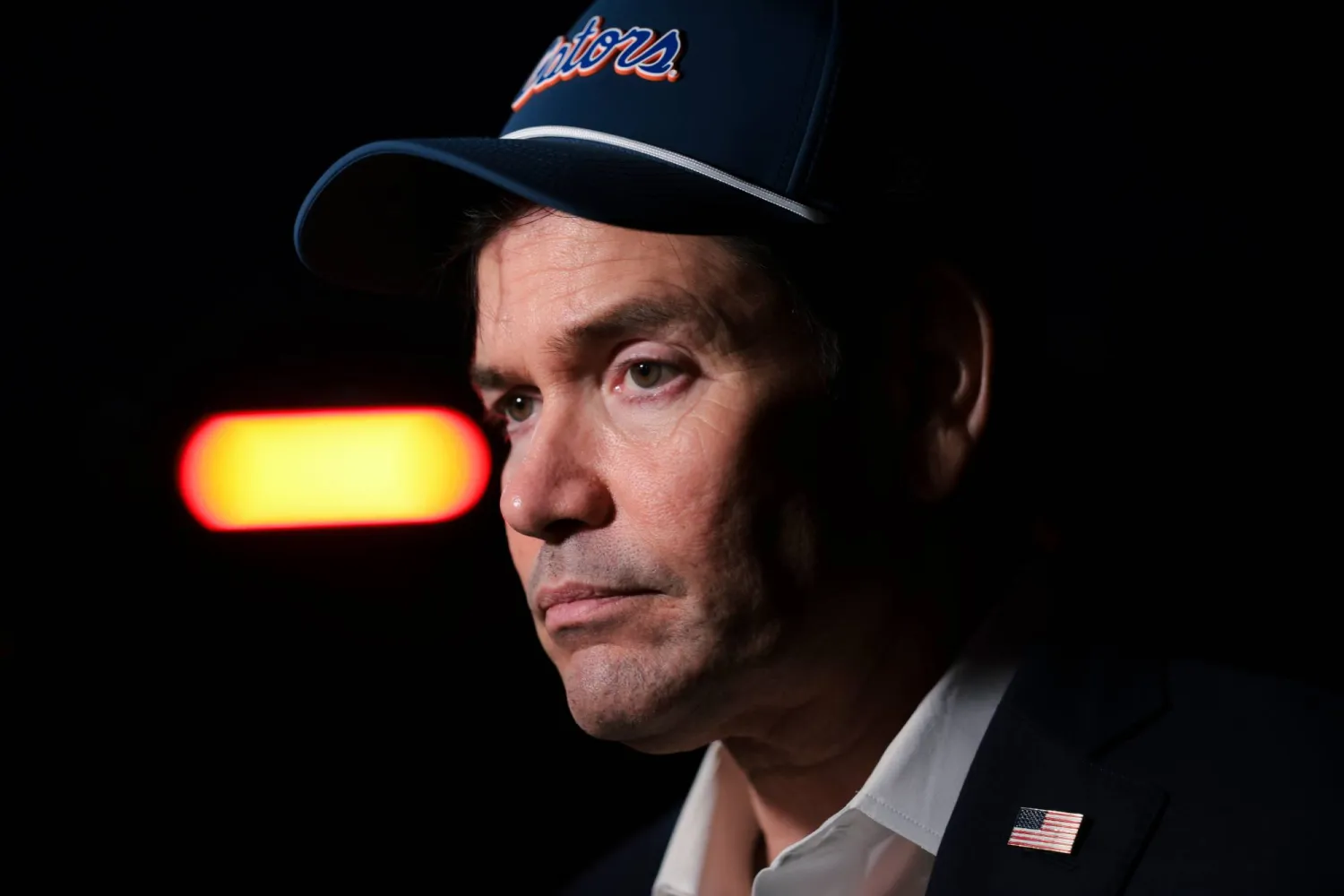
 US Secretary of State Marco Rubio prepares to board a plane en route to Uzbekistan, at Joint Base Andrews, Md., Saturday, Oct. 17, 2026. (AP)
US Secretary of State Marco Rubio prepares to board a plane en route to Uzbekistan, at Joint Base Andrews, Md., Saturday, Oct. 17, 2026. (AP)
TT

Trump Paused Russia Sanctions to ‘Analyze’ Impact on Global Economy, Says Rubio

 US Secretary of State Marco Rubio prepares to board a plane en route to Uzbekistan, at Joint Base Andrews, Md., Saturday, Oct. 17, 2026. (AP)
US Secretary of State Marco Rubio prepares to board a plane en route to Uzbekistan, at Joint Base Andrews, Md., Saturday, Oct. 17, 2026. (AP)

US Secretary of State Marco Rubio said Saturday that President Donald Trump's waiver of sweeping sanctions and tariffs on Russia would be a 60-day pause to "analyze" their impact on the global economy.

"The president wants to take the 60-day period of time to sort of analyze what imposing both sanctions and tariffs will mean to the global economy and even to the US economy," Rubio said, noting that the economic restrictions involved a number of countries, not just Russia.

He said various conflicts were impacting global energy prices, including the US war on Iran.

"These conflicts around the world are starting to crash into each other, and they're having an impact not just on global oil and diesel prices" but on economies as well, Rubio said.

Trump said late Saturday his decision would benefit the US, though it was unclear if he had actually made up his mind on the matter.

"We'll figure it out, and you'll figure it out," he said. "It's a very good decision, and it's going to be a decision that's good for the country, and I think good for the world."

US lawmakers on both sides of the political aisle have sharply criticized Trump after he signed an executive order Friday that waived sweeping sanctions and tariffs targeting Russia -- measures adopted by Congress last month.

The law passed in September, and signed by Trump, included sanctions targeting Russian officials, oligarchs and financial institutions, and provided Trump with the authority to impose sanctions on major buyers of Russian oil and gas.

The idea was to cut off sources of funding to supporters of Russian President Vladimir Putin, as well as his war on Ukraine.

But late Friday, two days before the law was due to take effect, Trump exempted Russia from those economic restrictions.

"Beyond irresponsible," Republican Senator Thom Tillis, a frequent Trump critic who will leave office in January, said in a post on X.

"If the President wants to actually bring down energy prices, he can do it by solving the Iran problem, not by doing a solid for Vladimir Putin."

Ted Cruz, a senior Republican senator from Texas, called the move "a mistake" in comments aired on Fox News.

Trump's executive order came after he struck a deal with Kremlin leader Vladimir Putin to allow exports of Russian diesel in exchange for the easing of sanctions.

The impact of steep diesel price hikes due to the Iran war are beginning to filter into the US economy, and cost of living worries are top of mind for voters ahead of key midterm elections next month.

Polls show Trump's Republicans are likely to receive a drubbing at the polls.

"The diesel that Putin was going to sell, they were (going to) make it available to the global market one way or the other. The only difference is how much of it the United States was going to get," Rubio said, underscoring the importance of the vital fuel powering US road hauling, agriculture and construction.

Ukraine's President Volodymyr Zelensky said he feared the United States would lift more sanctions on Russia and that Trump's action "rewards" Putin.



Costa Rica Bars UN Rapporteur on Palestinian Territory, Drawing Concern from Rights Chief

UN Special Rapporteur on the occupied Palestinian territories Francesca Albanese holds a press conference on the human rights situation in Gaza in Geneva on September 15, 2025. (AFP)
TT

Costa Rica Bars UN Rapporteur on Palestinian Territory, Drawing Concern from Rights Chief

UN Special Rapporteur on the occupied Palestinian territories Francesca Albanese holds a press conference on the human rights situation in Gaza in Geneva on September 15, 2025. (AFP)

Costa Rica denied entry to the United Nations special rapporteur on the occupied Palestinian territory, drawing criticism from UN human rights chief Volker Turk on Friday.

Costa Rica's move put the small Central American country's increasingly close alignment with Washington and Israel on security and foreign policy into the spotlight.

Turk said he was "deeply concerned" by Costa Rica's decision to bar Francesca Albanese from entering the country and urged authorities to reconsider after she was stopped at Juan Santamaria airport, which serves the capital San Jose.

Albanese, an Italian national, had ‌traveled to ‌Costa Rica to receive an honorary doctorate from ‌the ⁠state-run University of Costa ⁠Rica. A UN special rapporteur is an independent expert appointed by the UN Human Rights Council to investigate and report on rights abuses in a specific country.

The UN human rights office said on X that Albanese was denied entry on "claimed national security grounds." Costa Rica's migration office said it had acted after receiving ⁠an alert and that the decision was consistent with ‌national security measures.

Albanese, who has been ‌sanctioned by the United States under measures related to the International Criminal ‌Court, said she hoped Costa Rica would reverse the decision ‌and rejected what she described as efforts to link her to terrorism.

In a video call interview with journalist Ahmed Shihab-Eldin recorded from a gate at the airport, Albanese said authorities took her passport and that she ‌was offered a detention room to sleep in that was so smelly she almost got sick.

"I was ⁠almost forced ⁠to board the plane to be shipped back to Paris. I said no, and I opposed it... and they threatened to put me on the plane by force," she added.

Albanese has become one of the most outspoken international critics of Israel's conduct in Gaza, making her a frequent target of pro-Israel officials and governments.

Israel's UN ambassador, Danny Danon, praised Costa Rica's decision in a post on X.

Costa Rica, under President Laura Fernandez, has deepened cooperation with the United States on security and has moved closer to Israel, a notable shift for a country long associated with support for multilateral institutions.


Eisenkot Accuses Netanyahu's Party of Stalling Israeli Coalition Talks

Gadi Eisenkot, who is tasked with forming the next Israeli government, attends a conference at the parliament in Jerusalem on November 25, 2026. (AFP)
TT

Eisenkot Accuses Netanyahu's Party of Stalling Israeli Coalition Talks

Gadi Eisenkot, who is tasked with forming the next Israeli government, attends a conference at the parliament in Jerusalem on November 25, 2026. (AFP)

Gadi Eisenkot, who is trying to form the next Israeli government, on Friday accused the party of caretaker Prime Minister Benjamin Netanyahu of stalling coalition talks in a bid to bring about new elections.

Eisenkot's centrist Yashar party has in recent days agreed coalition deals with two allied parties, but the route to a parliamentary majority is still far from certain.

After the October election failed to deliver a clear majority for either bloc, Yashar has also held talks with Netanyahu's right-wing Likud party over the possibility of forming a national unity government involving both parties.

But no breakthroughs on that front have ostensibly been reached.

"Likud, for its part, was unwilling to compromise and, over two weeks, refused to put a single concrete proposal on the table," Eisenkot said in a statement on Friday.

"Their conduct points to an effort to run down the clock until the mandate expires, split the Change bloc and drag Israel into another election under the outgoing government," he added.

Eisenkot has until December 6 -- a deadline which can be extended by 14 days -- to form a government to replace Netanyahu.

His wide-ranging camp has faced divisions on whether to forge alliances with the ultra-Orthodox parties, or the Arab-majority lists, or whether to form a unity government with Likud.

"We are approaching a moment of decision," Eisenkot said on Friday.

"The question is whether Likud will engage in serious negotiations and commit to a partnership that requires compromise or keep up appearances and continue to stall," he added, but maintained he was still open to talks if Likud was "genuinely prepared to change course".

Likud, in turn, accused Eisenkot of working to form a "dangerous left-wing government" but nonetheless said it would still be open to a unity government.

Eisenkot's Yashar party has so far agreed coalition deals with the left-leaning Democrats party and the right-wing Israel Beiteinu party.

Together, they have a combined total of 36 lawmakers -- far short of the 61 needed for a parliamentary majority.


Iran Says Enemy Should Expect Action in Air and at Sea

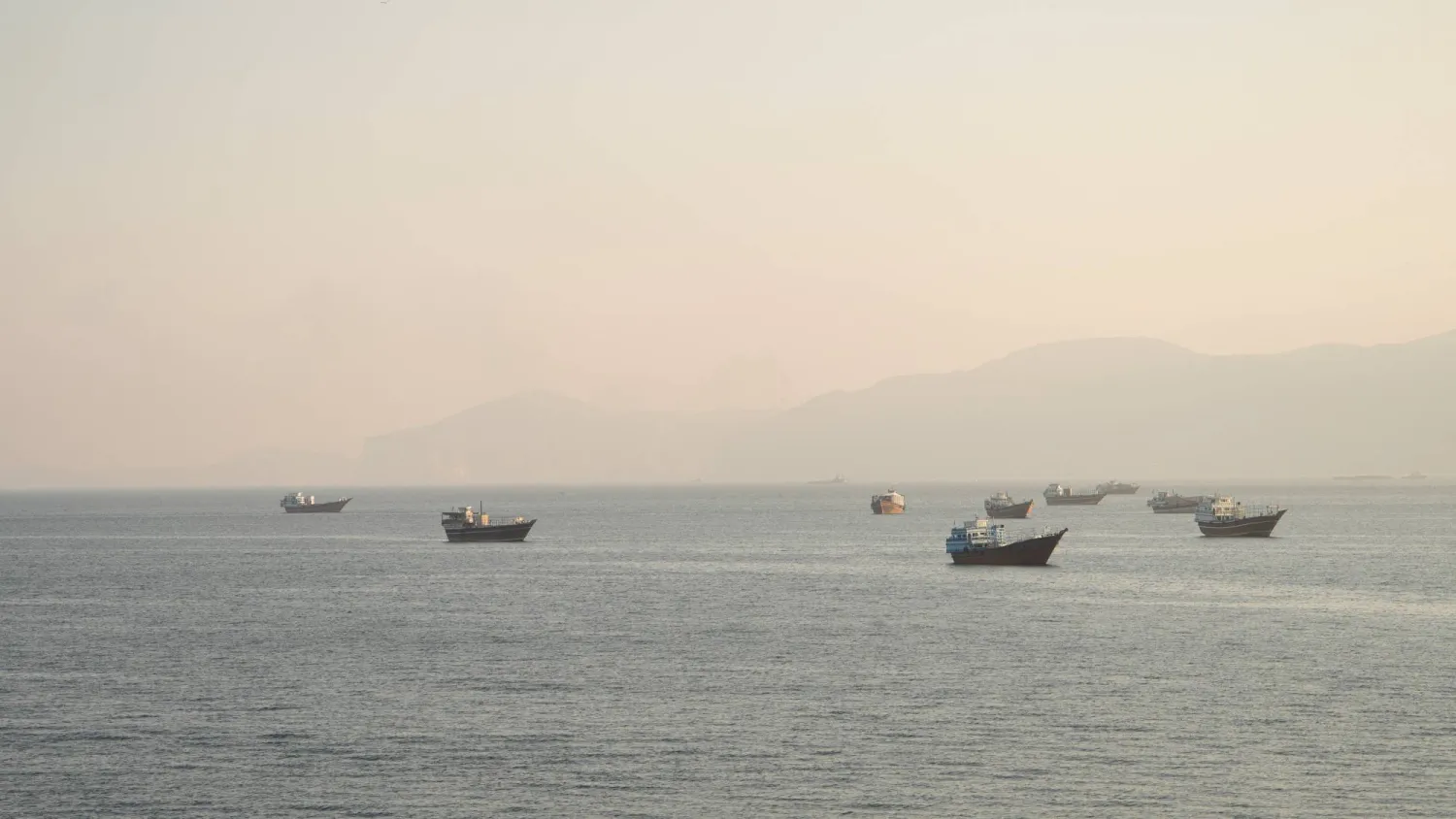
Vessels at the Strait of Hormuz, as seen from Musandam, Oman, November 23, 2026. (Reuters)
TT

Iran Says Enemy Should Expect Action in Air and at Sea

Vessels at the Strait of Hormuz, as seen from Musandam, Oman, November 23, 2026. (Reuters)

Iran's Revolutionary Guards Aerospace Force commander Majid Mousavi said in a post ‌on ‌X on ‌Friday ⁠that Iran's enemies should ⁠expect action in the air and ⁠at sea.

Breaking ‌the ‌blockade of ‌Iran ‌was the country's "firm mission and unwavering determination", ‌he said, a reference ⁠to the blockade ⁠imposed by the United States on Iranian ports.

The US military, meanwhile, said on Friday it disabled a commercial ship in the Gulf of Oman on ‌Thursday after its ‌crew attempted ‌to ⁠run the US ⁠blockade of Iran. 

Military aircraft launched precision munitions that struck the ⁠stern of ‌the ‌Palau-flagged M/V Pacific ‌Archer after ‌it departed from the port city of Bandar Abbas, ‌and the ship’s propulsion was disabled ⁠while ⁠the civilian crew was unharmed, US Central Command said in a statement.