
Fears of renewed internal tensions are growing in Lebanon as Hezbollah steps up its confrontational rhetoric toward the authorities and its supporters take to the streets of Beirut and its southern suburbs.
Against a backdrop of regional upheaval and mounting pressure on Iran, the developments have raised questions about whether Hezbollah is seeking to challenge the government’s authority or preparing further moves at home in response to shifting regional dynamics.
Ministerial sources told Asharq Al-Awsat that while the possibility of escalation remained a concern, there was no indication that any such move was imminent. The sources insisted that security agencies would continue enforcing government decisions, regardless of Hezbollah’s objections, and ruled out concessions over recent security and judicial measures.
They described the Iran-backed group’s increasingly defiant statements, particularly over a seized explosives shipment last week, as a reaction to the authorities’ actions rather than a reason to reconsider them.
President Joseph Aoun is due to chair a meeting of security chiefs at the presidential palace Monday afternoon to review recent developments, including the explosives shipment.
Prime Minister Nawaf Salam, meanwhile, reaffirmed that lasting stability depends on extending state authority throughout Lebanon, even if gradually, through its own security forces. Decisions on war and peace, he stressed, must remain exclusively with the state and its constitutional institutions.
Salam contacted Army commander Gen. Rodolphe Haykal and Internal Security Forces chief Maj. Gen. Raed Abdallah to commend the reinforced security presence across Greater Beirut following nighttime gatherings that had unsettled residents.
He also met Justice Minister Adel Nassar and Prosecutor General Rami al-Hajj to follow up on investigations into the explosives seized at Dahr al-Baidar and subsequent incidents, including efforts to arrest those involved in possessing or transporting illegal weapons.
He stressed that all action would be governed by the law.
Government refuses to back down
The government’s determination to retain exclusive control over weapons was echoed by Foreign Minister Youssef Raggi during the 52nd meeting of foreign ministers of the Organization of Islamic Cooperation in Iraq.
Raggi recalled the August 2025 decision to impose state monopoly over arms and extend state authority across the country.
He argued that sovereignty could not coexist with competing armed forces, nor could stability be achieved while decisions affecting the country were taken outside state institutions.
The increasingly tense atmosphere has also prompted warnings from Lebanese political figures.
MP Ibrahim Mneimneh suggested that the mobilization of Hezbollah supporters could be intended to prepare the ground for action at the right circumstances.
In remarks to Asharq Al-Awsat, he argued that Hezbollah appeared to be seeking a return to the situation that prevailed before the government’s decisions on weapons monopoly, while demonstrating that those measures carried little practical weight.
He did not rule out a link to Iran’s regional calculations or the broader political and security arrangements taking shape in the region.
For Mneimneh, the decisive issue was how the state would respond to any challenge. Unless it seriously addressed weapons outside its control, he cautioned, “Lebanon would remain hostage to the same circumstances.”
He urged the authorities to begin implementing their decisions, particularly the pledge to keep Beirut free of weapons, describing it as an “essential step toward restoring state authority in the capital.”
Lebanese Forces MP Antoine Habchi, for his part, accused Hezbollah of invoking the threat of civil war to buy time.
“Any internal fighting at this stage would be disastrous for Hezbollah itself, calling for the government’s decisions to be implemented without ambiguity,” he urged.
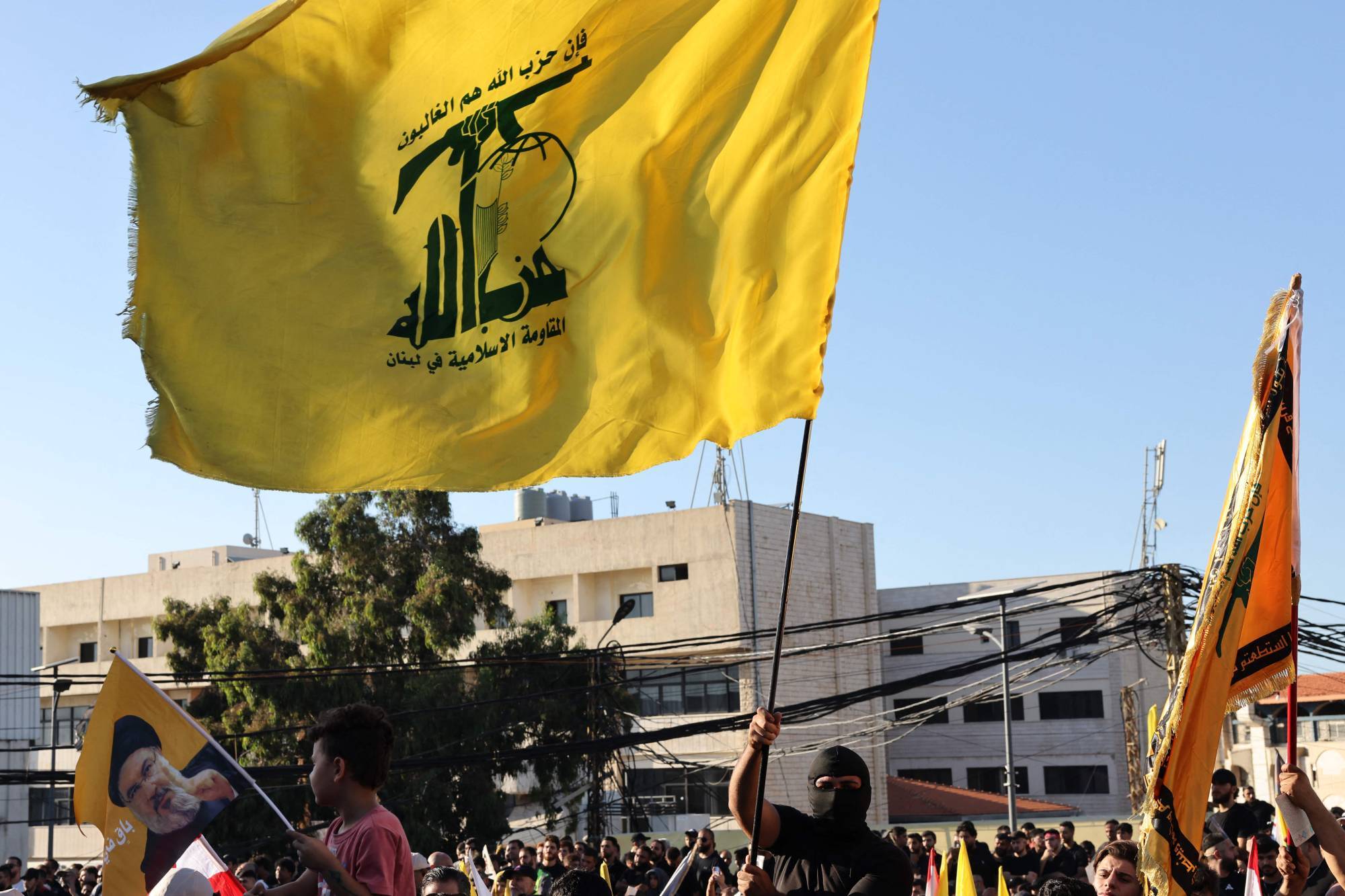
Tensions on the ground
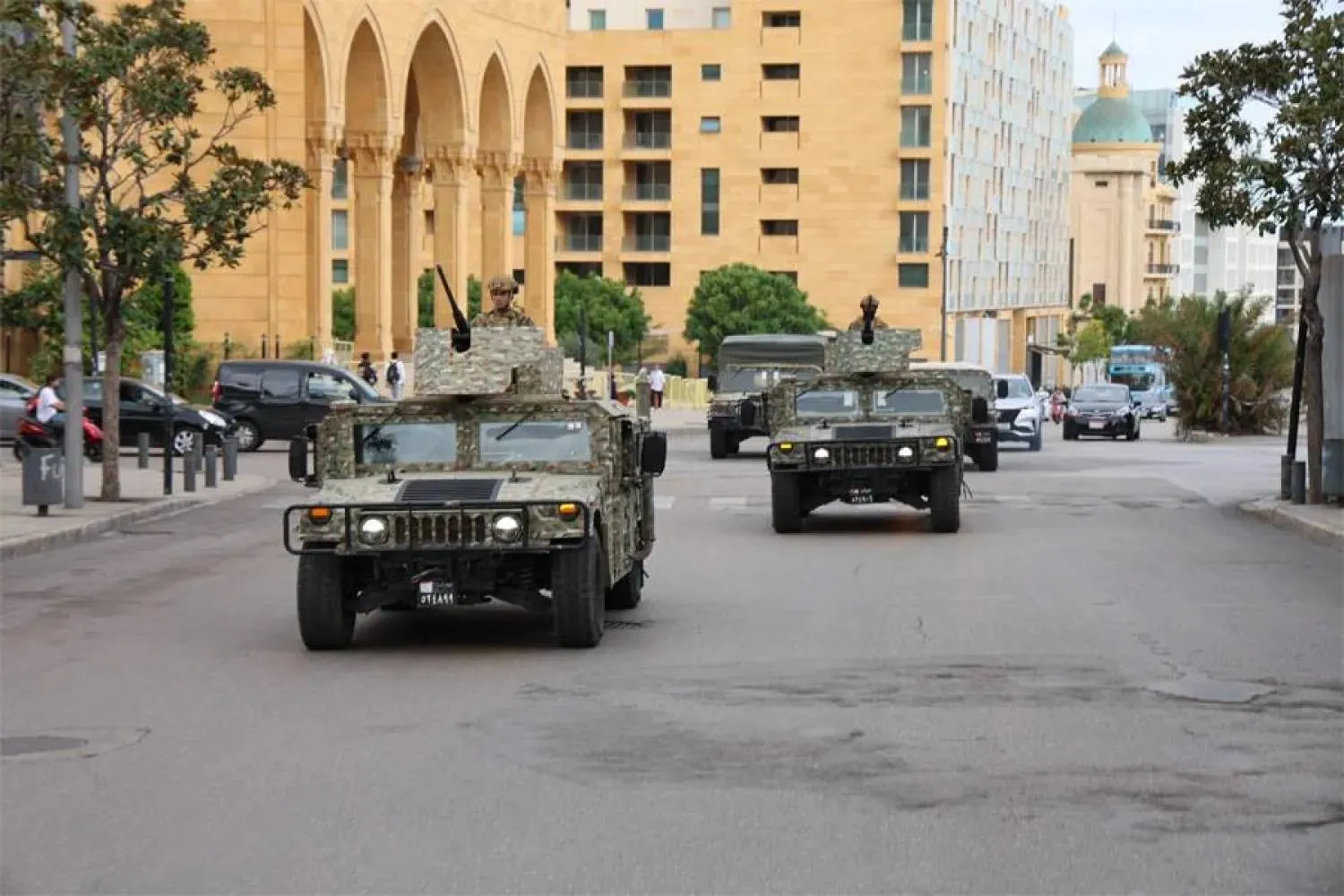
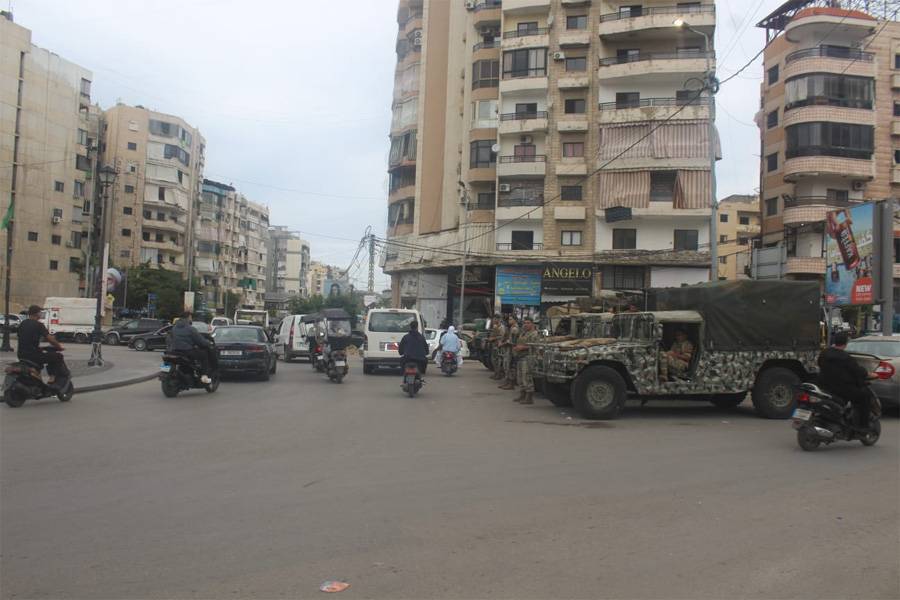
The Lebanese Army has deployed heavily in Beirut for several days, particularly around the southern suburbs and their entrances, amid concerns that Hezbollah supporters could stage further demonstrations.
The deployments coincide with ongoing investigations into the explosives seized at Dahr al-Baidar and a warehouse containing expired medicines.
On Friday evening, young men on motorcycles attempted to obstruct an Internal Security Forces patrol during a raid on the warehouse near the entrance to the southern suburbs. The army intervened, allowing the patrol to seal the premises.
Although Hezbollah denied any connection to the warehouse, reports alleged that a son of its secretary-general, Naim Qassem, was a partner in the business.
MP Paula Yacoubian repeated the allegation on Al Jadeed television Sunday, saying the other partner was the candidate backed by the Shiite political alliance for Lebanon’s pharmacists’ syndicate.
Qassem’s son denied involvement, saying the case was now in the hands of the relevant security and judicial authorities.
Hezbollah nevertheless protested the raid, insisting that operations in sensitive areas follow previously agreed coordination procedures - an apparent reference to arrangements that existed before the government’s recent decisions concerning its weapons.
The confrontation followed another dispute over a truck carrying around 780 kilograms of explosives seized by authorities at a Dahr al-Baidar checkpoint. Hezbollah acknowledged ownership of both the truck and its cargo, demanding their return and the release of those detained.
Hezbollah MP Hassan Fadlallah initially declared that the group “would not tolerate measures targeting it to satisfy US demands.”
On Sunday, he shifted responsibility for the mounting tensions onto the state, accusing the authorities of pushing Lebanon toward internal confrontation under American pressure.
He questioned who stood to benefit from such a confrontation and why the government appeared determined “to provoke tensions rather than defuse them.”