IMF Says 2027 Recovery in Middle East Hinges on Easing Conflict, Resumption of Trade

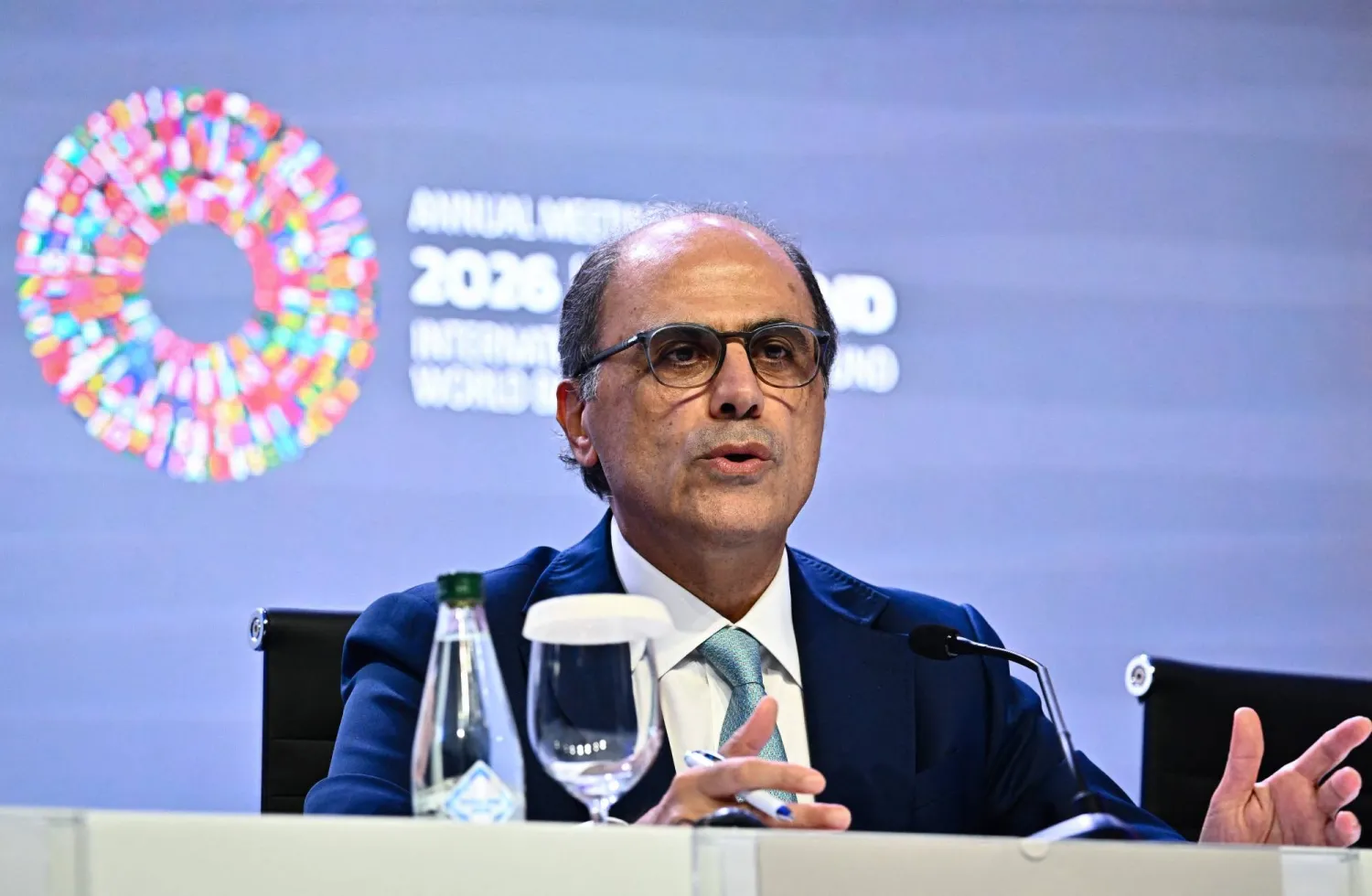
IMF Middle East and Central Asia Department Director Jihad Azour speaks during the Regional Economic Outlook for the Middle East and Central Asia press briefing at the Annual Meetings of the International Monetary Fund (IMF) and the World Bank Group (WBG) at the Queen Sirikit National Convention Center (QSNCC) in Bangkok on October 15, 2026. (Photo by Lillian SUWANRUMPHA / AFP)
TT

IMF Says 2027 Recovery in Middle East Hinges on Easing Conflict, Resumption of Trade

IMF Middle East and Central Asia Department Director Jihad Azour speaks during the Regional Economic Outlook for the Middle East and Central Asia press briefing at the Annual Meetings of the International Monetary Fund (IMF) and the World Bank Group (WBG) at the Queen Sirikit National Convention Center (QSNCC) in Bangkok on October 15, 2026. (Photo by Lillian SUWANRUMPHA / AFP)

Jihad Azour, director of the International Monetary Fund’s Middle East and Central Asia Department, said the war in the Middle East was weighing on the region’s economic outlook, with economies across the Middle East and North Africa, Afghanistan and Pakistan expected to contract by 1.3% in 2026 before rebounding strongly in 2027, provided the conflict eases and trade gradually returns to normal.

Azour made the remarks at a news conference on Thursday to present the IMF’s Regional Economic Outlook report, which examines the economic fallout from the conflict and its varying effects across countries in the region.

The impact of the war is being felt through multiple channels, including energy, shipping, tourism, trade and confidence. Its effects vary across regional economies depending on whether countries export or import oil, their exposure to disruptions and their capacity to contain the economic fallout.

Recovery expected in 2027

The IMF’s growth projections are based on a scenario in which the conflict subsides in early 2027 and trade gradually returns to normal. Under this scenario, the economies of the Middle East and North Africa, Afghanistan and Pakistan are expected to contract by 1.3% in 2026 before growing by 6.6% in 2027.

The 2026 growth forecast is around 3 percentage points lower than the projection issued in April, reflecting the conflict’s impact on economic activity across the region.

The effects of the war differ between oil-exporting and oil-importing countries. Oil exporters have faced disruptions to energy production and shipping, while oil-importing economies have shown resilience, supported by domestic demand, remittances, tourism revenues and financial conditions, as well as government measures to limit the pass-through of higher commodity prices to consumers.

Gulf Cooperation Council economies are expected to experience a V-shaped recovery, with economic activity declining before rebounding. However, output is likely to remain below pre-conflict projections over the medium term, Azour said.

By contrast, growth in oil-importing countries is expected to accelerate in 2026 and 2027.

Economies in the Caucasus and Central Asia are projected to grow by 5.2% in 2026 and 5% in 2027, while inflation continues to ease.

The IMF raised its growth forecasts for the Caucasus and Central Asia compared with its April projections, as improved prospects for oil-importing countries offset downgrades for some oil exporters in 2026.

Inflation and external balances under pressure

Azour expects inflation to rise across the Middle East and North Africa, Afghanistan and Pakistan in 2026, while continuing to decline in the Caucasus and Central Asia.

Government measures, including subsidies, price controls and fixed exchange rates, have helped limit the pass-through of higher commodity prices to consumers in parts of the region. However, these measures come at a fiscal cost.

External positions are expected to weaken across most economies in both regions, with the GCC’s current account surplus projected to narrow from around 5% of gross domestic product in 2025 to 1.3% in 2026.

Uncertainty remains exceptionally high

Azour said uncertainty surrounding the outlook remained exceptionally high, with risks tilted to the downside.

Key risks include renewed disruptions to energy production or trade routes, which could drive up energy prices and intensify pressure on regional economies.

Other risks include a tightening of external financial conditions if markets reassess expected productivity gains from artificial intelligence, as well as higher interest rates amid concerns over inflation and public finances.

The Caucasus and Central Asia face additional risks, including renewed disruptions stemming from Russia’s war in Ukraine, lower oil prices and weaker external demand if markets linked to artificial intelligence undergo a sharp correction.

Low-income and fragile countries remain the most vulnerable, given their reliance on food imports, substantial financing needs and declining official development assistance, which constrain their ability to withstand economic shocks.

IMF urges stronger fiscal buffers, continued reforms

Azour said the main economic policy priorities were to maintain price stability and ensure fiscal sustainability. Monetary policy should serve as the first line of defense if upside inflation risks materialize, he said.

In the Caucasus and Central Asia, preserving gains in reducing inflation and strengthening central bank independence are key to anchoring inflation expectations and limiting the pass-through of future supply shocks to prices.

On fiscal policy, governments should provide temporary, targeted support to the households and businesses hardest hit by the crisis, rather than adopt broad-based measures that increase public debt without delivering lasting gains in economic activity.

Azour urged countries in the region to rebuild fiscal buffers through credible monetary frameworks, adequate reserves and sound public finances to strengthen their capacity to withstand future shocks.

He said the current disruptions also provided an incentive to seize long-term opportunities through structural reforms to boost productivity and create jobs, diversify trade and economic activity, deepen regional integration, and create conditions conducive to harnessing technology and artificial intelligence.


US Seeks Answers on Nvidia’s Sale of Chips to China, Bessent Says

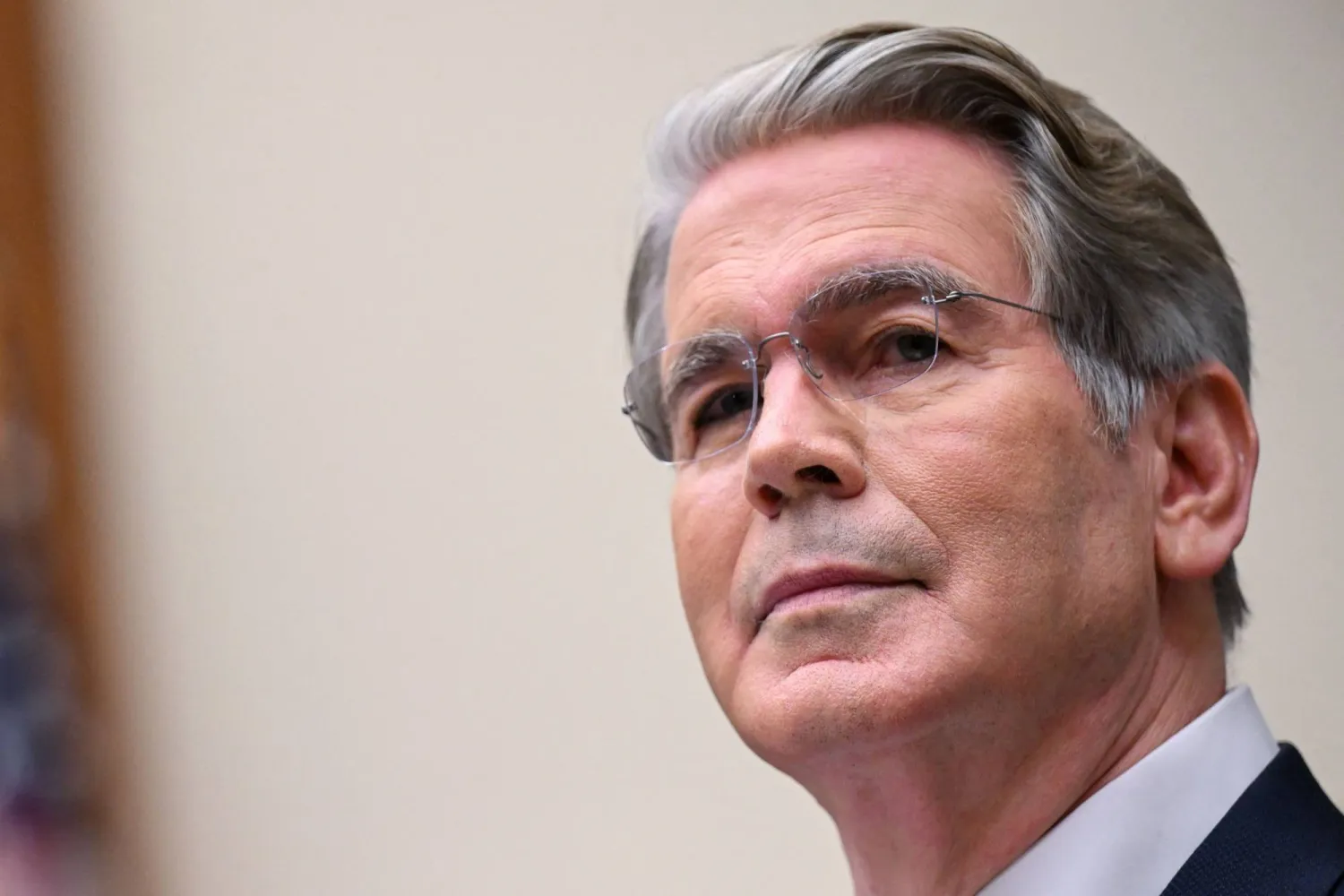
US Treasury Secretary Scott Bessent testifies during a House Financial Services Committee hearing on the state of the international financial system on Capitol Hill in Washington, DC, on September 15, 2026. (AFP)
TT

US Seeks Answers on Nvidia’s Sale of Chips to China, Bessent Says

US Treasury Secretary Scott Bessent testifies during a House Financial Services Committee hearing on the state of the international financial system on Capitol Hill in Washington, DC, on September 15, 2026. (AFP)

US Treasury Secretary Scott Bessent said on Sunday that the Trump administration still needs information on Nvidia's chip sales and ‌will find ‌out who led ‌compliance ⁠at the company ⁠formerly led by Jensen Huang, who resigned following an affair with a ⁠suspected Chinese spy.

"We've ‌been ‌in touch ‌with the temporary ‌management, with the lead directors, with their lawyers, and we ‌do need answers... it behooves Nvidia ⁠to ⁠move quickly on this because we want to know what the culture was," Bessent told CBS' "Face the Nation" program.


Oil Shipped Through Hormuz Falls 15% as Iranian Attacks Increase

In this handout photo provided by the Lewis Pugh Foundation, British endurance swimmer and UNEP Patron of the Oceans Lewis Pugh dives into the Strait of Hormuz, off the Musandam Peninsula, Oman, Wednesday, Nov. 18, 2026. (Lewis Pugh Foundation via AP)
TT

Oil Shipped Through Hormuz Falls 15% as Iranian Attacks Increase

In this handout photo provided by the Lewis Pugh Foundation, British endurance swimmer and UNEP Patron of the Oceans Lewis Pugh dives into the Strait of Hormuz, off the Musandam Peninsula, Oman, Wednesday, Nov. 18, 2026. (Lewis Pugh Foundation via AP)

The amount of oil being shipped through the Strait of Hormuz has begun to drop in the face of near-daily Iranian strikes on ships, the Financial Times reported.

It quoted the UK Maritime Trade Operations as saying on Friday that a total of 263 vessels passed in and out of the crucial waterway in the week to November 18— some 15 percent fewer than the previous week and 20 percent less than the week before that.

Of those vessels, 37 were oil tankers, down from 52 a week earlier, but on a level with the week before that. Preliminary data from commodities platform Kpler, measured in barrels, showed that oil flows through the strait in the second week of November were close to half those in the first week.

The figures may be revised higher as more vessels undertaking “dark transits” are identified, but the lower volumes suggest Iran’s latest campaign of strikes on merchant shipping is starting to reduce oil exports.

Some analysts had pointed to increased flows of crude out of the Gulf in October as evidence that Middle Eastern producers had found ways to get their product to international buyers. On six days in October, shipments through the strait exceeded pre-war levels.

But Giovanni Staunovo, a strategist at UBS, said in a note on Friday that “the recovery in Middle Eastern exports is looking increasingly fragile.”

Iran’s strikes on shipping began to rise in October after a period of relative calm. They have continued despite ongoing diplomatic efforts to find a resolution to the conflict and restore shipping flows. At least seven tankers have been hit in the past week, while at least three vessels have sunk since the conflict started.

About 135 ships used to pass through the narrow strait each day before the US-Israeli strike on Iran at the end of February, carrying about a fifth of global oil and gas supplies, among other products.


Saudi Arabia Signs 12 Aviation Agreements at ICAO Conference in Montreal

 Saudi Arabia signed bilateral air transport services agreements during the conference - SPA
Saudi Arabia signed bilateral air transport services agreements during the conference - SPA
TT

Saudi Arabia Signs 12 Aviation Agreements at ICAO Conference in Montreal

 Saudi Arabia signed bilateral air transport services agreements during the conference - SPA
Saudi Arabia signed bilateral air transport services agreements during the conference - SPA

Saudi Arabia, represented by the General Authority of Civil Aviation (GACA), has concluded its participation in the 7th Worldwide Air Transport Conference (ATConf/7), organized by the International Civil Aviation Organization (ICAO) in Montreal, Canada, from November 16 to 20.

Led by GACA President Abdulaziz Al-Duailej and comprising 44 representatives from 18 national entities, the delegation achieved key outcomes, including signing 12 agreements, memoranda of understanding, and records of discussion, submitting eight working papers, holding over 32 bilateral meetings, and hosting a special edition of the Future Aviation Forum, SPA reported.

During the conference, Saudi Arabia signed bilateral air transport services agreements with Belize, Samoa, Cambodia, and Jordan; MoUs with Saint Lucia, Antigua and Barbuda, Montenegro, Cabo Verde, and Türkiye; and records of discussion with Macau, the Congo, and Equatorial Guinea to expand international cooperation and air connectivity. The delegation also presented eight working papers addressing economic regulation, sector resilience, investment, innovation, and sustainable growth, while participating in ICAO deliberations shaping the future of global air transport.

Al-Duailej and the delegation held bilateral talks with ICAO Council President Toshiyuki Onuma, ICAO Secretary General Juan Carlos Salazar, Airports Council International (ACI) representatives, Bombardier, and 24 national delegations to explore sector development and exchange expertise. Additionally, in his capacity as Chair of the Executive Council of the Arab Civil Aviation Organization (ACAO), Al-Duailej presided over the eighth coordination meeting of regional civil aviation organizations to align positions ahead of upcoming assembly proceedings.

On the sidelines of the event, Al-Duailej—who also chairs the Steering Committee of the Riyadh-based Regional Safety Oversight Organization for the Middle East and North Africa (MENA RSOO)—received the formal accession documents from Syria and Lebanon, bringing the organization's membership to 10 states.

GACA also organized a special edition of the Future Aviation Forum in Montreal ahead of its next edition in Riyadh from April 19 to 21, 2027, further cementing the Kingdom's standing as a global aviation hub in line with Saudi Vision 2030.