Saudi Arabia Ranks First in GCC, 12th Globally in 2026 Marsh CFA Institute Global Pension Indexhttps://english.aawsat.com/business/5332755-saudi-arabia-ranks-first-gcc-12th-globally-2026-marsh-cfa-institute-global-pension
Saudi Arabia Ranks First in GCC, 12th Globally in 2026 Marsh CFA Institute Global Pension Index
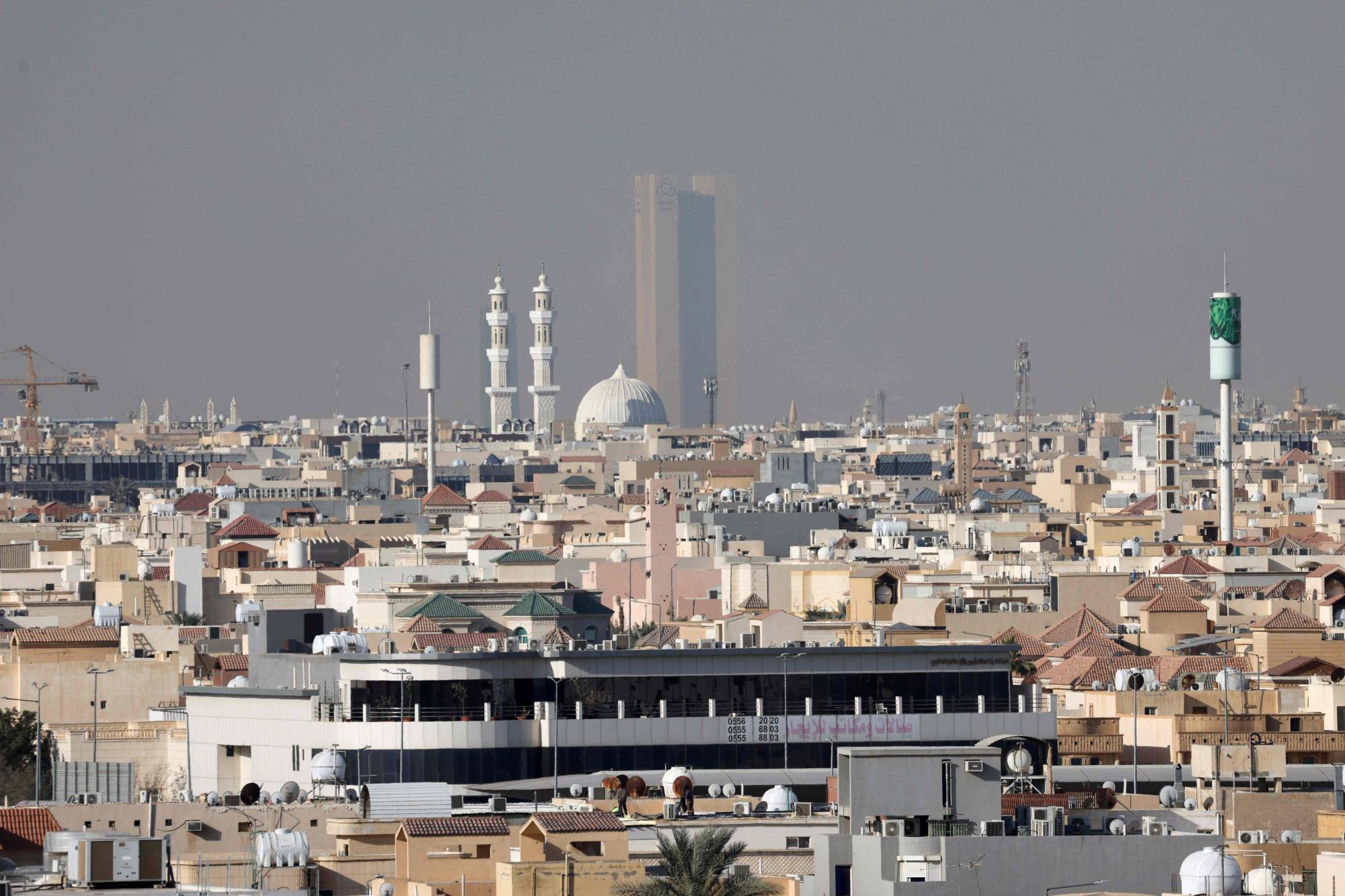
The Saudi flag. Asharq Al-Awsat
The Kingdom of Saudi Arabia ranked first among GCC states and 12th globally out of 55 pension systems in the 2026 Marsh CFA Institute Global Pension Index. The Kingdom's overall score climbed to 73.2 out of 100, up from 67.6 in 2025, continuing an upward trajectory that has seen it advance 15 places since 2022.
The Kingdom achieved notable gains across the index's three primary pillars. In the Integrity sub-index—which evaluates regulatory governance, member communication, and participant rights—Saudi Arabia scored 83.5, up 9.3 points from the previous year, securing an A rating, the highest classification in the category.
The Kingdom's Sustainability score increased to 61.2 points from 54.6, while Adequacy rose to 77.2 from 75, maintaining an overall B grade, SPA reported.
With its 73.2 score, Saudi Arabia outperformed established international pension systems categorized within the B band, including the United Kingdom, Canada, France, Germany, Belgium, Ireland, and Hong Kong, while leading all participating Gulf nations.
The index noted that Saudi Arabia's advancement was driven by sustained governance reforms, regulatory enhancements, data modernization, and stronger safeguards for scheme beneficiaries.
These results reflect ongoing modernization within the national social insurance ecosystem led by the Social Insurance, aimed at expanding benefit adequacy and safeguarding long-term fiscal sustainability.
Published in collaboration with the Monash Centre for Financial Studies, the 18th edition of the Marsh CFA Institute Global Pension Index evaluates retirement systems covering two-thirds of the world's population across more than 50 sub-indicators.
Loans Expand and Deposits Shift: A New Funding Equation for Saudi Bankshttps://english.aawsat.com/business/5342735-loans-expand-and-deposits-shift-new-funding-equation-saudi-banks
Loans Expand and Deposits Shift: A New Funding Equation for Saudi Banks
Vehicles pass the King Abdullah Financial District complex in the Saudi capital Riyadh, March 31, 2026. (AFP)
Saudi banks continue to finance economic activity amid accelerating credit growth, supported by their strong financial positions and diversified funding sources. However, managing these sources and their costs has become increasingly critical as deposit structures shift and competition to attract them intensifies, at a stage where banks are seeking to balance meeting financing demand with preserving profit margins.
Banks rely on a diversified funding base to sustain their lending role, encompassing government and private deposits, as well as debt markets and wholesale funding instruments. In this context, movements in government deposits carry particular weight in the banking funding equation, given their share in the overall deposit structure and their capacity to bolster liquidity available to lenders.
This coincides with sustained credit demand from corporates, individuals, and investment projects, making the diversification of funding sources and the management of their costs key factors in maintaining lending momentum and supporting economic activity.
In an assessment of these developments, Anton Lopatin, senior director for the banking sector at Fitch Ratings, told Asharq Al-Awsat that Saudi banks still maintain adequate liquidity levels despite tighter funding conditions and higher financing costs.
He explained that this became evident during the third quarter of 2026, when lending grew by around 2 percent against a roughly 1.5 percent decline in deposits, creating a gap between credit and deposit growth and intensifying competition among banks to attract funds.
The Alrajhi Bank building is seen in the background in Riyadh on December 3, 2024. (AFP)
Lopatin noted that under these conditions, banks are moving to increase their reliance on time deposits and wholesale market funding, which includes borrowing from other financial institutions and banks, or raising funds through bond and sukuk issuances. Although these instruments provide banks with additional funding sources, their cost can be higher than that of traditional deposits.
He stressed that these developments reflect pressures related to funding sources and their costs, rather than an issue with liquidity levels across the banking sector.
Data from the Saudi Central Bank (SAMA) reveals a notable acceleration in lending during September, with bank loan balances rising by approximately 35.9 billion riyals ($9.6 billion) - the largest monthly increase in 16 months - bringing the total portfolio to around 3.5 trillion riyals ($933 billion), representing an annual growth rate of 7.3 percent.
Conversely, the pace of credit expansion has slowed since the beginning of the year; the cumulative increase in loans over the first nine months stood at roughly 204 billion riyals ($54.4 billion), about one-third lower than the increase recorded during the corresponding period in 2025, reflecting slower growth in bank financing compared to last year.
On the funding side, total bank deposits declined to around 3.076 trillion riyals ($820.3 billion) by the end of September, marking a slight monthly decrease of 0.1 percent, though remaining up 4.8 percent on an annual basis. However, a quarterly comparison reveals a deposit contraction of roughly 1.8 percent, with government deposits serving as the primary driver.
Government deposits fell by about 34.2 billion riyals ($9.1 billion) during the quarter, accounting for nearly 61 percent of the total drop in deposits, to stand at roughly 1.008 trillion riyals ($268.8 billion), or nearly one-third of all bank deposits.
It is worth noting here that government deposits are not limited to funds held at commercial banks, but also include balances maintained by government entities at the Saudi Central Bank.
In this context, Lopatin explained that government entity balances at SAMA reached around 370 billion riyals ($99 billion) by the end of the third quarter, saying that movements in these deposits are tied to government cash management and can impact liquidity levels at commercial banks depending on how they are deployed.
Government deposits account for roughly one-third of total bank deposits, making them a key funding source for the sector, he went on to say.
Movements in government funds affect the liquidity available to banks in two ways. First, through increases or decreases in government deposits held directly at commercial banks, which raises or lowers the total deposits they rely on for funding. Second, through government balances held at the SAMA; transferring a portion of these funds to commercial banks, when needed to finance government spending, can add new resources to the banks' funding base.
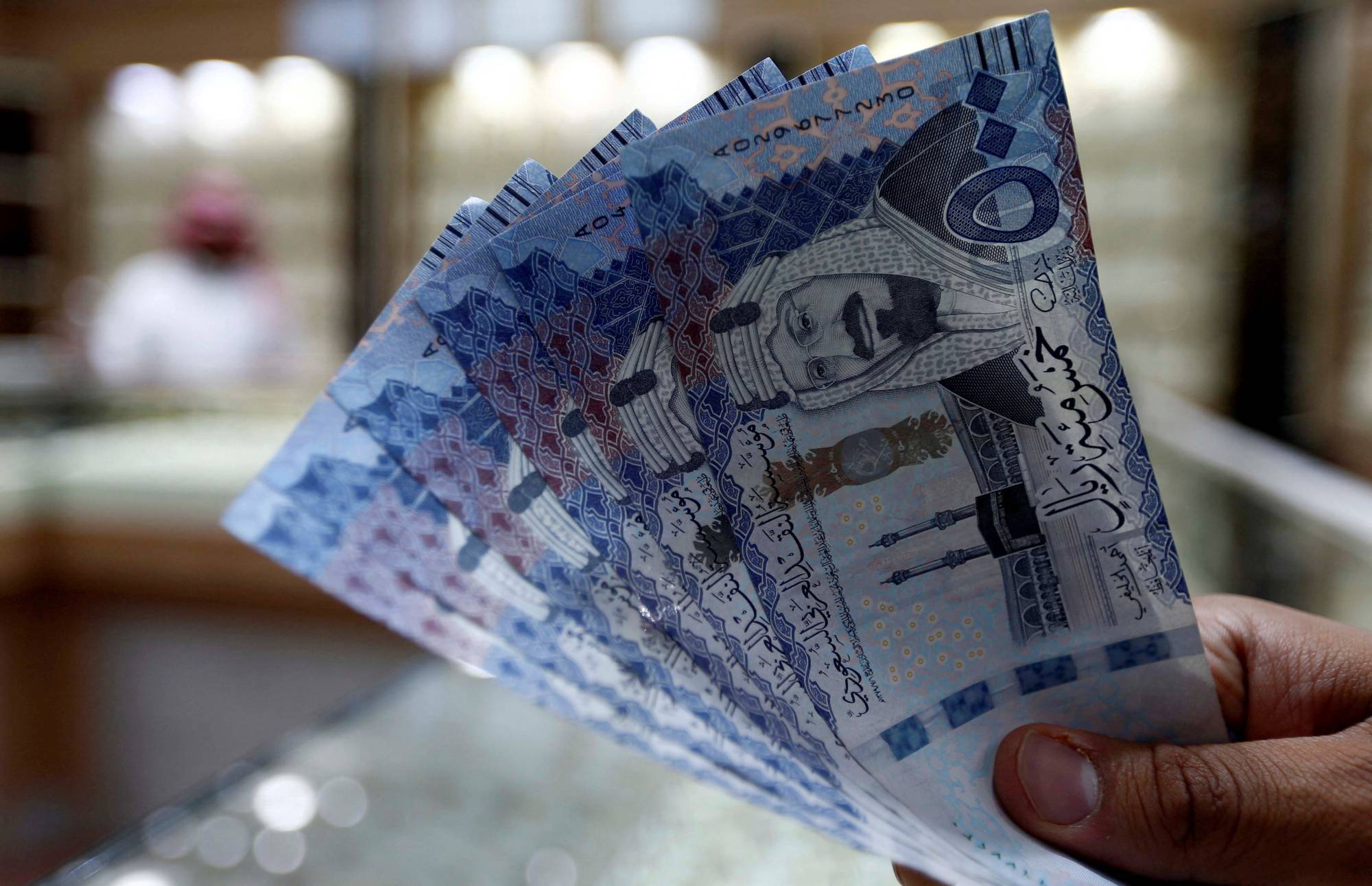
A Saudi money changer displays Saudi Riyal banknotes at a currency exchange shop in Riyadh, Saudi Arabia July 27, 2017. (Reuters)
Time deposits advance
Meanwhile, the composition of deposits shifted. Time and savings deposits rose by roughly 17.5 billion riyals ($4.7 billion), or 1.3 percent, during September to reach around 1.417 trillion riyals ($377.9 billion), lifting their share to 46.1 percent of total deposits. Demand deposits fell by 1.4 percent to around 1.405 trillion riyals ($374.7 billion), bringing their share to 45.7 percent.
Annual data underscores the breadth of this shift. The share of time and savings deposits climbed to 46.1 percent by the end of September 2026, compared with 39.3 percent a year earlier, while the share of demand deposits dropped from 50.4 percent to 45.7 percent. As a result, time and savings deposits surpassed demand deposits in value, signaling a move by a larger portion of depositor funds toward yield-bearing instruments.
This shift carries significant implications for funding costs, as retaining deposits and attracting new funds requires offering more competitive yields, which could drive up the cost of funds for banks compared to relying on demand deposits. However, a higher share of time and savings deposits does not necessarily translate into a proportional increase in funding costs, as actual costs remain tied to the yield levels offered by banks, as well as deposit maturities and terms.
Riyal funding
The shift in funding conditions is also evident in the widening spread between the three-month Saudi Interbank Offered Rate (SAIBOR) and the US Secured Overnight Financing Rate (SOFR), a gap that reflects differing funding conditions between the two markets and carries particular significance in Saudi Arabia given the riyal's peg to the dollar.
According to available data, the spread reached roughly 120 basis points. While local interest rates are influenced by US monetary policy moves due to the currency peg, the cost of riyal funding is also shaped by liquidity levels and demand for funds in the domestic market, making the widening spread an important indicator of evolving funding conditions within the Kingdom.
Lopatin explained that the widening spread between SAIBOR and SOFR reflects heightened competition among banks to attract riyal funding as credit growth continues to outpace deposit growth. However, he said that this development does not in itself indicate stress on the banking system or a liquidity shortage, but rather reflects the higher cost of attracting deposits and banks' move to diversify their funding sources to meet their needs.
Limited regional spillover
On regional developments, Lopatin said the war with Iran contributed to heightened market volatility and drove up wholesale funding costs during certain periods, though Fitch has not observed significant outflows from Saudi banks that could be directly linked to geopolitical events.
He added that banks remain able to diversify their funding sources and access alternatives, including private placements and syndicated loans, even during periods of volatility in public debt markets.
He explained that the direct impact of regional developments on bank liquidity flows remains limited compared with domestic factors that carry greater weight in shaping funding conditions, foremost among them growing credit demand and the need to attract deposits and diversify funding sources.
IMF: Banking resilience
These assessments align with the International Monetary Fund's reading of the Saudi banking sector in its 2026 Article IV consultation report. Although the IMF noted a decline in excess liquidity and a widening spread between riyal and dollar interest rates, coinciding with credit growth outpacing deposit growth and rising funding needs, it stressed that banks remain financially sound, backed by a strong capital base and comfortable liquidity levels that position them to absorb shocks and sustain lending activity.
Financial indicators support this evaluation. Data for 2025 showed that the capital adequacy ratio of Saudi banks reached 20.5 percent, while the Tier 1 capital ratio stood at 18.8 percent. Non-performing loans also registered around 1 percent of total loans, their lowest level in a decade, according to IMF data. On liquidity, the ratio of liquid assets to total assets reached 20.2 percent, while their ratio to short-term liabilities hit 38 percent, according to the Fund's figures.
The logo of the Saudi Central Bank at the Fintech Conference. (Turky Al-Agili)
Funding through 2027: Continued growth at a higher cost
This financial soundness provides a supportive foundation for banks to continue financing economic activity, though the challenge lies in their ability to sustain credit expansion amid rising funding costs and intensifying competition for deposits.
Lopatin said tighter funding conditions are not expected to constrain Saudi banks' capacity to support economic activity and finance Vision 2030 projects, though they could weigh more heavily on profit margins.
Continued credit growth outpacing deposit growth leaves banks with several options, including offering more competitive yields to attract funds, increasing reliance on market-based funding, or slowing the pace of loan growth, he said. Credit expansion has already begun to decelerate compared with earlier levels.
Higher funding costs could pressure net interest margins, particularly since banks cannot always pass the increase on to borrowers amid competition for high-creditworthiness clients, he went on to say. Consequently, lenders may become more selective in pricing new loans, without necessarily imposing broad restrictions on financing for the private sector or Vision 2030 projects.
Lopatin pointed to factors that could help ease funding pressures, including higher oil revenues and increased production, should they translate into higher government spending and deposit growth. In addition, the transfer of a portion of government balances held at SAMA to commercial banks could provide them with supplementary funding resources, coupled with the central bank's role in managing any temporary liquidity pressures.
Nevertheless, Fitch expects funding conditions to remain relatively tight through 2027, with the possibility of periodic improvements. Lopatin attributed this to ongoing financing needs tied to major investments and mega-projects under Vision 2030, which require growing credit resources.
Under these conditions, banks will continue to diversify their funding sources by attracting deposits and expanding issuances of bonds, sukuk, and wholesale funding instruments, while growth in government deposits or a slowdown in credit could help ease pressures, even though a rapid return to the abundant liquidity levels the sector previously experienced remains unlikely.
Ultimately, Saudi banks appear well-positioned to continue financing the economy and keeping pace with the demands of economic transformation, backed by their strong financial positions and diverse available funding channels.
Despite higher funding costs and intensifying competition for deposits, banks' ability to diversify funding sources and manage their credit portfolios gives them flexibility to navigate these shifts and sustain their role in supporting economic activity and Vision 2030 projects, while working to strike a balance between lending growth and sustainable profitability.
Oil Prices Fall as Higher US Crude Stocks Temper Supply Riskshttps://english.aawsat.com/business/5342618-oil-prices-fall-higher-us-crude-stocks-temper-supply-risks
An oil production facility operated by North American Blue Energy Partners (NABEP) stands in San Tomé, Venezuela, Monday, Nov. 16, 2026. (AP)
TT
TT
Oil Prices Fall as Higher US Crude Stocks Temper Supply Risks
An oil production facility operated by North American Blue Energy Partners (NABEP) stands in San Tomé, Venezuela, Monday, Nov. 16, 2026. (AP)
Oil prices fell on Wednesday on data showing an increase in US crude and fuel inventories last week, although ongoing US-Iran attacks and disruptions to shipping through the Strait of Hormuz limited losses.
Brent crude futures fell $1.28, or 1.4%, to $91.86 a barrel at 0745 GMT. US West Texas Intermediate futures declined $1.85, or 2.2%, to $84.16 a barrel.
"Crude is wedged between a persistent geopolitical risk premium from tanker attacks and escalating tit-for-tat US-Iran strikes, and an increasingly bearish sentiment from a chorus of analysts forecasting a sizeable market surplus," said Vandana Hari, founder and CEO at Vanda Insights.
The price spread between Brent and WTI has also widened in recent sessions, with WTI logging steeper declines during trading on Wednesday. The prompt Brent/WTI spread was hovering at a more than two-week high, LSEG data showed.
"WTI arbitrage trades have been shut to Asia and North West Europe, thus WTI correcting more than Brent is the expected price movement to allow the arbitrage window to open again," said June Goh, senior analyst at Sparta Commodities.
This is particularly so with crude stocks building in the US Gulf Coast, Goh added.
US crude stocks rose by 5.28 million barrels in the week ended November 13, market sources said on Tuesday, citing data from the American Petroleum Institute. Gasoline stocks rose by 5.12 million barrels and distillate inventories by 351,000 barrels.
But continued tensions between the US and Iran and ongoing risks to shipping through the Strait of Hormuz kept price declines limited.
Bahrain's defense force said on Wednesday that it had intercepted Iranian aerial attacks on the country, marking another escalation in the conflict a day after the US and Iran traded strikes.
Both oil benchmarks had settled higher on Tuesday as the US-Iran conflict intensified, even as talks continued between Iran and mediators Oman and Qatar. Attacks on ships transiting the Strait of Hormuz also stoked continued supply worries.
Iranian drones attacked a US military radar system in Bahrain on Tuesday, and the US retaliated with strikes on a missile launch site on Iran's Qeshm Island.
An LPG tanker was also struck by a projectile while sailing through the Strait of Hormuz off the coast of Oman on Monday, and crew had to evacuate the ship.
"Although regional supply may continue to recover through alternative routes, the latest vessel data suggests that normalization of flows through Hormuz is still not possible under current conditions," LSEG analysts said in a note on Tuesday.
After $6.3 Billion Crypto Heist, Binance Plans Foray into 5 Asian Marketshttps://english.aawsat.com/business/5342609-after-63-billion-crypto-heist-binance-plans-foray-5-asian-markets
The Binance logo and hacker code are seen in this illustration taken October 30, 2026. (Reuters)
TT
TT
After $6.3 Billion Crypto Heist, Binance Plans Foray into 5 Asian Markets
The Binance logo and hacker code are seen in this illustration taken October 30, 2026. (Reuters)
Binance, the world's largest cryptocurrency exchange, plans to expand into five Asian markets next year with South and Southeast Asia as key priorities, its regional business head said, not long after the firm was hit with a record $6.3 billion digital heist last month.
"We have ongoing conversations with at least five or six markets ... three of which are in quite mature stages," SB Seker told Reuters on the sidelines of the Singapore FinTech Festival on Wednesday. "The others are ongoing conversations."
He did not specify the new markets that Binance, which currently has operating licenses in more than 10 jurisdictions, was looking at, but said details of the planned expansion were expected to be rolled out in the first quarter of next year.
Binance's expansion plans come on the heels of a security breach linked to North Korea that resulted in $6.3 billion being stolen from its platform last month.
The Federal Bureau of Investigation and Binance have said North Korea was responsible for the hack, but Pyongyang has denied that.
The company, which resumed withdrawals in phases earlier this month after covering 95% of the lost tokens, said last weekend it aimed to reopen withdrawals for all remaining networks and assets by the end of this week.
The Binance heist, which has been described by experts as the largest crypto theft ever, has renewed scrutiny of inconsistent security practices in the industry.
Seker, the firm's head of APAC, said Binance contacted a number of regulators, including those in Japan, South Korea, Australia, Thailand and New Zealand, within the first 36 to 48 hours of the incident, to address questions about the scale of its impact and how the attack unfolded.
"Think of all the financial services regulators and markets where we are present," he said, adding that there was no one country that led the charge in the investigations.
Seker said that while discussions with regulators were ongoing, the conversation had moved beyond the heist to broader concerns about security threats facing the crypto industry.
"The conversations now are 'well, this is an omnipresent and spectrum-wide threat, and how does an entire ecosystem prepare for this?' It's moved away from the original incident to a much broader conversation," he said.
"We are part of the conversation, but we are not driving the conversation in isolation anymore."
لم تشترك بعد
انشئ حساباً خاصاً بك لتحصل على أخبار مخصصة لك ولتتمتع بخاصية حفظ المقالات وتتلقى نشراتنا البريدية المتنوعة