
After Terrorist Attack, What Do We Know About Hamoud Church and Karak's Christian Community?

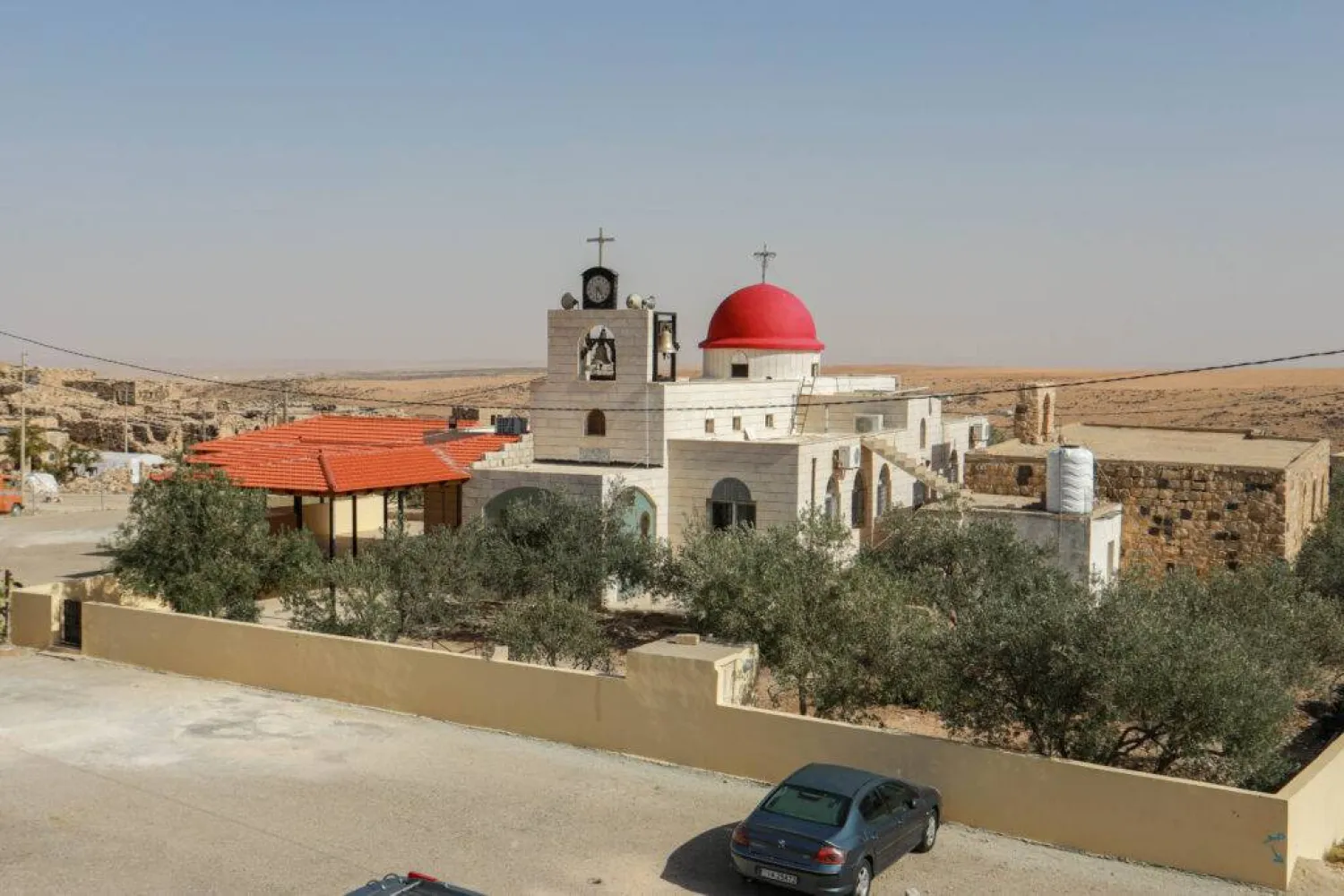
St. George Greek Orthodox Church (Official Directory of the Patriarchate’s Churches in Jordan)
TT

After Terrorist Attack, What Do We Know About Hamoud Church and Karak's Christian Community?

St. George Greek Orthodox Church (Official Directory of the Patriarchate’s Churches in Jordan)

A terrorist attack targeting mourners attending a funeral at St. George Greek Orthodox Church in Hamoud village, in southern Jordan's Karak Governorate, has drawn attention to one of the Kingdom's historic Christian communities and renewed interest in the church and its location.

Initial reports indicated that two gunmen got out of a vehicle and opened fire during the funeral, while Jordan's Public Security Directorate announced that it was pursuing the suspects.

Al-Mamlaka television reported Saturday that the death toll from the Karak church attack had risen to eight, while Jordan's Public Security Director said 40 people had been wounded.

The church is commonly referred to in media reports as Hamoud Church, after the village where it is located. Its official name honors St. Georgios, also known as St. George, and it is among the churches affiliated with the Greek Orthodox Patriarchate of Jerusalem in Jordan.

Karak Governorate holds an important place in Jordan's history and is home to Christian communities that have lived alongside the Muslim majority for generations. Churches belonging to different Christian denominations are found throughout the governorate.

The following is an overview of the church, its history and the Christian presence in Karak and Jordan.

Where Is Hamoud Church, and What Is Its Religious Significance?

St. George Greek Orthodox Church is located in Hamoud village in Karak Governorate, approximately 118 kilometers south of the capital, Amman.

According to the official directory of churches affiliated with the Greek Orthodox Patriarchate of Jerusalem, it is one of the patriarchate's churches in Jordan.

The church is named after St. Georgios, also known as St. George, who holds a prominent place in Eastern Christian tradition.

The church forms part of the Orthodox Christian presence in Karak Governorate, which is also home to churches belonging to other Christian denominations.

The Latin Patriarchate of Jerusalem notes that the governorate has Latin Catholic, Greek Catholic and Greek Orthodox communities, reflecting a Christian presence with deep historical roots.

Karak: A Long History of Christianity and Religious Coexistence

Karak Governorate is one of Jordan's regions with a historic Christian presence, dating back to the Byzantine era, when the area served as an episcopal center with several churches, according to a historical report published by the Latin Patriarchate of Jerusalem.

This Christian presence is not limited to Karak city, the governorate's administrative and historical center, but extends to several villages and towns, including Hamoud, Smakieh, Adir, Rabba and Qasr.

The governorate is home to Greek Orthodox, Latin Catholic and Greek Catholic churches, alongside mosques and other Islamic places of worship.

Over the years, the role of churches in Karak has extended beyond religious services to helping establish schools and health centers serving both Christians and Muslims, making them an integral part of the region's social and educational life.

What Is Karak's Population, and Where Are Its Christian Communities Concentrated?

Karak Governorate has a population of approximately 375,000, while estimates by Jordan's Department of Statistics put the figure at 395,400 at the end of 2025.

Historically, Karak has been home to several Christian families and clans, including the Hijazeen, Halasa and Akasheh, according to the Latin Patriarchate of Jerusalem's historical report.

The report notes that these families have formed part of the city's social fabric alongside Muslim clans.

Some Christian families are concentrated in particular neighborhoods, including the area known as the Christian Quarter in central Karak, where Christian and Muslim families have lived alongside one another for generations.

The governorate is characterized by a strong tribal identity and religious diversity.

Its social and religious diversity is reflected in the presence of Christian institutions and churches alongside mosques and other Islamic places of worship.

The World Council of Churches highlights the historical ties between Christians and Muslims in Jordan, emphasizing the importance of preserving places of worship and protecting freedom of religious practice.

Christians in Jordan: What Percentage of the Population Do They Represent, and Which Denominations Do They Belong To?

Christians constitute a religious minority in Jordan, accounting for an estimated 2 to 3 percent of the population, according to Jordan's Ministry of Tourism and Antiquities.

The Kingdom's Christians belong to several denominations, including Greek Orthodox, Catholic, Armenian Orthodox and Protestant communities, with churches located in different parts of the country.

Has Karak Experienced Similar Attacks Before?

Karak Governorate experienced a deadly terrorist attack in December 2016, claimed by ISIS, that targeted civilians and security forces.

The attack killed 10 people, including seven security personnel and a Canadian tourist, and wounded 34 others.

Four ISIS militants were also killed after barricading themselves inside the historic Karak Castle.

Reuters described the latest attack as a rare assault targeting Jordan's Christian minority.


Lebanon Slams Israeli Military Official’s Visit to School in South

Israeli military's Arabic-language spokesperson Ella Waweya in a screengrab from her visit to Debel. (Ella Waweya on X)
TT

Lebanon Slams Israeli Military Official’s Visit to School in South

Israeli military's Arabic-language spokesperson Ella Waweya in a screengrab from her visit to Debel. (Ella Waweya on X)

Lebanese officials have denounced a visit by an Israeli military spokesperson to a school in a Christian village in an Israeli-occupied area of southern Lebanon.

On Sunday, as Lebanon marked its Independence Day, the Israeli military's Arabic-language spokesperson Ella Waweya shared a video showing her outside a school in Debel and then standing in front of a classroom of children.

The village is located inside the occupied "security zone" that Israel declared after the latest war erupted with Hezbollah in March and which covers a strip of southern Lebanon along the border around 10 kilometers (six miles) deep.

It is among a number of Christian-majority villages near the frontier where many residents have refused to leave despite Israeli military orders to evacuate.

Cut off from the rest of Lebanon, they are largely dependent on humanitarian aid.

"During my last visit to south Lebanon, I was amazed by the beauty of the land and the villages which have paid a heavy price due to their exploitation... by a terrorist organization," Waweya said, referring to the Iran-backed Hezbollah group.

Lebanese Prime Minister Nawaf Salam later denounced Israel for "dragging students into a military and propaganda display".

"An occupying power has no right to exploit our children to embellish the image of its occupation or impose its dominance over our people in the south," he added.

Lebanese Education Minister Rima Karami condemned what she called an "attack on the Debel school and its students".

The Debel municipality said the visit took place around a month earlier "without any prior coordination with the school's administration".

Since the video's publication, the village and local officials have been targeted on social media with accusations of collaborating with Israel.

Such attacks are particularly incendiary in the area because Israel relied on local collaborators during its around two-decade-long occupation of southern Lebanon, which ended in 2000.

The municipality said that the choice by residents to remain was not "acceptance of the occupation" but rather "an expression of our attachment to our Lebanese land".

Residents "for long months have lived in exceptional and difficult conditions under the Israeli military presence," it said.

Hezbollah drew Lebanon into the Middle East war in March with rocket fire at Israel, which responded with massive airstrikes and a ground invasion.

Lebanon says Israeli attacks since then have killed more than 4,300 people.


War in Gaza Wreaks Environmental Catastrophe, Analysis Says

 Palestinians search for reusable items at a landfill in Deir al-Balah, central Gaza Strip, Friday, Nov. 20, 2026. (AP)
Palestinians search for reusable items at a landfill in Deir al-Balah, central Gaza Strip, Friday, Nov. 20, 2026. (AP)
TT

War in Gaza Wreaks Environmental Catastrophe, Analysis Says

 Palestinians search for reusable items at a landfill in Deir al-Balah, central Gaza Strip, Friday, Nov. 20, 2026. (AP)
Palestinians search for reusable items at a landfill in Deir al-Balah, central Gaza Strip, Friday, Nov. 20, 2026. (AP)

Israel’s military offensive in Gaza has unleashed an environmental catastrophe likely to impact Palestinians for decades, according to an analysis released Monday.

The military assault, launched in response to Hamas’ Oct. 7, 2023, attack, has strewn heavy metals, explosive residues, asbestos and biological contaminants across the entire territory, according to the analysis by Oxfam and the Conflict and Environment Observatory, a British nonprofit that studies the environmental impact of war.

Oxfam International Executive Director Amitabh Behar said Gaza's destruction “will have fundamentally degraded the environmental conditions necessary for human safety and survival.”

With Gaza’s infrastructure in ruins, mountains of trash tower over the tents. Some trash is burned, contributing to respiratory issues. Residents say they also suffer from skin diseases and pest infestations.

Nisreen Hassan, from Khan Younis, said no one is handling sanitation, leaving trash to accumulate for months.

She said children are especially susceptible to stomach ailments and other health problems stemming from pests contaminating food in people's tents.


Erdogan to Visit Libya for 1st Time in 15 Years for Türkiye-Africa Summit in December

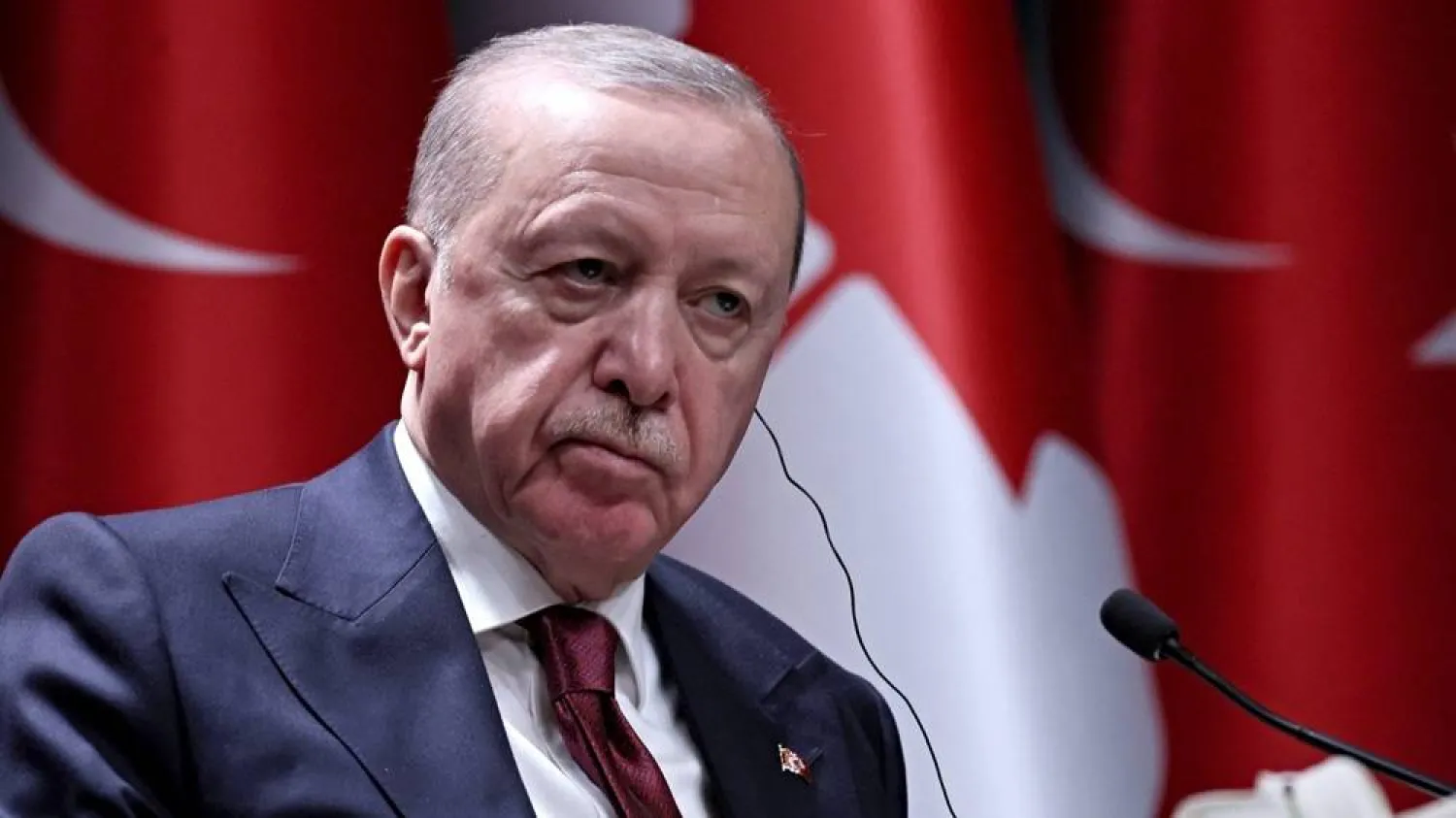
Turkish President Recep Tayyip Erdogan attends a joint press conference with Canadian Prime Minister Mark Carney in Ankara, October 22, 2026. (AFP)
TT

Erdogan to Visit Libya for 1st Time in 15 Years for Türkiye-Africa Summit in December

Turkish President Recep Tayyip Erdogan attends a joint press conference with Canadian Prime Minister Mark Carney in Ankara, October 22, 2026. (AFP)

Turkish President Recep Tayyip Erdogan will visit Libya next month for the first time in more than 15 years to attend the Türkiye-Africa Summit, scheduled to take place in Tripoli on December 8-9.

Turkish Foreign Minister Hakan Fidan announced the visit just hours after he and Turkish intelligence chief Ibrahim Kalin met with Abdulhamid Dbeibah, head of Libya’s Government of National Unity (GNU), in Istanbul on Saturday.

In a televised interview Saturday evening, the Turkish foreign minister described his talks with Dbeibah as “highly productive,” adding that the Libyan prime minister had expressed his anticipation of Erdogan’s visit.

Erdogan last visited Libya on September 16, 2011, when he was prime minister. He traveled to Tripoli and Benghazi following the fall of Moammar al-Gaddafi’s regime, meeting Mustafa Abdul Jalil, then head of the National Transitional Council, and Mahmoud Jibril, head of its executive office. Several cooperation agreements were signed during the visit.

Fidan described Erdogan as the key figure in defending western Libya and preventing the complete collapse of the GNU.

“During the war in Libya, we fought on one side, but we also established a comprehensive framework of high-level diplomacy and peacebuilding tactics to achieve peace and prevent another war,” he said.

The minister noted that Türkiye had since strengthened its ties with eastern Libya to a level approaching its relations with the west.

“We are now using our relations with both sides to unify the country,” he added.

Fidan stressed the importance of the Türkiye-Africa Summit, saying it would focus on strengthening the partnership between Türkiye and African countries across various sectors.

The summit will also address developments in Libya, including political efforts to reunify the country and hold elections.

Fidan recalled that Erdogan had discussed developments in Libya and efforts toward national reunification with Dbeibah during a meeting on the sidelines of the 31st Conference of the Parties to the UN Framework Convention on Climate Change (COP31) on November 12.

The Istanbul meeting between Fidan, Kalin and Dbeibah followed the Libyan prime minister’s visit to Egypt, where he met President Abdel Fattah al-Sisi.

Their discussions covered ways to strengthen bilateral relations, Libya’s political developments, efforts to achieve stability and regional issues of mutual concern.