Houthi Attacks on Taiz Leave Bloody Toll on Civilians

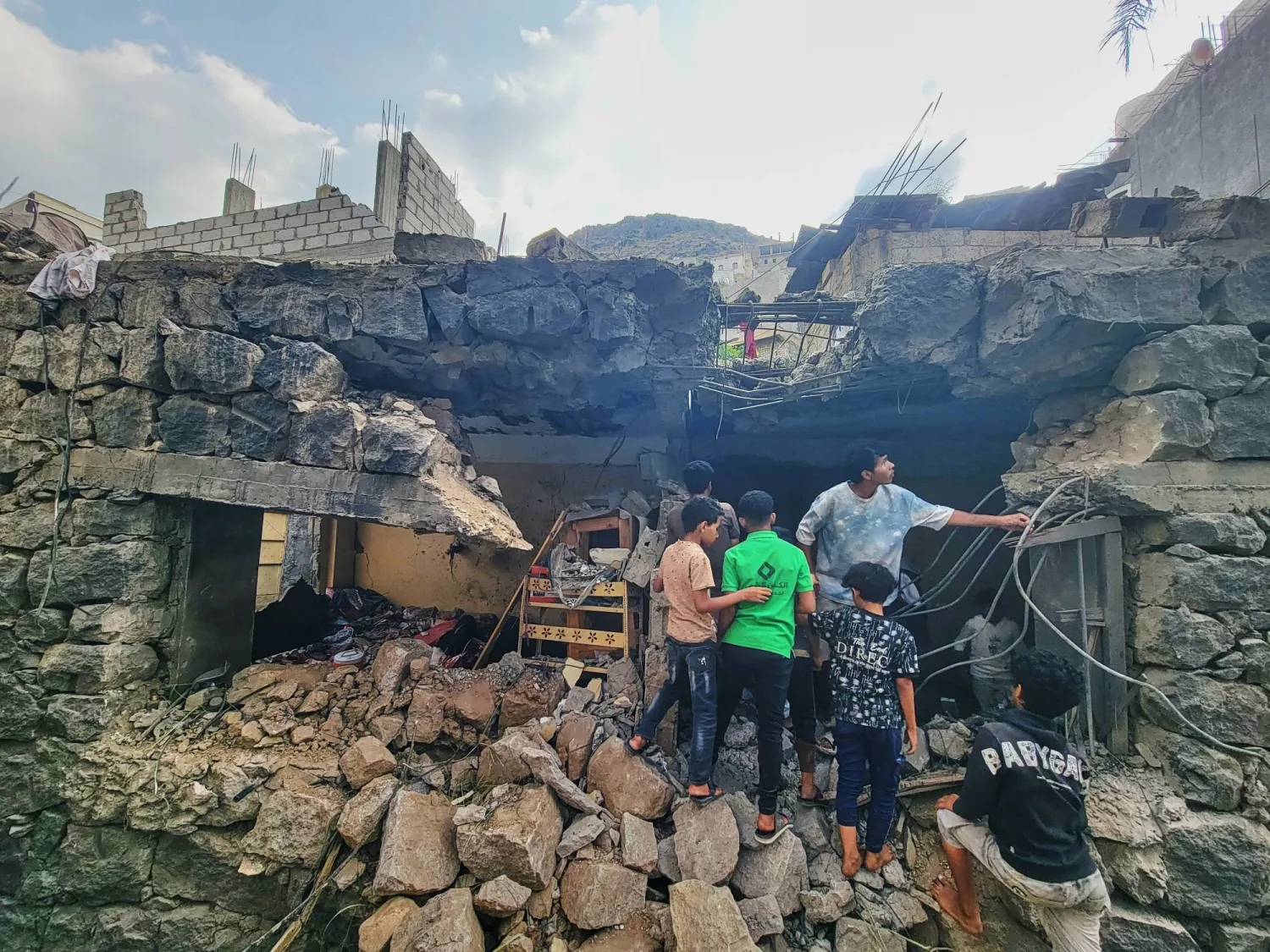
Residents walk amid debris from their homes after a missile strike in Seina, Taiz, Yemen, Tuesday, Oct. 20, 2026. (AP)
TT

Houthi Attacks on Taiz Leave Bloody Toll on Civilians

Residents walk amid debris from their homes after a missile strike in Seina, Taiz, Yemen, Tuesday, Oct. 20, 2026. (AP)

Yemen's Taiz governorate is facing a relentless Houthi military escalation that continues to deepen the suffering of its residents. Ongoing shelling targets residential neighborhoods and villages, while tightening restrictions choke civilian movement and block essential supplies.

Human rights reports documented hundreds of civilian casualties and abductions, and widespread damage to homes and vehicles.

The Yemeni Network for Rights and Freedoms documented 1,891 crimes and violations committed by the Iran-backed Houthi group against civilians and civilian objects in the governorate from September 1 to October 22.

This toll coincided with the network monitoring 21 additional crimes and violations within a 24-hour period, along with the firing of around 213 projectiles into residential areas.
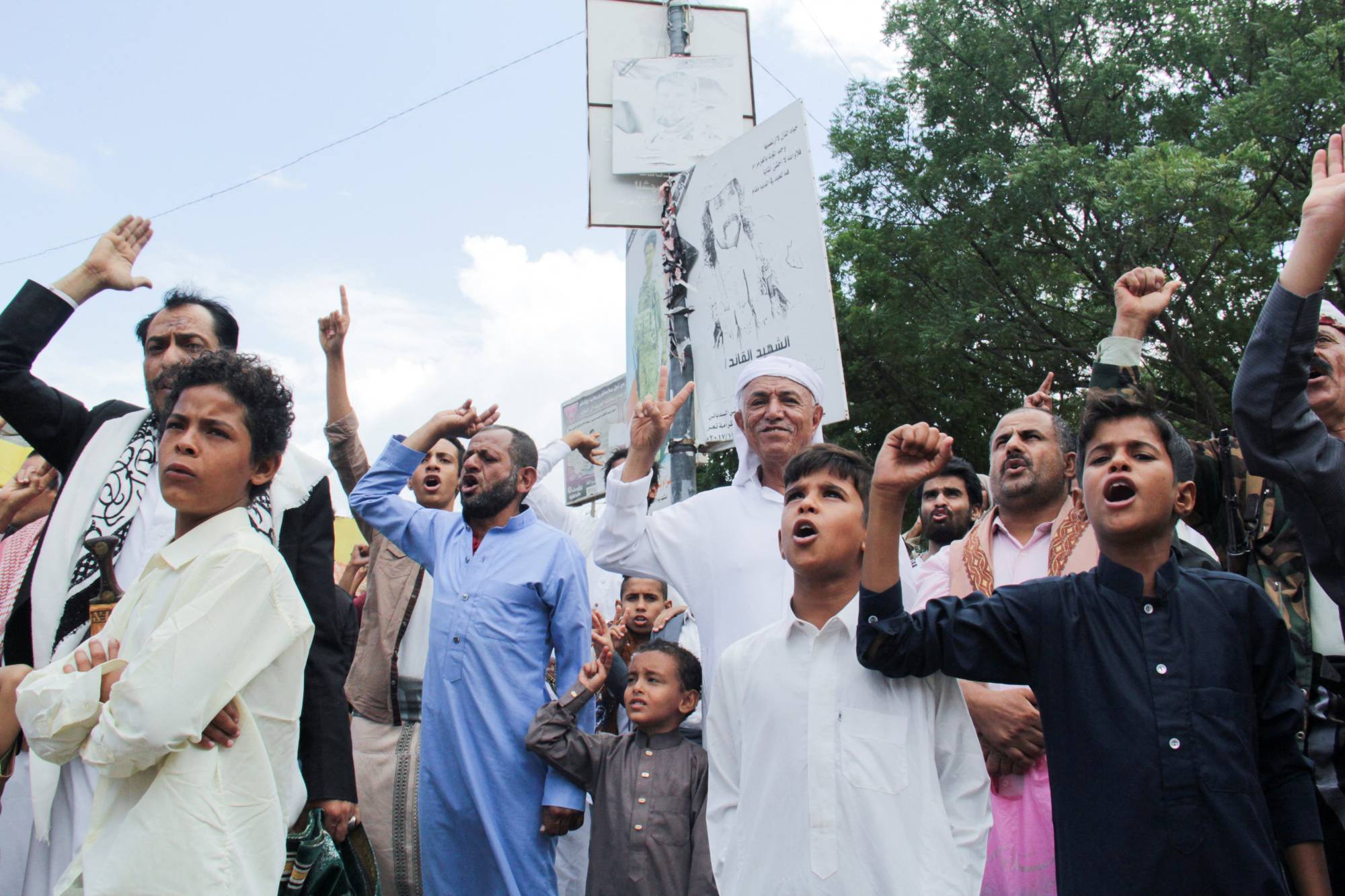
People chant slogans after they performed the Friday weekly prayer at the Freedom Square in the southwestern city of Taiz, Yemen October 23, 2026. (Reuters)

In its report, "Taiz... Bloody Invasion and Systematic Killing," the monitor said the violations resulted in the killing of 212 civilians, including 38 children - seven of whom were infants - and 27 women, as well as the wounding of 319 civilians, including 29 children and 46 women.

The report documented 23 cases of field executions, five massacres, and 314 instances of abduction and enforced disappearance, including 14 children held hostage to pressure their families. Additionally, 516 homes were raided in search of individuals suspected of being linked to government forces.
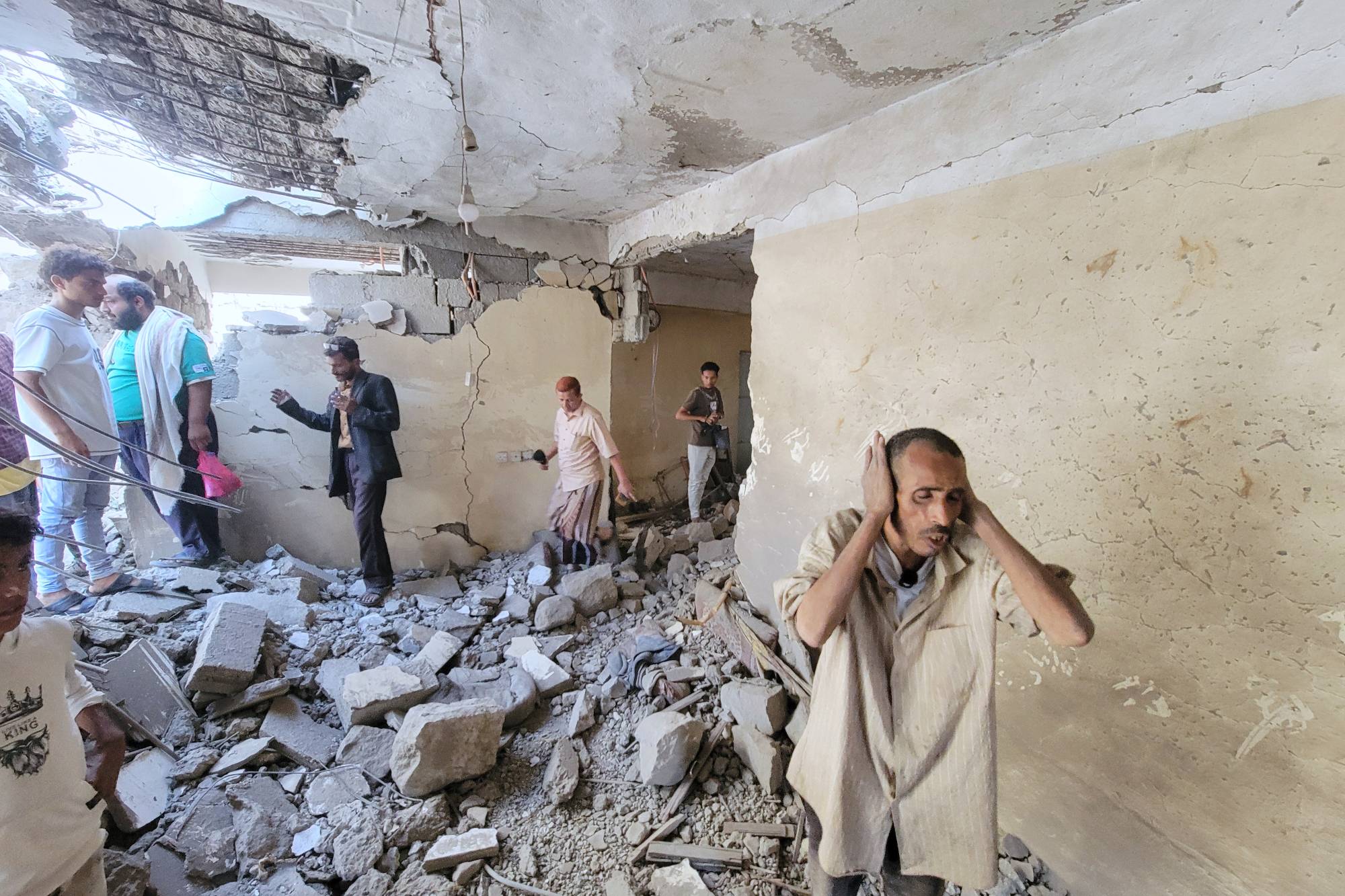
Residents walk on debris of their homes at Seina district in Taiz, Yemen, after a missile strike, Tuesday, Oct. 20, 2026. (AP)

Houthi attacks damaged 356 homes, including 98 that were completely destroyed, while three others were blown up.

According to the report, Houthi shelling and sniper fire extended to the villages of Kahlan and al-Shaqb, the old airport neighborhood.

The repercussions are not limited to casualties and destruction; the network said the Houthis fired around 9,876 projectiles during the period covered by its report, tightened the siege on the governorate since September 3, and established 26 illegal checkpoints and barriers.
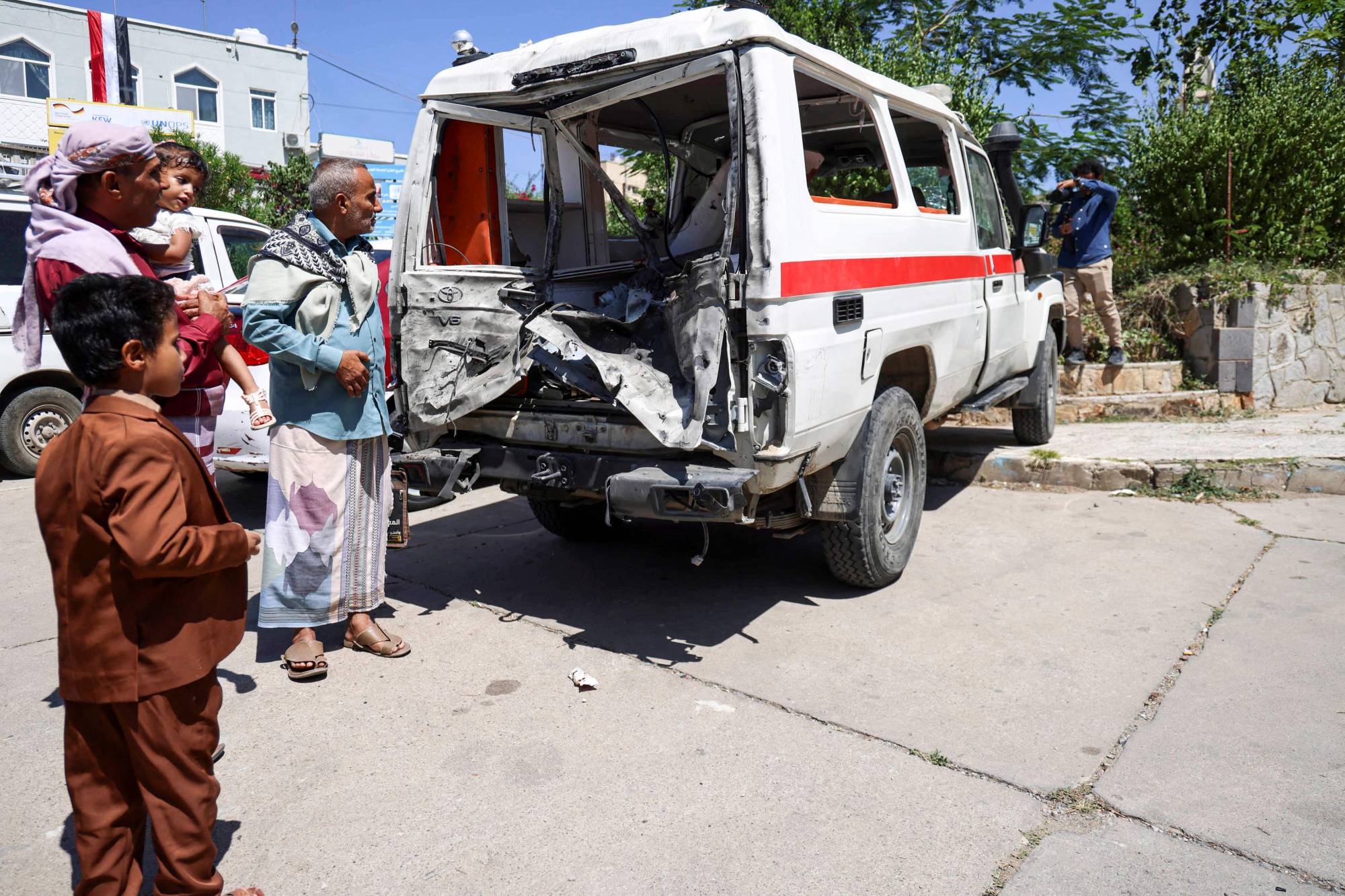
Yemeni people inspect a damaged ambulance in front of Al-Thawra General Hospital in Taiz on October 22, 2026. (AFP)

The report accused the group of obstructing the entry of food, medicine, fuel, oxygen cylinders, and drinking water, as well as blocking relief convoys and commercial supplies, including chronic disease medications and child vaccines.

It warned that blocking the fuel required to operate generators for hospitals, cancer treatment centers, and kidney dialysis units threatens patients' lives, noting that the escalation has caused the displacement of around 280,000 people from the governorate.

The network said the Houthis also turned five schools into operations rooms and detention centers.

It demanded that Taiz be declared a disaster city, calling for an end to the attacks, the lifting of the siege, the opening of roads, and guaranteed access to aid.


Syria Needs EU Support to Ensure Stability, Kallas Says

High Representative of the European Union for Foreign Affairs Kaja Kallas speaks prior to the Foreign Affairs Council meeting in Brussels, Belgium, 16 November 2026. (EPA)
TT

Syria Needs EU Support to Ensure Stability, Kallas Says

High Representative of the European Union for Foreign Affairs Kaja Kallas speaks prior to the Foreign Affairs Council meeting in Brussels, Belgium, 16 November 2026. (EPA)

European Union foreign ministers will discuss on Monday elevating their relationship with Syria as the war-torn country needs urgent support to ensure stability amid ‌escalating tensions ‌in the ‌region, ⁠the bloc's foreign policy ⁠chief said.

"We really see that Syria needs a lot of investments, to build ⁠up institutions and ‌its ‌reforms," Kaja Kallas ‌told reporters ahead of ‌a monthly foreign ministers meeting in Brussels.

"On the European side we ‌want to see Syrian refugees return but ⁠they ⁠need conditions to return. There's a lot we can do together because the stability of Syria is in our interest and the interest of region."


Jordan Bans Telegram App Over ‘Radicalization’ Claims

Jordanian military police stand guard outside Jordan's State Security Court in Amman, Jordan, November 15, 2026. (Reuters)
TT

Jordan Bans Telegram App Over ‘Radicalization’ Claims

Jordanian military police stand guard outside Jordan's State Security Court in Amman, Jordan, November 15, 2026. (Reuters)

Jordan announced a ban on the Telegram messaging app on Monday, citing concerns that it was being used to spread extremism, weeks after a deadly attack on a church.

"We announce the blocking of the Telegram app in Jordan, in the framework of efforts aiming to bolster digital security and protect users," the Jordanian security directorate said.

It said the move came "in the context of the commitment to protecting society and countering any uses that could contribute to and facilitate committing cyber crimes, threats, blackmail or spreading illegal content".

It also said it sought to counter "attempt to spread radicalization and extremism which affects national security".

The ban comes after the October 23 attack on a church in the southern Karak governorate that killed nine people and wounded dozens of others.

On Sunday, a court sentenced three men to death by hanging over the attack. Authorities described them as followers of a hardline extremist ideology.


Confrontation between Iraqi PM, Kataib Hezbollah Intensifies

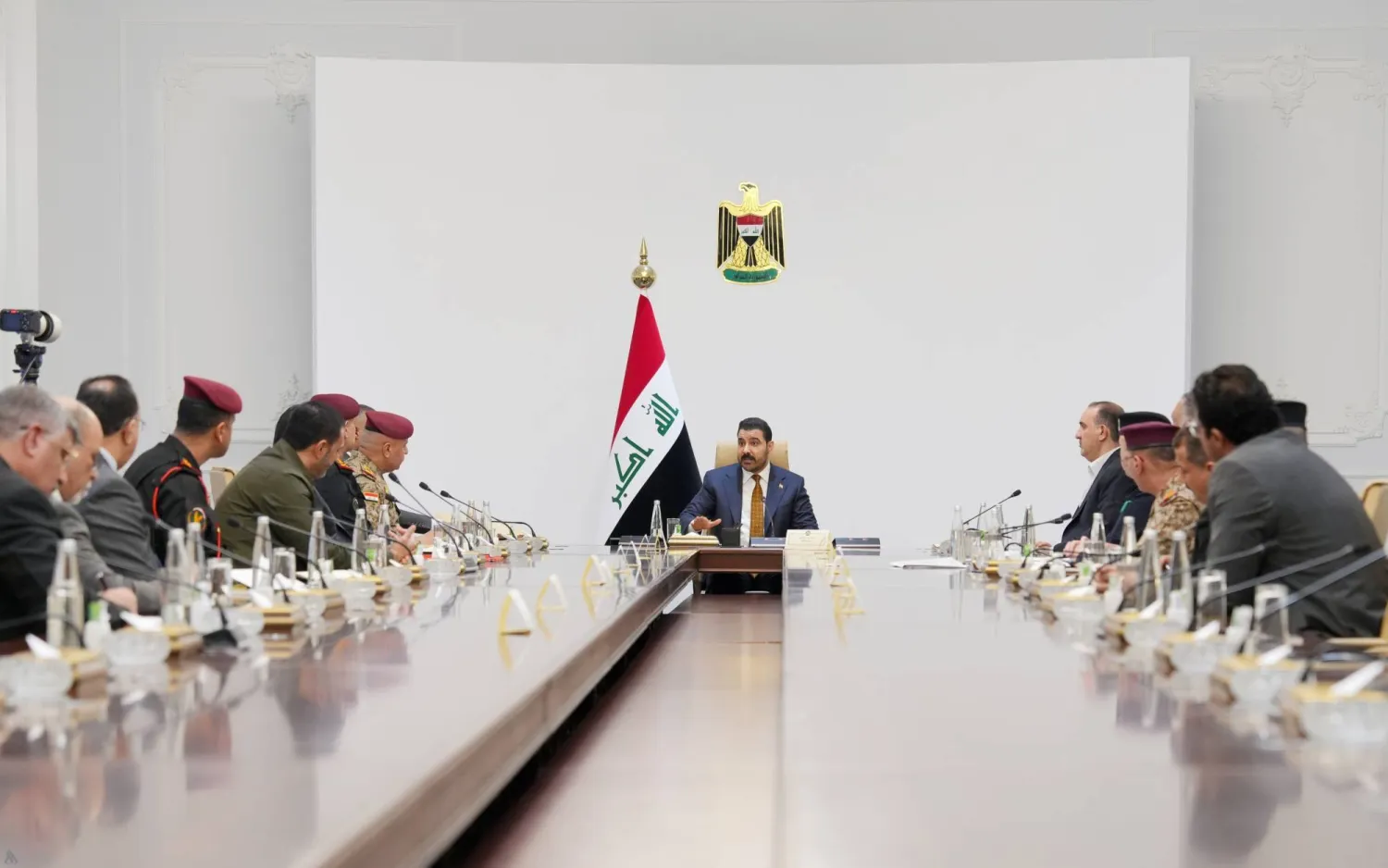
Iraqi PM Ali al-Zaidi chairs a security meeting on Sunday on oil smuggling in Jurf al-Sakhar. (INA)
TT

Confrontation between Iraqi PM, Kataib Hezbollah Intensifies

Iraqi PM Ali al-Zaidi chairs a security meeting on Sunday on oil smuggling in Jurf al-Sakhar. (INA)

Iraqi Prime Minister Ali al-Zaidi has won half the battle against armed factions by referring dozens of security and military officials across Babil province’s operational sectors to the judiciary for failing to halt oil smuggling in Jurf al-Sakhar, an area that has been held by the Kataib Hezbollah faction.

The government has made strides in its efforts to impose state monopoly over arms, including by offering government positions as incentives to several armed groups.

A number of those factions, including Kataib Hezbollah and Harakat al-Nujaba, have however refused to surrender their arms, arguing that they are “ideological” and tied to what is known as the “unity of arenas”, as promoted by Iran.

However, the sudden revelation that the armed faction, which has controlled Jurf al-Sakhar for years, was involved in smuggling oil passing near the area by puncturing pipelines has largely changed the equation.

The revelation was made after the security-political committee formed by al-Zaidi managed to enter the previously off-limits area to the authorities. There, it uncovered oil smuggling operations involving tanker trucks.

The development prompted al-Zaidi, who is also Commander-in-Chief of the Armed Forces, to issue several decisions viewed by experts as paving the way, for the first time, for a real confrontation with the armed factions to allow military units to enter the area.

According to a statement from the Office of the Commander-in-Chief of the Armed Forces, al-Zaidi chaired an emergency security meeting on Saturday evening to review the findings of a committee investigating oil smuggling in Jurf al-Sakhar.

The committee confirmed the accuracy of Federal Intelligence and Investigations Agency reports detailing oil smuggling operations, unauthorized refineries, and administrative irregularities.

“In light of the investigation’s findings, the Commander-in-Chief of the Armed Forces directed that all suspects involved in the oil smuggling operations be referred to the judiciary and that legal measures be taken against them,” it added.

He also decided to relieve the following officials in Babil of their duties: the police chief, the director of northern Babil police, the director of Babil intelligence and counterterrorism at the Ministry of Interior, the director of national security in Babil, the director of intelligence and security for Babil province at the Ministry of Defense, the director of Babil intelligence, the commander of the Popular Mobilization Forces (PMF) in Babil, the commander of the Energy Police’s Sixth Brigade at the Ministry of Interior, and the director of the Oil Pipelines Company at the Ministry of Oil.

“The Commander-in-Chief directed that operations commanders, provincial police chiefs, and directors of security and intelligence agencies bear full responsibility for any oil smuggling incidents occurring within their sectors of responsibility.”

He stressed the need to tighten oversight and security measures to prevent these practices and hold those negligent accountable, stressing that “not a single inch of Iraq, from Zakho to Basra, will remain a place where smuggling is practiced.”

Legal expert Ali al-Tamimi told Asharq Al-Awsat that “Iraq today faces the most dangerous threat to its sovereignty: weapons outside state control.”

He said the PM’s measures in Jurf al-Sakhar sparked widespread legal debate even though the moves align with the constitution.

“These referrals and dismissals are grounded in Article 78, which designates the prime minister as the direct executive responsible for the state's general policy and commander-in-chief of the armed forces,” he remarked.

He added: “Individuals who sabotage oil infrastructure are prosecuted as terrorists under the Anti-Terrorism Law and could gave penalties up to the death penalty.”