Dar Global CEO: Now Is the Best Time to Invest in Gulf Real Estate

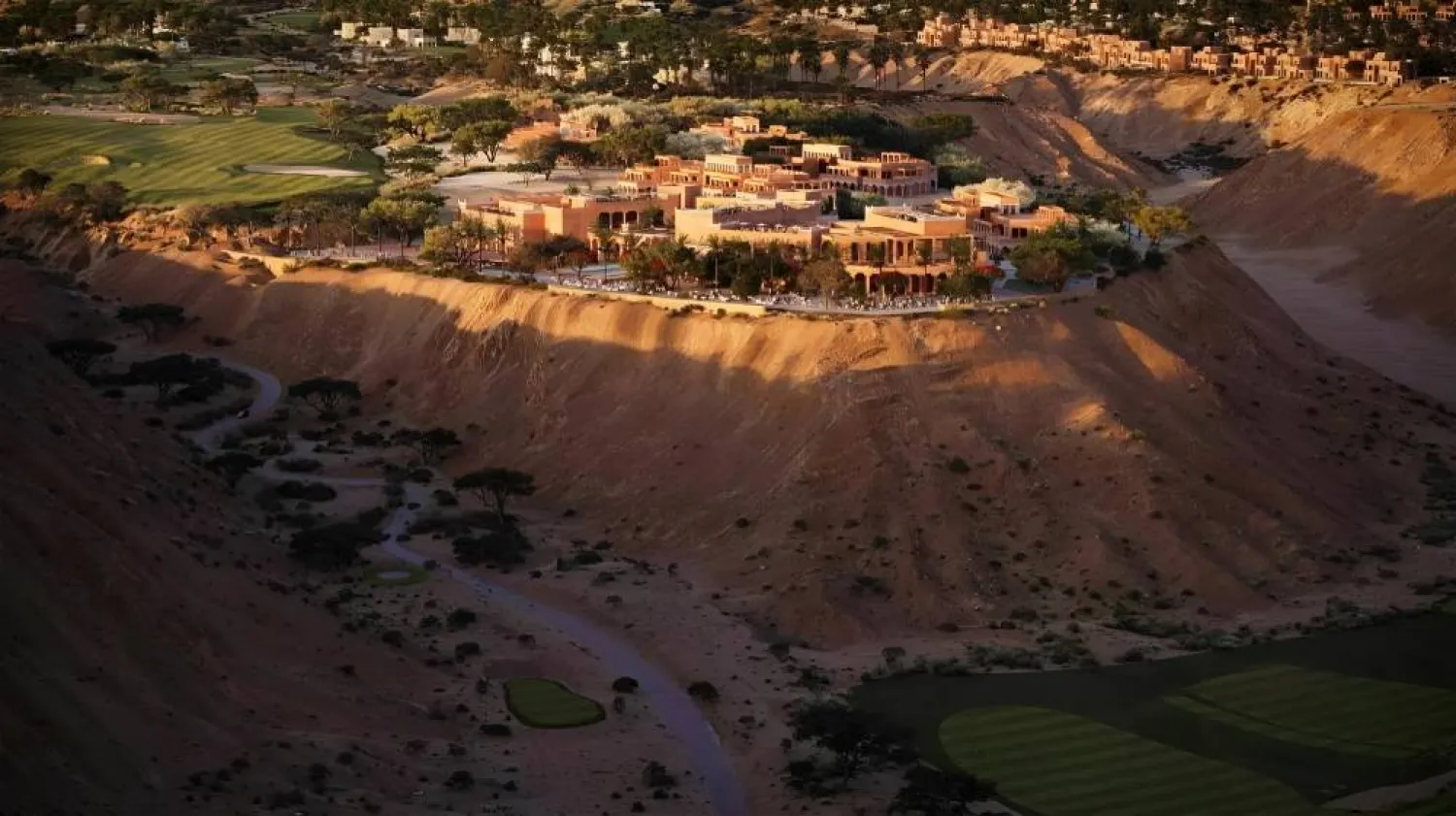
An artist’s rendering of the Wadi Safar project in Diriyah, Saudi Arabia (Asharq Al-Awsat). 
TT

Dar Global CEO: Now Is the Best Time to Invest in Gulf Real Estate

An artist’s rendering of the Wadi Safar project in Diriyah, Saudi Arabia (Asharq Al-Awsat). 

Dar Global aims to leverage its investor network spanning nearly 120 nationalities to attract more foreign capital to Saudi Arabia’s property market, CEO Ziad El Chaar told Asharq Al-Awsat.

The London-listed developer has attracted buyers from 57 foreign nationalities to a Jeddah project and plans three more Saudi developments — two in Diriyah and one in Jeddah — in partnership with new international brands. Saudi Arabia now represents roughly half its portfolio.

Dar Global’s net profit surged 149% in the first half of 2026, while revenue rose 66%, driven by earlier sales and construction progress.

El Chaar explained that property sales are reflected in earnings as developments advance. Now in its fifth year, the company has pursued geographic diversification to offset slowdowns in individual markets.

Earnings were partly supported by a Riyadh project launched about 18 months ago with Mouawad Jewelry and an Aston Martin-branded development in Ras Al Khaimah.

Saudi Arabia Drives Growth

Expansion into Saudi Arabia has helped double Dar Global’s portfolio development value, particularly through major projects in Diriyah and Jeddah.

Its Wadi Safar development in Diriyah spans approximately 3 million square meters and includes around 500 palaces in a gated community overlooking golf courses, green spaces and valleys.

Prices range from SAR 15 million ($4 million) to SAR 160 million ($42.6 million).

Despite weakness in parts of the regional property market, the project has recorded strong sales among Saudi buyers, reflecting its exclusivity, according to El Chaar.

In Jeddah, a development on King Abdulaziz Road has attracted buyers from 58 nationalities, including Saudis.

“We are no longer just property developers. We have become part of attracting foreign investment to the Kingdom,” he declared.

Reducing Execution Risks

To address a shortage of available contractors, many of whom are occupied with major government projects, Dar Global established a contracting company and acquired a project management firm.

The moves brought project management, supervision and cost control in-house.

“With major expansion, you need to keep the development chain in your own hands to reduce execution risks,” El Chaar explained.

The company finances projects through equity, local and international bank loans, off-plan sales and partnerships with landowners, developers and investors.

These arrangements support expansion without substantial land purchases, while its London listing provides governance and transparency that strengthen partner confidence.

Company equity is approaching $500 million, with return on equity reaching approximately 25% in 2025.

Partnerships with international brands, including Trump, Aston Martin, Lamborghini, Fendi and Versace, remain central to its strategy.

El Chaar emphasized their global marketing reach and the confidence they inspire through rigorous checks before allowing developers to use their names.

Costs and Supply Chains

Rising construction costs and supply chain disruptions continue to pressure the sector, particularly fluctuations in energy, steel, concrete and transportation prices.

Projects in Saudi Arabia, Oman and Qatar have experienced no major disruptions, although Dubai developments faced some delays before alternative materials were sourced, including through Jeddah.

Most projects remain on schedule, but certain major construction contracts for more complex developments have moved from the third to the fourth quarter, with some potentially extending into early 2027.

Customer delivery commitments remain on track, El Chaar maintained.

The company plans launches in Diriyah in October and November, followed by Jeddah in December.

He ruled out a Saudi stock market listing for now, citing possible duplication with its London listing, but disclosed plans to issue additional shares in London when market conditions improve.

Gulf Investment Outlook

El Chaar argued that geopolitical developments should not obscure the Gulf’s long-term property fundamentals.

“When I speak to investors, I don’t talk about Riyadh alone, or Dubai or Ras Al Khaimah. I talk about the Gulf,” he remarked.

Unlike some European and Asian markets raising taxes or restricting foreign investors, Gulf countries are easing property ownership, residency and banking requirements to attract capital.

Annual population growth of 2.5% to 3% in some regional markets also supports demand, he observed.

Saudi Arabia’s foreign ownership reforms represent a major turning point.

“We are not talking about opening a small market, but a market in a G20 economy,” he emphasized.

El Chaar estimated annual Saudi domestic demand at around $600 billion, arguing that its scale provides stability even before foreign investors enter.

He also highlighted economic growth, stronger governance, transparency and major initiatives such as Expo 2030 as long-term attractions.

Saudi Arabia accounts for approximately 50% of Dar Global’s portfolio, while the Gulf represents around 80%.

Beyond substantial investments in southern Spain, the company plans to expand in Britain, particularly London, and Spain, while exploring opportunities in Greece, provided its tax environment remains attractive to foreign investors.

El Chaar considers Saudi Arabia and the wider Gulf among the most appealing long-term destinations for domestic and international property investment.


Carney Says US Tariffs Could Turn Canada’s Carmakers to China

Canada's Prime Minister Mark Carney speaks to reporters as he arrives for Question Period ahead of the tabling of the federal budget on Parliament Hill in Ottawa, Ontario, Canada, November 5, 2026. (Reuters)
TT

Carney Says US Tariffs Could Turn Canada’s Carmakers to China

Canada's Prime Minister Mark Carney speaks to reporters as he arrives for Question Period ahead of the tabling of the federal budget on Parliament Hill in Ottawa, Ontario, Canada, November 5, 2026. (Reuters)

Canadian Prime Minister Mark Carney said on Monday his country's carmakers could turn to China if the North American auto industry becomes less integrated due to US President Donald Trump's tariff hikes.

"We have the best auto workers in the world, and we want them fully deployed... in an integrated North American market," Carney told reporters ahead of a meeting with Chinese President Xi Jinping at this week's APEC summit in southern China.

"That market has become less integrated because of US trade actions."

Carney said at a summit of French-speaking nations in Cambodia the current system was "the best result for Canadian workers, for Canadian business, and for US consumers".

"It's part of the trade negotiations, as you know -- depending on where that settles, there'll be other options, European options, Asian options, of course, Chinese, Japanese," he added.

Trump imposed punishing tariffs on Canada's auto sector last year, and has repeatedly said he wants autos sold in the United States to be made exclusively by American workers.

Carney walked away from trade talks with Trump in August, but Ottawa and Washington have sounded optimistic about prospects for a deal in recent weeks.

Carney said looking to China was "not leverage, but action, reaction".


China’s Economy Falters as Factory Output, Retail Sales Undershoot Expectations

Construction workers build a new residential condominium in Beijing, China, 16 November 2026. (EPA)
TT

China’s Economy Falters as Factory Output, Retail Sales Undershoot Expectations

Construction workers build a new residential condominium in Beijing, China, 16 November 2026. (EPA)

China's economy showed fresh signs of sluggishness in October as factory production slowed and consumption remained weak, calling into question how long the world's second-largest economy can rely on exports to underpin growth.

An AI-driven export boom has powered China's economic growth this year and looks set to shelter overall growth from external and domestic headwinds into 2027, but slowing momentum in October laid bare the drag from soft demand at home.

Weaker-than-expected October data is "a worrying start" for the fourth quarter, said Lynn Song, ING's chief economist for Greater China, adding that "the domestic economy at large would benefit from more policy support."

Industrial output in October expanded 4.8% from a year earlier, National Bureau of Statistics (NBS) data showed on Monday. The pace missed Reuters poll expectations for growth of 5.3%, and compared with a 5.5% rise in September.

Robust external demand for AI-related products and cars helped pull the Chinese economy out of a second-quarter slowdown. With ‌third-quarter GDP growth ‌running at 4.5% on year, analysts believe Beijing remains on target to reach 4.5%-5.0% without the ‌need ⁠for significant additional ⁠stimulus.

"No new stimulus measures are expected to be introduced for the remainder of the year," said Zhaopeng Xing, senior China strategist at ANZ.

"Data for the single month of October are unlikely to alter the overall growth trajectory for the year; we continue to project that annual GDP growth will remain above 4.5%."

High-end and intelligent manufacturing contributed to more than half of industrial output growth in the first 10 months, NBS spokesperson Fu Linghui told a press briefing.

Strong demand for high-tech products masked the weaknesses in more traditional, domestically oriented industries, and may prolong or even deepen imbalances in China's growth model as resilient manufacturing and exports lessen pressure on policymakers to shore up domestic consumption.

Trade data last ⁠week showed goods exports soared in October as the global AI infrastructure buildout continued to ‌elevate sales of high-tech goods.

However, an official survey for factory activity indicated that sentiment ‌faltered among manufacturers in October compared with the previous month as they reported worse conditions in new orders and new export orders.

LACKLUSTER DOMESTIC CONSUMPTION

A ‌soft labor market and a years-long property market slump that has diminished the value of homeowners' assets continued to curb consumer ‌spending.

Retail sales, a gauge that measures goods consumption and catering revenue, edged up 0.4% year on year in October after growing 1.1% the previous month. Economists polled by Reuters had expected a 0.8% increase.

Services retail sales grew 4.9% in the first 10 months compared with the same period last year, narrowing from 5% growth in the first three quarters, NBS data showed.

The underwhelming figures are more worrying considering that October consumption should have received ‌a boost from a seven-day holiday and the month-long Singles Day shopping festival spanning October and November.

"The persistently soft consumer confidence remains the main issue preventing a consumption recovery, and a ⁠more effective policy push must address ⁠this," ING's Song said.

China's stocks were slightly lower by the midday break on Monday, dragged by AI hardware shares as worries over the durability of the AI rally soured sentiment, while the yuan held steady.

NBS spokesperson Wang Guanhua said exports would continue to underpin growth and expressed confidence that stronger policy support and improving conditions for high-quality development would help China meet its annual growth target despite lingering economic challenges.

Separate data on Monday underscored China's prolonged property downturn, as new home prices fell further in October from the previous month and property investment tumbled 21.6% in January-October from a year earlier.

The 8.1% decline in fixed-asset investment in the January-to-October period widened from the 7.2% drop in the first nine months despite government efforts to speed up funding for infrastructure projects. The drop was worse than a forecast 7.0% decrease.

The surveyed urban unemployment rate dipped to 5.1% from 5.2% in September.

Beijing has in recent months introduced fresh support, including measures for steering cheaper credit into a range of sectors including infrastructure and technology, as well as expanding support for home buyers.

"In 2027, policymakers are likely to continue doing just enough to meet the growth target, with 4.5% likely to remain the lower bound," wrote Macquarie analysts Larry Hu and Yuxiao Zhang.

"As a result, the scale of stimulus, which determines China's domestic demand, will depend on the extent of the export slowdown."


Gold Hits Over One-Year Low as Firm Dollar, Fed Outlook Weigh

UK gold bullion bars are stacked at Baird & Co in Hatton Garden in London, Britain, October 8, 2025. (Reuters)
TT

Gold Hits Over One-Year Low as Firm Dollar, Fed Outlook Weigh

UK gold bullion bars are stacked at Baird & Co in Hatton Garden in London, Britain, October 8, 2025. (Reuters)

Gold prices fell to their lowest level in more than a year on Monday, weighed down by a firmer US dollar, while investors assessed hawkish signals from Federal Reserve officials and looked ahead to remarks from Fed Chair Kevin Warsh for clues on the interest-rate path.

Spot gold slid 1% to $3,840.52 per ounce by ‌0641 GMT, after touching ‌its lowest level since October 2025 earlier ‌in the ⁠session. US gold ⁠futures for December delivery dropped 1.1% to $3,843.60.

"Gold is still effectively swimming against the tide of a stronger dollar, elevated Treasury yields and firm expectations of a December Fed rate hike. At current levels, gold looks neutral to mildly bearish," said Tim Waterer, chief market analyst at KCM Trade.

The US dollar held near its highest level since April ⁠2025, making greenback-priced bullion more expensive for holders of other ‌currencies.

Kansas City Fed President Jeff ‌Schmid said on Sunday that inflation was still "running too hot" and that the ‌central bank had "some work to do" to bring price pressures ‌under control.

Fed Vice Chair Philip Jefferson said on Friday he was taking his policy cues from inflation, remarks that suggested support for further rate hikes.

Markets see a 92% chance of a 25-basis-point rate hike in December, while ‌the probability of a larger 50-basis-point move is priced at 8%, according to CME's FedWatch tool.

Higher interest ⁠rates increase ⁠the opportunity cost of holding non-yielding bullion, reducing its appeal to investors.

Investors now await comments from Warsh later in the day and minutes of the October Federal Open Market Committee meeting, due on Wednesday.

"A more hawkish tone would reinforce the current headwinds for gold, while any signs of caution around the strength of the economy could offer some relief," Waterer said.

Elsewhere, research published on Friday forecast a 5% fall in global silver demand in 2026, citing weaker jewellery demand and lower use in solar cells as elevated prices accelerate substitution.

Among other metals, spot silver slipped 3% to $47.26 per ounce, platinum dropped 1.1% to $1,477.08 and palladium fell 1.8% to $982.33.