


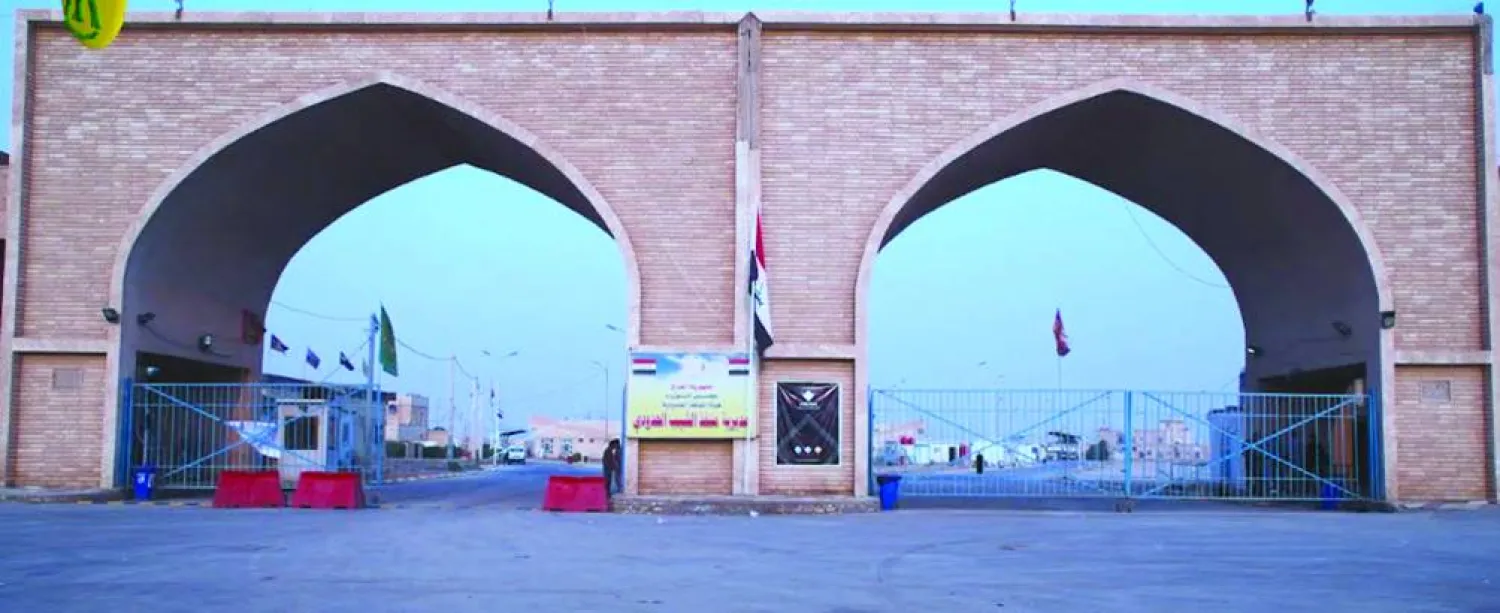

Iraq’s closure of the Al-Sheeb border crossing with Iran has triggered protests in the southern Maysan province and heightened tensions with Tehran, as Iran-aligned armed factions accuse Washington of interfering in Baghdad’s internal affairs.
Dozens of protesters blocked the main road leading to oil companies in Maysan on Sunday, demanding that the crossing reopen.
According to Shafaq News, demonstrators shut down the vital Bazargan road amid a heavy security deployment.
Maysan Provincial Council Chairman Mustafa Duaier al-Mohammadawi gave Baghdad until Thursday to reverse the decision, threatening civil disobedience, further roadblocks and even Maysan’s separation from Iraq.
The closure has disrupted trade with Iran, driving up fruit and vegetable prices in local markets, Shafaq News reported.
The Iraqi government ordered the crossing closed indefinitely on October 20, citing incomplete technical and development requirements.
Government spokesman Haider al-Aboudi told the Iraqi News Agency that the suspension would allow improvements to technical and logistical readiness, while other crossings continued facilitating trade with Iran.
Tehran objected, with its Interior Ministry maintaining that Baghdad had provided no advance notice.
The Iranian Embassy also condemned remarks by Abdul Amir Taiban, adviser to Prime Minister Ali al-Zaidi on tribal and marshland affairs, who linked the Al-Sheeb and Shalamsheh crossings to drug and counterfeit currency smuggling from Iran.
Rejecting what it called “false allegations,” the embassy urged Iraqi authorities to respond to statements damaging bilateral relations.
Baghdad has neither publicly responded to the embassy nor reversed the closure.
Influencing the govt
Iran-aligned Iraqi armed factions accused the United States of influencing government decisions concerning airports and border crossings with Iran.
They claimed to have documented 171 violations of Iraqi airspace by US fighter and reconnaissance aircraft between September 30 and October 23.
Describing the flights as violations of sovereignty and bilateral agreements, the groups demanded clarification from Baghdad about its understandings with Washington.
They also questioned the independence of Iraqi decision-making, linking the alleged incursions to border and airport restrictions.
The statement provided no locations or aircraft details, and no independent evidence was presented to substantiate allegations of US interference.
Fresh test
The dispute comes amid fears of a wider confrontation between the United States and Israel on one side and Iran on the other.
Baghdad previously announced understandings brokered by mediators from the Shiite Coordination Framework with armed factions refusing to surrender their weapons.
An initial truce, lasting until the end of 2026, commits the groups to refraining from attacks on US interests in Iraq and neighboring countries.
A second arrangement, running until June 2027, concerns disarmament and participation in the political process.
However, the factions’ latest accusations and the Al-Nujaba Movement’s rejection of political participation in exchange for surrendering its weapons have raised doubts about the agreements’ durability.
The government has not clarified whether the truce remains intact.
The Al-Sheeb dispute now extends beyond the technical reasons cited by Baghdad, combining local economic grievances, Iranian objections and pressure from armed factions.


