Indonesia Sends Oxygen Bus to Aid Residents Choking on Forest Fire Haze

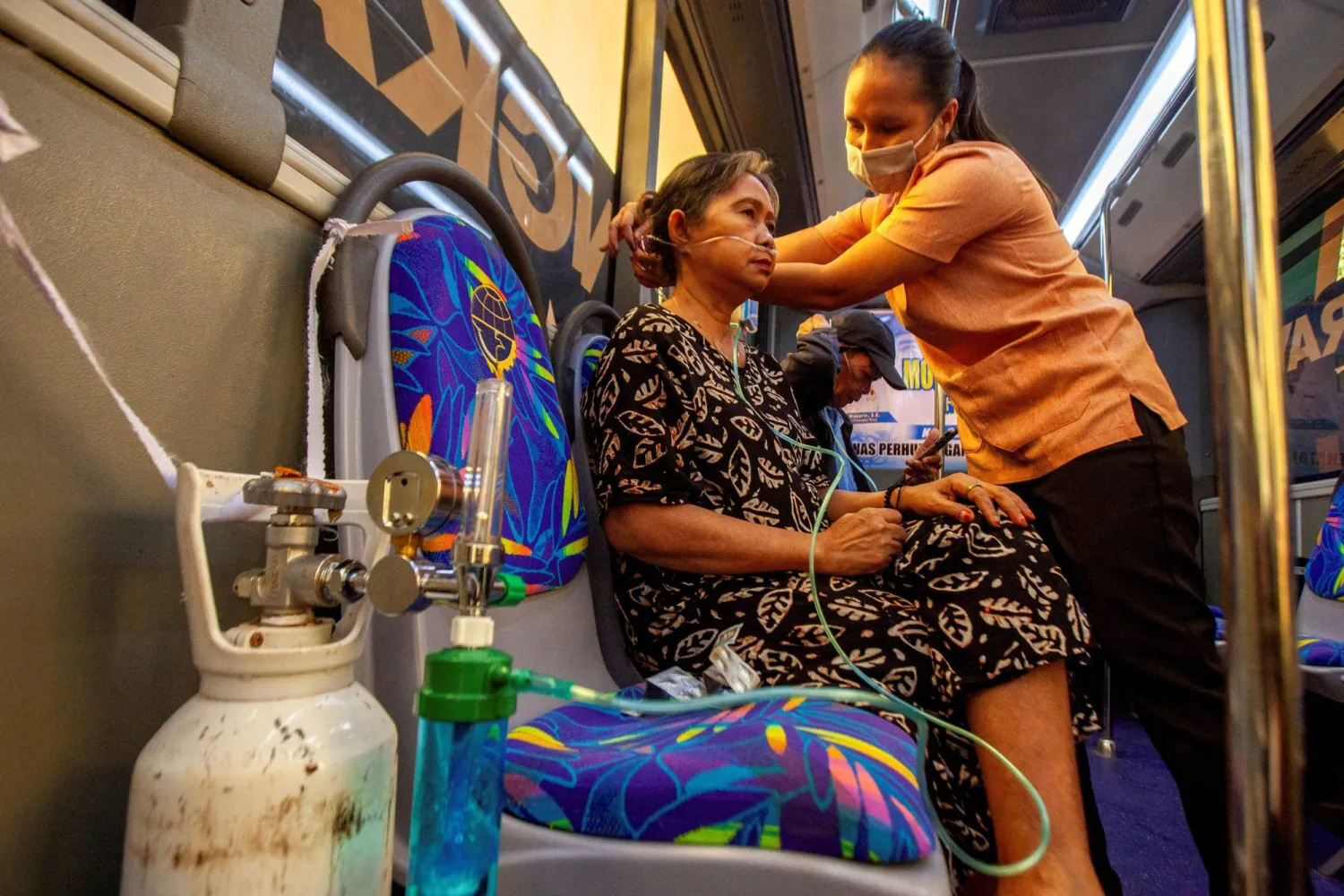
FILE PHOTO: A resident receives oxygen from a free mobile oxygen bus deployed by the city government amid haze from wildfires in Palangka Raya, Central Kalimantan province, Indonesia, October 23, 2026. REUTERS/Arief Rahman Septian Prathama/File Photo
TT

Indonesia Sends Oxygen Bus to Aid Residents Choking on Forest Fire Haze

FILE PHOTO: A resident receives oxygen from a free mobile oxygen bus deployed by the city government amid haze from wildfires in Palangka Raya, Central Kalimantan province, Indonesia, October 23, 2026. REUTERS/Arief Rahman Septian Prathama/File Photo

A bus fitted out with oxygen tanks is providing a sanctuary in a city on Indonesia's Borneo island where people are choking from forest-fire-induced haze and the blazes show no sign of letting up.

Indonesia regularly battles seasonal forest fires, predominantly on Sumatra and Borneo islands, but this year the infernos are the most intense in more than a decade. An intense El Niño weather phenomenon has driven up temperatures, leaving the country's vast forests and peatlands more vulnerable to fires that have turned skies orange across Indonesia, Malaysia and Singapore.

As respiratory illnesses increased in the Central Kalimantan city of ⁠Palangka Raya, the ⁠local government provided an 'oxygen bus' replete with oxygen tanks and medical professionals who offer residents a chance to be hooked up to a small oxygen tube around their nose for 5 to 10 minutes at a time.

"The service is intended to help people access oxygen, particularly those experiencing respiratory problems or who need oxygen ⁠support amid unhealthy air quality conditions," the Central Kalimantan provincial health department said on Instagram this week.

Indonesia's air pollution index has shown some areas of Borneo and Sumatra registering pollution levels of over 1,000, with readings of 300 or more already categorized as hazardous.

Respiratory illnesses linked to the fires have risen, with about 350,000 cases from August to October 25, the health ministry said. Central Kalimantan reported about 31,000 cases as of October 25.

"This is a disaster from nature and there is not much we can do," ⁠Oktawina, 44, ⁠who like many Indonesians goes by one name, said with an oxygen tube hooked to her nose.

Medical staff on the white-and-blue bus recorded patients' details and administered oxygen to residents reporting breathing difficulties. One of them, Yuda, said most residents who came to the bus coughing or had trouble breathing.

Purnasari, 31, another patient on the bus, said: "If I've been out of the house lately I feel tightness and coughing ... because this morning the thick yellowish smoke so my breathing feels tight."

Hundreds of students protested at the office of the provincial governor last week demanding a greater response to the fires, local news website Kompas reported.


Scientists Report Strong New Evidence that Specially Bred Mosquitoes Can Fend Off Dengue

FILE - A mosquito feeds on a technician at the Salt Lake City Mosquito Abatement District on July 26, 2023, in Salt Lake City. (AP Photo/Rick Bowmer, File)
TT

Scientists Report Strong New Evidence that Specially Bred Mosquitoes Can Fend Off Dengue

FILE - A mosquito feeds on a technician at the Salt Lake City Mosquito Abatement District on July 26, 2023, in Salt Lake City. (AP Photo/Rick Bowmer, File)

Children who lived in Brazilian neighborhoods buzzing with a special kind of mosquito were far less likely to catch dengue or another worrisome virus, chikungunya, researchers reported Saturday.

The major study of more than 5,700 children in one of the world’s dengue hot spots offers new evidence that breeding mosquitoes unable to transmit these viruses can be a viable strategy rather than solely relying on pesticides and trying to avoid getting bitten.

In neighborhoods populated by these so-called Wolbachia-carrying mosquitoes, researchers found about a 69% reduction in dengue and chikungunya infections in schoolchildren compared to similar neighborhoods — an effect sustained even during Brazil’s severe 2024 dengue outbreak, said Dr. Sri Edupuganti of Emory University, part of the international research team.

According to The Associated Press, the researchers reported the findings at a meeting of the American Society of Tropical Medicine and Hygiene.

“This is really exciting,” said Dr. David Hamer, a global health expert at Boston University who wasn’t involved with the Brazilian study. He predicts that pairing more use of these Wolbachia mosquitoes with existing steps to fight mosquito-borne disease could “knock dengue down to much lower levels” in many places.

The latest research comes as Florida grapples with an unusually large outbreak of the virus, what appears to be the biggest in any US state since at least the 1940s.

Usually in the continental US, dengue is found mostly in people who traveled internationally. But as of Friday, Florida health officials had tallied more than 650 locally acquired cases, about three-quarters of them in Hillsborough County, home to Tampa.

Outside the US, the nonprofit World Mosquito Program has pioneered the Wolbachia strategy.

How it works: Scientists breed mosquitoes to carry a kind of bacteria called Wolbachia. It is harmless to people and common in many insects, although not dengue-carrying Aedes aegypti mosquitoes.

The bacteria dramatically reduce the mosquitoes’ ability to transmit certain viruses. Female mosquitoes spread the bacteria to their offspring, so releasing enough of the specially bred insects — males and females — into an area allows Wolbachia to gradually become established in the local mosquito population.

Field trials and other studies in Indonesia and elsewhere have shown the strategy can significantly lower dengue diagnoses. But because people with mild symptoms may not be diagnosed, the new study in Belo Horizonte, Brazil, went further. Researchers tested blood for signs of dengue, chikungunya or the Zika virus.

The four-year study compared children living in neighborhoods that all got the same pesticide and other mosquito-control interventions, but half were randomly assigned to have Wolbachia mosquitoes released into the area.

There were too few cases of Zika to calculate if the special mosquitoes had any effect on that disease.


Clear Out What You Don't Need: 5 Mental and Physical Health Benefits of Decluttering Your Home

Cluttered environments contribute to higher stress levels for most people (Pexels).
TT

Clear Out What You Don't Need: 5 Mental and Physical Health Benefits of Decluttering Your Home

Cluttered environments contribute to higher stress levels for most people (Pexels).

If you're looking for a simple way to reduce stress, clearing the clutter around you may be a good place to start. Getting rid of unnecessary belongings does more than improve the appearance of your home. It may also benefit your mental health, giving you a greater sense of calm, happiness and control. An organized space can help promote mental clarity, according to WebMD.

The Benefits of Decluttering

Cluttered environments often contribute to higher stress levels. One study found that women who described their homes in positive terms were less likely to have elevated levels of cortisol, commonly known as the stress hormone, than those who described their homes as cluttered or untidy.

However, the relationship between an organized environment and mental health is not entirely clear-cut. Another study found that while tidy environments were associated with healthier lifestyle choices, messy surroundings could stimulate creativity and encourage new ideas.

So, if creativity is a priority for you, allowing a little disorder in certain areas of your life may actually be beneficial.

For most people, however, decluttering can help boost productivity and improve both mental and physical health. Here are five key benefits:

1. Improved Concentration

Clutter can make it harder to find the things you need and distract you from the task at hand. Removing visual distractions can help you concentrate more effectively on what you're doing.

2. Greater Self-Esteem

Struggling to keep your surroundings tidy can leave you feeling as though you've lost control. Organizing and improving your living space can help restore your sense of competence, confidence and self-worth.

3. Better Relationships

Disagreements often arise among family members or roommates when clutter and unnecessary belongings begin to pile up.

Keeping your home clean and organized can also make you feel more comfortable inviting friends over.

4. Reduced Risk of Asthma and Allergies

Your home may be cluttered without necessarily being dirty. However, accumulated belongings can make it more difficult to clean the surrounding areas.

Decluttering can therefore help prevent pest infestations and reduce the buildup of dust and mold, all of which can trigger asthma attacks and allergic reactions.

5. A Healthier Lifestyle and Greater Well-Being

Preparing healthy meals becomes easier when your kitchen is clean and organized.

In addition, most people tend to sleep better in a tidy bedroom with a neatly made bed.


Mascot-mad Fans Flock to Meetup of 200 Characters in Japan

Visitors take a picture with a mascot character during the annual World Mascot Summit in Hanyu in Saitama prefecture, north of Tokyo, on November 21, 2026. (Photo by Rie KIKUCHI / AFP)
TT

Mascot-mad Fans Flock to Meetup of 200 Characters in Japan

Visitors take a picture with a mascot character during the annual World Mascot Summit in Hanyu in Saitama prefecture, north of Tokyo, on November 21, 2026. (Photo by Rie KIKUCHI / AFP)

Tens of thousands of mascot fans gathered in a city near Tokyo on Saturday to meet and greet more than 200 life-size cuddly characters that promote local towns and businesses.

In the land of Hello Kitty and Pokemon, mascots are used to promote everything from prison to railways to private businesses, and popular ones gain full-on celebrity status.

"This is the first time I've ever come to an event like this, so I'm kind of excited," Yuriko Okamori, 51, told AFP at the annual meetup event.

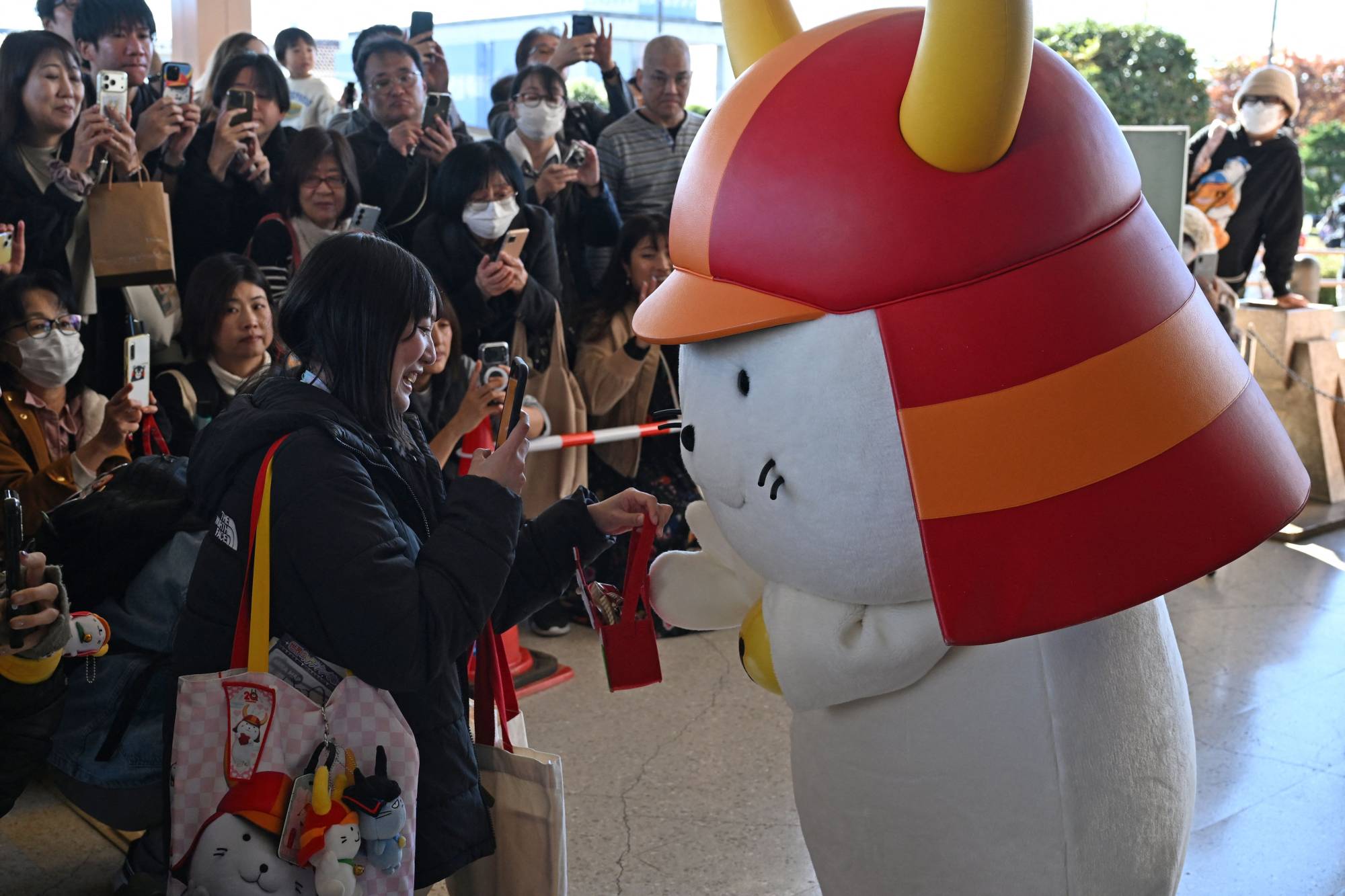
A woman hands a gift to a mascot character during the annual World Mascot Summit in Hanyu in Saitama prefecture, north of Tokyo, on November 21, 2026. (Photo by Rie KIKUCHI / AFP)

The mascot meetup has been held in the city of Hanyu since 2010 and nearly 220 mascots were invited to join this year, according to organizers.

On a stage, a troupe of animal mascots danced to upbeat pop music as a large crowd filmed them on smartphones and clapped along.

Elsewhere, a popular pony mascot representing Gunma prefecture was surrounded by fans eager for selfies, while a cat mascot was pushed through the packed crowd on a cart to make its way across the venue.

City official Shogo Dei, who oversees the event, said 80,000 people attended the two-day meetup last year and that organizers expect a similar turnout this year.

"These local mascot characters representing regions are part of Japanese culture. Our aim is to help revitalize towns across Japan through these characters," Dei told AFP.

Mascots in Japan can generate millions of dollars in revenue if they become successful, even without the global recognition of major intellectual property brands such as Pikachu.

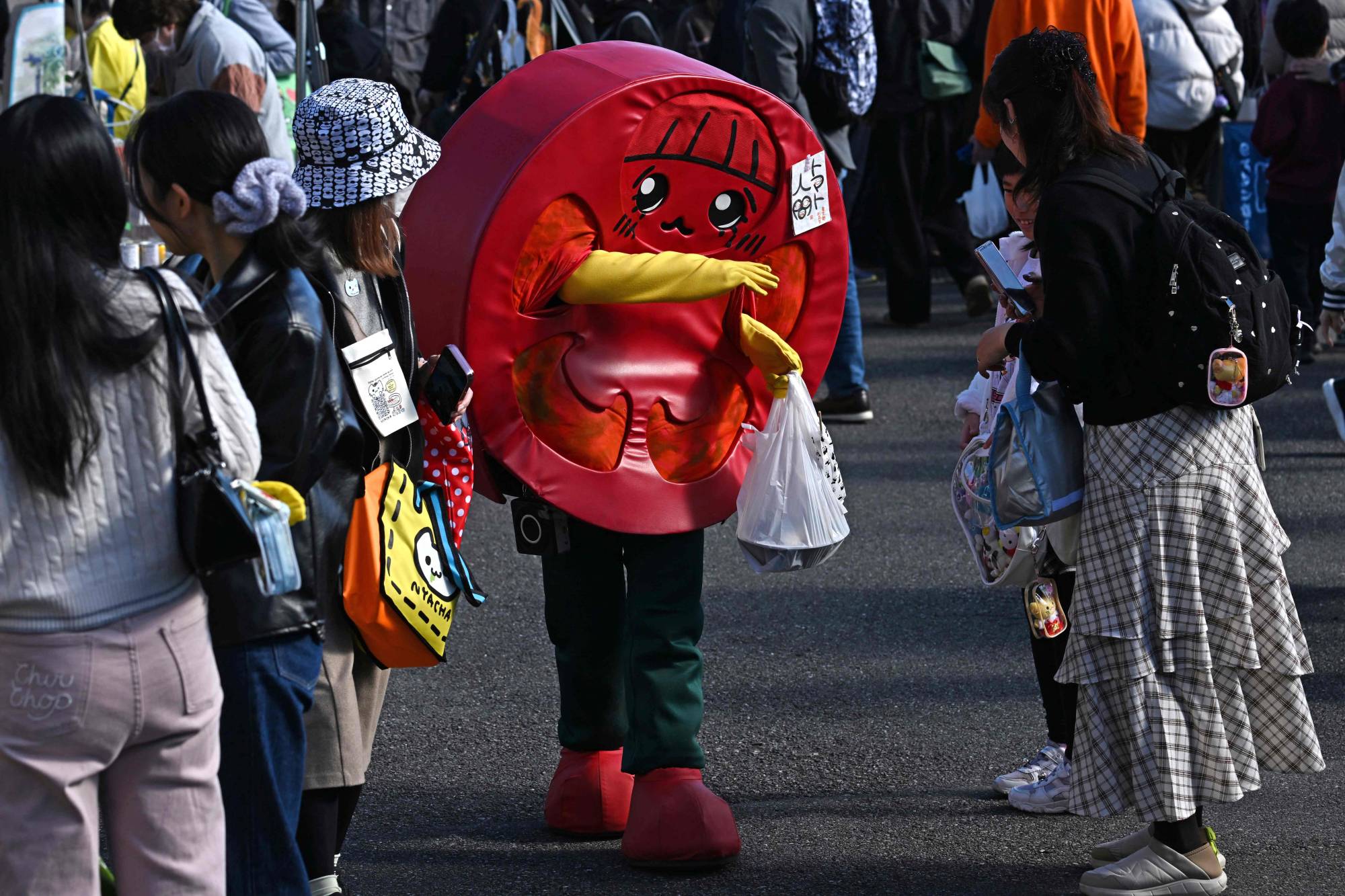
A mascot character greets visitors during the annual World Mascot Summit in Hanyu in Saitama prefecture, north of Tokyo, on November 21, 2026. (Photo by Rie KIKUCHI / AFP)

Another popular character, Hikonyan, a samurai helmet-wearing cat mascot associated with Hikone Castle in western Japan, has helped draw tourists to the area. The character even received around 10,000 New Year's greeting cards from across Japan this January.

"There are so many different characters representing different places, and it's not uncommon to see even adults carrying mascot goods on their bags," Okamori said.

"I think that's something uniquely Japanese."