US Costs of Iran War Rise to Over $47 Billion, According to Pentagon Estimate

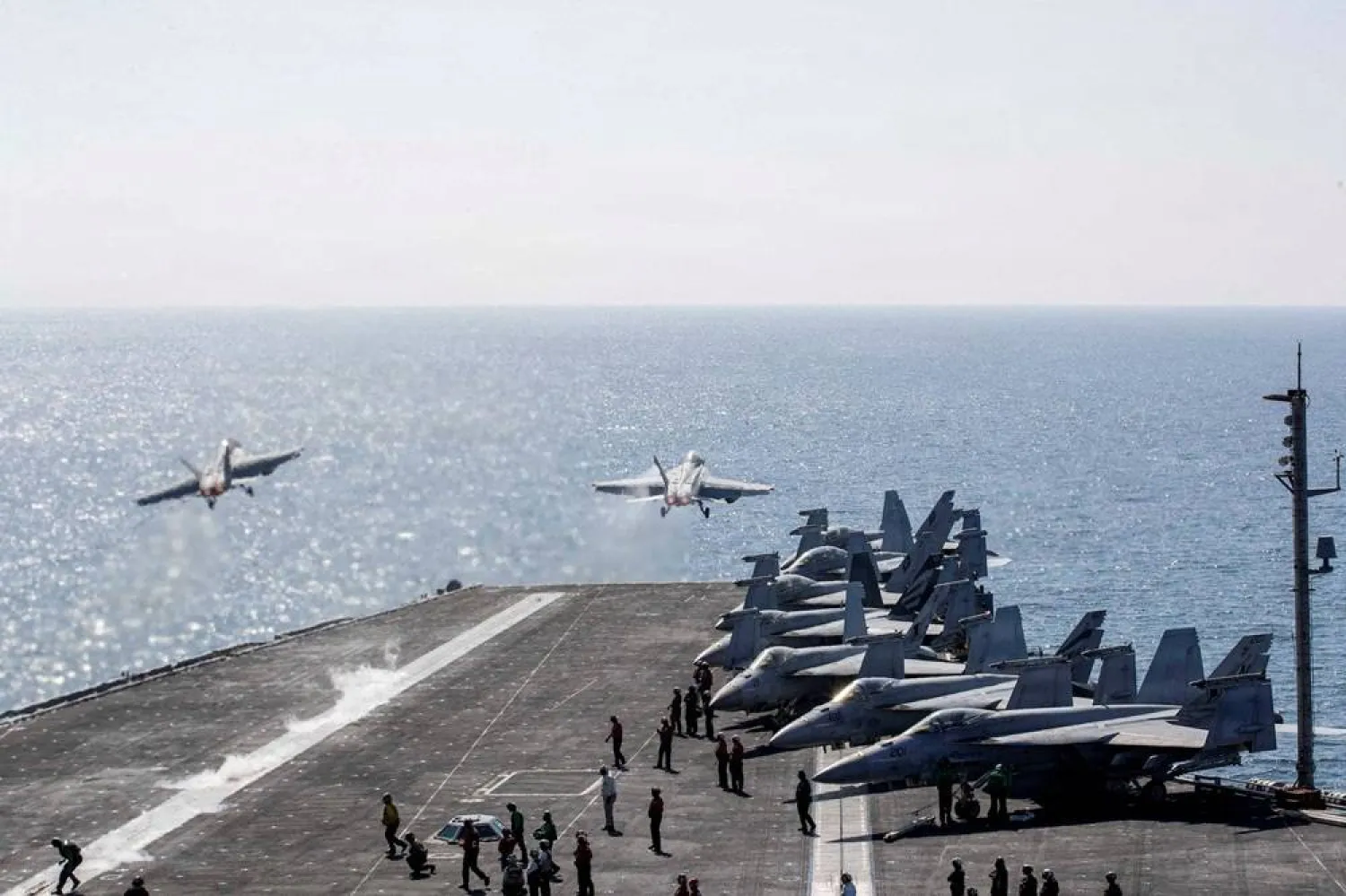
Two F/A-18 Super Hornets launch from the flight deck of the US Navy Nimitz-class aircraft carrier USS Abraham Lincoln in support of the Operation Epic Fury attack on Iran from an undisclosed location March 3, 2026. (US Navy/Handout via Reuters)
TT

US Costs of Iran War Rise to Over $47 Billion, According to Pentagon Estimate

Two F/A-18 Super Hornets launch from the flight deck of the US Navy Nimitz-class aircraft carrier USS Abraham Lincoln in support of the Operation Epic Fury attack on Iran from an undisclosed location March 3, 2026. (US Navy/Handout via Reuters)

The US military has spent over $47 billion so far to prosecute the war in Iran, more than 25% higher than the Defense Department's estimate in July, according to Pentagon data obtained by Reuters.

The Pentagon did not immediately respond to a request for comment on its estimate, which has not been shared publicly.

The disclosure about ‌the rising ‌cost of the Iran war comes as Republicans wrestle with ‌the ⁠political fallout of ⁠the unpopular conflict ahead of the November 3 election that will determine control of Congress for the next two years.

The war's impact on global energy costs has weighed on support for Republican candidates and hurt President Donald Trump's approval ratings. Trump's Republican Party holds a narrow majority in both chambers of Congress.

The Pentagon's latest estimate was tied to the operational costs of carrying out the ⁠war, with a projected cost of more than $29 billion to ‌replace expended munitions used in the conflict.

More than $6 ‌billion would be needed to replace military equipment and so-called "platform losses," which include ‌the loss of aircraft including many drones lost during the war.

Trump launched ‌the Iran war jointly with Israel in February, predicting that the conflict would last a short time.

Trump's initial strategy in the Iran war focused on first using expensive, high-end precision missiles to bomb Iran's defenses so it could later use less expensive ‌munitions, including gravity bombs like the air-launched JDAMs, which are plentiful.

But an April ceasefire gave time for Iran to ⁠dig out underground storage ⁠facilities, bringing back online some Iranian defenses, as well as missiles and drones that had been inaccessible.

Trump has since imposed a naval blockade on Iran to starve it of oil export revenue and held out the possibility of restarting combat operations after the midterm elections. US officials, speaking on condition of anonymity, say the Pentagon has been planning to restart heavy fighting if ordered to do so.

The latest Pentagon estimate compares to Defense Secretary Pete Hegseth's July estimate of $37.5 billion for the cost of the war.

While the figures include a host of operational costs, from flight operations to cyber support, the US military's Iran war cost estimates did not clearly account for the massive expense expected to repair damage to US bases sustained by Iranian missile and drone attacks.


Serbia: ‘ISIS Supporter’ Killed after Attacking Guard Outside Israeli Embassy

This handout photograph taken and released by Serbia's Interior Ministry on October 28, 2026, shows the scene of an attack on a police officer guarding the Israeli embassy in Belgrade. (Photo by Handout / SERBIAN MINISTRY OF INTERIOR AFFAIRS / AFP)
TT

Serbia: ‘ISIS Supporter’ Killed after Attacking Guard Outside Israeli Embassy

This handout photograph taken and released by Serbia's Interior Ministry on October 28, 2026, shows the scene of an attack on a police officer guarding the Israeli embassy in Belgrade. (Photo by Handout / SERBIAN MINISTRY OF INTERIOR AFFAIRS / AFP)

Serbian police killed an attacker outside the Israeli embassy in Belgrade on Wednesday after an officer was targeted in a "terrorist attack", outgoing Interior Minister Ivica Dacic said.

"A minor whose identity has yet to be established... attacked a member of the police with two knives," Dacic said, also raising the terrorism threat to its highest level.

The interior ministry said in a statement the guard killed the attacker in self-defense but suffered a minor knife wound to the face in the incident just after midnight on Wednesday.

Dacic said security services had been monitoring the attacker, who was "known to be a supporter of ISIS" and was believed to be from the western city of Sabac.

"His Instagram profile featured a black flag and the ISIS emblem," he added.

Dacic said the terrorism threat level had been raised to its highest, or "red alert".

"This means tighter security checks and an increased police presence at sensitive sites, including infrastructure facilities and places where large crowds gather”.

Police photos from the scene showed the guard's booth outside the embassy and the area sealed off by police tape as officers in full gear stood nearby.

Although such attacks are rare in Serbia, the Israeli embassy in Belgrade has been targeted before.

In June 2024, an attacker armed with a crossbow seriously wounded a police officer guarding the embassy before being shot dead by police.

The attacker was identified at the time as a 25-year-old man from a village near Belgrade who had embraced extremist views.

Wednesday's attack comes just days after Serbia held a key early parliamentary election on Sunday in which long-ruling former President Aleksandar Vucic was defeated by a youth-led movement after almost two years of protests against him. But Vucic and his allies still control the police as the new government is yet to be formed.

Israel also held its parliamentary vote Tuesday that exit polls said produced no clear winner.


Grossi: No Signs Iran Tried to Repair Nuclear Facilities Damaged in US Strikes

Candidate for the position of United Nations secretary-general, Rafael Mariano Grossi speaks during the "UN Town Hall: The Next Secretary-General" event at United Nations headquarters in New York City, US, July 23, 2026. REUTERS/Eduardo Munoz
TT

Grossi: No Signs Iran Tried to Repair Nuclear Facilities Damaged in US Strikes

Candidate for the position of United Nations secretary-general, Rafael Mariano Grossi speaks during the "UN Town Hall: The Next Secretary-General" event at United Nations headquarters in New York City, US, July 23, 2026. REUTERS/Eduardo Munoz

The head of the UN nuclear agency said Tuesday there has been no indication Iran has tried to repair or reconstruct its nuclear facilities damaged in US and Israeli military strikes this year or last year.

President Donald Trump has said one of the major reasons the US went to war with Iran on February 28 was to deny Tehran the ability to develop nuclear weapons, even as he has insisted that strikes the US carried out on Iranian nuclear sites in June 2025 “obliterated” the country’s atomic program.

During a UN Security Council meeting, International Atomic Energy Agency chief Rafael Grossi urged Iran to give inspectors access to all nuclear sites, including those damaged in the military attacks.

The IAEA has not been able to verify the status of Iran’s stockpile of near weapons-grade uranium since the US bombed its sites last year.

However, Grossi said that “since June 2025, we have not identified any activity to repair or reconstruct any of the facilities damaged in the military attacks of 2025 and 2026.”

Trump has consistently downplayed the economic impact of the Iran war, which has emerged as a liability for Republicans heading into next week’s midterm elections, and has argued that higher fuel prices are worth paying to prevent a nuclear-armed Iran.

The White House didn’t immediately respond Tuesday evening to a request for comment on Grossi’s remarks.
Iran maintains that its nuclear program is peaceful. However, the IAEA says the country has a stockpile of 440.9 kilograms of uranium enriched up to 60% purity — a short, technical step away from weapons-grade levels of 90%.


US Costs of Iran War Rise to Over $47 Billion, According to Pentagon Estimate

Two F/A-18 Super Hornets launch from the flight deck of the US Navy Nimitz-class aircraft carrier USS Abraham Lincoln in support of the Operation Epic Fury attack on Iran from an undisclosed location March 3, 2026. (US Navy/Handout via Reuters)
TT

US Costs of Iran War Rise to Over $47 Billion, According to Pentagon Estimate

Two F/A-18 Super Hornets launch from the flight deck of the US Navy Nimitz-class aircraft carrier USS Abraham Lincoln in support of the Operation Epic Fury attack on Iran from an undisclosed location March 3, 2026. (US Navy/Handout via Reuters)

The US military has spent over $47 billion so far to prosecute the war in Iran, more than 25% higher than the Defense Department's estimate in July, according to Pentagon data obtained by Reuters.

The Pentagon did not immediately respond to a request for comment on its estimate, which has not been shared publicly.

The disclosure about ‌the rising ‌cost of the Iran war comes as Republicans wrestle with ‌the ⁠political fallout of ⁠the unpopular conflict ahead of the November 3 election that will determine control of Congress for the next two years.

The war's impact on global energy costs has weighed on support for Republican candidates and hurt President Donald Trump's approval ratings. Trump's Republican Party holds a narrow majority in both chambers of Congress.

The Pentagon's latest estimate was tied to the operational costs of carrying out the ⁠war, with a projected cost of more than $29 billion to ‌replace expended munitions used in the conflict.

More than $6 ‌billion would be needed to replace military equipment and so-called "platform losses," which include ‌the loss of aircraft including many drones lost during the war.

Trump launched ‌the Iran war jointly with Israel in February, predicting that the conflict would last a short time.

Trump's initial strategy in the Iran war focused on first using expensive, high-end precision missiles to bomb Iran's defenses so it could later use less expensive ‌munitions, including gravity bombs like the air-launched JDAMs, which are plentiful.

But an April ceasefire gave time for Iran to ⁠dig out underground storage ⁠facilities, bringing back online some Iranian defenses, as well as missiles and drones that had been inaccessible.

Trump has since imposed a naval blockade on Iran to starve it of oil export revenue and held out the possibility of restarting combat operations after the midterm elections. US officials, speaking on condition of anonymity, say the Pentagon has been planning to restart heavy fighting if ordered to do so.

The latest Pentagon estimate compares to Defense Secretary Pete Hegseth's July estimate of $37.5 billion for the cost of the war.

While the figures include a host of operational costs, from flight operations to cyber support, the US military's Iran war cost estimates did not clearly account for the massive expense expected to repair damage to US bases sustained by Iranian missile and drone attacks.