



Alarming Study: 77% of Pilots Report Falling Asleep During Flights

Fatigue is a major factor behind these episodes during flights (Pexels)
TT

Alarming Study: 77% of Pilots Report Falling Asleep During Flights

Fatigue is a major factor behind these episodes during flights (Pexels)

A new report has raised alarming concerns about aviation safety after finding that a large proportion of pilots have experienced brief episodes of sleep while in the cockpit.

According to the European Cockpit Association (ECA), more than three in four pilots have fallen asleep while operating an aircraft, the New York Post reported.

The study, released this week and involving approximately 7,200 pilots, found that 76.8% of respondents had experienced at least one episode of involuntary sleep at the controls during the four weeks preceding the survey.

The report described these episodes as "microsleeps," which the National Sleep Foundation defines as brief, involuntary periods of sleep lasting several seconds. People experiencing them may not even realize they have fallen asleep, posing significant safety risks for those operating vehicles or aircraft.

In some cases, a person experiencing a microsleep may appear awake, even with their eyes open, while their brain temporarily stops processing information.

The National Sleep Foundation explains that microsleeps are a common symptom of sleep deprivation.

Fatigue is a major factor behind these episodes during flights. The study found that 38.8% of pilots usually or always lacked sufficient rest to prevent fatigue from accumulating.

A culture of silence and pushing through exhaustion despite the risks also remains prevalent in cockpits.

Only 37.2% of pilots said they report themselves unfit to fly when experiencing fatigue.

Meanwhile, 24.2% admitted that they do not report their fatigue and continue flying despite feeling unfit for duty, citing fears of punishment or negative reactions from management.

The study also highlighted concerns surrounding "Commander's Discretion," a provision under aviation regulations that allows aircraft commanders to extend a flight duty period or reduce the required rest period.

Some 38.3% of respondents reported using this discretion at least once during the previous four weeks, while 15.2% said they had used it twice or more.

Approximately 69.1% of pilots also expressed concern about facing negative consequences if they refused to extend their duty hours.

"When pilots fear career consequences, fatigue goes unreported and the risk returns to the cockpit," Captain Coen George, an ECA board director, said in a statement.

He stressed that airlines and aviation authorities must ensure pilots can report fatigue without fear of punishment and that Commander's Discretion is used appropriately.

George also pointed out that some airlines pressure flight crews to extend their working hours to make up for delays and even penalize those who refuse to extend their duty periods.

"We have repeatedly warned aviation authorities about these pressures, which clearly undermine our safety margins, but we are still waiting for effective action to put an end to them," he said.


UK Records Highest Number of Heat-Related Deaths in 2026

Europe experienced another summer marked by prolonged periods of extreme heat, which scientists say are becoming more frequent and intense because of climate change. (Getty Images/AFP)
TT

UK Records Highest Number of Heat-Related Deaths in 2026

Europe experienced another summer marked by prolonged periods of extreme heat, which scientists say are becoming more frequent and intense because of climate change. (Getty Images/AFP)

Heat-associated deaths in Britain reached 5,258 during the summer of 2026, marking the highest annual total since records began in 2016, according to the UK Health Security Agency.

The toll comes after Europe experienced another summer marked by prolonged periods of extreme heat, which scientists say are becoming more frequent and intense because of climate change.

The 5,258 figure compares with 2,985 ‌heat-associated deaths during the ‌whole of summer 2022, another ‌notably ⁠hot period, and comes ⁠after what the agency described as an exceptional season of prolonged hot weather in 2026.

Other European countries have also reported record excess mortality from the heatwaves over the summer.

Researchers from Imperial College London and the London School of Hygiene & ⁠Tropical Medicine estimated that more than 50,000 ‌heat-related deaths occurred in ‌urban areas across 30 European countries during the summer, ‌the highest toll recorded since 2000.

In Britain, there ‌were seven heat episodes lasting a total of 41 days during the summer, the highest number recorded since annual heat mortality monitoring began, the UKHSA said.

The deadliest ‌period was between June 21 and June 28, when an estimated 2,401 ⁠deaths were ⁠associated with extreme heat. More than 3,000 heat-associated deaths were estimated across heat episodes in May and June alone.

Heat can be fatal by triggering heat stroke and dehydration or by worsening underlying cardiovascular and respiratory conditions.

Ross Thompson, principal environmental health scientist at the agency, said it was vital that everyone is prepared "not just during a heatwave but in the longer term."

"The decisions we make now will shape the health impacts people experience in the decades ahead," Thompson said.


Saudi Arabia’s Harrat Al Rass Al Abyad Nature Reserve Registered in World Database on Protected Areas

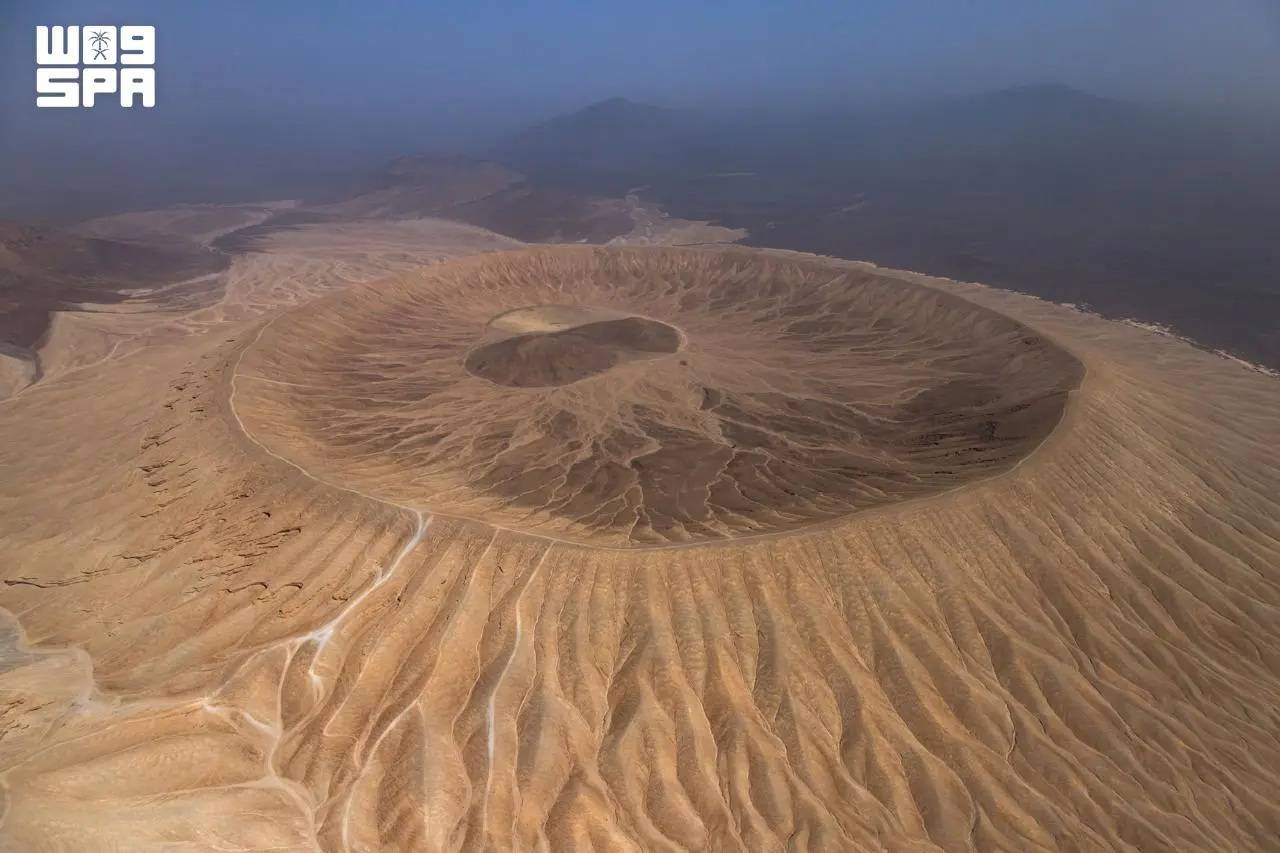
The reserve is located within Harrat Khaybar, one of the largest volcanic fields in the Arabian Peninsula. (SPA)
TT

Saudi Arabia’s Harrat Al Rass Al Abyad Nature Reserve Registered in World Database on Protected Areas

The reserve is located within Harrat Khaybar, one of the largest volcanic fields in the Arabian Peninsula. (SPA)

Saudi Arabia’s Royal Commission for AlUla (RCU), in coordination with the National Center for Wildlife, announced the official registration of Harrat Al Rass Al Abyad Nature Reserve in both the National Database of Protected Areas and the World Database on Protected Areas (WDPA). The milestone supports efforts to conserve the reserve’s distinctive biodiversity and rare geological formations.

Covering an area of 600 square kilometers in the Khaybar Governorate in the Madinah Region, the reserve is the sixth within RCU’s protected area network (APAN), which spans a total of 12,107 square kilometers.

Its registration reflects RCU’s continued efforts to develop its protected area network, document its natural assets and strengthen their management through scientific approaches that support long-term sustainability.

Harrat Khaybar is home to three rare white volcanoes. (SPA)

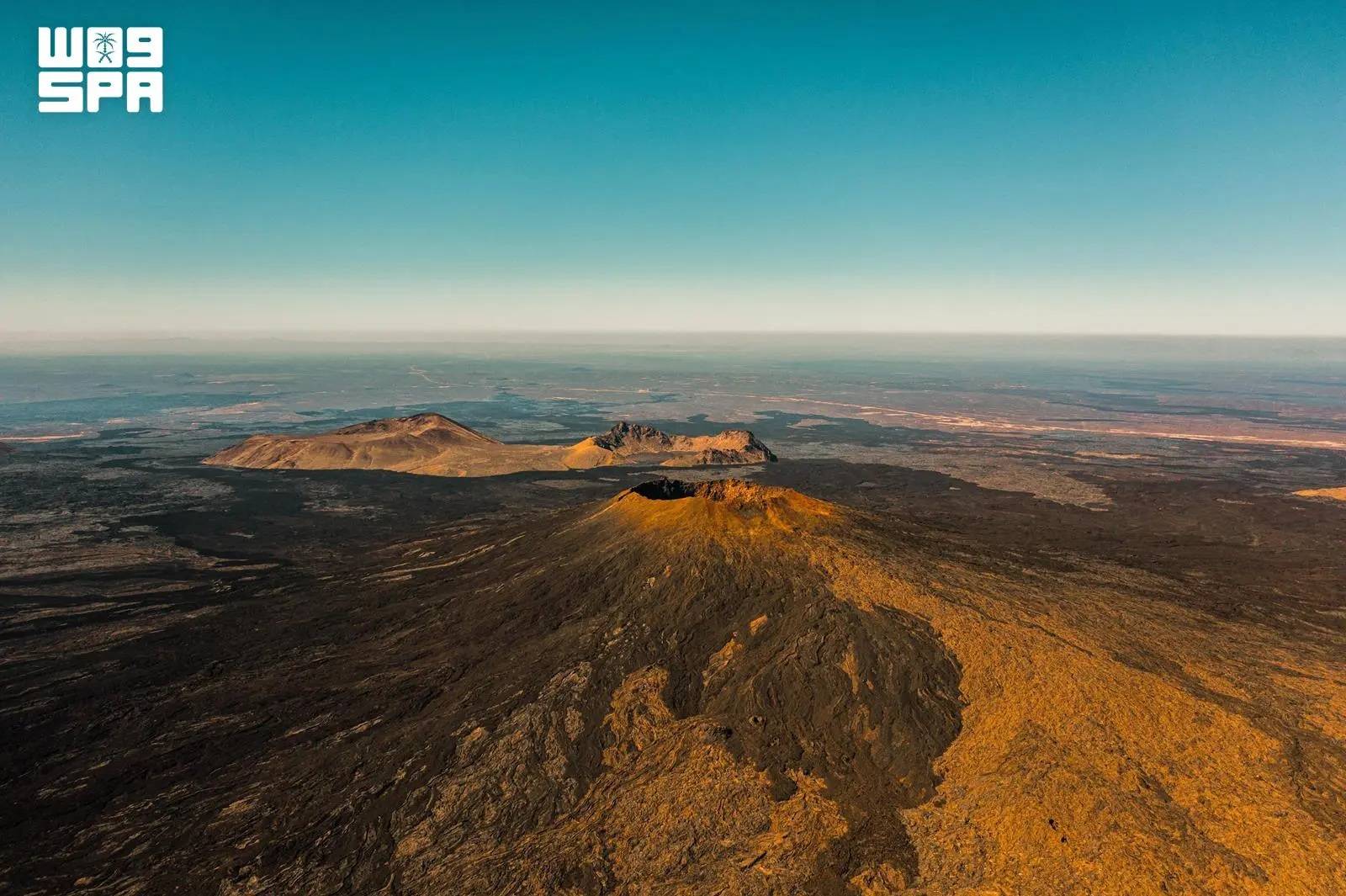
The reserve is located within Harrat Khaybar, one of the largest volcanic fields in the Arabian Peninsula, where white volcanoes stand alongside black basalt fields, creating a striking geological landscape. The white formations derive their distinctive color from comendite volcanic rocks, setting them apart from the surrounding landscape.

Harrat Khaybar is home to three rare white volcanoes: Jabal Al Bayda, Jabal Al Abyad and Jabal Al Mansaf, highlighting the area's significance for studying geological diversity and the history of volcanic activity.

The reserve falls under Category III of the International Union for Conservation of Nature (IUCN) protected area management categories, which focuses on protecting natural features and their associated biodiversity and habitats.

The area is also home to Umm Jirsan Cave, one of Saudi Arabia’s longest lava tube systems, extending approximately 1,481 meters.

Preliminary surveys conducted by RCU have recorded around 99 plant, 14 mammal, 18 reptile and 59 bird species, including the endangered Egyptian vulture. The surveys have also identified suitable habitats for the mountain ibex.

Species inventories and data updates remain ongoing to enhance knowledge of the reserve’s ecological assets and identify conservation priorities.

The area is also home to Umm Jirsan Cave, one of Saudi Arabia’s longest lava tube systems. (SPA)

The development of the reserve was guided by a scientific approach involving environmental, geological and cultural assessments conducted between 2022 and 2024 in collaboration with the IUCN. The assessments resulted in an operational management plan for 2024–2029, providing a framework for conservation, management and monitoring activities to safeguard the site's natural and cultural values.

RCU continues to pursue international recognition for the area, including efforts to meet the requirements of UNESCO Global Geoparks and the IUCN Green List. These initiatives support the conservation of geological heritage and enhance the effectiveness of protected area management.

The reserve’s registration forms part of RCU’s 10-year ecosystem restoration strategy and its wider efforts to protect natural habitats, conserve biodiversity and safeguard geological heritage. The efforts align with the Saudi Green Initiative’s target of protecting 30% of Saudi Arabia’s terrestrial and marine areas by 2030.


China to Launch Space Mission with First Foreign Astronaut

A view of the launchpad for the Shenzhou-24 mission is seen at the Jiuquan Satellite Launch Center near Jiuquan, China, 24 November 2026. (EPA)
TT

China to Launch Space Mission with First Foreign Astronaut

A view of the launchpad for the Shenzhou-24 mission is seen at the Jiuquan Satellite Launch Center near Jiuquan, China, 24 November 2026. (EPA)

The first foreign astronaut on a Chinese space mission said on Tuesday that he will be carrying "the hopes of 250 million Pakistanis" when the latest crew blasts off on Wednesday.

Beijing has poured billions into the Chinese space program, whose prized Tiangong space station is stewarded by teams of three astronauts that are typically rotated every six months.

The Shenzhou-24 mission is set to lift off at 8:18 am (0018 GMT) on Wednesday from the Jiuquan launch center in China's northwestern Gobi Desert, China Manned Space Agency (CMSA) spokesman Zhang Jingbo told a news conference on Tuesday.

Muhammad Zeeshan Ali, a Pakistani payload specialist, will become the first foreign astronaut to board China's Tiangong space station.

"I carry the name of Pakistan on my shoulder, the hopes of 250 million Pakistanis," Ali told a separate news conference held later to introduce the crew.

"To every child who is watching while I'm in orbit, just look up at the sky and remember that I am up there with your dreams," he said in English, following other remarks in fluent Mandarin and Urdu.

Ali will join a short orbital flight expected to last around five days before returning with the Shenzhou-23 spaceship, which docked at the Tiangong in May.

He is not the first Pakistani in space, with Monaco-based polar explorer Namira Salim having flown on Virgin Galactic's Galactic 04 mission in October 2023.

- Rivalling the US -

Beijing has invested heavily in its space program in recent years, seeking to catch up with its principal rival, the United States.

Pakistan, which maintains close diplomatic and trade ties with Beijing, is a natural partner in the endeavor.

The crew currently aboard the Tiangong space station is headed by 40-year-old Zhu Yangzhu, Lai Ka-ying and Zhang Zhiyuan, also 40.

Lai is Hong Kong's first astronaut and the only woman currently aboard the space station.

After the new, all-male crew reaches the Tiangong, Pakistan's Ali will return to Earth alongside Lai and Zhang.

Zhu will remain on board to complete China's first full-year stay in space -- a key test of endurance critical for future lunar and potentially deep-space ambitions.

Zhu will be accompanied for the next six-month Tiangong rotation by 51-year-old space veteran Tang Hongbo and Wu Yi, in his late thirties and making his first voyage to space.

The Long March-2F rocket that will carry the crew into space will soon be filled with propellant, the CMSA's Zhang said.

The crew is in good condition and the space station is functioning normally, meeting all requirements for the mission, he said.
