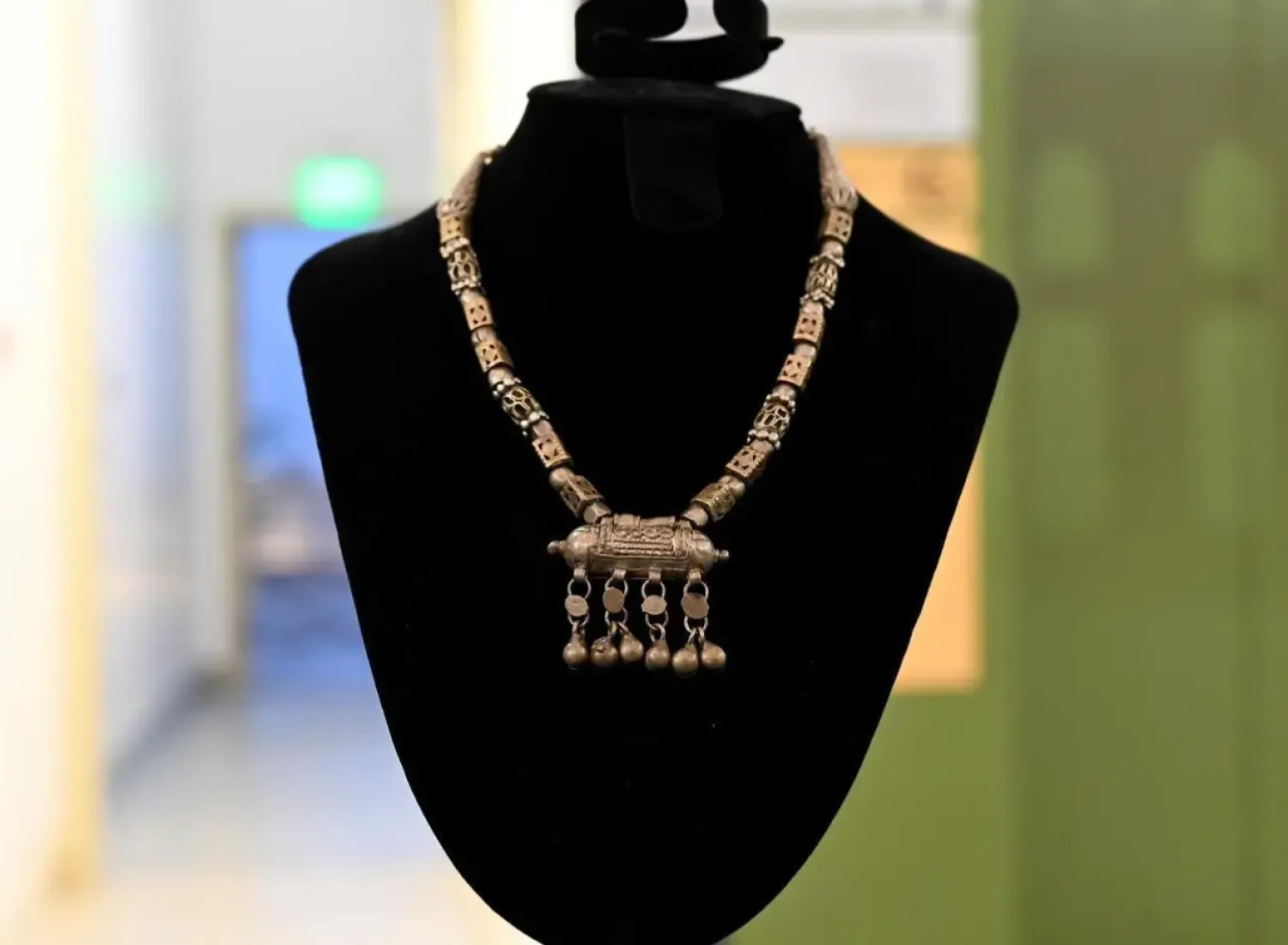
‘Rashrash’: A Silver Necklace Reflecting Jazan’s Traditional Women’s Jewelry Heritage

Adornment was not limited to silver jewelry but also included the use of kohl, henna, perfumes and hair-care products - SPA
TT

‘Rashrash’: A Silver Necklace Reflecting Jazan’s Traditional Women’s Jewelry Heritage

Adornment was not limited to silver jewelry but also included the use of kohl, henna, perfumes and hair-care products - SPA

Traditional jewelry in Jazan Region preserves part of the memory of women and reflects aspects of their social lives in the past.

Among these ornaments is the Rashrash necklace, a silver piece worn around women’s necks, valued for its aesthetic appeal and cultural significance, which are deeply rooted in the community’s customs and heritage.

According to SPA, silver held a prominent place in traditional Jazan women’s adornment, with jewelry ranging from necklaces, earrings and bracelets to decorative pieces worn on the upper arms and feet.

The Rashrash was among the ornaments worn by women in Jazan and was one of the pieces worn by brides as part of traditional wedding customs. Together with other jewelry, it formed the bride’s adornment for the occasion, reflecting the attention women paid to aesthetic details and the variety of silverwork used for personal adornment.

Adornment was not limited to silver jewelry but also included the use of kohl, henna, perfumes and hair-care products.

Women also used local plants and flowers to adorn their hair on special occasions. These practices were closely linked to the natural environment, which provided the plants and materials women used in their daily lives and social gatherings.


Literature, Publishing and Translation Commission Inaugurates Saudi Pavilion at Kuwait International Book Fair

The fair also offers opportunities to share publishing expertise and bring Saudi content to wider audiences across the region - SPA
TT

Literature, Publishing and Translation Commission Inaugurates Saudi Pavilion at Kuwait International Book Fair

The fair also offers opportunities to share publishing expertise and bring Saudi content to wider audiences across the region - SPA

The Literature, Publishing and Translation Commission inaugurated Saudi Arabia’s pavilion at the Kuwait International Book Fair 2026, which runs from November 18 to 28.

Commission CEO Dr. Abdullatif Alwasel said the participation showcases Saudi literary and intellectual output and developments in literature, publishing, and translation, SPA reported.

An accompanying cultural program features discussions with Saudi writers and intellectuals on these sectors and Saudi cultural achievements.

He added that the participation introduces Saudi cultural institutions and their initiatives, builds professional partnerships, and promotes knowledge exchange.

The fair also offers opportunities to share publishing expertise and bring Saudi content to wider audiences across the region.


Culinary Arts Commission Announces Completion of Project to Document Saudi Culinary Traditions

Culinary Arts Commission Announces Completion of Project to Document Saudi Culinary Traditions
TT

Culinary Arts Commission Announces Completion of Project to Document Saudi Culinary Traditions

Culinary Arts Commission Announces Completion of Project to Document Saudi Culinary Traditions

The Culinary Arts Commission has announced the completion of a project to inventory and document Saudi culinary practices and traditions. Launched in 2022, the project involved 42 months of extensive fieldwork and research across the Kingdom’s regions to safeguard Saudi culinary heritage and the associated inherited practices and knowledge as an integral part of the nation’s cultural identity.

The project resulted in the documentation of 1,476 culinary elements, including traditional dishes, recipes, practices, and knowledge related to the culinary arts, SPA reported.

The effort involved 2,746 participants, including experts, researchers, practitioners, and members of local communities, and covered 94 cities and governorates throughout the Kingdom.

The commission explained that the project employed a specialized documentation methodology to gather culinary knowledge directly from community and field-based sources.


King Abdulaziz Center for Cultural Communication Organizes International Tolerance Forum

The forum sought to showcase national and international experiences in countering intolerance and hate speech, and to highlight Saudi Arabia’s efforts to advance intercultural dialogue and social cohesion - SPA
TT

King Abdulaziz Center for Cultural Communication Organizes International Tolerance Forum

The forum sought to showcase national and international experiences in countering intolerance and hate speech, and to highlight Saudi Arabia’s efforts to advance intercultural dialogue and social cohesion - SPA

The King Abdulaziz Center for Cultural Communication organized the International Tolerance Forum on Monday in Riyadh, coinciding with the 2026 International Day for Tolerance.

The forum brought together a distinguished group of scholars, thinkers, researchers, and specialists from within the Kingdom and abroad, SPA reported.

It was held as part of the center’s efforts to promote a culture of tolerance and reinforce the values of coexistence and respect for diversity.

The forum sought to showcase national and international experiences in countering intolerance and hate speech, and to highlight Saudi Arabia’s efforts to advance intercultural dialogue and social cohesion.

Discussions also underscored the importance of integrating the roles of educational, family, and community institutions. They stressed the value of drawing on international experiences and modern technologies to foster understanding between cultures and help build more cohesive and harmonious societies.