Japan’s Beleaguered Shoppers Are a Worry for Convenience Stores and the Economy

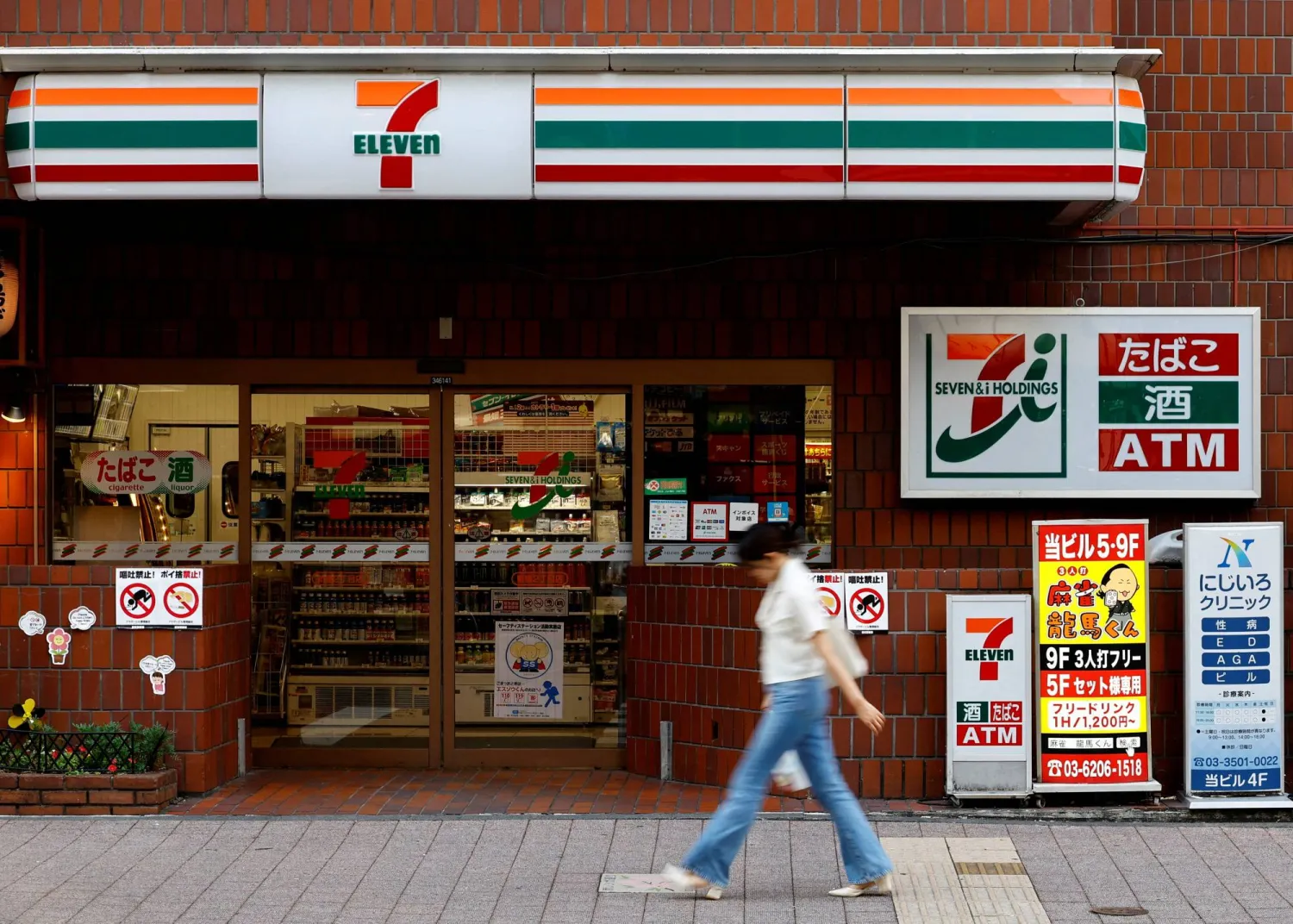
A pedestrian walks past Japan's Seven & i’s 7-Eleven convenience store in Tokyo, Japan August 19, 2024. (Reuters)
TT

Japan’s Beleaguered Shoppers Are a Worry for Convenience Stores and the Economy

A pedestrian walks past Japan's Seven & i’s 7-Eleven convenience store in Tokyo, Japan August 19, 2024. (Reuters)

Kana Sekiya, 43, used to shop near a train ‌station in Tokyo on her way back home from work. Now she drives more than 30 minutes on weekends to a discount supermarket to buy groceries in bulk — one of a growing number of consumers shifting their shopping habits as prices rise.

"I've totally stopped going to convenience stores because of the rising cost of living," she said.

Sekiya's changing shopping habits are not just a concern for Japan's once unassailable convenience stores, or "conbini", but also a worrying sign for the economy, which has exited decades of deflation.

Underlying inflation rose in September at the fastest annual pace in three years, according to Bank of Japan data, exceeding its 2% target. The bank is likely on Friday to signal a rate hike could come as soon as December, taking the economy into territory not trodden for more than 30 years.

"Consumers have become extremely demanding when it comes to prices," said Seiji Kitamura, head of group merchandising strategy at 7-Eleven owner Seven & i, which operates around 23,000 outlets across the country.

"Their desire to save has grown more than we anticipated."

Customer numbers at convenience stores have fallen for 15 consecutive months, ‌according to data ‌from the Japan Franchise Association. In September, numbers fell by 3.8% from a year earlier, the ‌most ⁠since September 2021 ⁠during the COVID-19 pandemic.

The increasing thriftiness of Japanese consumers — many of whom have never experienced widespread price gains in their lifetime — is likely to cause wider economic issues.

"With private consumption accounting for about half of Japan's GDP, there are concerns that increased household belt-tightening could weigh on the broader economy," said Ryohei Ikeda, an analyst at Mizuho Research Institute.

Japanese companies used to be famously reticent to raise prices, with ice pop maker Akagi Nyugyo apologizing in 2016 for a 10 yen ($0.06) hike.

But food and drink makers hit by the weak yen and higher oil prices raised prices on more than 20,000 items in 2026 for a second year. Amid the increases, Japanese convenience store operators are facing squeezed consumers seeking ⁠cheaper alternatives.

"Competitors such as drugstores and mini-supermarkets are putting value for money front and center," Takeshi ‌Inoue, a corporate manager at Itochu's FamilyMart, said at an earnings briefing.

"We haven't been able ‌to fully meet customers' needs."

Sekiya said she is feeling the pinch when buying goods such as meat and vegetables. She now shops ‌at two discount supermarkets — Lopia and OK — to maximize savings.

To attract customers to its "conbinis", Seven & i is introducing its lower-priced own-brand ‌range, "Seven The Price", which includes precooked chicken and is priced around 20% below branded alternatives.

Last month, FamilyMart said it would offer morning discounts when customers bought bread or rice balls together with drinks such as coffee.

EGG SANDWICHES

In contrast to convenience stores, some supermarkets that compete aggressively on price are seeing robust customer traffic growth.

Seiyu, which was acquired last year by discount chain Trial Holdings, recorded a 6.9% year-on-year increase in customer numbers ‌at existing stores in September.

"Wage growth has not kept pace with inflation, creating favorable conditions for discount retailers," said Seiyu President Hitoshi Narakino.

Walmart previously struggled to make a success of Seiyu, ⁠with private equity firm KKR acquiring ⁠the business before selling to Trial.

Kyushu-based Trial has brought its popular 199 yen egg sandwiches to Seiyu stores, where it is also bolstering supplies of fresh meat and fish.

Conbini are also under threat from mini-supermarkets, with Trial opening small format Trial GO stores in Tokyo and Aeon , Japan's biggest retailing group, expanding its My Basket chain.

CRANE GAMES

As higher oil prices due to the Iran war feed through to electricity and gas bills, inflation is likely to top 3% in early 2027, said Taro Saito, a research fellow at the NLI Research Institute.

Real wages are also likely to turn negative next year, potentially further squeezing households, he said.

With rising labor and utility costs squeezing franchisees, conbini operators are looking outside of food to grow revenue.

FamilyMart is installing crane games and capsule-toy machines in about 5,000 stores by reducing space allocated for magazines and eating in.

Lawson, which is owned by Mitsubishi Corp and KDDI , has also installed toy machines at about 1,500 stores.

There are also signs of price sensitivity across the broader retail sector.

Uniqlo parent Fast Retailing this week said it was scrapping a planned price hike for a color socks line that was set to take effect from November 10.

"As socks are an essential everyday item, in Japan we reconsidered our planned price revision," Fast Retailing said.


Crypto Platform Binance Confirms $6.3 Bn Hack

Representations of cryptocurrencies are seen in front of displayed Binance logo in this illustration taken November 10, 2022. (Reuters)
TT

Crypto Platform Binance Confirms $6.3 Bn Hack

Representations of cryptocurrencies are seen in front of displayed Binance logo in this illustration taken November 10, 2022. (Reuters)

Cryptocurrency platform Binance said Thursday it had fallen victim to a major hack that hit around $6.3 billion in funds, with about half that amount frozen to prevent a massive theft.

The company -- the world's largest crypto exchange by daily trading volumes -- posted a series of sometimes contradictory messages on X, insisting that "user funds are completely safe" but also saying it would "cover all losses."

The company later said on its X account for Latin America that "the total estimated impact is around $6.3 billion."

"We have worked with blockchain partners to freeze the affected assets, with ~$3 billion frozen on-chain so far," it added.

That would be four times the amount impacted in what had been the biggest-ever cyberattack of its kind to date: $1.5 billion taken in February last year from the Bybit platform -- which was attributed to hackers affiliated with North Korea.

At about 0030 GMT Friday, Binance said all deposits and withdrawals had been "temporarily suspended while our team conducts security checks, freezes funds and works with law enforcement."

"This figure may continue to increase as our teams work closely with law enforcement, issuers, blockchain intelligence firms and industry partners to trace and freeze additional assets," the company said.

The company's statement on X said an initial investigation suggested the hack involved a compromised laptop belonging to a "DevOps engineer," allowing the unauthorized party to access a "service container" and execute unauthorized withdrawal transactions.

"We have found no evidence of any private key leaks from wallets," Binance said.

"We will share a detailed technical post-mortem analysis once the investigation is complete and the facts are fully verified."

"It does look like a hack on Binance," said former Binance chief Changpeng Zhao, who no longer runs the group but remains a majority shareholder.

Paolo Ardoino, the boss of Tether -- a company that issues a cryptocurrency known as USDT -- said his firm froze about $1.6 billion "related to a potential Binance exchange hack."

Jeremy Allaire, who runs cryptocurrency platform Circle, said his company had frozen more than $800 million in USDC.

USDT and USDC are both "stablecoins," or digital currencies whose value is linked to a traditional currency, the US dollar.

The US Department of Justice and the FBI did not immediately respond to requests for comment.

- Crypto prices tumble -

For several hours before Binance confirmed the attack, industry observers said hackers had managed to reach the platform.

The prices of most major cryptocurrencies fell on news of the cyberattack, except for the stablecoins, which by definition can only fluctuate within tight margins.

At about 0400 GMT, bitcoin and Ethereum were down 0.8 percent, recovering after plunges of nearly five-percent and nearly six-percent respectively. BNB, native to Binance, was up 2.7 percent after it tumbled nearly 10 percent.

The attack on Binance comes as many observers express worries that the ever-expanding capabilities of artificial intelligence (AI) models could compromise cryptography and IT security protocols.


TotalEnergies to Cut Diesel Prices to €2.15 per Liter at 705 French Stations

A sign of TotalEnergies on a fuel station in Paris, France on October 9, 2022. (AFP)
TT

TotalEnergies to Cut Diesel Prices to €2.15 per Liter at 705 French Stations

A sign of TotalEnergies on a fuel station in Paris, France on October 9, 2022. (AFP)

TotalEnergies said on Friday it will cut diesel prices to €2.15 ($2.40) a liter at 705 French stations from ‌Saturday, October ‌31.

The price ‌reduction ⁠comes after France ⁠announced it would release 10 million barrels of diesel from its strategic reserves on November ⁠1.

TotalEnergies said it ‌is ‌passing on the savings ‌from these older, cheaper ‌fuel stocks immediately, without waiting for physical deliveries to arrive.

The company ‌said in a statement the Access ⁠stations ⁠account for 60% of its fuel sales in the country, adding it will maintain a nationwide diesel price cap of €2.25 per liter.


Turkish Tourism Revenues Rise 5% in Q3

People walk on a small street that leads to the historical Galata Tower, Istanbul, Türkiye, April 25, 2025. (Reuters)
TT

Turkish Tourism Revenues Rise 5% in Q3

People walk on a small street that leads to the historical Galata Tower, Istanbul, Türkiye, April 25, 2025. (Reuters)

Türkiye's tourism revenues rose 5% year-on-year to $25.526 billion in the ‌third ‌quarter of 2026, ‌Turkish ⁠Statistical Institute data ⁠showed on Friday, maintaining growth in ⁠the ‌country's tourism ‌sector.

In the ‌first ‌nine months of the year, ‌tourism revenues increased to $51.29 billion, ⁠up ⁠2.4% compared with the same period of 2025.