


15% Capital Requirement Complicates Restructuring of Lebanese Banks

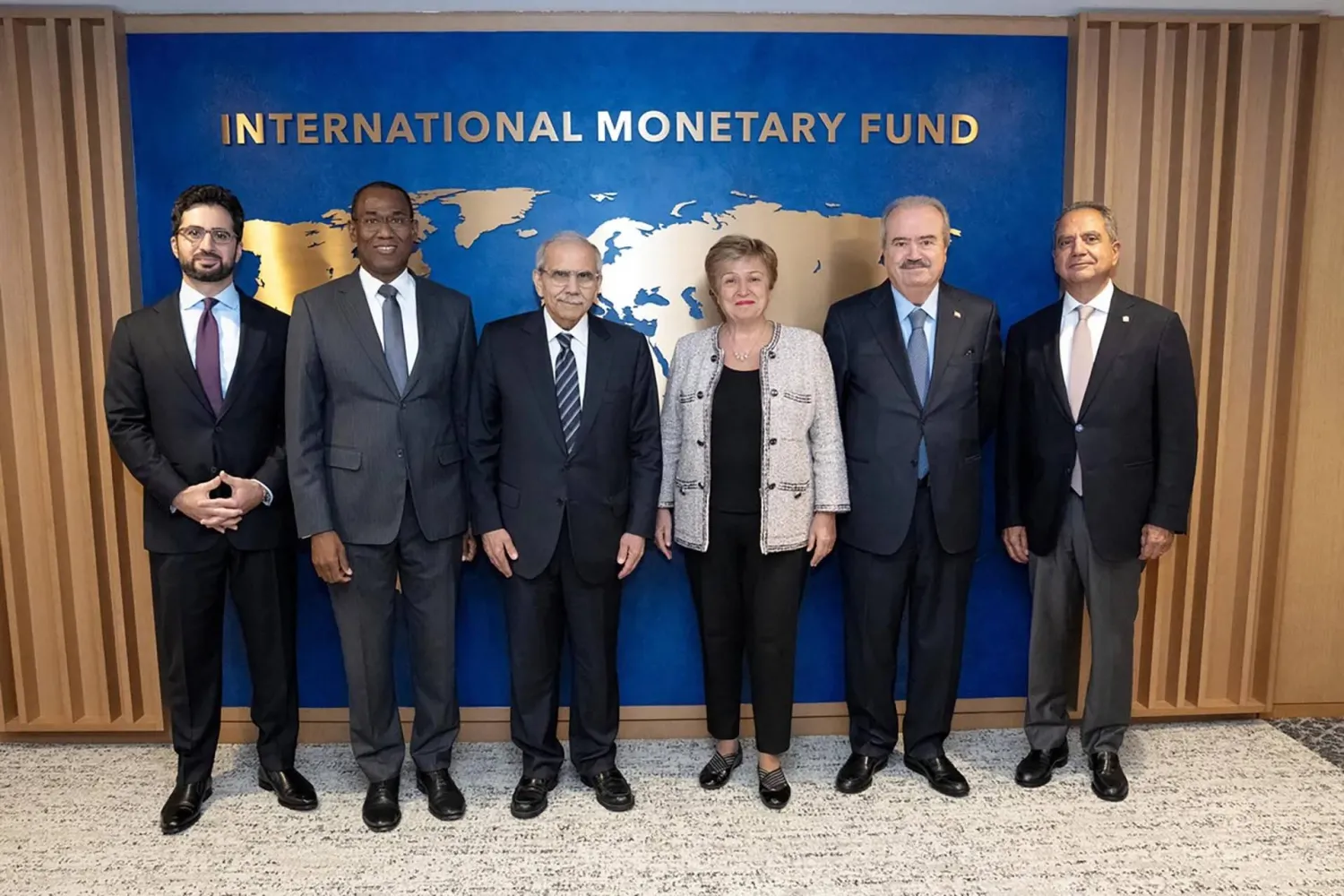
A Lebanese delegation, led by Prime Minister Nawaf Salam, meets with IMF Managing Director Kristalina Georgieva in Washington in September. (X)
TT

15% Capital Requirement Complicates Restructuring of Lebanese Banks

A Lebanese delegation, led by Prime Minister Nawaf Salam, meets with IMF Managing Director Kristalina Georgieva in Washington in September. (X)

Talks that concluded in Paris on Thursday between Lebanon’s central bank, the Banking Control Commission and representatives of Lebanese banks revealed persistent differences over banking sector restructuring and the distribution of losses, as the International Monetary Fund (IMF) insists on a 15% capital adequacy ratio for banks seeking to remain operational, to be achieved within five to seven years.

According to information obtained by Asharq Al-Awsat, the meetings were hosted by Rothschild, the international adviser to Banque du Liban (BDL), in an effort to reconcile differing approaches to the provisions of the draft Financial Regularization and Deposit Recovery Law.

The discussions produced new proposals involving relatively minor changes in form but a more substantive approach to the draft law submitted by the government to Parliament late last year. The proposals are expected to influence subsequent stages of the legislative process.

However, efforts to bridge the differences were not matched by any shift in the IMF’s position. The Fund’s delegation reportedly maintained its firm stance on limiting the use of public funds and upholding the hierarchy of loss absorption, under which bank capital, shareholders and equity holders are first in line to bear losses.

Against this backdrop, the IMF has introduced an additional requirement, informing banking executives that operating banks must restructure their capital positions to achieve a 15% capital adequacy ratio as a key condition for remaining in business.

A source familiar with the matter told Asharq Al-Awsat that the Fund had stipulated a period of five to seven years from the start of restructuring to meet the requirement.

Although the proposed ratio is substantially higher than the requirements set under Basel III standards, the IMF argues that it is necessary for the banking sector, together with BDL as its regulator, to demonstrate a serious commitment to addressing the consequences of Lebanon’s unprecedented financial crisis.

The aim is to emerge from the crisis with a financial sector in the strongest possible position, paving the way for the restoration of international confidence.

Lebanese banks, however, face considerable difficulties persuading existing shareholders to inject such large amounts of private capital within a relatively short period.

Shareholders remain reluctant to commit fresh funds before negotiations produce a final agreement with the IMF, the government meets structural reform requirements in the public sector, a medium-term fiscal plan is adopted, and the outcome of Lebanon’s Eurobond restructuring becomes clear.
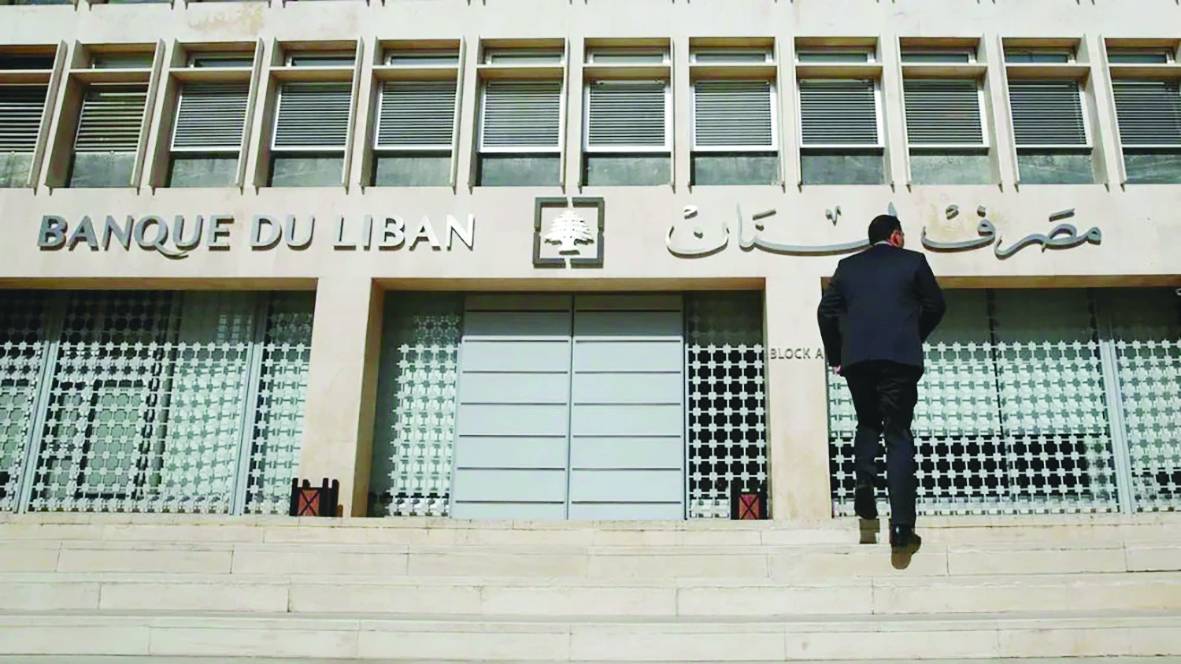
The Lebanese Central Bank building in Beirut. (AP)

What is required of banks?

An initial assessment by Asharq Al-Awsat indicates that meeting the IMF’s requirement would entail substantial cash injections and capital contributions or the attraction of new investors, a task that appears nearly impossible under current conditions.

Preliminary estimates suggest the funds required could amount to twice banks’ current capital, which has fallen sharply from levels exceeding $20 billion as a result of the Lebanese pound’s collapse.

The challenge comes as Lebanon and its economy face an exceptional contraction in investment inflows because of wars and the financial losses and heavy reconstruction costs they have left behind.

These burdens add to a financial gap that the government estimates at approximately $70 billion.

Insistence on this approach could undermine the banking sector’s prospects for recovery and its ability to contribute effectively to the broader economic rebound, given the difficulty most banks would face in injecting or attracting capital on such a scale.

Banking officials argue that the approach fails to account for the state’s role and responsibility in drawing financing from BDL’s balance sheet.

They also point out that a government decision to suspend repayment of all obligations on Lebanon’s Eurobonds deprived both commercial banks and the central bank of access to vital financial assets.

Meanwhile, a financial official noted that BDL’s handling of the consequences of the financial and monetary collapse, which have been concentrated heavily in the banking system, requires realism and a balance between two interconnected principles: ensuring a fair distribution of losses and avoiding the sacrifice of financial institutions.

This includes restructuring banks’ balance sheets and capital positions while enabling them to make the greatest possible contribution toward the gradual repayment of depositors’ claims, in accordance with the distribution mechanism established under existing central bank circulars.

Before the crises erupted, BDL imposed stringent solvency requirements on operating banks, with average ratios exceeding 15%.

Bank managements also voluntarily adhered strictly to international professional standards for assessing capital adequacy, enabling Lebanese banks to achieve leading regional positions in covering credit, market and operational risks.

Their risk management practices also included measuring and monitoring other exposures, such as interest rate risk in the banking book, credit concentration, liquidity and reputational risks.

Rothschild serves as BDL’s international adviser in negotiations concerning the financial sector, while Lazard performs the same role for Lebanon’s Finance Ministry.



Oil On Track for First Weekly Gain in November on Supply Fears

 Flames emerge from flare stacks at the oil fields in Kirkuk, Iraq October 18, 2017. REUTERS/Alaa Al-Marjani/File Photo
Flames emerge from flare stacks at the oil fields in Kirkuk, Iraq October 18, 2017. REUTERS/Alaa Al-Marjani/File Photo
TT

Oil On Track for First Weekly Gain in November on Supply Fears

 Flames emerge from flare stacks at the oil fields in Kirkuk, Iraq October 18, 2017. REUTERS/Alaa Al-Marjani/File Photo
Flames emerge from flare stacks at the oil fields in Kirkuk, Iraq October 18, 2017. REUTERS/Alaa Al-Marjani/File Photo

Oil prices were set to snap a three-week losing streak on Friday, on track for their first weekly gain in November.

Brent crude futures fell $1.42 to $95.20 a barrel by 10:16 a.m. ET (1516 GMT). Brent hit its highest since November 9 earlier in the session, but stayed shy of the $100 mark.

US West Texas Intermediate crude futures at $83.74 a barrel were up 5 cents, or 0.06%, from Wednesday's close. There was no Thursday settlement for WTI because of the US Thanksgiving holiday.

"Attacks on Middle Eastern energy facilities and tankers have brought supply disruption back into focus," said Mark Schaefer, a director at brokerage Liquidity Energy, Reuters reported.

Prices retreated in recent weeks as investors were relieved that US President Donald Trump did not step up military action against Iran after the midterm elections.

However, Iran has continued to attack ships transiting the key Strait of Hormuz, disrupting oil exports, while Yemen's Houthis have struck Saudi Arabian infrastructure.

Saudi Aramco's Jazan refinery temporarily halted some operations after a projectile struck it on Thursday, killing a worker, Saudi Arabia's Energy Ministry said.

OPEC+ is set to keep first-quarter 2027 output targets unchanged when the group meets on Sunday, three people with knowledge of the talks said.


Taiwan's Economy Expected to Grow at its Fastest Rate in Nearly 50 Years

A woman rides past poster of Taipei Mayor Chiang Wan-an displayed on a public transport bus in Taipei on November 27, 2026. (Photo by Punit PARANJPE / AFP)
TT

Taiwan's Economy Expected to Grow at its Fastest Rate in Nearly 50 Years

A woman rides past poster of Taipei Mayor Chiang Wan-an displayed on a public transport bus in Taipei on November 27, 2026. (Photo by Punit PARANJPE / AFP)

Taiwan's tech-reliant economy is expected to expand at its fastest rate in almost half a century this year thanks to continued strong AI demand, the government said on Friday, but US export controls and AI regulation could cloud the outlook.

Gross domestic product is now expected to be 13.28% higher than a year earlier, up from a forecast of 11.05% in August, the Directorate General of Budget, ⁠Accounting and Statistics ⁠said, according to Reuters. That would be the fastest growth since 1978, when GDP grew 13.56%.

Taiwan plays a leading role in fulfilling the demand for AI chips and technology from firms like Nvidia and Apple, with the island being home to the world's largest contract chip manufacturer, Taiwan Semiconductor Manufacturing Co.

For next year, it said it ⁠expected Taiwan's economy to grow 6.51%, upgrading its August prediction of 6.04%.

The agency warned of key uncertainties, including possible tighter US AI regulation and export controls, and the impact of rising financing costs.

There is also uncertainty over US tariff policy, it added.

Demand for AI already drove Taiwan's economy in 2025 to expand 8.76%.

While exports have shown no sign of weakening, there will be a greater risk next year because of a possible slowdown in demand from US clients, President Capital Management Chief Economist Lu ⁠Cheng-tao said.

"Based ⁠on current orders, there is no major problem. However, purchasing momentum in the first half of next year could very likely change," he added.

The statistics agency expects 2026 exports to rise 46.67% from a year earlier, versus a previously forecast 41.07% expansion, and said for next year exports would increase 18.63%, slightly below the prior prediction of 18.7%.

It revised up slightly its third-quarter 2026 economic growth view to 14.39% from a preliminary reading of 14.36%. It also kept its 2026 consumer price index forecast at 2.07%, slightly above the central bank's 2% target.


Gold Gains Nearly 3% as Dollar Rally Stalls, Equities Stabilize

FILE PHOTO: UK gold bullion bars are stacked at Baird & Co in Hatton Garden in London, Britain, October 8, 2025. REUTERS/Hiba Kola/File Photo/File Photo
TT

Gold Gains Nearly 3% as Dollar Rally Stalls, Equities Stabilize

FILE PHOTO: UK gold bullion bars are stacked at Baird & Co in Hatton Garden in London, Britain, October 8, 2025. REUTERS/Hiba Kola/File Photo/File Photo

Gold prices rose nearly 3% on Friday, recovering from a more than one-year low, supported by a pause in the dollar's advance and calmer equity markets.

Spot gold rose 2.9% to $3,670.69 per ounce by 0835 GMT, after it touched its lowest level since August 2025 on Wednesday.

US gold futures for December delivery gained 3.9% to $3,669.30, Reuters reported.

"After days of declines, buyers returned to the market. Technology ⁠and AI stocks ⁠seem to have stabilized after the recent selloff, which is positive for gold because the market rout had forced some investors to liquidate bullion positions to raise cash and cover losses in other positions," said Carlo Alberto De Casa, external analyst for Swissquote.

"I don't see gold ⁠easily back to $5,000, but I see good chances that the price could return to $4,000-$4,200."

The US dollar took a breather after scaling a 22-month peak earlier this week. A softer dollar makes dollar-priced metals less expensive for holders of other currencies.

Equities steadied as they neared the end of a bruising month, with a US holiday lull giving some respite from AI jitters.

The US economy grew much faster than initially estimated in the third quarter, while inflation ⁠accelerated in ⁠October, data showed on Wednesday. These reinforced expectations that the Federal Reserve will raise rates next month and again in early 2027.

Rising interest rates diminish gold's appeal by boosting returns on competing interest-bearing assets.

Meanwhile, physical gold demand in key Asian hubs improved this week, with jewelry and investment buying picking up in India, while strong retail purchases in China kept local premiums firm.

Spot silver climbed 6.6% to $44.25 per ounce, platinum gained 5.4% to $1,360.82 and palladium rose 4.6% to $913.07. All three metals were on track for weekly gains.