
From Italy to Croatia, a Warming Climate Threatens Prized White Truffles

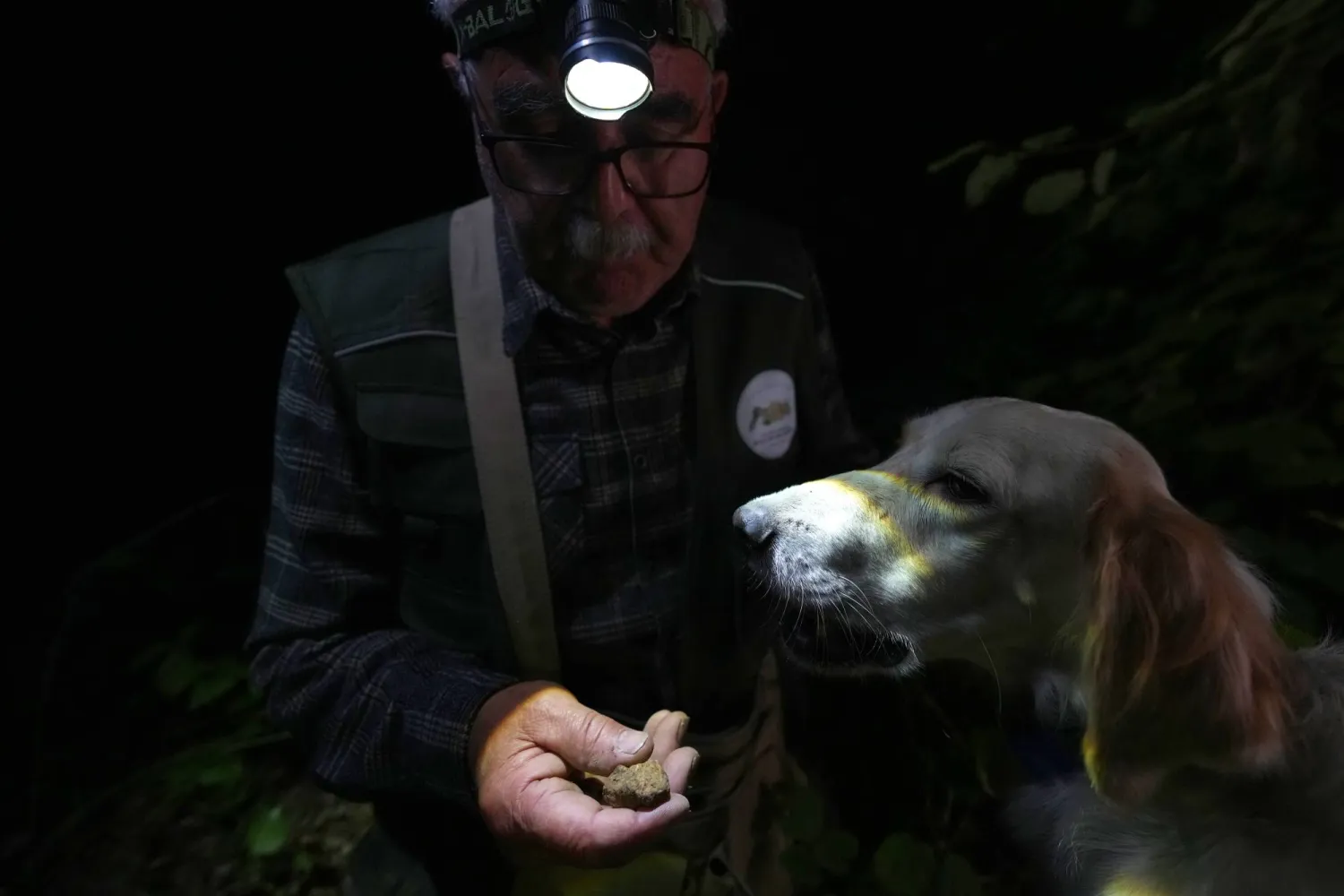
Truffles hunter Tino Marolo checks truffle found with his dog Stella in the woods in Vezza d'Alba, near Alba, northern Italy, Thursday, Oct. 1, 2026. (AP Photo/Antonio Calanni)
TT

From Italy to Croatia, a Warming Climate Threatens Prized White Truffles

Truffles hunter Tino Marolo checks truffle found with his dog Stella in the woods in Vezza d'Alba, near Alba, northern Italy, Thursday, Oct. 1, 2026. (AP Photo/Antonio Calanni)

Guided by the beam of a flashlight, Tino Marolo follows his dog Stella through the darkness of a Piedmont woodland, searching for one of Italy’s most prized culinary treasures hidden beneath the soil.

In the hills around Alba, home to the world’s most famous white truffles, hunters known as “trifolau” traditionally begin their season on Oct. 1. But increasingly, they are confronting a challenge above ground: climate change.

Months of heat and drought have raised concerns about the future of the prized white truffle, a fungus that depends on cool, moist soils and a delicate relationship with tree roots.

“The entire month of October was affected by the lack of rain in July and August and the high temperatures, so it was characterized by poor production and poor truffle shelf life,” said Antonio Degiacomi, president of Italy’s National Centre for Truffle Studies.

According to Degiacomi, dry and compacted soils have also produced smaller truffles this season.

The difficult harvest comes as Alba and the surrounding Langhe hills welcome visitors for the International White Truffle Fair, one of Italy’s best-known food events, which opened on Oct. 10 and runs until Dec. 6.

A changing climate, a changing harvest For Axel Iberti, president of the fair, the season began slowly, with smaller truffles emerging after a hot, dry summer. More recent rains have improved conditions, helping larger specimens appear.

Despite tighter supplies, demand remains strong. Prices at Alba’s truffle market are running about 20% to 30% higher than last year, Iberti said, while hotels and other accommodations have largely sold out during the fair period.

The concerns extend beyond this year’s crop.

“This year certainly stands out from a trend we all know has been going on for five or six years now,” Degiacomi said, citing hotter summers and increasingly erratic rainfall patterns.

Back in the woods, Marolo says uncertainty has always been part of the hunt.

“You certainly come home empty-handed more often than you do with a truffle,” The Associated Press quoted him as saying. “It’s really the thrill of saying: I don’t know what I’m going to find.”

Similar concerns are emerging elsewhere in Europe’s truffle-producing regions, suggesting a challenge extending beyond any single forest or region.

Across the Adriatic in Croatia, truffle hunters and scientists describe many of the same challenges, from shrinking harvests to declining habitat suitability.

In oak forests outside Zagreb, truffle hunter Petar Alebic says years of drought have made the prized fungi harder to find.

“Each year for the past seven or eight years has been worse than the last,” Alebic said. “Due to the drought, unfortunately, truffles are becoming smaller and scarcer.”

Alebic estimates this year’s harvest is about 30% below normal and increasingly supplements his income with truffle-hunting tours for tourists.

Scientists studying truffles in Croatia report similar findings. Croatia is home to about a dozen truffle species, according to mycologist Armin Mesic of the Rudjer Boskovic Institute. The most prized, the white truffle, can fetch as much as 4,000 euros ($4,500) per kilogram.

“Drought, a lack of rainfall and high temperatures have a significant impact on both the quantity and quality of truffles,” Mesic said.

“Quantities are declining, as is the geographical area where white truffles grow,” he added.

Forests are part of the solution Yet experts in Piedmont reject the idea that the white truffle is doomed.

“I don’t think we’re facing extinction; we’re facing a challenge,” Degiacomi said.

Researchers are studying ways to help truffle habitats adapt, including improved forest management and experimental irrigation during prolonged droughts.

“We’re trying to do what nature does, and do it artificially,” Degiacomi said.

In Alba, the response increasingly centers on restoring and protecting forests.

Iberti has expanded the fair’s focus beyond tourism to include environmental education and conservation efforts.

“The truffle is the sum, but it’s also the vector,” Iberti said. “People come to Alba and the Langhe to discover everything the territory has to offer.”

Working with municipalities, truffle hunters and landowners, communities have begun creating new public truffle grounds and planting trees that could eventually support truffle growth.

“The forest is an act of love and faith for the next two or three generations,” Iberti said.

Advocates say reforestation can help lower soil temperatures, retain moisture and reduce erosion, although it can take more than a decade before newly planted trees become suitable hosts for truffles.

Science looks underground Researchers are also investigating the role of soil microorganisms and looking for tree varieties better suited to hotter and drier conditions.

Attempts to cultivate the prized white truffle continue, but reliable commercial production remains elusive.

Unlike black truffles, which can be cultivated, white truffles have largely resisted large-scale production.

As autumn progresses, the size of this year’s harvest will become clearer, along with its effect on prices and supplies reaching restaurants and markets.

For now, however, the ancient partnership between hunters, dogs and forests endures.

One evening in the woods, Stella eventually stops and begins to dig.

The dog has found a truffle.

Whether future generations will continue to enjoy such moments may depend on a mix of science, conservation and adaptation to a warmer climate.


Wasm Hail 2026 Highlights Region's Natural Attractions Through Qareh Trail Hike

Participants embark on a guided three-kilometer morning hike, with separate days for men and women - SPA
TT

Wasm Hail 2026 Highlights Region's Natural Attractions Through Qareh Trail Hike

Participants embark on a guided three-kilometer morning hike, with separate days for men and women - SPA

The Wasm Hail 2026 events feature a hiking experience along the Qareh trail, bringing together adventure and exploration enthusiasts to enjoy the region's natural attractions amid Hail's diverse landscapes and terrain.

Participants embark on a guided three-kilometer morning hike, with separate days for men and women, SPA reported.

The experience is part of the activities accompanying Wasm Hail 2026, which aim to highlight the region's natural and tourism sites, diversify the options available to participants and visitors, and promote adventure travel and outdoor activities as key elements of Hail's appeal.


UK Records Highest Number of Heat-Related Deaths in 2026

Europe experienced another summer marked by prolonged periods of extreme heat, which scientists say are becoming more frequent and intense because of climate change. (Getty Images/AFP)
TT

UK Records Highest Number of Heat-Related Deaths in 2026

Europe experienced another summer marked by prolonged periods of extreme heat, which scientists say are becoming more frequent and intense because of climate change. (Getty Images/AFP)

Heat-associated deaths in Britain reached 5,258 during the summer of 2026, marking the highest annual total since records began in 2016, according to the UK Health Security Agency.

The toll comes after Europe experienced another summer marked by prolonged periods of extreme heat, which scientists say are becoming more frequent and intense because of climate change.

The 5,258 figure compares with 2,985 ‌heat-associated deaths during the ‌whole of summer 2022, another ‌notably ⁠hot period, and comes ⁠after what the agency described as an exceptional season of prolonged hot weather in 2026.

Other European countries have also reported record excess mortality from the heatwaves over the summer.

Researchers from Imperial College London and the London School of Hygiene & ⁠Tropical Medicine estimated that more than 50,000 ‌heat-related deaths occurred in ‌urban areas across 30 European countries during the summer, ‌the highest toll recorded since 2000.

In Britain, there ‌were seven heat episodes lasting a total of 41 days during the summer, the highest number recorded since annual heat mortality monitoring began, the UKHSA said.

The deadliest ‌period was between June 21 and June 28, when an estimated 2,401 ⁠deaths were ⁠associated with extreme heat. More than 3,000 heat-associated deaths were estimated across heat episodes in May and June alone.

Heat can be fatal by triggering heat stroke and dehydration or by worsening underlying cardiovascular and respiratory conditions.

Ross Thompson, principal environmental health scientist at the agency, said it was vital that everyone is prepared "not just during a heatwave but in the longer term."

"The decisions we make now will shape the health impacts people experience in the decades ahead," Thompson said.


Saudi Arabia’s Harrat Al Rass Al Abyad Nature Reserve Registered in World Database on Protected Areas

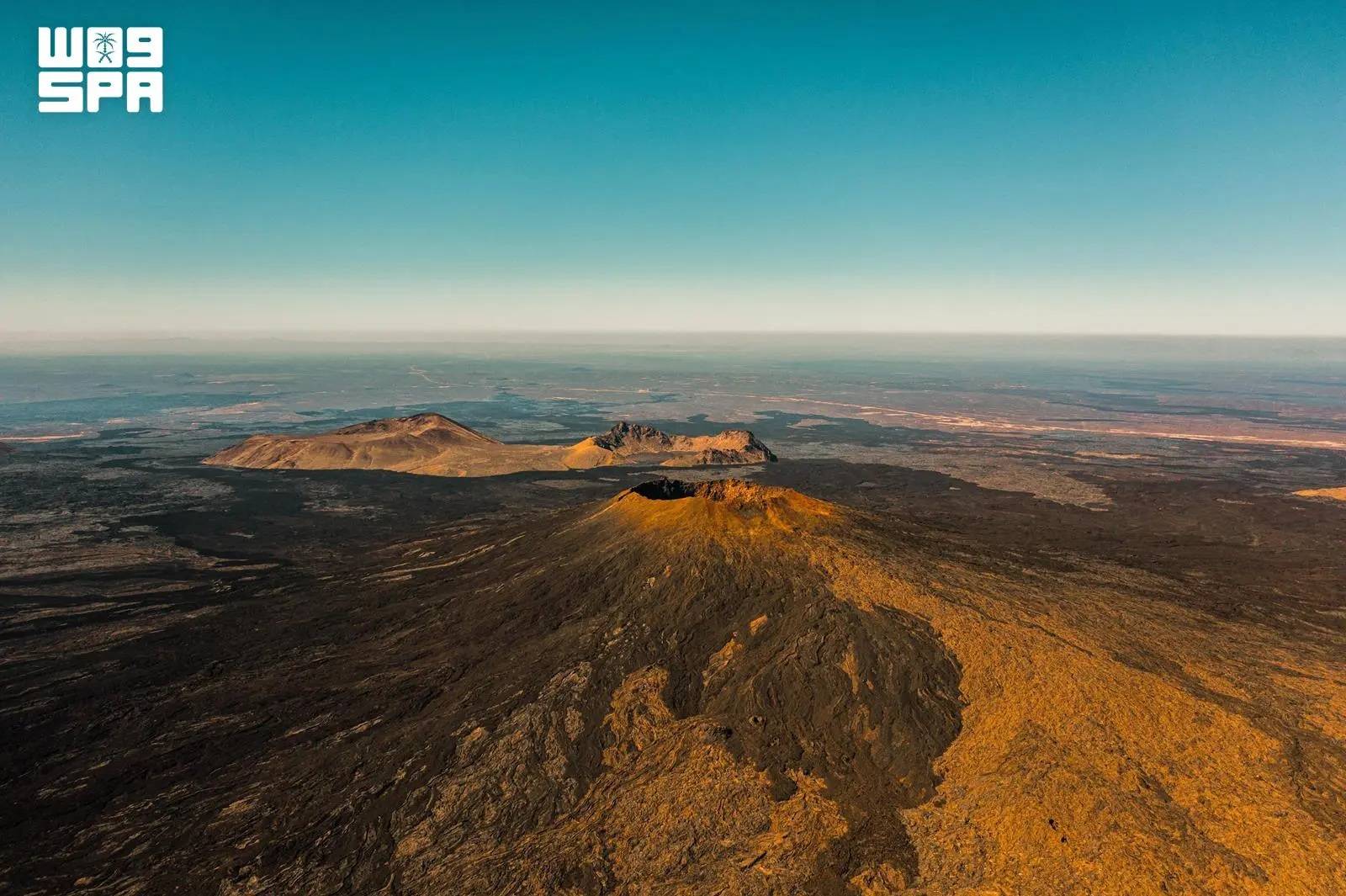
The reserve is located within Harrat Khaybar, one of the largest volcanic fields in the Arabian Peninsula. (SPA)
TT

Saudi Arabia’s Harrat Al Rass Al Abyad Nature Reserve Registered in World Database on Protected Areas

The reserve is located within Harrat Khaybar, one of the largest volcanic fields in the Arabian Peninsula. (SPA)

Saudi Arabia’s Royal Commission for AlUla (RCU), in coordination with the National Center for Wildlife, announced the official registration of Harrat Al Rass Al Abyad Nature Reserve in both the National Database of Protected Areas and the World Database on Protected Areas (WDPA). The milestone supports efforts to conserve the reserve’s distinctive biodiversity and rare geological formations.

Covering an area of 600 square kilometers in the Khaybar Governorate in the Madinah Region, the reserve is the sixth within RCU’s protected area network (APAN), which spans a total of 12,107 square kilometers.

Its registration reflects RCU’s continued efforts to develop its protected area network, document its natural assets and strengthen their management through scientific approaches that support long-term sustainability.

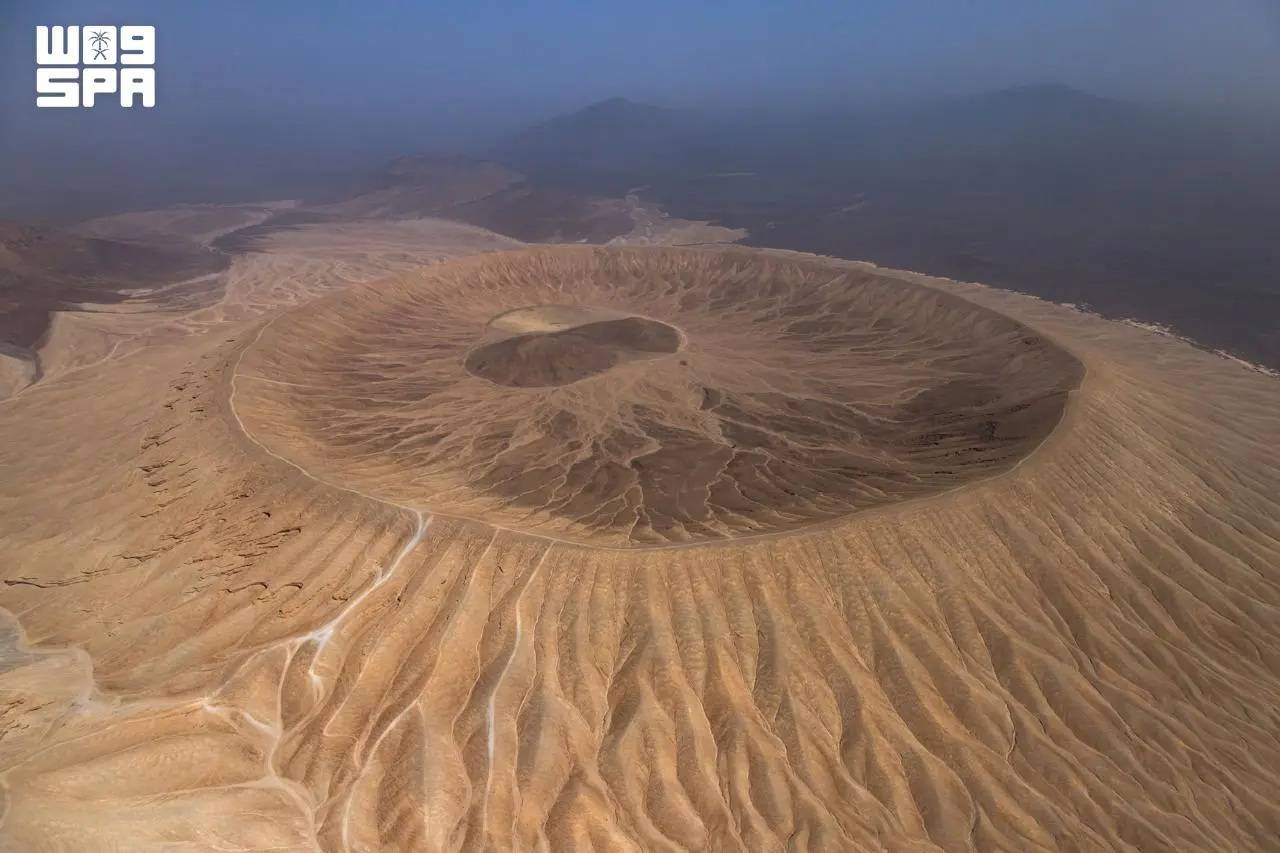
Harrat Khaybar is home to three rare white volcanoes. (SPA)

The reserve is located within Harrat Khaybar, one of the largest volcanic fields in the Arabian Peninsula, where white volcanoes stand alongside black basalt fields, creating a striking geological landscape. The white formations derive their distinctive color from comendite volcanic rocks, setting them apart from the surrounding landscape.

Harrat Khaybar is home to three rare white volcanoes: Jabal Al Bayda, Jabal Al Abyad and Jabal Al Mansaf, highlighting the area's significance for studying geological diversity and the history of volcanic activity.

The reserve falls under Category III of the International Union for Conservation of Nature (IUCN) protected area management categories, which focuses on protecting natural features and their associated biodiversity and habitats.

The area is also home to Umm Jirsan Cave, one of Saudi Arabia’s longest lava tube systems, extending approximately 1,481 meters.

Preliminary surveys conducted by RCU have recorded around 99 plant, 14 mammal, 18 reptile and 59 bird species, including the endangered Egyptian vulture. The surveys have also identified suitable habitats for the mountain ibex.

Species inventories and data updates remain ongoing to enhance knowledge of the reserve’s ecological assets and identify conservation priorities.

The area is also home to Umm Jirsan Cave, one of Saudi Arabia’s longest lava tube systems. (SPA)

The development of the reserve was guided by a scientific approach involving environmental, geological and cultural assessments conducted between 2022 and 2024 in collaboration with the IUCN. The assessments resulted in an operational management plan for 2024–2029, providing a framework for conservation, management and monitoring activities to safeguard the site's natural and cultural values.

RCU continues to pursue international recognition for the area, including efforts to meet the requirements of UNESCO Global Geoparks and the IUCN Green List. These initiatives support the conservation of geological heritage and enhance the effectiveness of protected area management.

The reserve’s registration forms part of RCU’s 10-year ecosystem restoration strategy and its wider efforts to protect natural habitats, conserve biodiversity and safeguard geological heritage. The efforts align with the Saudi Green Initiative’s target of protecting 30% of Saudi Arabia’s terrestrial and marine areas by 2030.