


Iran Warns New War Could Last Longer After Trump Threatens Strikes

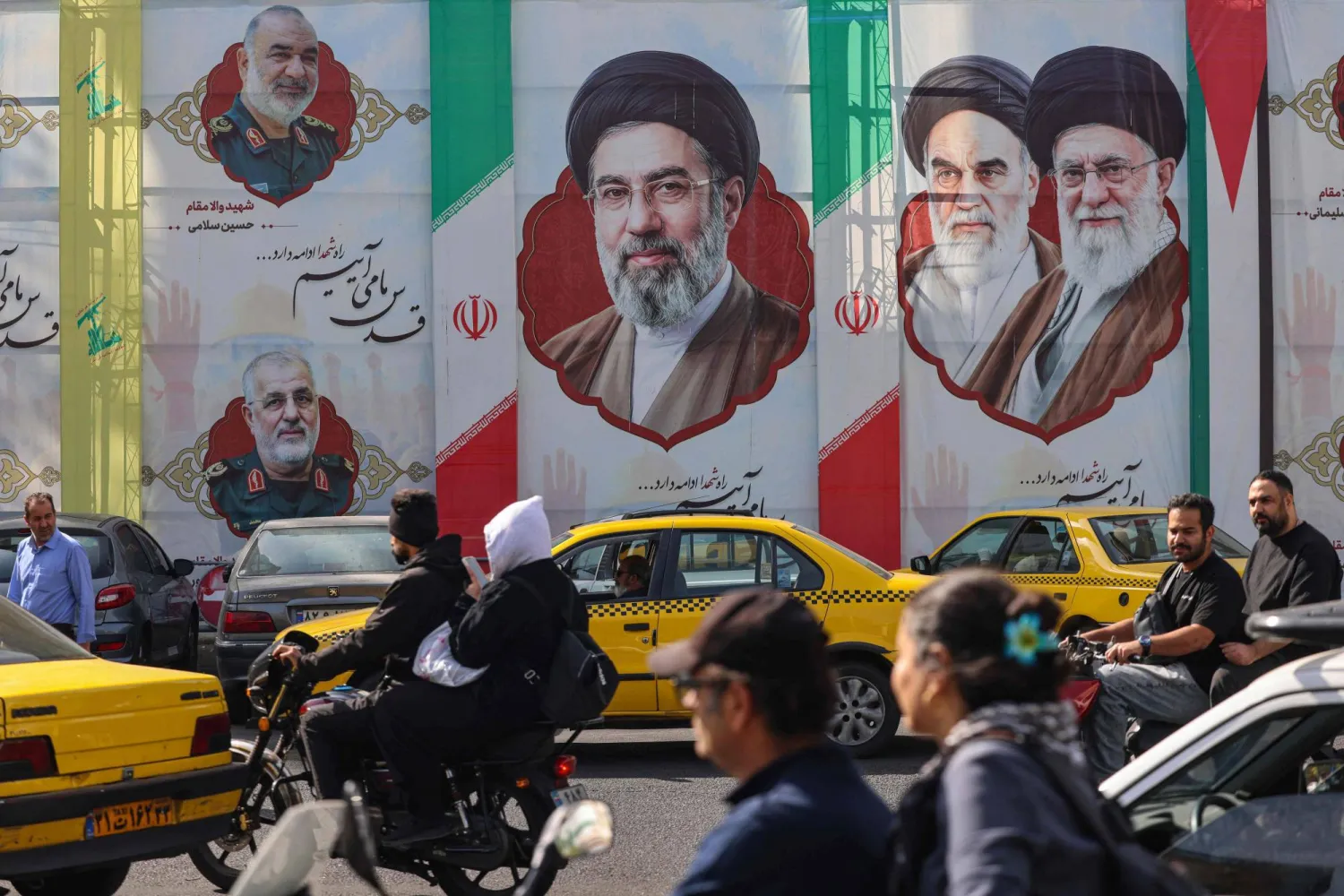
Iranians motorists drive past a poster of Iran's supreme leader Mojtaba Khamenei in central Tehran on November 1, 2026. (Photo by ATTA KENARE / AFP) /
TT

Iran Warns New War Could Last Longer After Trump Threatens Strikes

Iranians motorists drive past a poster of Iran's supreme leader Mojtaba Khamenei in central Tehran on November 1, 2026. (Photo by ATTA KENARE / AFP) /

Iran warned on Sunday that any renewed war with the United States could last longer than the previous round of fighting, after President Donald Trump said he still had to "take care" of more targets. 

Diplomatic efforts to end the Middle East war have been punctuated by repeated threats from the United States and Israel to resume bombardments as they hold crucial elections. 

"A potential future war could last longer than previous conflict, and the American president would not be in a position to dictate the timing or the conditions of its conclusion," said army spokesman Mohammad Akraminia, according to Iranian state television. 

In the most intense phase of the war, which began on February 28 with US-Israeli strikes on Iran, Tehran retaliated with missile and drone attacks across the region. Iran-aligned armed groups joined the fighting in Lebanon and Yemen. 

Akraminia's remarks followed Trump's suggestion that the United States could swiftly strike its remaining targets in Iran. 

"We still have to take care of, I would say one or two sites, but we can do that in 10 minutes," Trump told reporters. 

"You probably could look at Pickaxe Mountain, and you have to take care of that. We can do that all very quickly," he added, referring to a suspected underground nuclear complex. 

Trump reiterated his threat on Sunday, telling a campaign rally in Iowa ahead of midterm elections, that he may have to give Tehran "the hammer" at some unspecified time. 

The warning came after US media reported that Trump had held a call with Israeli Prime Minister Benjamin Netanyahu on Saturday over whether and when to ramp up combat operations against Iran. 

Axios quoted one US and one Israeli official saying the two leaders discussed the state of negotiations with Iran, with Netanyahu pressing the president to strike the country immediately after Tuesday's US midterm elections and Trump eager to let negotiations play out. 

The Israeli source described the call as "tough", while the US source said it was "direct", according to Axios. 

Speaking to reporters on Sunday, Trump confirmed he had discussed Iran with Netanyahu, but would not elaborate. 

- 'No geographical limitations' - 

Top military and political officials in Iran have warned against any new attack. 

Revolutionary Guards spokesman Hossein Mohebbi on Sunday echoed a warning issued a day earlier in a written message by Iran's new supreme leader, Mojtaba Khamenei. 

"In a conflict with America, there are no geographical limitations; a vast theatre has been defined for inflicting damage upon the enemy," Mohebbi said, according to state television. 

Foreign Minister Abbas Araghchi said: "We hope the other side will exercise rationality and choose diplomacy," adding that Iran "remains prepared for both defense and diplomacy", according to the official IRNA news agency. 

The warnings came as Iran's security chief Mohsen Rezaei disclosed on Saturday that he had received a letter from US Vice President JD Vance seeking to revive talks. 

Rezaei noted what he described as a positive change in "tone" from the US side but said he had yet to respond. 

He said Tehran had previously told Washington that unless its conditions were met, "neither would the Strait of Hormuz be reopened nor would there be any negotiations". 

Those conditions include unfreezing Iranian assets abroad, ending the months-long US naval blockade of Iranian ports, lifting longstanding sanctions and ending the war on all fronts. 

Since the war began, Iran has claimed control over the Strait of Hormuz, a vital global energy conduit, and repeatedly targeted vessels attempting to cross without its authorization. 

The United States has imposed a naval counter-blockade on Iranian ports. 

- Helplessness - 

In Tehran, some residents described a sense of helplessness as threats of renewed fighting mount. 

"The news coming in is truly worrying. However... there is nothing I can actually do about it," Mohadese, a 27-year-old health inspector, told AFP. 

Others including 48-year-old vendor Ebrahim saw no reason to be concerned. 

"We do not fear another war; we have been at war for 48 years now -- we are always at war," he said in downtown Tehran. 


US Imposes Sanctions on Dozens Linked to Iran’s Shadow Banking Networks

US Treasury Secretary Scott Bessent testifies during a House Financial Services Committee hearing on the state of the international financial system on Capitol Hill in Washington, DC, on September 15, 2026. (AFP)
TT

US Imposes Sanctions on Dozens Linked to Iran’s Shadow Banking Networks

US Treasury Secretary Scott Bessent testifies during a House Financial Services Committee hearing on the state of the international financial system on Capitol Hill in Washington, DC, on September 15, 2026. (AFP)

The Trump administration has issued new Iran-related sanctions targeting dozens of people and entities, the Treasury Department said on Monday, stepping up its effort to isolate Iran from the global economy and disrupt its shadow banking networks.

The Treasury's Financial Crimes Enforcement Network (FinCEN) also released an analysis identifying nearly $15 billion of financial activity conducted from January 2025 to August 2026 that it said was potentially linked to Iranian shadow banking.

The Treasury said Monday's ‌sanctions hit ‌two dozen Iranian exchange houses and front ‌companies ⁠that have kept ⁠Iran's foreign trade running, including firms based in Türkiye and Hong Kong, as well as key personnel.

“Iran’s economy is underwater, and its leaders are panicking,” Treasury Secretary Scott Bessent said in a statement. “Iran’s shadow banking system is the last ⁠financial lifeline of a bankrupt regime. Treasury ‌will continue dismantling these illicit ‌networks until we have buried the head of the ‌snake.”

The Treasury said Iran’s shadow banking system is overseen ‌by the Central Bank of Iran and relies on dozens of Iran-based exchange houses and “rahbar companies,” bank affiliates that manage sanctions-evasion networks for their Iran-based clients.

Billions of dollars move ‌through the international financial system in this way, sustaining the last remnants of Iran’s ⁠foreign trade, ⁠it added.

The FinCEN report, based on data submitted by regulated US financial institutions, showed a decrease in the volume of potential Iranian shadow banking from January to August, which it said "may be indicative of at least partial disruption of Iran’s ability to operate shadow banking networks."

It showed that those networks continue to be connected, most prominently in Hong Kong and Singapore, through businesses spanning the oil, shipping and investment sectors.


Iran Seeks $290 Bn in Damages Against the US

People walk on a street in Tehran, Iran, November 20, 2026. Majid Asgaripour/WANA (West Asia News Agency) Reuters
TT

Iran Seeks $290 Bn in Damages Against the US

People walk on a street in Tehran, Iran, November 20, 2026. Majid Asgaripour/WANA (West Asia News Agency) Reuters

Iranian courts have demanded that the United States pay $290 billion in damages, a judiciary official said on Monday.

"We have secured court rulings in domestic courts awarding $290 billion in damages against the Americans," said Hassan Abdolianpour, head of the judiciary's center for lawyers, according to state television.

According to state TV, the damages cover US actions going back decades.

The Middle East war began on February 28 when the United States and Israel launched a wave of strikes that killed Iran's supreme leader Ali Khamenei.

Iran responded by launching missiles and drones at countries across the region saying it is targeting US bases and assets in those countries.


Nvidia Board Reinstates Jensen Huang as CEO Just Days After Rejecting His Offer to Return

Jensen Huang, founder of Nvidia, is broadcasted on a screen after his reinstatement at the NASDAQ MarketSite in New York City, US, November 23, 2026. (Reuters)
TT

Nvidia Board Reinstates Jensen Huang as CEO Just Days After Rejecting His Offer to Return

Jensen Huang, founder of Nvidia, is broadcasted on a screen after his reinstatement at the NASDAQ MarketSite in New York City, US, November 23, 2026. (Reuters)

In a surprise move, Nvidia’s board reinstated Jensen Huang as president and CEO on Monday, just days after rejecting his offer to return to the artificial intelligence chipmaker where he built a reputation as one of the industry's leading evangelists.

It was the latest twist in the fallout from Huang’s admission of an affair with a woman suspected of being a Chinese spy.

“The Board believes Jensen is the right person to lead NVIDIA, and that his reinstatement is in the best interests of our stockholders, employees, partners and customers,” board Chairman Harvey C. Jones said in a statement.

President Donald Trump, who has a close personal relationship with Huang, called for the reinstatement as recently as Sunday night and took credit for the board's decision in an interview Monday with CNBC.

“I believe my intervention was very important,” Trump said.

The president said he spoke to Huang about the reinstatement Sunday, and the CEO assured him that he would work harder than before his fall. Trump also said his administration assured Nvidia there were no national security concerns about Huang's return.

“The board decided to do what we wanted them to do,” the president said.

Trump declined to say whether he called into the board meeting, though he said, “Basically, I was represented at the board.”

Huang still faces scrutiny

Huang still faces scrutiny, including several congressional investigations, over the affair and the suspected diversion of Nvidia’s advanced chips to China. Huang is scheduled to sit for an interview next week with three House committees investigating the scandal’s implications for national security.

Huang said in a statement that he was “honored” to return to the company and that he resumes the responsibility “with the greatest humility and renewed commitment.” He thanked Jones and interim CEO Colette Kress, who will return to her role as chief financial officer, as well as Nvidia’s executive staff for their leadership during the brief period of disorder.

“I am also deeply thankful to our employees, shareholders, leaders across the industry and partners around the world for their extraordinary support,” Huang’s statement said. “Above all, I am grateful for the love and support of my family. I can’t wait to get back to work.”

Shares of Nvidia soared 33% to $165.57 at the opening bell Monday, moments after Huang’s return was announced. That price was far below the all-time high of $239.24 that the stock reached just last month.

The president said Attorney General Todd Blanche confirmed that the government “does not possess evidence that he has engaged in any unlawful conduct.”

Trump called the reinstatement the “correct and proper decision,” writing on social media Monday that the country “needs Jensen’s leadership at NVIDIA in order to ensure the Success and Prosperity of not only the Company, but the American Economy.” He also called for Nvidia to continue its internal investigation.

Announcement follows a whirlwind month for Nvidia

The company has had a whirlwind month after Huang admitted to extramarital affairs, including one with Chinese businesswoman Alice Huang, a suspected spy for the country. Nvidia stock was at the center of market volatility in the wake of the admission and its downstream effects in Washington.

Attorney General Blanche told reporters at an unrelated news conference this month that the Justice Department had not reached any conclusion about whether Alice Huang was a Chinese spy.

“All that I think I will say is that of course DOJ is investigating or looking at it," Blanche said.

The Justice Department is conducting a criminal investigation involving potential export control violations into Megaspeed, the Singapore-based cloud computing firm where Alice Huang was an executive.

Jensen Huang's reinstatement comes after days of speculation about whether he would return.

Supporters set up an online petition calling for him to get his job back that drew many signatures from current and former Nvidia staff, investors and other Silicon Valley supporters, including Elon Musk.

Huang posted an online message last week saying he would be “honored” to return if the company asked him. But the board responded then that it did not intend to reinstate him.

It’s not the first time a tech industry leader has been fired because of transparency concerns and then quickly rehired after an outpouring of support from staff and investors. Three years ago, OpenAI co-founder Sam Altman was ousted as CEO after a chaotic power struggle and then reinstated days later after employees revolted.
