More Than a Dozen Flights in Europe Receive Bomb Threats that an Official Calls 'Malicious' Hoaxes

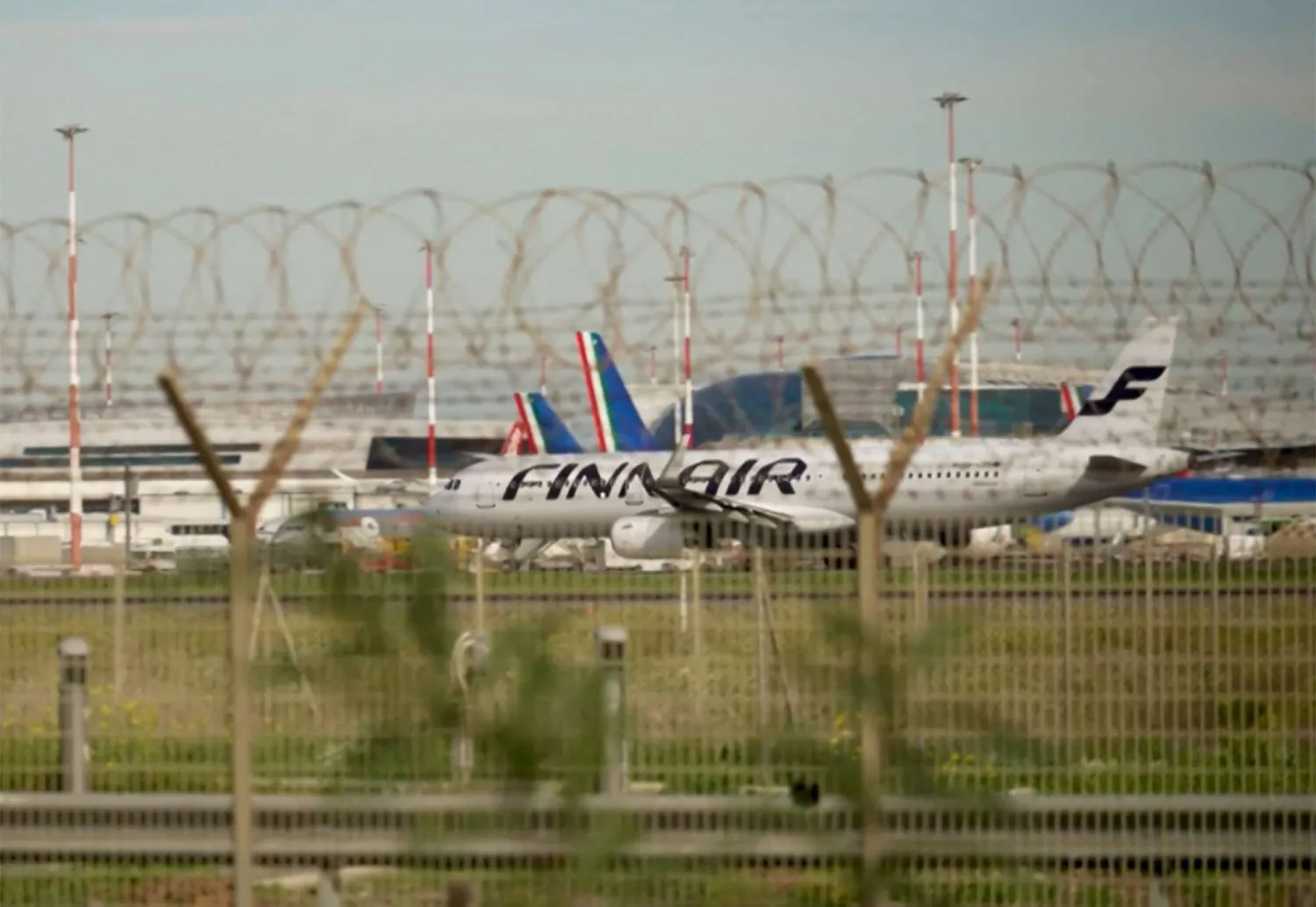
This video grab from AFPTV footage shows a Finnair plane taking off from Fiumicino Airport after it was diverted due to a bomb threat, with Italian air force jets having escorted it from Helsinki to Rome on November 5, 2026. (Photo by Andrea BERNARDI / AFP)
TT

More Than a Dozen Flights in Europe Receive Bomb Threats that an Official Calls 'Malicious' Hoaxes

This video grab from AFPTV footage shows a Finnair plane taking off from Fiumicino Airport after it was diverted due to a bomb threat, with Italian air force jets having escorted it from Helsinki to Rome on November 5, 2026. (Photo by Andrea BERNARDI / AFP)

Bomb threats targeted more than a dozen flights in Europe on Thursday, leading to a slew of emergency landings and military escorts in some cases, authorities said. No hazardous or suspicious materials have been found in what a British official called “malicious" hoaxes.

Several similar threats targeted planes earlier this week, prompting searches and diversions. Europe has experienced a slew of other disruptions recently, such as attacks on supermarket refrigeration systems, drone incursions and mysterious triggers to alert apps.

While fake bomb threats are relatively common, it is unusual to see so many in a single day. They come at a time of increased geopolitical tensions and warnings from authorities that Russia may be ramping up so-called hybrid threats in Europe.

It was not known whether this week's threats were linked, who sent them or what their aims were.

An email containing the threat to Rome-bound planes was sent on behalf of a group that describes itself as anti-feminist, according to a copy provided by an airport official and reviewed by The Associated Press.

An official from another European airport said the threat they received also came from a group calling itself anti-feminist, and used some of the same language. It wasn't clear if the two threats were sent by the same group. Both officials spoke on condition of anonymity because they weren’t authorized to share the information.
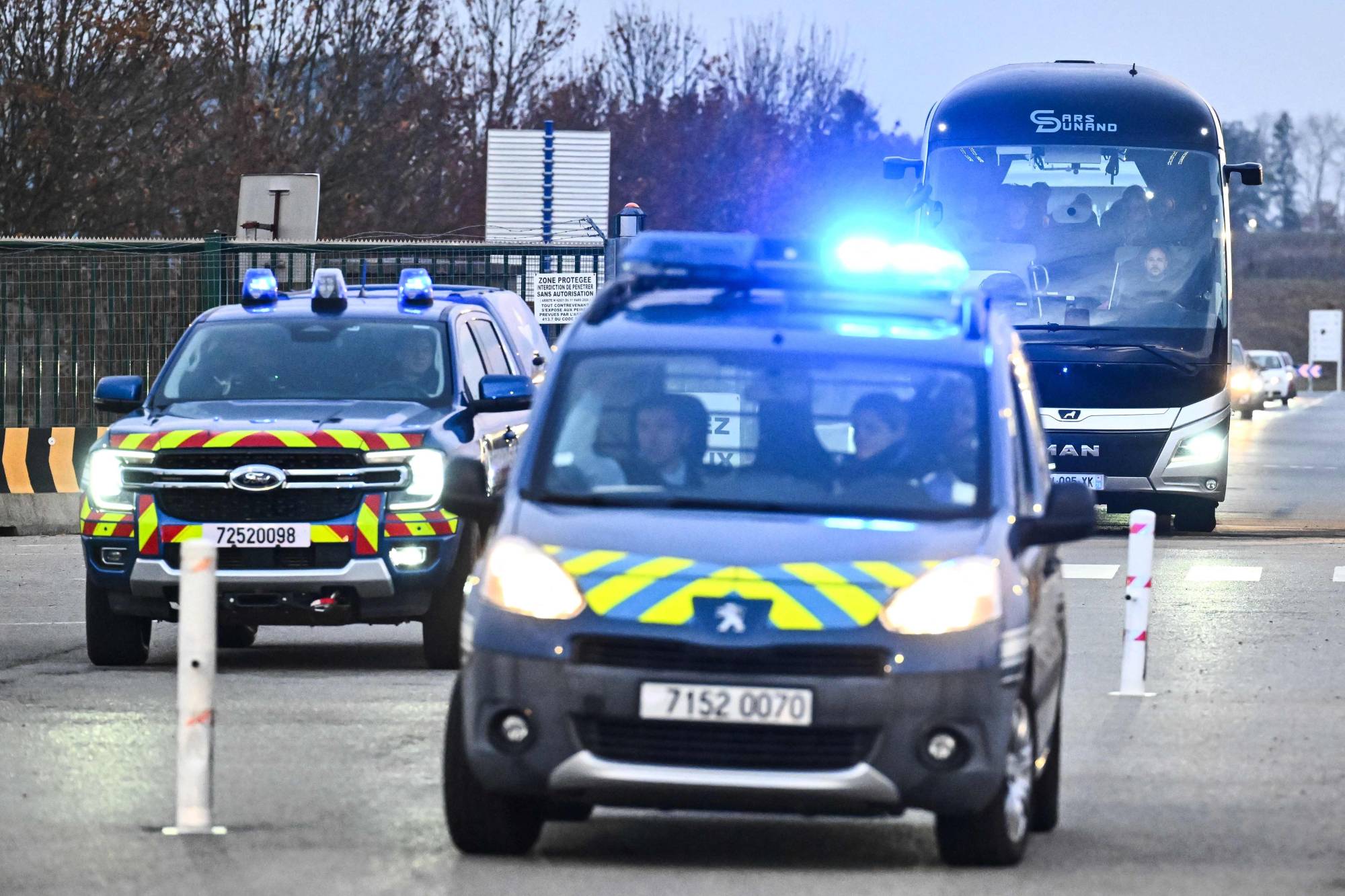
Passengers of Aer Lingus aircraft from Dublin to Rome, leave in a bus the Evreux-Fauville Air Base after their plane had been rerouted and escorted by military aircraft after a suspected bomb threat, on November 5, 2026. (Photo by Guillaume Saligot / AFP)

Jacob Funk Kirkegaard, senior fellow at the Bruegel think tank in Brussels, said the threats were “stress-testing” how European governments and airport officials respond, and whether their responses were coordinated.

The idea behind the threats “appears to be to sow chaos, uncertainty, about the reliability of air traffic across Europe” and could have “cascading effects” — like economic damage and costs related to inspection, investigation and cleaning aircraft.

Joji Waites, who heads flight safety at the British Airline Pilots’ Association, said the industry has put in place “proved mechanisms” for dealing with such threats, including a team of assessors to grade the level of threat in a red-amber-green color-coding system, quick notification of flight crews, and the evacuation of planes on the ground.

Each flight disruption could cost airlines as much as $250,000, on a par with the possible costs of dealing with an unruly passenger, said Philip Baum, a visiting professor of aviation security at Coventry University in England.

“And that’s because you might end up with the crew going out of hours. You might need replacement crew. You have got passengers that miss their flight connections," Baum said. "It knocks everything out of sync for the rest of the day for the airline in question.”

Military escorts incur expenses, too, which would be borne by governments rather than airlines, he added.

Officials decry the hoaxes Britain's transport secretary, Heidi Alexander, told British broadcasters that flights across Europe have been hit by “malicious hoax threats.”

European Union Transport Commissioner Apostolos Tzitzikostas told reporters in Dublin that it was “too early to draw conclusions on whether the reported incidents are linked.”

“National investigations remain ongoing,” he said, adding that an EU information-sharing mechanism on aviation security had been activated.

An Aer Lingus flight from Dublin to Rome was diverted to a military air base in France after receiving a threat, French Prime Minister Sébastien Lecornu’s office said. The flight landed safely at the base in Evreux, which was under high alert, and military bomb disposal teams were examining the plane, the office said.

Lecornu ordered warplanes to intercept the plane because the pilot “didn’t cooperate as expected with the authorities,” his office said. It declined to comment further.

Hours after the flight landed, the plane was sitting on the tarmac with a Red Cross vehicle nearby while explosive experts with dogs examined it.

An investigation was opened by French aviation security authorities. The regional prosecutor, Remi Coutin, said in a statement that the pilot and co-pilot were being questioned about what happened.

Italian air force jets escort a Finnair flight Italian air force fighter jets escorted a Finnair flight that departed Helsinki bound for Rome after an email threat was received, the air force said in a statement.

Finnair said that two of its flights, including the one that received the military escort and landed safely in Rome, “faced unfounded hoax bomb scares.” The other flight, operated by Jettime from Helsinki to Vienna, landed safely at its destination, and was expected to return to service after an inspection, Finnair said.

Three Ryanair flights bound for Sofia, Bulgaria, meanwhile, also received military escorts and made emergency landings after bomb threats, officials said. Two of the flights — one from Copenhagen, Denmark, and the other from Madrid — landed safely in Sofia, airport officials told reporters. The third, from London, was diverted and landed safely in Plovdiv, Bulgaria’s second-largest city, Plovdiv Airport CEO Krassimir Peshev said.

Several flights across Europe received bomb threats earlier this week, officials said.

The flights included ones operated by Polish airline LOT, Scandinavian Airlines, Wizz Air and Ryanair. The hoax threats came after a plane headed for Bulgaria was diverted to Hungary upon receiving a similar bomb threat while in the air. No one was injured.
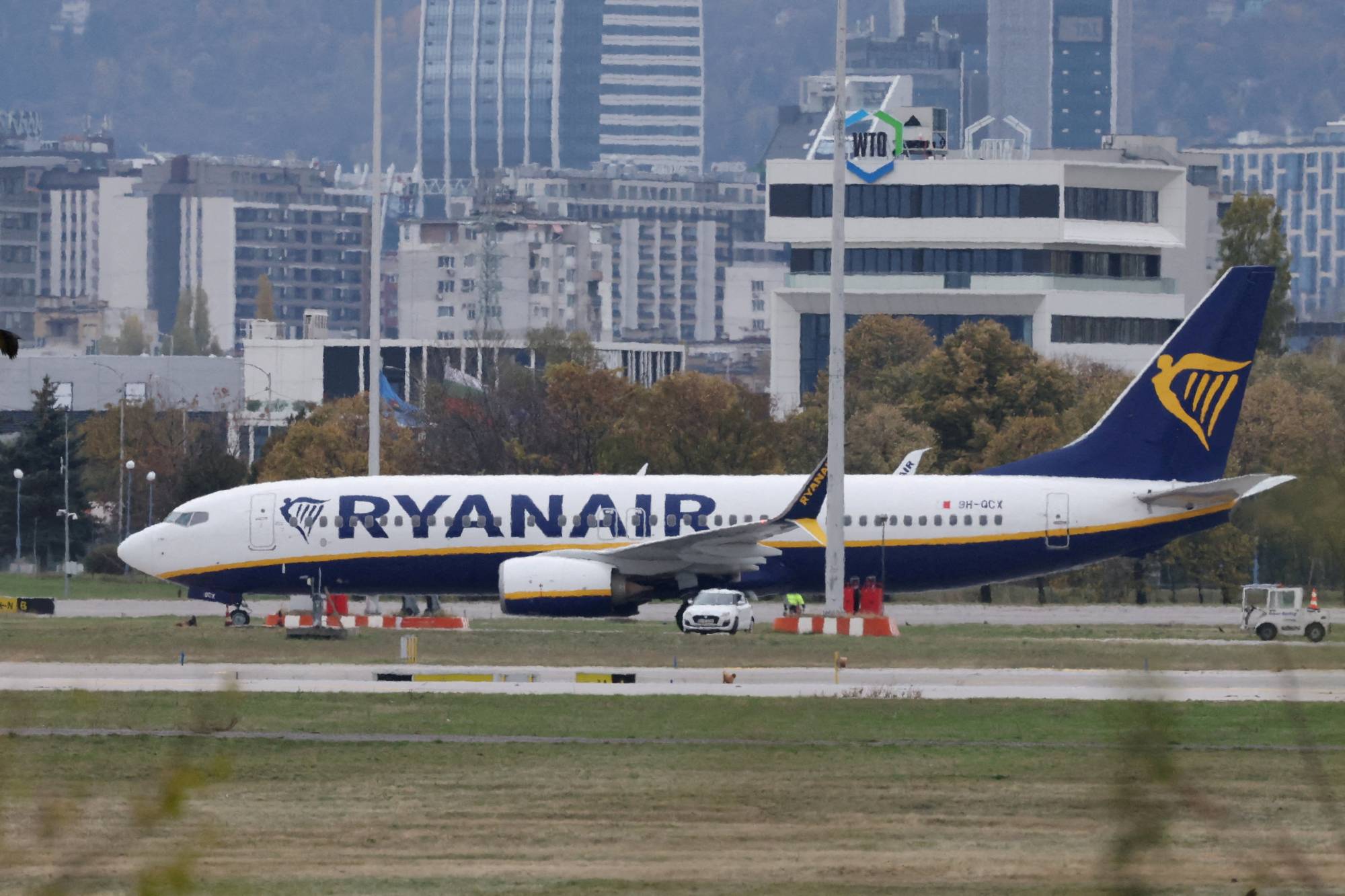
A Ryanair aircraft at Sofia Airport after airplanes flying from Copenhagen and Madrid landed in Sofia, according to the Bulgarian interior minister, as bomb threats forced airliners to make unplanned landings across Europe, in Sofia, Bulgaria, November 5, 2026. REUTERS/Stoyan Nenov TPX IMAGES OF THE DAY

A slew of other flights were disrupted Thursday. Among those incidents:

— Czech police said searches of four planes that landed in Prague after being targeted by bomb threats turned up nothing. They have not given details on where the flights originated, and said they took precautions despite not finding the threats credible.

— A LOT Polish Airlines flight from Warsaw to Brussels landed at its destination, where inspections found no hazardous or suspicious items, the airline said.

— A Wizz Air flight from Milan to Bucharest landed safely in Bucharest following a bomb threat, airport spokesman Teo Postelnicu said. Checks turned up no bomb.

— A flight to Warsaw landed in Vienna after an email to Polish authorities containing an abstract threat, said Stefan Loidl, a police spokesperson in Lower Austria province. Nothing was found and the plane continued to Warsaw. He said there was also an abstract threat to Vienna Airport concerning four other flights, which he declined to identify, but operations were not disrupted.

- Air Serbia said a flight from Belgrade to Romania’s capital, Bucharest, received a bomb threat that turned out to be a hoax. The plane landed in Bucharest, underwent checks and resumed regular operations.


European Air Traffic Targeted by New Threats in at Least 3 Incidents

Police officers work at Copenhagen Airport on November 6, 2026, in connection with new threats directed at air traffic. (AFP)
TT

European Air Traffic Targeted by New Threats in at Least 3 Incidents

Police officers work at Copenhagen Airport on November 6, 2026, in connection with new threats directed at air traffic. (AFP)

Police in Denmark and the Czech Republic investigated threats to air traffic on Friday, while a Romanian plane received a bomb threat following a string of hoaxes that have targeted flights and disrupted travel across Europe this week.

A flight from Prague to Bucharest operated by Romanian carrier Tarom received a bomb threat. The plane landed at its intended destination, and airport administration officials said the bomb threat proved to be false.

In the Danish capital, Copenhagen, police said Friday they were present at the airport for a second consecutive day “in connection with threats directed at air traffic.”

They said their immediate assessment was that there had been no danger to passengers or to others at the airport. It added that air traffic was proceeding safely and without disruption.

Czech police also said they were again dealing with threats against planes on Friday. They said necessary security measures have been taken in cooperation with Prague’s Vaclav Havel Airport that have “a minimal impact on the normal operations at the airport.”

Meanwhile in Ireland, the Dublin headquarters of national broadcaster RTE was evacuated Friday after a bomb threat, and live broadcasts were replaced with pre-recorded programs.

Ireland’s police force, An Garda Síochána, said it was “aware of a threat made against media organizations here and in Europe.” It said that it has been liaising with Irish media organizations and the threat will be investigated.

More than two dozen flights were affected by threats earlier in the week, with some diverted as authorities scrambled to rule out any danger.

Europe has experienced a slew of other disruptions recently, such as attacks on supermarket refrigeration systems, drone incursions and mysterious triggers to alert apps.

Fake bomb threats are relatively common, but it is unusual to see so many in such a short period. They come at a time of increased geopolitical tensions and warnings from authorities that Russia may be ramping up so-called hybrid threats in Europe.


Satellite Images Reveal New Construction Near Iran Missile Sites

A satellite photo shows suspected tunnel expansion (in the upper-right quadrant of the picture) at Shahid Modarres Garrison, near Tehran, Iran, in this handout image obtained by Reuters on July 5, 2024. (Planet Labs PBC/Handout via Reuters)
TT

Satellite Images Reveal New Construction Near Iran Missile Sites

A satellite photo shows suspected tunnel expansion (in the upper-right quadrant of the picture) at Shahid Modarres Garrison, near Tehran, Iran, in this handout image obtained by Reuters on July 5, 2024. (Planet Labs PBC/Handout via Reuters)

Iran appears to be undertaking significant new construction near at least two of its major missile sites and repairing bases damaged by months of US and Israeli air strikes, analysis of satellite images suggests, reported the BBC on Friday.

Evidence of digging and new buildings are visible in satellite imagery taken in November at the Garmdareh military base in Karaj near the capital Tehran and the Shahroud base in the north, analysts at British intelligence company MAIAR, who reviewed the photos, told BBC Verify.

At least 12 other military sites, including missile complexes and air bases, appear to show signs of repairs. New roofs have been built on destroyed buildings at the Kermanshah missile base in western Iran, near the border with Iraq, while damaged buildings and debris have been cleared at the Parchin military complex east of the capital.

"The excavations near Shahroud could potentially be related to the production of missiles," said Jim Lamson, a former CIA analyst who focused on Iran.

"Because the nearby air base at Shahroud has been targeted multiple times in recent years, Iran's Revolutionary Guards Corps (IRGC) is probably trying to find ways to move its production facilities underground," he explained.

At Karaj and Shahroud, satellite images appear to show significant excavation. At Karaj, multiple vehicles were visible in satellite images, while improvements appear to have been carried out to the nearby airbase.

The images from Karaj appear to show "a new portal for an underground facility", said Sam Lair, research analyst at the Foreign Policy Research Institute (FPRI), which has looked extensively into recent developments at Iranian sites, reported the BBC.

A MAIAR analyst also identified new construction and excavations outside tunnel entrances near the city of Qom, close to the Fordo underground uranium enrichment complex, which has been bombed by both the US and Israel multiple times.

Washington has repeatedly asserted that the strikes have severely degraded Iran's military capabilities. Tehran maintains that it holds substantial missile reserves, with state television broadcasting footage purporting to show dozens of missiles at the entrance of an underground facility.

Activity related to military assets would show that Tehran is bracing itself for further attacks by the US and Israel, said Mark Cancian, a military analyst with International Security Program at the Center for Strategic and International Studies (CSIS).

"The purpose is to better defend itself against future attacks," he said, according to the BBC. "It also indicates a priority on rebuilding military capability rather than rehabilitating the economy."


Israel Opposition Figure Makes U-Turn on Ultra-Orthodox Draft to Oust Netanyahu

Avigdor Liberman, then Israel's finance minister, speaks to members of the media in Jerusalem on September 11, 2022. (AFP)
TT

Israel Opposition Figure Makes U-Turn on Ultra-Orthodox Draft to Oust Netanyahu

Avigdor Liberman, then Israel's finance minister, speaks to members of the media in Jerusalem on September 11, 2022. (AFP)

A hardline figure in the Israeli opposition said Friday he would moderate longtime demands that ultra-Orthodox Jews serve in the military, seeking a coalition that can oust Prime Minister Benjamin Netanyahu.

Neither Netanyahu nor opposition chief Gadi Eisenkot reached a majority in the October 27 election, with Israeli society highly polarized over Netanyahu and worn down by three years of war.

Eisenkot could form a coalition if he works with Israeli-Arabs, whose seat count soared on anger over Netanyahu's far-right government, but that prospect faces strong disagreement from opposition partner Avigdor Liberman, a onetime aide to Netanyahu who now sharply criticizes the prime minister but shares his hawkish views on the Palestinians.

Liberman said Friday he would not back down on rejecting an alliance with Israeli-Arabs but said the opposition should negotiate with ultra-Orthodox Jews, despite his years of heated denunciations of the community for avoiding military service.

Saying the most important goals were removing Netanyahu and avoiding new elections, Liberman said it was time to compromise and "understand that trying to have everything risks getting nothing".

"This also includes the issue of the conscription law," he said in a social media statement.

"This pains me, and I know it pains many others as well. But given the full range of challenges we face today, the national interest of the State of Israel and the Jewish people must take precedence over all other considerations."

Liberman, whose Yisrael Beiteinu party won seven seats, has long demanded an end to an exemption that allows religious students to avoid the military service required of nearly all other Israelis.

Liberman even put up campaign posters vowing to crack down on the "draft-dodgers". During an appearance earlier this year, he described ultra-Orthodox Jews as "anti-Jewish" for their demands.

Netanyahu, while himself personally secular, has long relied on the two main ultra-Orthodox parties, although they left his government -- without seeking to remove him -- after he stopped short of enshrining the draft exemption into law.

One of the parties, United Torah Judaism, declined Thursday to back Netanyahu in forming the next government during consultations with President Isaac Herzog, although it also did not back Eisenkot.

The two ultra-Orthodox parties together have 13 votes, which would give Eisenkot a narrow majority in parliament.

Herzog will announce Sunday who will have the first chance at forming a government -- presumably Eisenkot as he received more recommendations from parties.

Ultra-Orthodox Jews' exemption from military service has fueled widespread resentment among other Israelis, with reservists serving multiple tours in the wars Israel has been fighting since the October 7, 2023 attack by Hamas.