Russia’s Putin Says He Expects ‘Big Potential Benefit’ from Meeting with Trump and Xi

President of Russia Vladimir Putin attends a meeting with Chinese President Xi Jinping (not pictured) at the APEC China 2026 Summit in Shenzhen, Guangdong province, China, 18 November 2026. (EPA)
TT

Russia’s Putin Says He Expects ‘Big Potential Benefit’ from Meeting with Trump and Xi

President of Russia Vladimir Putin attends a meeting with Chinese President Xi Jinping (not pictured) at the APEC China 2026 Summit in Shenzhen, Guangdong province, China, 18 November 2026. (EPA)

Russian President Vladimir Putin said on Wednesday he expected a "big potential benefit" from his trilateral meeting this week with US President Donald Trump and Chinese leader Xi Jinping.

Putin, who is due to hold talks with Trump and Xi on Thursday, was speaking at ‌the opening ‌ceremony of the Asia-Pacific Economic ‌Cooperation (APEC) ⁠CEO summit 2026 ⁠in China's southern city of Shenzhen.

Citing what he said was a fragmented global economy and military-political risks, Putin said partnership, rather than isolation, was necessary, and that APEC provided a ⁠chance for a constructive exchange of ‌views.

"I therefore ‌expect big potential benefit from the upcoming trilateral ‌meeting between the leaders of ‌Russia, China and the United States, which is scheduled to take place on the sidelines of the APEC summit," Putin told ‌the summit.

Putin held bilateral discussions with Xi on Wednesday, saying China ⁠and ⁠Russia's foreign policy partnership was working "steadily and positively on the international stage."

Xi, meanwhile, said that China and Russia should take more concrete measures to deepen all-round cooperation and "lead and advance the trend toward a multipolar world."

China-Russia relations have remained steadfast through storms, Xi said.


Russia’s Putin Says He Expects ‘Big Potential Benefit’ from Meeting with Trump and Xi

President of Russia Vladimir Putin attends a meeting with Chinese President Xi Jinping (not pictured) at the APEC China 2026 Summit in Shenzhen, Guangdong province, China, 18 November 2026. (EPA)
TT

Russia’s Putin Says He Expects ‘Big Potential Benefit’ from Meeting with Trump and Xi

President of Russia Vladimir Putin attends a meeting with Chinese President Xi Jinping (not pictured) at the APEC China 2026 Summit in Shenzhen, Guangdong province, China, 18 November 2026. (EPA)

Russian President Vladimir Putin said on Wednesday he expected a "big potential benefit" from his trilateral meeting this week with US President Donald Trump and Chinese leader Xi Jinping.

Putin, who is due to hold talks with Trump and Xi on Thursday, was speaking at ‌the opening ‌ceremony of the Asia-Pacific Economic ‌Cooperation (APEC) ⁠CEO summit 2026 ⁠in China's southern city of Shenzhen.

Citing what he said was a fragmented global economy and military-political risks, Putin said partnership, rather than isolation, was necessary, and that APEC provided a ⁠chance for a constructive exchange of ‌views.

"I therefore ‌expect big potential benefit from the upcoming trilateral ‌meeting between the leaders of ‌Russia, China and the United States, which is scheduled to take place on the sidelines of the APEC summit," Putin told ‌the summit.

Putin held bilateral discussions with Xi on Wednesday, saying China ⁠and ⁠Russia's foreign policy partnership was working "steadily and positively on the international stage."

Xi, meanwhile, said that China and Russia should take more concrete measures to deepen all-round cooperation and "lead and advance the trend toward a multipolar world."

China-Russia relations have remained steadfast through storms, Xi said.


Algorithms Must Not Determine Life and Death, Says Red Cross

Delegates attend the United Nations (UN) Review Conference of the High Contracting Parties to the Convention on Certain Conventional Weapons (CCW), where discussions focus on Lethal Autonomous Weapons Systems (LAWS), often referred to as “killer robots,” in Geneva on November 16, 2026. (AFP)
TT

Algorithms Must Not Determine Life and Death, Says Red Cross

Delegates attend the United Nations (UN) Review Conference of the High Contracting Parties to the Convention on Certain Conventional Weapons (CCW), where discussions focus on Lethal Autonomous Weapons Systems (LAWS), often referred to as “killer robots,” in Geneva on November 16, 2026. (AFP)

With the future of lethal autonomous weapons systems under debate, a Red Cross expert is sounding the alarm over "killer robots" that "reduce human beings to data".

Gathered for a conference this week at the United Nations in Geneva, countries are mulling whether to seek binding rules for such weapons.

Laurent Gisel, who heads the weapons unit at the International Committee of the Red Cross (ICRC), said there was an urgent need to establish such rules before unpredictable and unmanageable weapons are deployed in large numbers.

"The debate on autonomous weapons is very often associated with drones," he told AFP in an interview, stressing though that "autonomy is a capability that can be integrated into any type of weapon, including a missile or a bomb".

Warfare is undergoing a radical transformation as armies seek to capitalize on artificial intelligence to boost their fighting abilities.

While the concept of weapons capable of reacting without human intervention is not new, the impact of AI and the speed of development has spurred calls for regulation.

Autonomous weapons "have existed for decades", Gisel said, pointing for instance to antipersonnel mines, and to warship missile defense systems capable of automatically triggering a response to detected threats.

When faced with an incoming missile traveling at very high speed, "soldiers oversee the system, but they don't approve each individual strike", Gisel said.

In this context -- on the high seas and in response to missiles with identifiable signatures -- he said the risks remained relatively limited.

- 'Loitering munitions' -

But rapid technological developments are bringing new risks.

"What concerns us in particular are the developments we are seeing on today's battlefields," Gisel said, pointing to the emergence of offensive weapons designed to "seek out targets".

He cited the dangers of so-called "loitering munitions", which are capable of searching for an enemy radar and then diving onto it to destroy it.

Because such weapons can operate autonomously, there is a risk that they might detonate on a radar located on infrastructure also used by civilians, he explained.

That is at odds with international humanitarian law (IHL), he warned.

IHL, enshrined in the Geneva Conventions of which the ICRC is considered the key guardian, requires the parties to a conflict to distinguish between civilians and combatants, and between military targets and civilian infrastructure.

- Reducing humans to data -

Gisel stressed that the goal is not to ban every weapon that uses some form of automation.

The ICRC is calling for a ban on two categories of autonomous weapons: so-called "unpredictable autonomous weapons" and those designed or used to directly target humans.

The latter in particular raise ethical questions, according to the organization.

"These weapons reduce human beings to data, which is captured by sensors and analyzed by algorithms," Gisel said.

"It is this machine process that ultimately decides who lives and who dies."

The expert also pointed to risks linked to how situations on the ground can evolve.

Between the moment when a weapon is activated and the moment it fires, a combatant might surrender or become wounded -- changing their status to one protected under international law.

But the ICRC warns autonomous weapons may not be capable of taking that change into account and responding appropriately.

And it raises fears about autonomous weapons falling into the hands of rights abusers, with disastrous effect.

"Should anti-personnel autonomous weapons be developed, they would certainly be used by terrorist groups, criminal organizations and states seeking to repress their own populations," Gisel warned.

He also highlighted how autonomous AI-based software had repeatedly exhibited unexpected behaviors well beyond the parameters established by its designers.

"Just imagine the risk," he said, "if such unpredictable agents were integrated into a weapons system".


Iran Threatens to Turn to ‘Dam for Dam’ Scenario in Response to Attack on Its Civilian Infrastructure

A dam on the Karkheh River that stops the flow of water to the Iraqi border. (Tasnim)
TT

Iran Threatens to Turn to ‘Dam for Dam’ Scenario in Response to Attack on Its Civilian Infrastructure

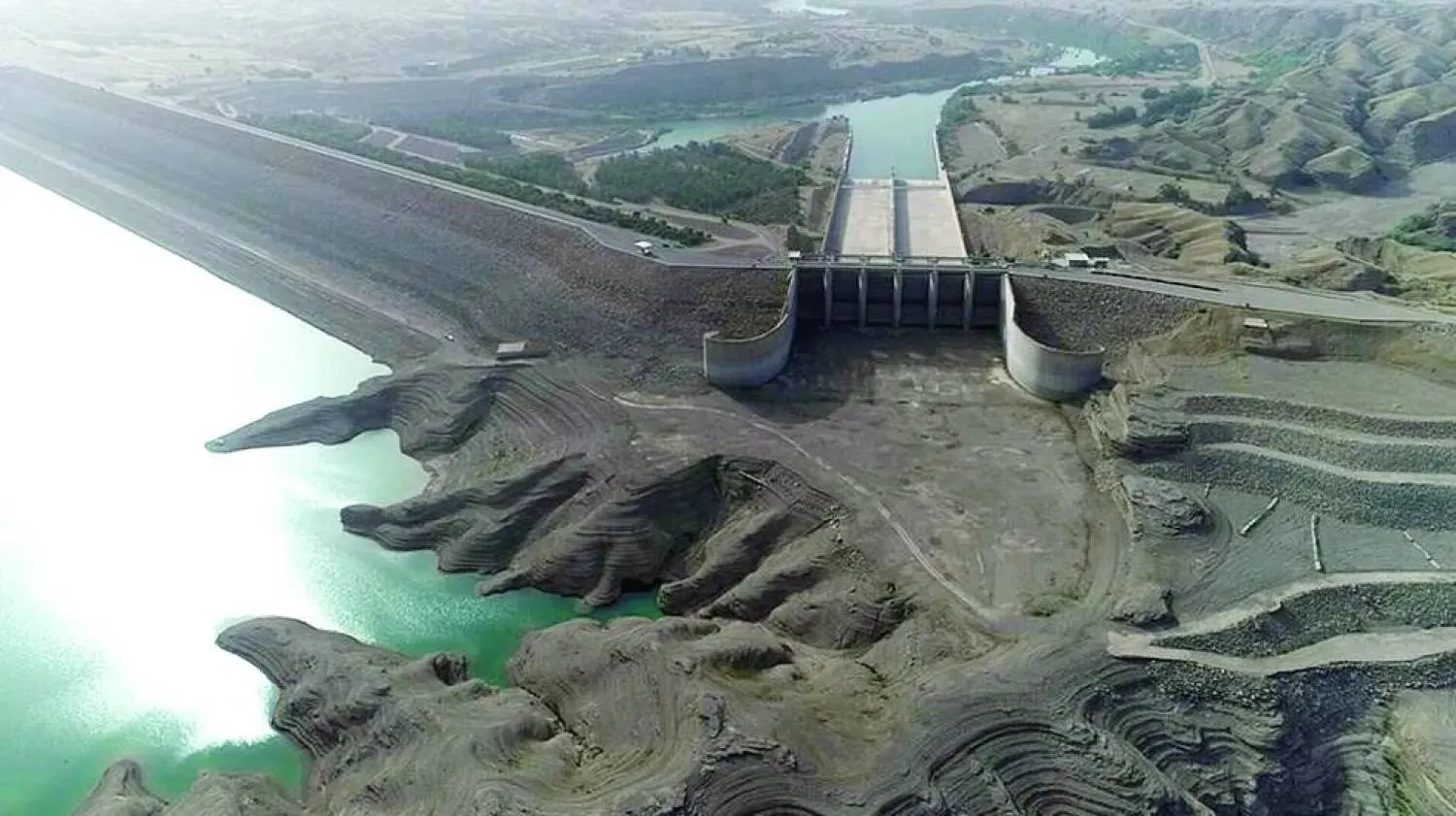
A dam on the Karkheh River that stops the flow of water to the Iraqi border. (Tasnim)

Iran’s parliament Speaker Mohammad Bagher Ghalibaf warned on Tuesday that Tehran could target civilian facilities located near US and Israeli military bases in response to any attacks on the country’s civilian infrastructure.

Ghalibaf’s remarks came after the New York Times published a report this week raising questions about possible links between Iran’s water infrastructure and underground missile facilities.

In a post on X, the Speaker posted a link to the NYT article and wrote, “Prepping the next round on civilian infra, their ‘experts’ tell NYT: ‘dams near Iran’s missile sites are dual-use'.”

He added: “Cool. New rule: Any dam, port, or power plant near a US or Israeli base is dual-use. We’ll apply your logic consistently and even-handedly.”

Ghalibaf did not specify which dams could be targeted, but linked his threat to what he described as preparations for a new wave of attacks on Iran’s civilian infrastructure.

Targeting infrastructure

Iranian Foreign Ministry spokesperson Esmaeil Baghaei rejected the NYT report, calling the claims “baseless” and “a propaganda and security pretext to justify attacks on a country's vital infrastructure.”

On his X account, he said the claim that civilian infrastructure is geographically adjacent to missile bases, used to legitimize attacks against such infrastructure, is neither a valid justification nor supported by any evidence.

“Rather, it is merely a deliberate fallacy intended to justify targeting civilian infrastructure and normalize flagrant violations of international humanitarian law,” he wrote.

He said Iran knows very well how to deliver an “unforgettable” response to any malicious act or aggression.

However, he added: “the world must understand that silence and appeasement in the face of efforts to pave the way for flagrant violations of international legal norms and moral and humanitarian principles will have devastating consequences for all humanity and human civilization.”

Karun and Karkheh Dams

Iran has an extensive network of dams and water infrastructure, with major concentrations in the Karun and Karkheh River basins in the country’s southwest.

Environmental reports say the expansion of dam construction and the diversion of waterways have contributed to worsening drought, desertification and declining water resources in several regions.

On Monday, the NYT published a report, “Airstrikes on Iran missiles sites may shed light on justification for dams,” saying Iran has been building dams to help supply its various underground bunkers and “missile cities.”

According to the report, some analysts who have long been mystified by the significant proliferation of dams across Iran, especially in regions that had no apparent need for them, think they now know the answer after US and Israeli airstrikes on concealed Iranian missile sites this year targeted many of the same areas.

These analysts have concluded that the water projects may have been developed to support the country’s military buildup.