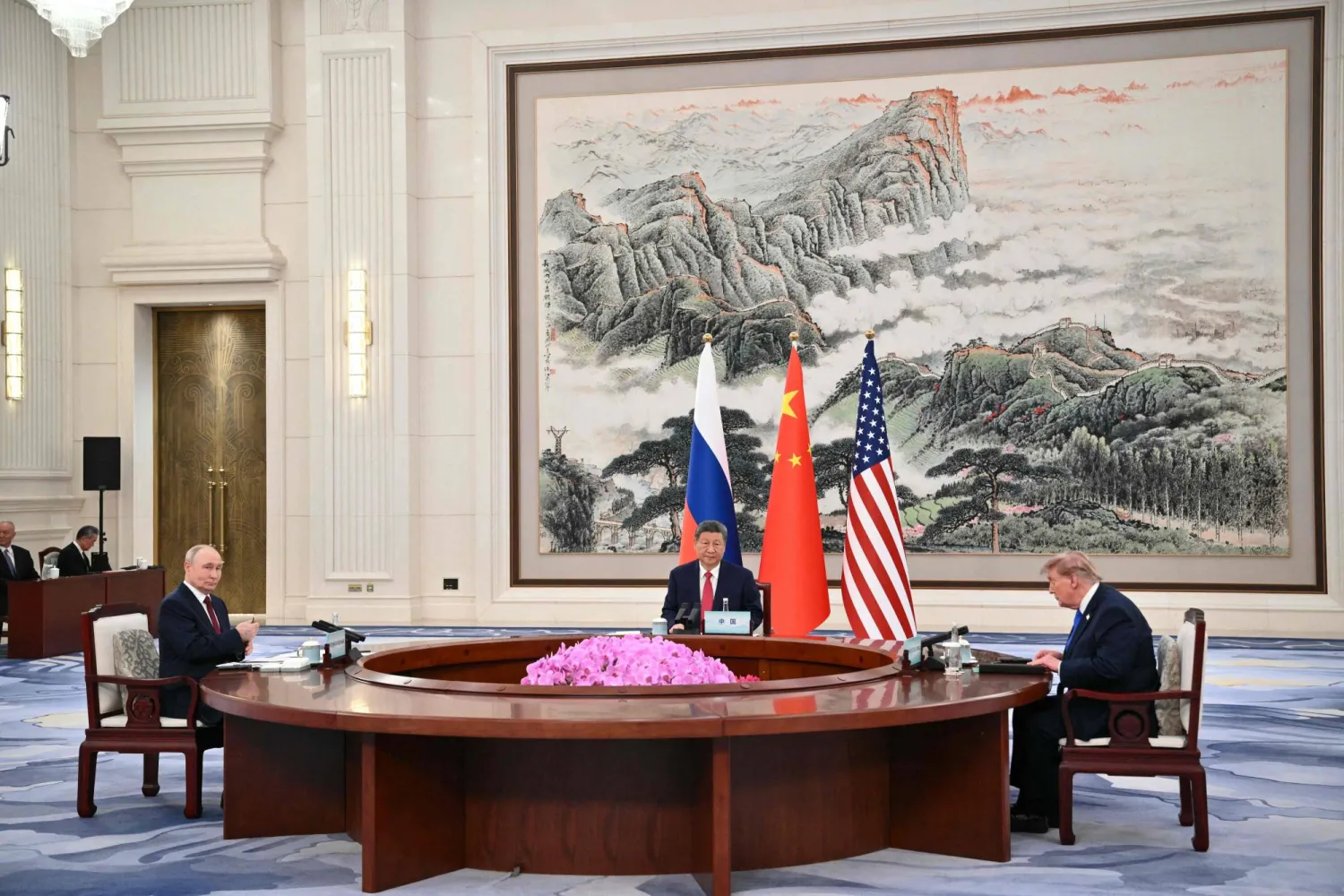
Trump, Xi, Putin Begin Historic Meeting with Ukraine War on Agenda

China's President Xi Jinping (C), US President Donald Trump (R) and Russia's President Vladimir Putin (L) take part in a trilateral meeting at Kylin Villa on the sidelines of the Asia-Pacific Economic Cooperation (APEC) Summit in Shenzhen, in China's southern Guangdong Province, on November 19, 2026. (Photo by Mandel NGAN / AFP)
TT

Trump, Xi, Putin Begin Historic Meeting with Ukraine War on Agenda

China's President Xi Jinping (C), US President Donald Trump (R) and Russia's President Vladimir Putin (L) take part in a trilateral meeting at Kylin Villa on the sidelines of the Asia-Pacific Economic Cooperation (APEC) Summit in Shenzhen, in China's southern Guangdong Province, on November 19, 2026. (Photo by Mandel NGAN / AFP)

US President Donald Trump and Chinese and Russian counterparts Xi Jinping and Vladimir Putin began an unprecedented three-way meeting on Thursday, where they said they will discuss the war in Ukraine and nuclear arms control.

Sat around a big round table in a villa in the southern Chinese city of Shenzhen, on the sidelines of an Asia-Pacific summit, the leaders of the world's biggest nuclear powers took turns to give opening remarks.

"We are really making history," Trump said. "The three of us have a great deal to discuss.”

“No peace was ever forged by declining opportunities for engagement.”

Putin said the three countries have "numerous shared interests in the settlement of regional conflicts, including obviously the conflict in Ukraine.”

Unlike Trump and Putin, Xi - who Chinese state media said was presiding over the meeting - did not make a reference to Ukraine, but said: "History tells us that when major powers live in harmony, the world is at peace. When major powers clash, the world falls into turmoil."
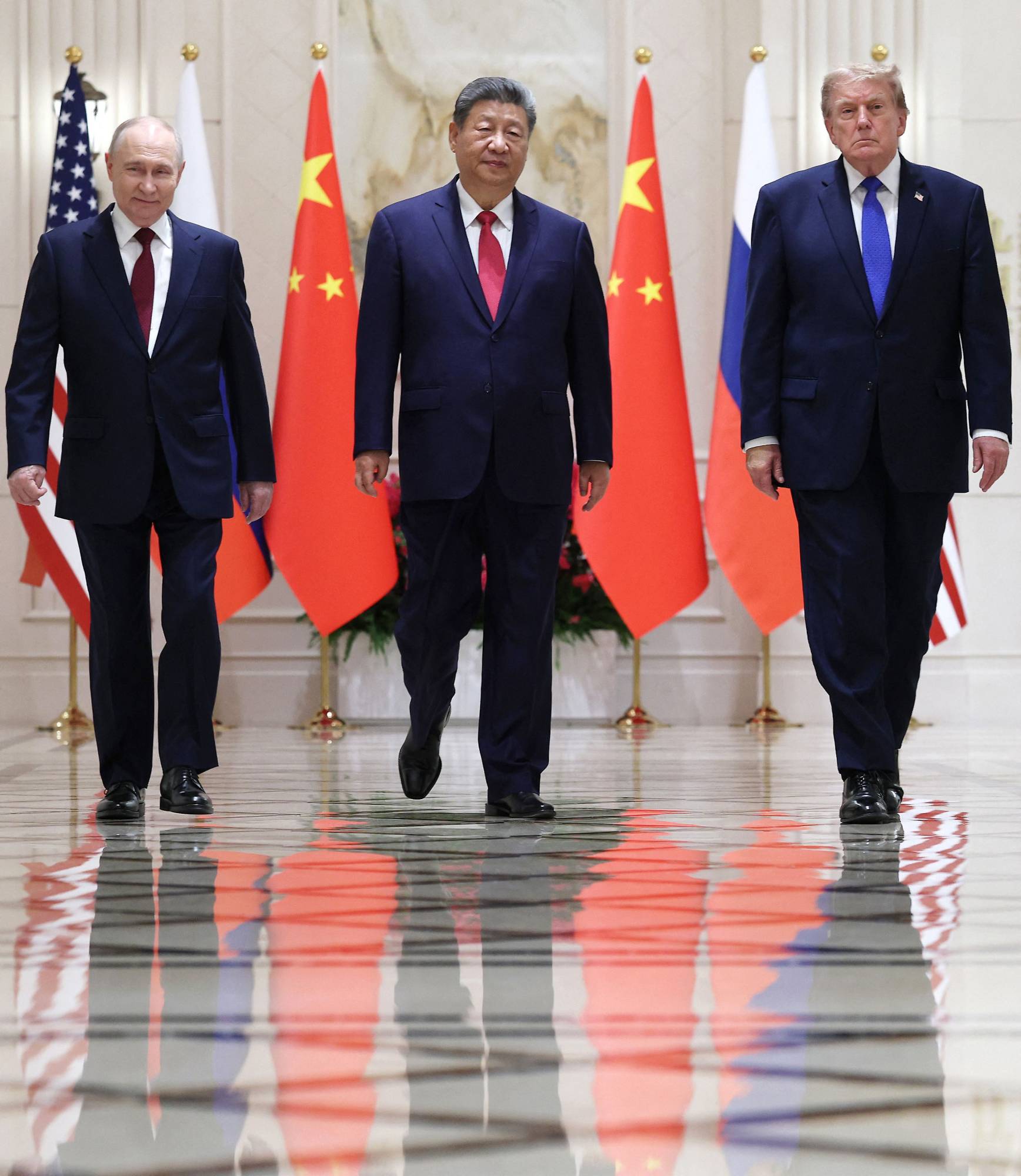
China's President Xi Jinping (C), US President Donald Trump (R) and Russia's President Vladimir Putin (L) arrive for a trilateral meeting at Kylin Villa on the sidelines of the Asia-Pacific Economic Cooperation (APEC) Summit in Shenzhen, in China's southern Guangdong province, on November 19, 2026. (Photo by Win McNamee / POOL / AFP)

The trilateral is unlikely to produce major agreements, analysts say, given deep differences over Ukraine, Iran, nuclear weapons and trade. But it has unnerved smaller countries that fear their interests might be disregarded.

Before the meeting, Trump met Xi and Putin separately, referring to both as friends, Reuters reported.

Trump said both he and Xi felt strongly about oil having to flow through the Strait of Hormuz, which has been ⁠disrupted by the ⁠Iran war. Xi has not mentioned Ukraine or Iran in any of his remarks during the two-day summit so far.

Patricia Kim, foreign policy fellow at the Brookings Institution, said China would not want to be seen as brokering a deal over Ukraine, given the "problematic optics" of Kyiv and European leaders not taking part.

"Xi has characterized the Russia-Ukraine war as fundamentally a European problem, making Beijing even less inclined to assume responsibility for resolving it," Kim said.

Speaking to Fox News earlier, Trump highlighted the pomp surrounding his arrival for the summit, which contrasted with the more muted greeting of other leaders, including Putin. Japanese Prime Minister Sanae Takaichi landed without any welcoming ceremony.

Japan's relations with China have soured since Takaichi's remarks in 2025, when she said Japan could deploy its military if a Chinese move on Taiwan also threatened its ⁠territory.

Takaichi, who cut an isolated figure throughout the summit, said Tokyo's position on Taiwan had not changed since 1972.

Japan and Taiwan this week reported Russian military aircraft incursions as Moscow displayed it can still project power in Asia despite being busy in Ukraine. On Taiwan, Xi told Trump the US must "do the right thing" to avoid major setbacks in their relationship.

Xi greeted Trump at the airport, the first time he has done so with any visiting leader since becoming president, reciprocating his counterpart's gesture at Joint Base Andrews in September when they last met. The leaders also briefly hugged.

"This is a great president, one of the great presidents of China, and he's never gone to the airport to meet somebody," Trump said.

"And not only that, the fanfare, the beauty, the pageantry, the thousands of people, the young children, the soldiers, the whole thing. It was great respect, and I appreciate that. That's a big win for us. It's a big win for China too."
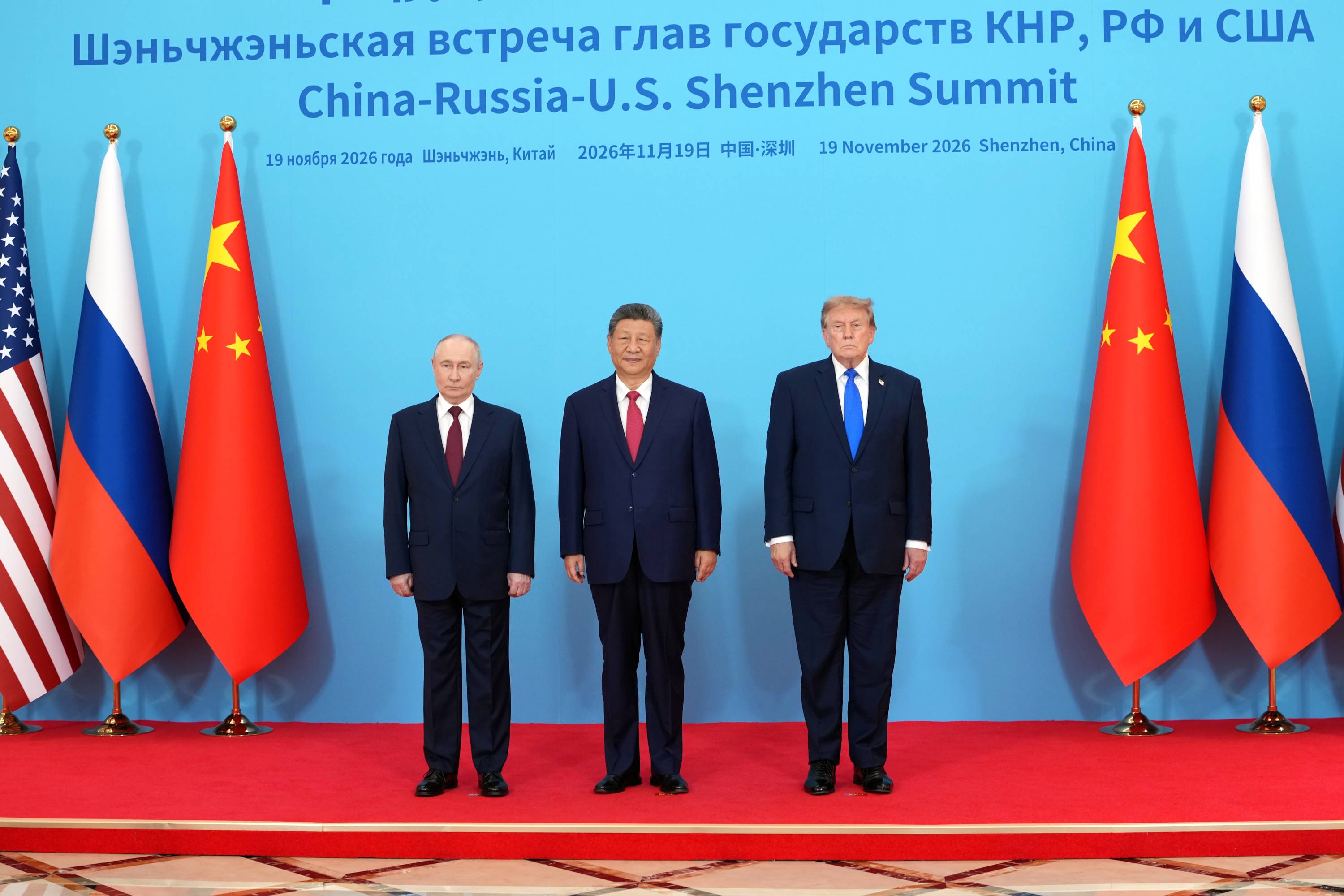
President Donald Trump, right, Chinese President Xi Jinping, center, and Russian President Vladimir Putin, pose for photo, prior to their trilateral meeting, at the Kylin Villa in Shenzhen, China, Thursday, Nov. 19, 2026. (Doug Mills/Pool Photo via AP)

Trump arrived after Xi and Putin delivered pointed speeches denouncing Western trade "protectionism" and sanctions.

During Thursday's APEC proceedings, Xi called for "free and open" trade. Western leaders say China's growth model favoring industrial strength over consumers is unfair and creates destabilizing global trade imbalances.

Putin, fresh from a setback in his war against Ukraine after the ⁠crippling of a key bridge linking ⁠Crimea to Russia, said Russia was key for food and energy security in the Asia-Pacific.

Trump, reeling from a mid-term election loss and the Nvidia spy scandal, told the audience the US has been a Pacific power for hundreds of years.

Trump has insisted nuclear arms control be a central topic of the summit, despite China's repeated objections to joining talks with Washington and Moscow, which have far larger nuclear arsenals.

“It’s not an easy thing to do - give them up,” Trump told Xi and Putin at the start of their meeting.

The leaders have plenty of reasons to appear together but far fewer to agree on substance, given differences over Ukraine, Iran, nuclear weapons, trade and China's military buildup, said Craig Singleton of the Foundation for Defense of Democracies.

"A photograph could serve all three men well," Singleton said, adding that he thought the "agenda is much harder to agree on."

Trump's talks with Xi come after an extension of their trade truce this month, but also amid growing tension over reports of Nvidia chips being diverted to China through Southeast Asia, raising questions about the effectiveness of US export curbs and the future of Chinese access to advanced technology.

"This is Beijing's worst nightmare. China wants chip access that it can negotiate with the president. It may get chip restrictions written into law by both parties," Singleton said.


Trump, Xi, Putin Begin Historic Meeting with Ukraine War on Agenda

China's President Xi Jinping (C), US President Donald Trump (R) and Russia's President Vladimir Putin (L) take part in a trilateral meeting at Kylin Villa on the sidelines of the Asia-Pacific Economic Cooperation (APEC) Summit in Shenzhen, in China's southern Guangdong Province, on November 19, 2026. (Photo by Mandel NGAN / AFP)
TT

Trump, Xi, Putin Begin Historic Meeting with Ukraine War on Agenda

China's President Xi Jinping (C), US President Donald Trump (R) and Russia's President Vladimir Putin (L) take part in a trilateral meeting at Kylin Villa on the sidelines of the Asia-Pacific Economic Cooperation (APEC) Summit in Shenzhen, in China's southern Guangdong Province, on November 19, 2026. (Photo by Mandel NGAN / AFP)

US President Donald Trump and Chinese and Russian counterparts Xi Jinping and Vladimir Putin began an unprecedented three-way meeting on Thursday, where they said they will discuss the war in Ukraine and nuclear arms control.

Sat around a big round table in a villa in the southern Chinese city of Shenzhen, on the sidelines of an Asia-Pacific summit, the leaders of the world's biggest nuclear powers took turns to give opening remarks.

"We are really making history," Trump said. "The three of us have a great deal to discuss.”

“No peace was ever forged by declining opportunities for engagement.”

Putin said the three countries have "numerous shared interests in the settlement of regional conflicts, including obviously the conflict in Ukraine.”

Unlike Trump and Putin, Xi - who Chinese state media said was presiding over the meeting - did not make a reference to Ukraine, but said: "History tells us that when major powers live in harmony, the world is at peace. When major powers clash, the world falls into turmoil."

China's President Xi Jinping (C), US President Donald Trump (R) and Russia's President Vladimir Putin (L) arrive for a trilateral meeting at Kylin Villa on the sidelines of the Asia-Pacific Economic Cooperation (APEC) Summit in Shenzhen, in China's southern Guangdong province, on November 19, 2026. (Photo by Win McNamee / POOL / AFP)

The trilateral is unlikely to produce major agreements, analysts say, given deep differences over Ukraine, Iran, nuclear weapons and trade. But it has unnerved smaller countries that fear their interests might be disregarded.

Before the meeting, Trump met Xi and Putin separately, referring to both as friends, Reuters reported.

Trump said both he and Xi felt strongly about oil having to flow through the Strait of Hormuz, which has been ⁠disrupted by the ⁠Iran war. Xi has not mentioned Ukraine or Iran in any of his remarks during the two-day summit so far.

Patricia Kim, foreign policy fellow at the Brookings Institution, said China would not want to be seen as brokering a deal over Ukraine, given the "problematic optics" of Kyiv and European leaders not taking part.

"Xi has characterized the Russia-Ukraine war as fundamentally a European problem, making Beijing even less inclined to assume responsibility for resolving it," Kim said.

Speaking to Fox News earlier, Trump highlighted the pomp surrounding his arrival for the summit, which contrasted with the more muted greeting of other leaders, including Putin. Japanese Prime Minister Sanae Takaichi landed without any welcoming ceremony.

Japan's relations with China have soured since Takaichi's remarks in 2025, when she said Japan could deploy its military if a Chinese move on Taiwan also threatened its ⁠territory.

Takaichi, who cut an isolated figure throughout the summit, said Tokyo's position on Taiwan had not changed since 1972.

Japan and Taiwan this week reported Russian military aircraft incursions as Moscow displayed it can still project power in Asia despite being busy in Ukraine. On Taiwan, Xi told Trump the US must "do the right thing" to avoid major setbacks in their relationship.

Xi greeted Trump at the airport, the first time he has done so with any visiting leader since becoming president, reciprocating his counterpart's gesture at Joint Base Andrews in September when they last met. The leaders also briefly hugged.

"This is a great president, one of the great presidents of China, and he's never gone to the airport to meet somebody," Trump said.

"And not only that, the fanfare, the beauty, the pageantry, the thousands of people, the young children, the soldiers, the whole thing. It was great respect, and I appreciate that. That's a big win for us. It's a big win for China too."

President Donald Trump, right, Chinese President Xi Jinping, center, and Russian President Vladimir Putin, pose for photo, prior to their trilateral meeting, at the Kylin Villa in Shenzhen, China, Thursday, Nov. 19, 2026. (Doug Mills/Pool Photo via AP)

Trump arrived after Xi and Putin delivered pointed speeches denouncing Western trade "protectionism" and sanctions.

During Thursday's APEC proceedings, Xi called for "free and open" trade. Western leaders say China's growth model favoring industrial strength over consumers is unfair and creates destabilizing global trade imbalances.

Putin, fresh from a setback in his war against Ukraine after the ⁠crippling of a key bridge linking ⁠Crimea to Russia, said Russia was key for food and energy security in the Asia-Pacific.

Trump, reeling from a mid-term election loss and the Nvidia spy scandal, told the audience the US has been a Pacific power for hundreds of years.

Trump has insisted nuclear arms control be a central topic of the summit, despite China's repeated objections to joining talks with Washington and Moscow, which have far larger nuclear arsenals.

“It’s not an easy thing to do - give them up,” Trump told Xi and Putin at the start of their meeting.

The leaders have plenty of reasons to appear together but far fewer to agree on substance, given differences over Ukraine, Iran, nuclear weapons, trade and China's military buildup, said Craig Singleton of the Foundation for Defense of Democracies.

"A photograph could serve all three men well," Singleton said, adding that he thought the "agenda is much harder to agree on."

Trump's talks with Xi come after an extension of their trade truce this month, but also amid growing tension over reports of Nvidia chips being diverted to China through Southeast Asia, raising questions about the effectiveness of US export curbs and the future of Chinese access to advanced technology.

"This is Beijing's worst nightmare. China wants chip access that it can negotiate with the president. It may get chip restrictions written into law by both parties," Singleton said.


Pakistan Military Says it Killed 22 Militants in Raids on Hideouts in Northwest

Police personnel stand outside the Islamabad High Court in Islamabad, Pakistan, 18 November 2026. EPA/SOHAIL SHAHZAD
TT

Pakistan Military Says it Killed 22 Militants in Raids on Hideouts in Northwest

Police personnel stand outside the Islamabad High Court in Islamabad, Pakistan, 18 November 2026. EPA/SOHAIL SHAHZAD

Pakistani security forces acting on intelligence raided militant hideouts in the northwest near the Afghan border, setting off gunbattles that killed 22 militants, the military said Thursday.

It said the militants killed were backed by neighboring India. There was no immediate comment from New Delhi, but Pakistan often accuses Afghanistan and India of supporting the Pakistani Taliban and other militant groups, allegations both countries deny.

The raids took place over the past 48 hours in the South Waziristan, Bannu and Tank districts of Khyber Pakhtunkhwa province, The Associated Press quoted the military as saying in a statement.

The military reported last week that security forces had killed 74 militants over several days in raids on hideouts in the northwest and in southwestern Balochistan province.

The military said troops were searching the areas for any remaining militants and pledged to continue operations against what it described as foreign-backed terrorism.

President Asif Ali Zardari and Prime Minister Shehbaz Sharif in separate statements praised the security forces for eliminating “Indian-supported” militants and vowed to continue the fight against militancy. Sharif said militants and their supporters would not be allowed to spread unrest in Pakistan and that the nation stood behind the forces fighting them.


US and Iran on Alert for a Resumption of War

US carriers Theodore Roosevelt and George Washington sailing at a location given as Arabian Sea, in this screen grab obtained from a video released on November 17, 2026. US Central Command/Handout via REUTERS
TT

US and Iran on Alert for a Resumption of War

US carriers Theodore Roosevelt and George Washington sailing at a location given as Arabian Sea, in this screen grab obtained from a video released on November 17, 2026. US Central Command/Handout via REUTERS

The US has sent mixed messages on its next steps on Iran as Tehran gets ready for war following an increase in reciprocal strikes between the two sides.

Israeli media reported that CENTCOM commander Brad Cooper met on Wednesday with Israeli military officials, while Reuters cited sources saying that the head of Israel’s intelligence agency, the Mossad, had pressed Washington to carry out joint strikes against Iran.

Signs of a new US attack have intensified at a time when reports indicate that the two sides continue to exchange limited, undeclared military strikes.

Iranian Army Commander-in-Chief Amir Hatami said that the military’s readiness is improving moment by moment, adding that the armed forces are monitoring the enemy’s movements with vigilance and precision, in what appeared to be a reference to US preparations.

He warned that any Iranian response to a new attack would be more devastating.

Meanwhile, the head of Iran’s judiciary, Gholam-Hossein Mohseni Ejei, said that the US president intends to launch a new attack on Iran.

Ejei added that Iranian forces now possess capabilities that were not available during the 40-Day War.

At the same time, the Basij militia announced that extending the range of Iran’s missiles has been incorporated into the plans of the country’s armed forces, based on directives from Supreme Leader Mojtaba Khamenei.