Afghan Tradition Keeps Grapes Fresh for Winter Treat

This photograph taken on November 10, 2026 shows Afghan farmer Muhammad Saber Shojaei seal packing grapes in mud-and-straw discs known as Kanginas before storing them in a dark room in the Kalakan district of Kabul province. (AFP)
TT

Afghan Tradition Keeps Grapes Fresh for Winter Treat

This photograph taken on November 10, 2026 shows Afghan farmer Muhammad Saber Shojaei seal packing grapes in mud-and-straw discs known as Kanginas before storing them in a dark room in the Kalakan district of Kabul province. (AFP)

On the outskirts of Afghanistan's frenetic capital Kabul, Muhammad Saber Shojaei is carrying out a centuries-old task of preserving fistfuls of grapes to be eaten when winter bites.

Crouched in front of dozens of "kanginas", clay-and-straw discs containing grapes, Shojaei recalls his father, who taught him the technique.

"I remember the old days, when we sat together around the sandali (stove), eating kangina grapes and enjoying those happy moments," said the 47-year-old from Kalakan district.

Carefully putting a bunch of grapes in one of the discs, Shojaei added a second disc on top and sealed the kangina with mud before placing it in a dark storage room.

"In this way, kanginas can keep grapes fresh from now until the spring," said the farmer, who makes about 700 each year to sell by the roadside.

No one knows quite how long kanginas have been used in Afghanistan, with estimates starting at "centuries" and the knowledge passed down through the generations.
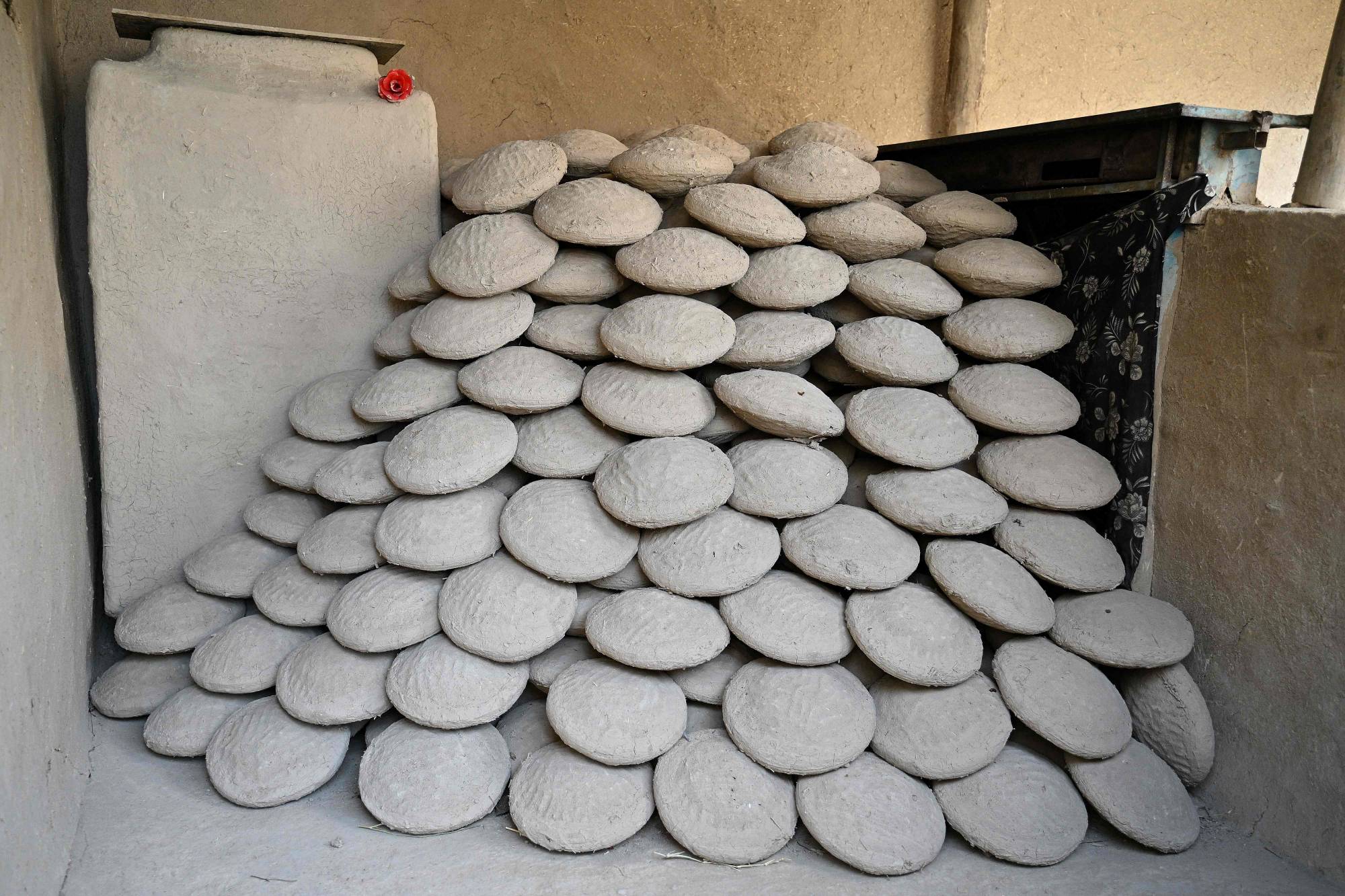
This photograph taken on November 10, 2026 shows Kanginas, a traditional preserving method made from clay mud and straw used to keep grapes fresh for up to six months, in a storage inside of a house in the Kalakan district of Kabul province. (AFP)

During harvest season, grapes for sale can be seen bundled in big plastic bags, or piled high onto trucks as they're taken to markets further afield.

But such abundance comes with problems in Afghanistan, where cold storage to keep produce fresh is severely limited and the export route to Pakistan has been cut off by cross-border conflict.

Farhad Ezati, a 21-year-old trader, said "farmers can't even cover their costs" this year as grape prices have plummeted by 70 percent due to the border closure causing a supply glut.

Standing in a bright green field while laborers packed grapes into cardboard boxes, Ezati said competition among sellers is incredibly tough.

"Afghan grapes are the best," he said, his face brightening. "They're really high in quality... and have a really good taste."

- 'Keep our culture alive' -

Labor-intensive and fragile, kanginas cannot overcome large-scale storage or trade problems.

But in the depths of winter, Afghans living near the vineyards can buy them along the roadside or in nearby markets, and farming families can crack them open and enjoy fresh grapes.

Gulagha Frotan, a community leader in Kalakan, said people wait until snow or rain to enjoy them.

"We don't wash the grapes because they might lose their natural quality. We only blow away the dust, or shake them gently, and then they're ready to eat," the 61-year-old told AFP.
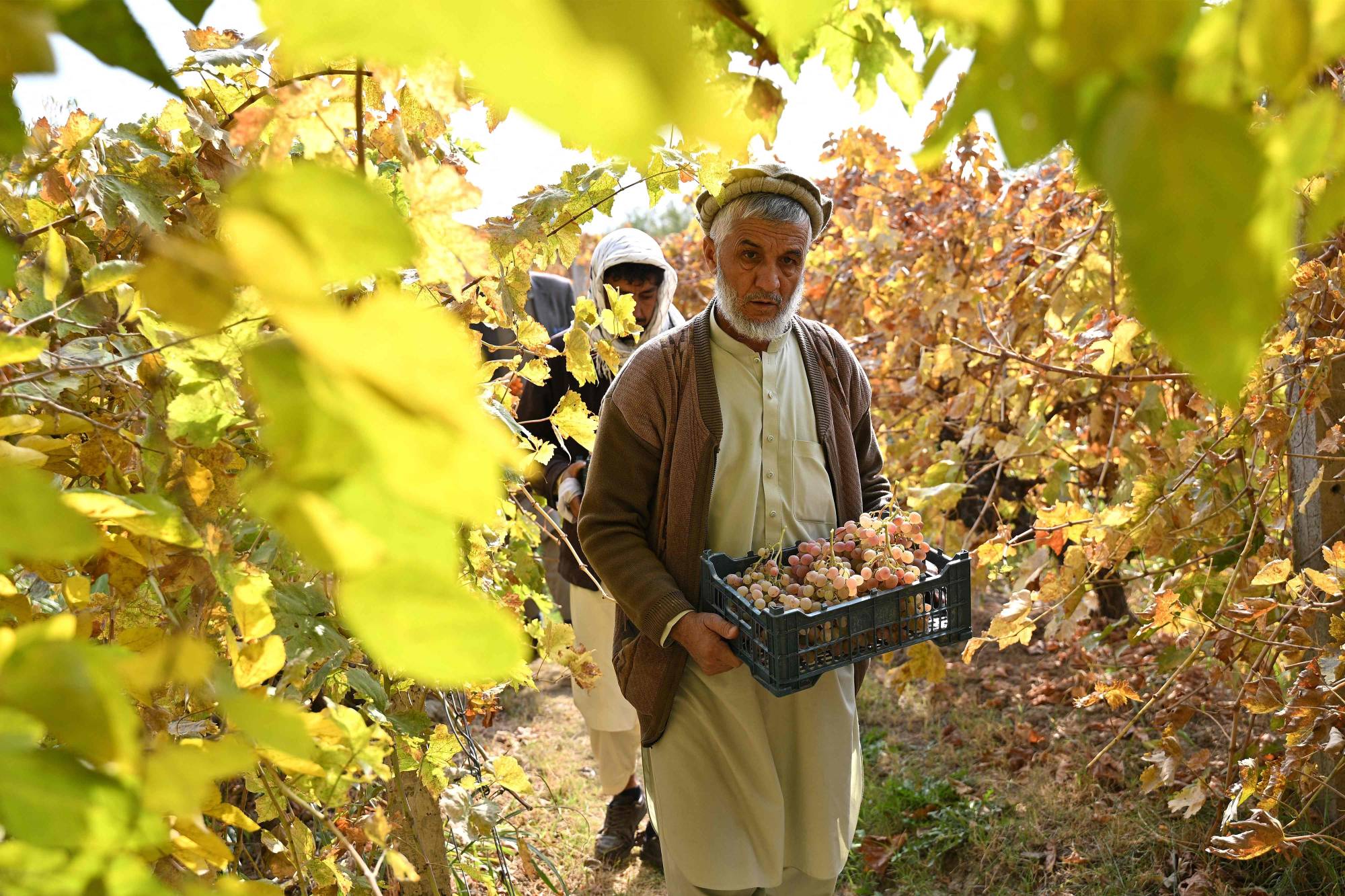
This photograph taken on November 10, 2026 shows an Afghan farmer carrying harvested fresh Taifi grapes in a vineyard in the Kalakan district of Kabul province. (AFP)

Despite its long history in the Kabul area, the practice is currently only being used in one other province, neighboring Parwan, according to the UN's Food and Agriculture Organization (FAO).

The agency's Ezatullah Noori said that, along with the cool weather, the large population in the area means that farmers don't have to travel far to sell the kanginas.

"There's potential for farmers to sell some of their grapes, rather than to lose them during the peak production season," said Noori, FAO's emergency and resilience team leader in Afghanistan.

He called for scientific research to better understand such unique heritage, as well as an organized effort to help farmers cooperate to sell their kanginas on a larger scale.

"I am afraid that one day this will disappear from our country and nobody will know how to make it," Noori told AFP.

"We should keep our culture alive."


Afghan Tradition Keeps Grapes Fresh for Winter Treat

This photograph taken on November 10, 2026 shows Afghan farmer Muhammad Saber Shojaei seal packing grapes in mud-and-straw discs known as Kanginas before storing them in a dark room in the Kalakan district of Kabul province. (AFP)
TT

Afghan Tradition Keeps Grapes Fresh for Winter Treat

This photograph taken on November 10, 2026 shows Afghan farmer Muhammad Saber Shojaei seal packing grapes in mud-and-straw discs known as Kanginas before storing them in a dark room in the Kalakan district of Kabul province. (AFP)

On the outskirts of Afghanistan's frenetic capital Kabul, Muhammad Saber Shojaei is carrying out a centuries-old task of preserving fistfuls of grapes to be eaten when winter bites.

Crouched in front of dozens of "kanginas", clay-and-straw discs containing grapes, Shojaei recalls his father, who taught him the technique.

"I remember the old days, when we sat together around the sandali (stove), eating kangina grapes and enjoying those happy moments," said the 47-year-old from Kalakan district.

Carefully putting a bunch of grapes in one of the discs, Shojaei added a second disc on top and sealed the kangina with mud before placing it in a dark storage room.

"In this way, kanginas can keep grapes fresh from now until the spring," said the farmer, who makes about 700 each year to sell by the roadside.

No one knows quite how long kanginas have been used in Afghanistan, with estimates starting at "centuries" and the knowledge passed down through the generations.

This photograph taken on November 10, 2026 shows Kanginas, a traditional preserving method made from clay mud and straw used to keep grapes fresh for up to six months, in a storage inside of a house in the Kalakan district of Kabul province. (AFP)

During harvest season, grapes for sale can be seen bundled in big plastic bags, or piled high onto trucks as they're taken to markets further afield.

But such abundance comes with problems in Afghanistan, where cold storage to keep produce fresh is severely limited and the export route to Pakistan has been cut off by cross-border conflict.

Farhad Ezati, a 21-year-old trader, said "farmers can't even cover their costs" this year as grape prices have plummeted by 70 percent due to the border closure causing a supply glut.

Standing in a bright green field while laborers packed grapes into cardboard boxes, Ezati said competition among sellers is incredibly tough.

"Afghan grapes are the best," he said, his face brightening. "They're really high in quality... and have a really good taste."

- 'Keep our culture alive' -

Labor-intensive and fragile, kanginas cannot overcome large-scale storage or trade problems.

But in the depths of winter, Afghans living near the vineyards can buy them along the roadside or in nearby markets, and farming families can crack them open and enjoy fresh grapes.

Gulagha Frotan, a community leader in Kalakan, said people wait until snow or rain to enjoy them.

"We don't wash the grapes because they might lose their natural quality. We only blow away the dust, or shake them gently, and then they're ready to eat," the 61-year-old told AFP.

This photograph taken on November 10, 2026 shows an Afghan farmer carrying harvested fresh Taifi grapes in a vineyard in the Kalakan district of Kabul province. (AFP)

Despite its long history in the Kabul area, the practice is currently only being used in one other province, neighboring Parwan, according to the UN's Food and Agriculture Organization (FAO).

The agency's Ezatullah Noori said that, along with the cool weather, the large population in the area means that farmers don't have to travel far to sell the kanginas.

"There's potential for farmers to sell some of their grapes, rather than to lose them during the peak production season," said Noori, FAO's emergency and resilience team leader in Afghanistan.

He called for scientific research to better understand such unique heritage, as well as an organized effort to help farmers cooperate to sell their kanginas on a larger scale.

"I am afraid that one day this will disappear from our country and nobody will know how to make it," Noori told AFP.

"We should keep our culture alive."


Roman Treasure Trove Found During Excavation in Britain

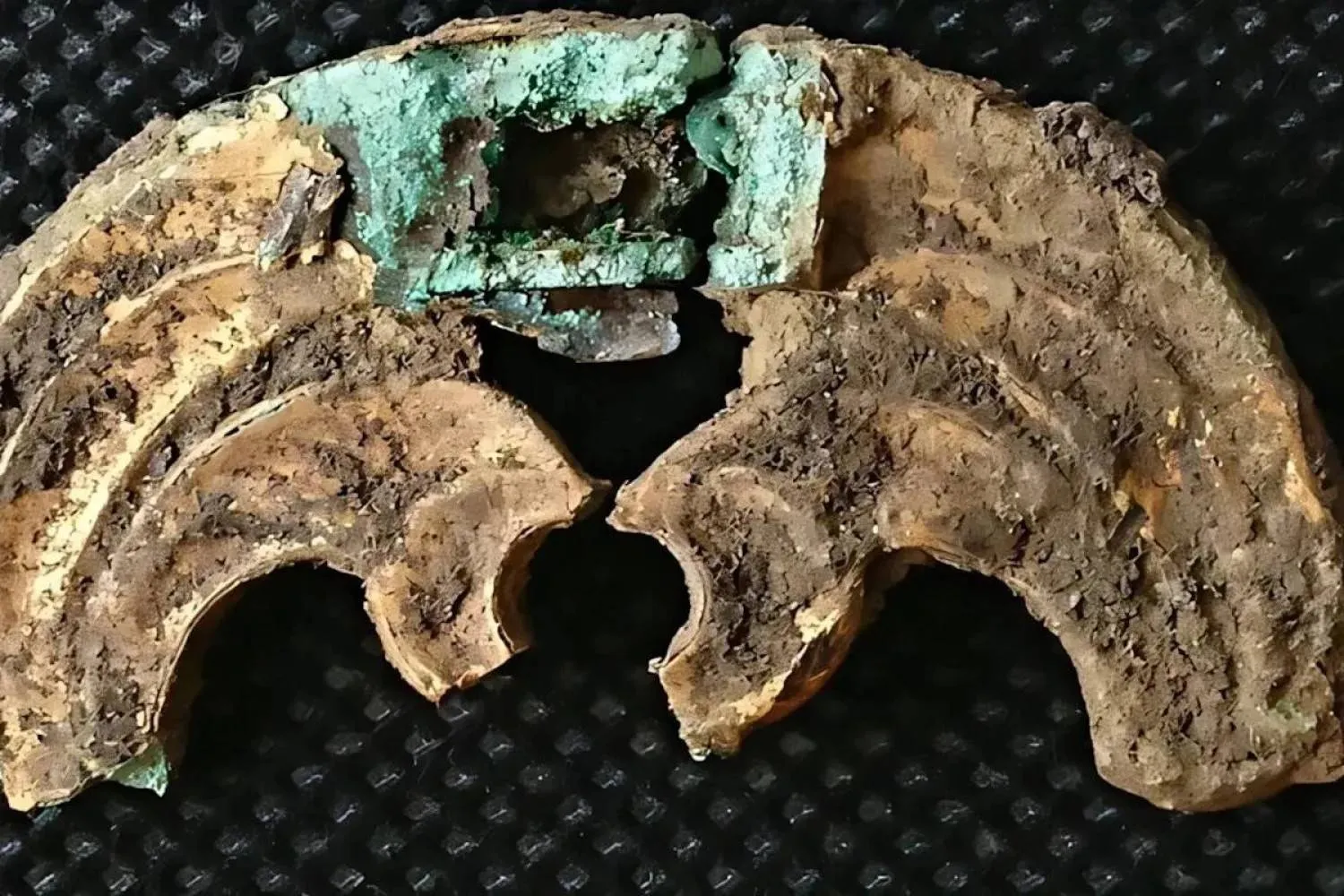
Roman peltate cavalry dangler (The Archaeological Practice Ltd via Newcastle University)
TT

Roman Treasure Trove Found During Excavation in Britain

Roman peltate cavalry dangler (The Archaeological Practice Ltd via Newcastle University)

Archaeology students doing their first excavation found a major Roman-era treasure trove in UK’s Northumberland, shedding more light on life at the northernmost edge of the ancient empire.

The quantity and quality of the treasure, unearthed earlier this year, was a surprise even to experienced researchers, archaeologists from Newcastle University said, according to The Independent.

One of the most remarkable items in the trove was a gold-chain section measuring about 7cm.

It was so well preserved that, if it were complete, it could still be worn today, researchers said.

The chain was likely made using the sophisticated loop-in-loop technique, a hallmark of high-quality Roman goldsmithing. Its individual rings were carefully pinched into figure-eight shapes, folded, and then interwoven to create the chain.

Such chains were typically made from pure gold and associated with elite jewelry, military amulets, or special fittings for high-ranking officers and their families.

“Finding the gold chain was really surreal, especially given that it was the first day of my first dig. I didn't expect to find anything like that in my whole career, so it was definitely a surprise,” archaeology student Elise Zallu said.

“Finding a gold artifact is something many archaeologists can go an entire career without experiencing,” said Eric Tourigny of Newcastle University. “For a first-year student to discover a beautifully preserved Roman gold chain on their first day in the trench is truly remarkable.”

Another student, Shannon Wood, unearthed a folded piece of lead bearing traces of a Latin inscription.

The object was most likely a seal associated with trade, taxation, ownership, or the movement of goods through the Roman military supply network, researchers said. It functioned as a personal message or a “curse tablet.”

In the Roman Empire, people scratched prayers, grievances, requests, and even curses onto thin sheets of lead and deposited them in sacred places.


Saudi Film Nights Continues International Tour in Brazil with Four Saudi Films

Saudi Film Nights Continues International Tour in Brazil with Four Saudi Films
TT

Saudi Film Nights Continues International Tour in Brazil with Four Saudi Films

Saudi Film Nights Continues International Tour in Brazil with Four Saudi Films

Saudi Film Nights, organized by the Film Commission, continues its international tour with its upcoming stop in the Federative Republic of Brazil from November 20 to 28, 2026. Brazil marks the final stop of this year's tour.

The program features a series of film screenings across São Paulo, Rio de Janeiro, and Salvador, showcasing the diversity of contemporary Saudi cinema and the ongoing growth of the Kingdom’s film industry.

The decision to bring Saudi Film Nights to Brazil reflects the country’s influential position within the Latin American film landscape, its longstanding history of film production and hosting cultural and artistic events, and the opportunities it offers for cultural exchange, dialogue, and collaboration between filmmakers from Saudi Arabia and Brazil, SPA reported.

The Brazilian edition will present four Saudi films: two features, Unidentified and Saify, and two shorts, The Last Dismissal and Two Sisters.

At the Film Commission's invitation, the films were selected by actor and director Selton Mello and Ilda Santiago, co-founder and executive director of the Rio Film Festival. The invitation brings together Mello's artistic and cinematic experience and Santiago's extensive international curatorial expertise to offer a program suited to Brazilian audiences and bring them closer to Saudi cinema.
These works reflect the richness of contemporary Saudi narratives, offering diverse artistic and human perspectives.

The screenings will begin in São Paulo before moving to Rio de Janeiro and concluding in Salvador. The program will take place at prominent cultural and cinematic venues, including Espaço Petrobras de Cinema in São Paulo, Estação Claro Gávea in Rio de Janeiro, and Cine Glauber Rocha in Salvador. These venues are recognized for attracting audiences interested in international and independent cinema, providing Saudi films with an opportunity to reach diverse audiences across Brazil.

The Saudi Film Nights initiative has reached 17 countries and 40 cities following its stop in Brazil, with a total of 45 stops, including France, Morocco, Australia, China, India, Mexico, the United Kingdom, Japan, Sweden, Denmark, Finland, Norway, Spain, South Africa, the United Arab Emirates, Saudi Arabia, and Brazil.

This expansion aligns with the Film Commission’s ongoing efforts to foster collaboration with international cultural institutions and create new avenues for professional partnerships. The initiative also seeks to showcase and empower local creativity, reinforcing the Kingdom’s position as a cultural contributor that builds bridges of cross-cultural communication through the art of cinema.