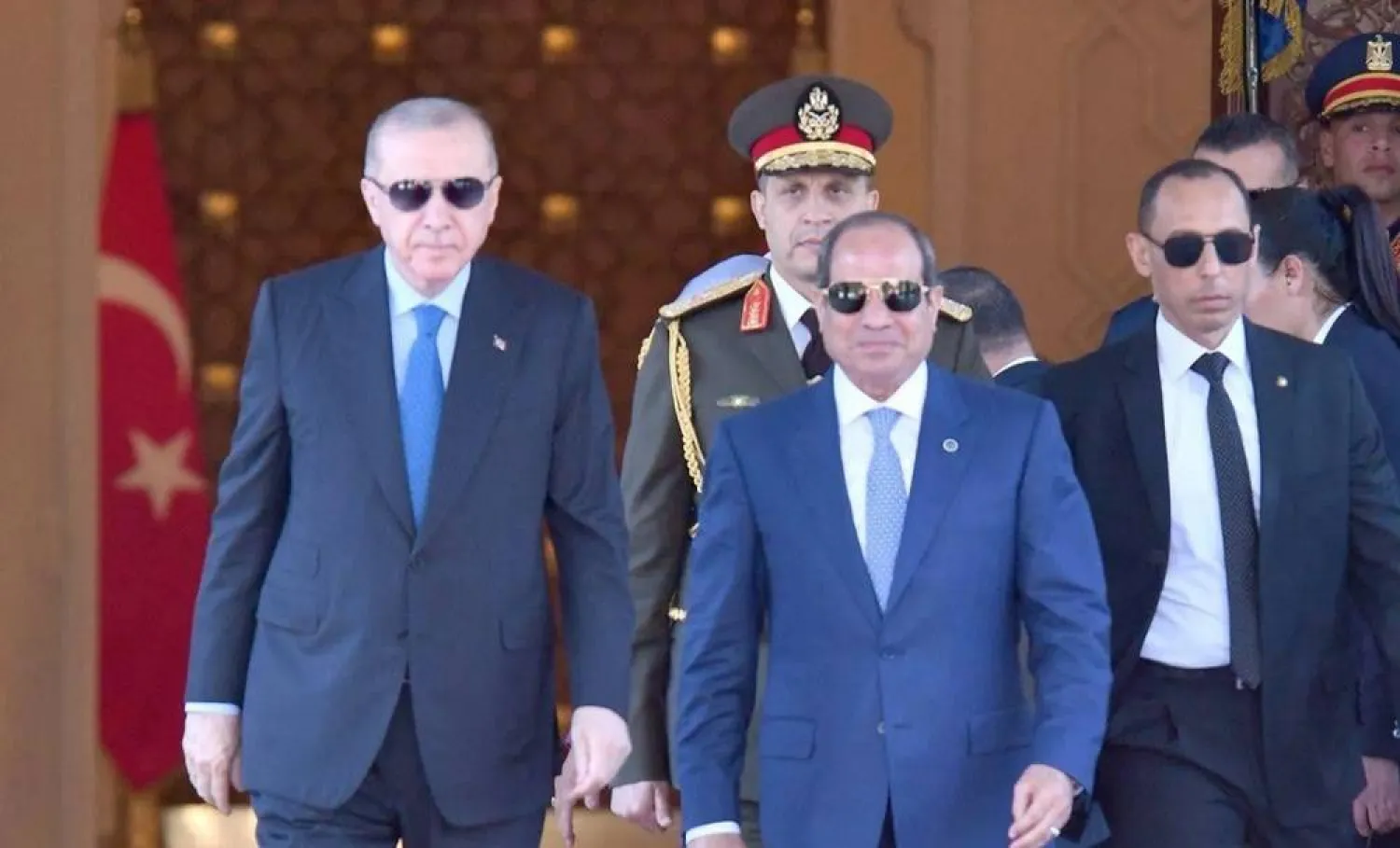

Growing Turkish investment in Egypt is strengthening economic ties between Cairo and Ankara despite ongoing disagreements over a maritime deal between Türkiye and Libya, according to analysts.
The Egyptian government highlighted the expanding Turkish business presence in the country on Wednesday, releasing figures that analysts interpreted as a sign of both sides’ determination to deepen economic cooperation while managing political disputes.
According to the Egyptian Cabinet’s Media Center, Turkish investment has expanded across manufacturing, trade, services and other economic activities in recent years. Turkish companies have contributed around $921.5 million in investment through 1,869 businesses established in Egypt, creating around 43,900 jobs.
Annual Turkish investment inflows surged 393.2% over eight years, reaching $175.1 million in the 2024-2025 fiscal year, compared with $35.5 million in 2016-2017.
The increase came despite a period of strained relations before Cairo and Ankara restored ambassador-level diplomatic ties in 2023.
Bilateral trade rose 44.7%, reaching $6.8 billion in 2025, up from $4.7 billion in 2016, according to the government figures, which highlighted major Turkish projects in the garment and food-processing industries.
Economic interests
Bashir Abdel Fattah, a Türkiye affairs specialist at the Al-Ahram Center for Political and Strategic Studies, said the growth in Turkish investment reflects Ankara’s determination to strengthen its strategic partnership with Cairo.
Speaking to Asharq Al-Awsat, Abdel Fattah described economic cooperation as a key component of the rapprochement, adding that Türkiye is seeking to capitalize on investment opportunities in Egypt while broadening the partnership across multiple sectors.
Egypt also provides Turkish companies with access to Arab and African markets through trade arrangements, including the free trade agreement with members of the Common Market for Eastern and Southern Africa (COMESA), enabling businesses to manufacture goods in Egypt for export across the continent.
Hani al-Gamal, deputy director of the Tafkir Center for Political Affairs, said that the government figures demonstrate how closely Turkish capital has become integrated into Egypt’s economy, particularly in manufacturing, employment and exports, generating benefits for both countries.
While acknowledging the importance of investment in strengthening bilateral cooperation, al-Gamal cautioned that economic ties alone could not resolve geopolitical disputes.
He attributed the broader improvement in relations to political and regional circumstances that have also facilitated closer military cooperation and notable progress in defense industries.
Military cooperation
Egyptian and Turkish naval forces participated in the Sea of Friendship exercises this month. The Egyptian military described the drills as part of growing cooperation between the two countries’ armed forces, aimed at sharing expertise and strengthening naval coordination.
The exercises took place despite Cairo’s repeated rejection of the Libyan parliament’s ratification in October of a maritime boundary agreement with Ankara.
Egypt and Türkiye have nevertheless continued consultations aimed at reducing regional tensions.
Abdel Fattah identified the separation of contentious political issues from areas of cooperation as a key factor behind the recent improvement in relations.
Disagreements over maritime boundaries and the Libyan crisis have not prevented Cairo and Ankara from developing ties in other sectors, he explained.
He viewed this approach as evidence of political maturity and a shared determination to avoid a return to tensions.
He said that rapprochement and cooperation could build confidence, narrow disagreements and create more favorable conditions for resolving outstanding issues.
Al-Gamal similarly emphasized that translating political rapprochement into tangible economic interests could deepen mutual trust and broaden the foundations of cooperation.