



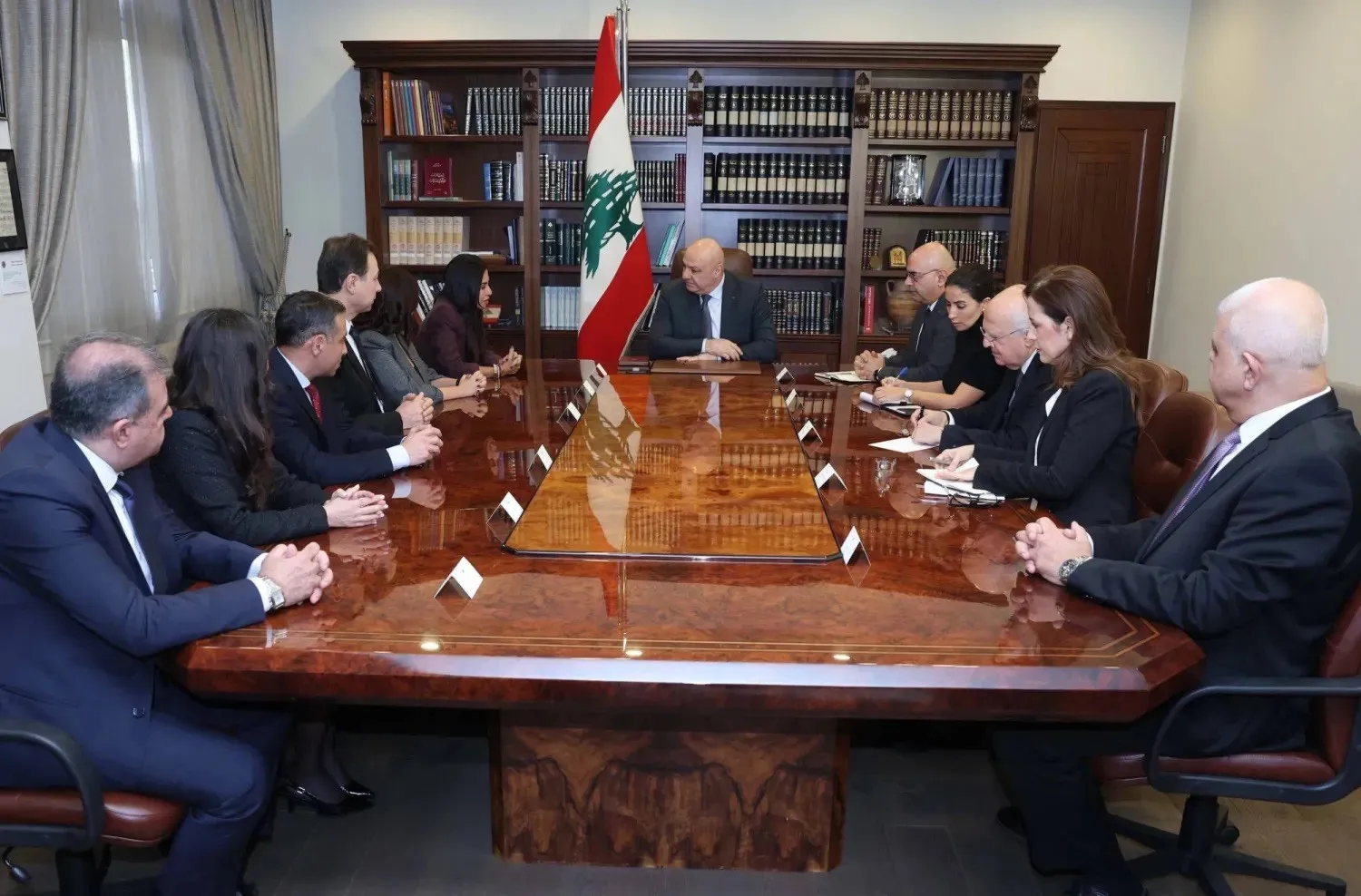

International messages marking Lebanon’s Independence Day have reaffirmed support for the country’s aspirations for peace, stability and the restoration of its full sovereignty, while expressions of local support for President Joseph Aoun’s address have continued along with calls for concrete measures to strengthen state authority.
Hezbollah, meanwhile, has increased its rhetoric against Aoun over his remarks on sovereignty, foreign interference and relations with Iran.
International support for Lebanon
In his Independence Day message, Pope Leo XIV expressed hope for a peaceful and prosperous Lebanon.
Syrian President Ahmed al-Sharaa reaffirmed his country’s commitment to strengthening bilateral relations, wishing “the brotherly Lebanese people further prosperity and progress” and emphasizing the importance of enhancing ties in the interests of both countries and their peoples.
Turkish President Recep Tayyip Erdogan pledged that his country’s support for Lebanon would “continue across various sectors,” reflecting the importance Ankara attaches to Lebanon in the context of regional security and stability.
Italian President Sergio Mattarella placed particular emphasis on Lebanon’s sovereignty, reiterating Rome’s readiness to cooperate in achieving a just and lasting peace in the region.
Italy would continue working toward “a definitive cessation of hostilities and the restoration of Lebanon’s full sovereignty,” he affirmed, describing dialogue and diplomacy as “indispensable tools for overcoming conflicts and ensuring peaceful coexistence throughout the Middle East.”
Aoun also received congratulatory messages from the presidents of Uruguay, the Czech Republic, Tajikistan, the Democratic Republic of the Congo and Gabon.
Kataeb urges immediate action
At home, the Kataeb Party’s political bureau welcomed Aoun’s Independence Day address, urging the government and state agencies to follow it up with “immediate measures to implement previous government decisions on establishing a state monopoly on arms and banning Hezbollah’s security and military activities.”
The party warned that “hesitation in implementation threatens internal security,” citing what it described as Hezbollah’s continued prohibited activities.
It also called for referring the case of Hezbollah’s security and military apparatus to the Judicial Council to establish responsibility for “dragging Lebanon into war without the state’s consent.”
Hezbollah: Equating Israel with Iran a grave mistake
Hezbollah lawmaker Hassan Ezzeddine stepped up the party’s criticism of Aoun, taking aim at his Independence Day address without naming him directly.
“No one, regardless of their standing, should take a one-sided view of any issue, whether they are a president, an analyst, a thinker or anyone else,” he declared.
Equating Israel with Iran, Ezzeddine argued, was “a grave political mistake, indeed a moral crime that cannot be met with silence.”
Defending Tehran, he insisted that Iran “has never interfered with Lebanon’s sovereignty,” describing it instead as “the only hope and lifeline for Lebanon, its people, the resistance and its community.”
He further stressed that the resistance was here to stay, maintaining that it had endured throughout history and would continue to confront any aggressor or colonizer setting foot on Lebanese soil.
In his Independence Day address, Aoun said that Israel and Iran represent the two principal obstacles to the completion of Lebanon’s sovereignty and independence, stressing that the country must not remain captive to either project.
Tehran opposes alternatives to UNIFIL
Iran’s Foreign Ministry also weighed in on the future of the international presence in South Lebanon as the mandate of the United Nations Interim Force in Lebanon (UNIFIL) nears its expiry at the end of the year.
The ministry warned against “US efforts to establish alternative mechanisms to the international force,” arguing that Washington’s attempts to create arrangements lacking national consensus in Lebanon would fail to safeguard the country’s rights and national interests.
Instead, it cautioned, such moves would “expose Lebanon’s independence, security, stability and national cohesion to grave risks.”


