


For Remote and Laid-Back Dunedin, a Warm Welcome to the Women’s World Cup 

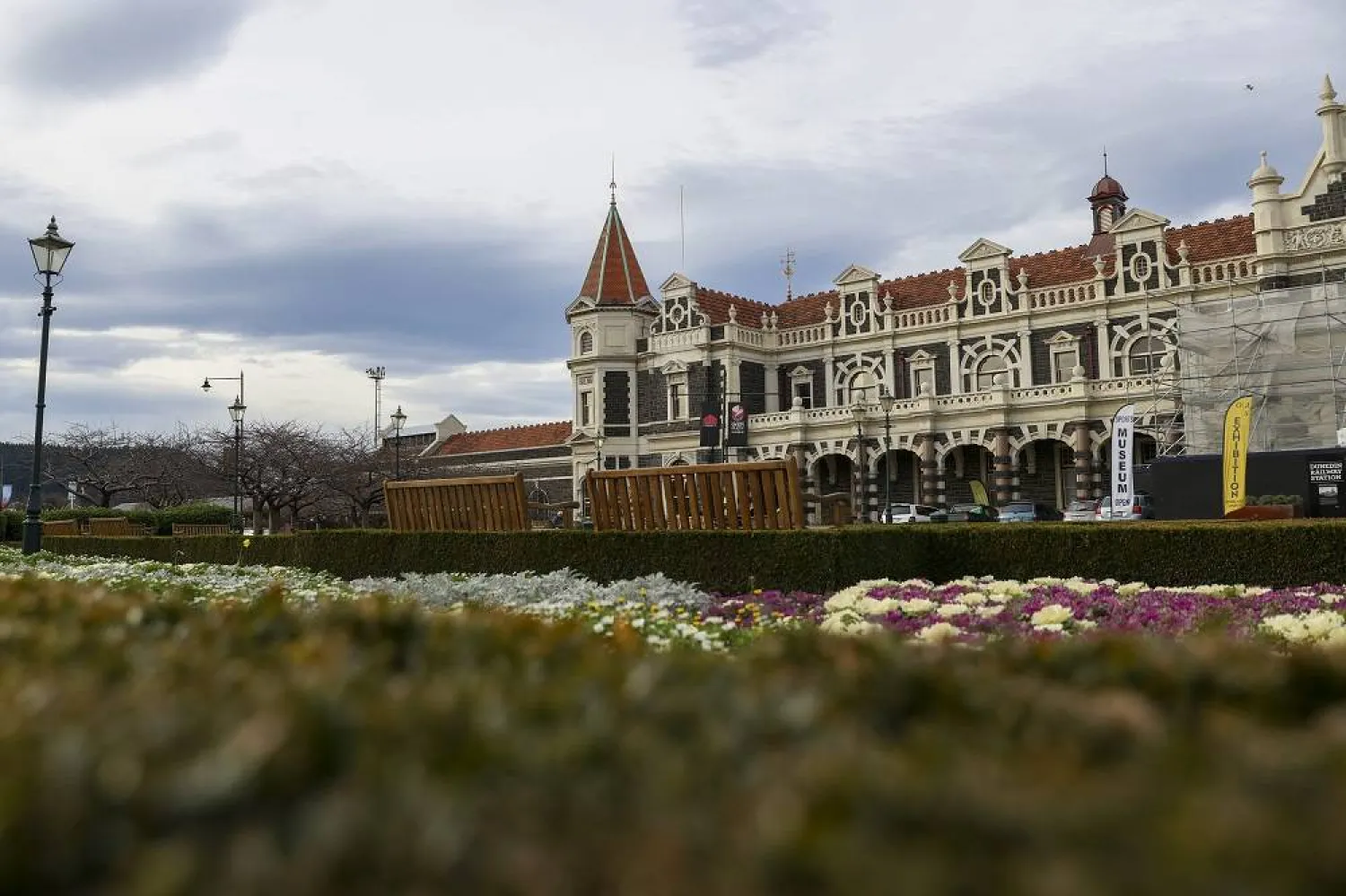
Dunedin's Anzac Square in central Dunedin, Wednesday, July 19, 2023. (AP)
TT

For Remote and Laid-Back Dunedin, a Warm Welcome to the Women’s World Cup 

Dunedin's Anzac Square in central Dunedin, Wednesday, July 19, 2023. (AP)

Hanging on the edge of the stunning South Island, in one of the world’s more remote countries, sat a scenic, minor-league sized city founded by Scottish immigrants.

Then, a few weeks ago, one of the world’s biggest sporting events came to town, bringing in thousands of visitors.

Reporter, in a cab: “So, is Dunedin excited for the Women’s World Cup?”

Cab driver: “Yes – and no.”

Welcome to Dunedin, which at a latitude of 45.88 degrees South is the southernmost city to ever host a match in a soccer World Cup, men’s or women’s.

It may also be among the quirkiest spots, a place of contradictions. Locals have been excited to host the Women’s World Cup, but not necessarily to go see a game.

With the city about to host its last game of the Women’s World Cup on Tuesday — Netherlands vs. Vietnam with first place in Group E on the line for the Dutch — it’s time for a little tour of what soccer at the bottom of the world has looked like.

Quiet fandom

During Dunedin’s time in the soccer spotlight, there’s been the usual hum of life here: People returning home from work and University of Otago students enjoying drinks in the octagonal heart of downtown, fittingly named the Octagon.

“New Zealanders have their own way of showing interest or passion,” said 78-year-old Ron Palenski, historian and a renowned New Zealand sports writer. “Their support is more low-key.”

People here don’t need to deck themselves out in team apparel to be considered fans, it’s all about what’s in the heart.

“When it’s a New Zealand team, I am just a devoted fan,” Dunedin resident and retired neuroscience professor Ruth Napper said. “It doesn’t matter what it is. I think it’s about being a small country at the bottom of the world that, you know, we’ve got to stand up and be noticed. And I think on a sports field, we punch above our weight.”

Dunedin’s six matches have all taken place in the covered Forsyth Barr Stadium, nicknamed the Glasshouse, and also known as Dunedin Stadium. Not unlike the cab driver’s “yes and no” answer, while it provides shelter from rain and wind, the stadium has open sides and provides little insulation from the cold.

And while tickets for New Zealand’s match against Switzerland sold out to fill the stadium’s 25,947 seats, attendance at the other matches has ranged from just under 7,000 to about 13,700.

Southern hospitality

Southern hospitality isn’t just in the United States. Dunedin is known for its welcoming vibe. People are approachable here, the style is casual and many stay because they love it.

“I came down here on a trip and basically never left,” said Dan Hendra, Dunedin City Council’s events team leader, who arrived 20 years ago and is originally from Auckland, on New Zealand's North Island. “I fell in love with the place and how friendly everyone was. The hospitality and friendliness and welcoming of the locals is awesome. That’s why I live here.”

Certainly, it's a place to get away from it all.

The city of about 130,000 residents is roughly 2,650 miles (4,265 kilometers) from Antarctica, around the distance from New York City to Los Angeles. Souvenir shops sell items that read, “Dunedin: the Riviera of the Antarctic” and “Dunedin: Bottom of the World.”

Founded in 1848, it's often called the Edinburgh of the South, as its name originates from “Dun Eideann,” the Scots-Gaelic word for Scotland’s capital city, Edinburgh. Like Scotland, there’s a wildness to the area, and nature is a big draw.

On non-game days, Women’s World Cup tourists have explored the Otago Peninsula’s rolling green hills, grassy cliffs and deep turquoise waters, where they watched blue penguins emerge from the surf each night to nest along the beach.

Blue penguins, or kororā in the Māori language, are the world’s smallest penguins, averaging about 10 to 12 inches (25-30 centimeters) tall and weighing two or three pounds (about 1 kilogram). The area also is home to seals, sea lions, albatross and other native birds.

“It’s great to show off what we have down here and what we are as a city,” Hendra said. “Given that we are the wildlife capital of the country, that’s something that we are really proud of and love to showcase.”

Game day

The sports scene in Dunedin is influenced by the University of Otago, which was founded in 1869 and now boasts 21,000 students. The Glasshouse, which often hosts rugby matches and other sporting events, has a university student section known as “the Zoo,” which “creates a buzzing atmosphere,” according to 22-year-old Barnaby Kelly.

Mostly, what those students watch is rugby – the most popular sport in this area and New Zealand by a long way. Dunedin was a host city for the Rugby World Cup in 2011.

Nestled in a quiet upstairs space at the Dunedin Railway Station is the New Zealand Sports Hall of Fame, opened in 1990.

Prominently displayed are photos and memorabilia from revered athletes in rugby, cycling, golf, tennis and more. But soccer? There’s only one display — a 6-by-3 glass case.

Even 13-year-old Izabella Christofoletti, who plays soccer for her school and a club team, and has been a ball girl for several Women’s World Cup matches, can talk about how soccer lags behind rugby in interest. Soccer “is not a well-known sport amongst different areas, so it’s good (the tournament) is here because it creates knowledge of it,” she said.

Nonetheless, when New Zealand played its last match against Switzerland on Sunday, a painful 0-0 tie that knocked the Football Ferns out of the tournament, the fans finally turned out and made noise, stomping their feet and cheering at every chance on goal for the Ferns.

Even though the result wasn’t what they wanted, New Zealand players were proud of their fans.

“I think there’s nothing better than Kiwis and especially in Dunedin and a sold-out crowd,” New Zealand midfielder Malia Steinmetz said. “You could hear it, you could feel it. I think they pushed us through a lot in that game.”



Saudi PIF Rewrites the 'Global Sports Economy'

The summit’s business and leadership platform brought together a group of prominent decision-makers and specialists. (Asharq Al-Awsat)
TT

Saudi PIF Rewrites the 'Global Sports Economy'

The summit’s business and leadership platform brought together a group of prominent decision-makers and specialists. (Asharq Al-Awsat)

Saudi Arabia’s investment presence in international sporting events is no longer limited to traditional forms of commercial sponsorships or one-off acquisitions. It has evolved into intellectual and strategic leadership that is reshaping the foundations of the global sports economy.

From the heart of the British capital, London, specifically at the historic Stamford Bridge stadium, which hosts the annual Leaders Week London summit, the high-level Saudi session reflected the depth of the structural transformation being led by the Kingdom and its effective shift from hosting seasonal events to creating a sustainable investment and development environment capable of shaping the future of the sector globally.

The special session, sponsored by the Public Investment Fund, highlighted how a “sporting superpower” can be built through a unique strategic integration of smart sovereign financing, major infrastructure development, and unprecedented operational excellence. This has made the Saudi experience a new economic benchmark aligned with the ambitions and targets of Saudi Vision 2030.

The summit’s business and leadership platform brought together a group of decision-makers and specialists leading this strategic transformation on the ground. Participants included Alanoud Althonayan, Head of Sponsorships and Events at the Public Investment Fund, and Feras Sheraiff, Head of Sports Investments for the Middle East and North Africa at the fund, who discussed the Kingdom’s financing dimensions and long-term economic vision.

On structural development and operational excellence at facilities, the session featured an extensive discussion with Xavier Campbell, CEO of radia, and Marc Archer, Executive Director of Sports Strategy and Partnerships at Qiddiya, highlighting how ambitious engineering and investment plans can be transformed into active assets that maximize returns and create sustainable opportunities.

Historically, most major investments in sports have focused on acquiring broadcasting rights or sponsoring the jerseys of major clubs to achieve rapid and temporary brand exposure. The current Saudi strategy, however, prioritizes investment in physical infrastructure to establish solid foundations for the sector. This transformation involves injecting unprecedented capital into the construction of modern stadiums, advanced training centers, and surrounding entertainment districts, based on an economic vision that considers ownership of advanced physical assets the only guarantee of attracting sporting elites, rights holders, and global sponsorship groups over the long term.

Qiddiya stands out as a key pillar and a living example of this structural vision. The construction of high-quality facilities such as the world-class racing circuit and the National Tennis Center, built to advanced engineering specifications, is not aimed merely at hosting a passing tour or tournament. Rather, it seeks to create a permanent infrastructure environment capable of hosting training camps and continental tournaments throughout the year, thereby increasing the investment efficiency of the real estate and sporting asset and transforming it into a productive and sustainable sector that generates tangible returns.

Countries that host major sporting events have historically faced a challenge known as “abandoned stadiums,” referring to large facilities that lose their function and vitality after competitions end and become a financial and administrative burden on governments. The Saudi model, however, has anticipated this challenge by focusing on operational excellence years before hosting major competitions.

This system was strengthened through the launch of radia, a company affiliated with SURJ Investment, which is owned by the fund, in partnership with global leaders in operations and entertainment such as Live Nation and Oak View Group, to ensure the continuity and vitality of events on a permanent basis.

The core philosophy of radia is to transform stadiums and sports arenas from facilities that operate only on seasonal match days into vibrant entertainment, cultural, and commercial destinations operating year-round without interruption.

This smart integration of sports and entertainment ensures sustainable financial flows that protect assets from declines in market value. At the same time, it contributes to creating thousands of permanent jobs for young Saudi talent in management, marketing, and hospitality, strengthening the local impact of sovereign investments.

Alanoud Althonayan, Head of Sponsorships & Events at the Public Investment Fund, speaks during the session (Asharq Al-Awsat)

Redefining Return Standards and Engineering Legacy Toward 4302

The Public Investment Fund’s investment vision has moved beyond traditional concepts of direct financial returns limited to ticket sales. The new Saudi benchmark is centered on making sports a major contributor to non-oil GDP, stimulating the sports tourism sector, and increasing the attractiveness of the domestic market to foreign investors.

This financial return is linked to a sustainable social impact, as investments contribute to increasing community participation in sports locally and developing an ideal environment for practicing them, which in turn improves the public health of citizens and creates a vibrant and active society.

The 2034 FIFA World Cup represents the most prominent milestone in these ambitions. However, the event is not viewed as a final objective whose implementation ends with the closing match. Instead, it is treated as a comprehensive development accelerator serving future generations.

All current investments discussed at the London summit, from stadiums to entertainment districts, are being designed to align with a clear and strict post-tournament plan, so that sports infrastructure will be immediately ready to support the growth of domestic leagues, make the Kingdom the Middle East’s leading regional hub for sports business, and create an integrated ecosystem capable of growing on its own.


Tsitsipas Advances to Shanghai Masters 2nd Round, Hurkacz Lines Up Djokovic

Greece's Stefanos Tsitsipas hits a return to Belgium's Kimmer Coppejans during their men's singles match at the Shanghai Masters tennis tournament in Shanghai on October 8, 2026. (Photo by Hector RETAMAL / AFP)
TT

Tsitsipas Advances to Shanghai Masters 2nd Round, Hurkacz Lines Up Djokovic

Greece's Stefanos Tsitsipas hits a return to Belgium's Kimmer Coppejans during their men's singles match at the Shanghai Masters tennis tournament in Shanghai on October 8, 2026. (Photo by Hector RETAMAL / AFP)

Two-time major finalist Stefanos Tsitsipas beat qualifier Kimmer Coppejans 6-3, 7-5 in the Shanghai Masters first round on Thursday, continuing his slow climb back up the ATP rankings.

Tsitsipas reached a career-high No. 3 ranking in 2021. He lost in qualifying at last week’s Japan Open. At his previous tournament, the US Open, he lost in the fourth round to eventual finalist Ben Shelton.

After slipping to No. 87 mid-year, Tsitsipas has worked his way up to 43. He next faces 18th-seeded Luciano Darderi.

Big-serving Polish player Hubert Hurkacz had 19 aces in a 6-3, 7-6 (4) win against James Duckworth and next plays No. 10 seed Djokovic, who won the China Open on Tuesday for a 102nd career title, The Associatec Press reported.

Bernard Tomic, a former world No. 16 whose ranking dropped to as low as 825 four years ago, qualified for an ATP 1000 main draw for the first time in seven years. He lost his first-round match to Matteo Arnaldi 6-3, 6-1.

The top seeds including Djokovic, US Open champion Alexander Zverev and third-ranked Carlos Alcaraz received first-round byes and were not scheduled to play until the weekend or later.

No. 1 Jannik Sinner withdrew from Shanghai this week when he announced he was taking the rest of 2026 off due to a right knee injury.


FIA to 'Strengthen' Software Testing after F1 Cars Stopped on Track in Malaysia

Air pollution is seen across the skyline as people prepare the street circuit before the Formula One Singapore Grand Prix night race in Singapore on October 8, 2026. (Photo by Lillian SUWANRUMPHA / AFP)
TT

FIA to 'Strengthen' Software Testing after F1 Cars Stopped on Track in Malaysia

Air pollution is seen across the skyline as people prepare the street circuit before the Formula One Singapore Grand Prix night race in Singapore on October 8, 2026. (Photo by Lillian SUWANRUMPHA / AFP)

The FIA has defended its handling of the Formula 1 car software bug which delayed the start of the Bahrain Grand Prix in Malaysia last weekend and pledged it will “strengthen” how the code is tested in future.

Several drivers, including seven-time champion Lewis Hamilton, were left stuck on track when their cars lost power and had to be restarted on formation laps before Sunday's race.

The on-board software failed to cope with drivers taking a more cautious approach ahead of the first wet race for the 2026 cars, which have a near 50-50 split between engine and electrical power.

The FIA, the governing body for F1, on Thursday said its investigation found that cars “experienced a loss of power beyond the original intent and that could not be recovered.”

After the cars were stuck on track, the start was suspended as the FIA rushed out a software update. The race eventually started almost an hour later, with no obvious software-related incidents, though the track had dried much more by then.

The FIA says that update will be used again if it rains at this week's Singapore Grand Prix — the forecast says that's likely — with more changes at the following race on Oct. 25.

“As a result, the configuration established for the Sepang event will be reinstated for the Singapore Grand Prix should similar weather conditions be expected,” The Associated Press quoted the FIA as saying.

“Additionally, a further update to the wet weather software will be released for the United States Grand Prix.”

The FIA added that it, the teams and engine manufacturers “will continue to strengthen power unit software testing and verification capabilities, enhancing the overall validation process through independent assessment and collaborative feedback.”

Drivers were scathing of the software bugs last week in Malaysia. Hamilton likened driving the sluggish cars to gimmicky pre-race exhibitions the drivers have done previously and four-time champion Max Verstappen called for a “lesson learned.”

The FIA said it had conducted testing on the software which failed last week, but that took place in two practice sessions which were largely dry ahead of races in Belgium and the Netherlands.
