



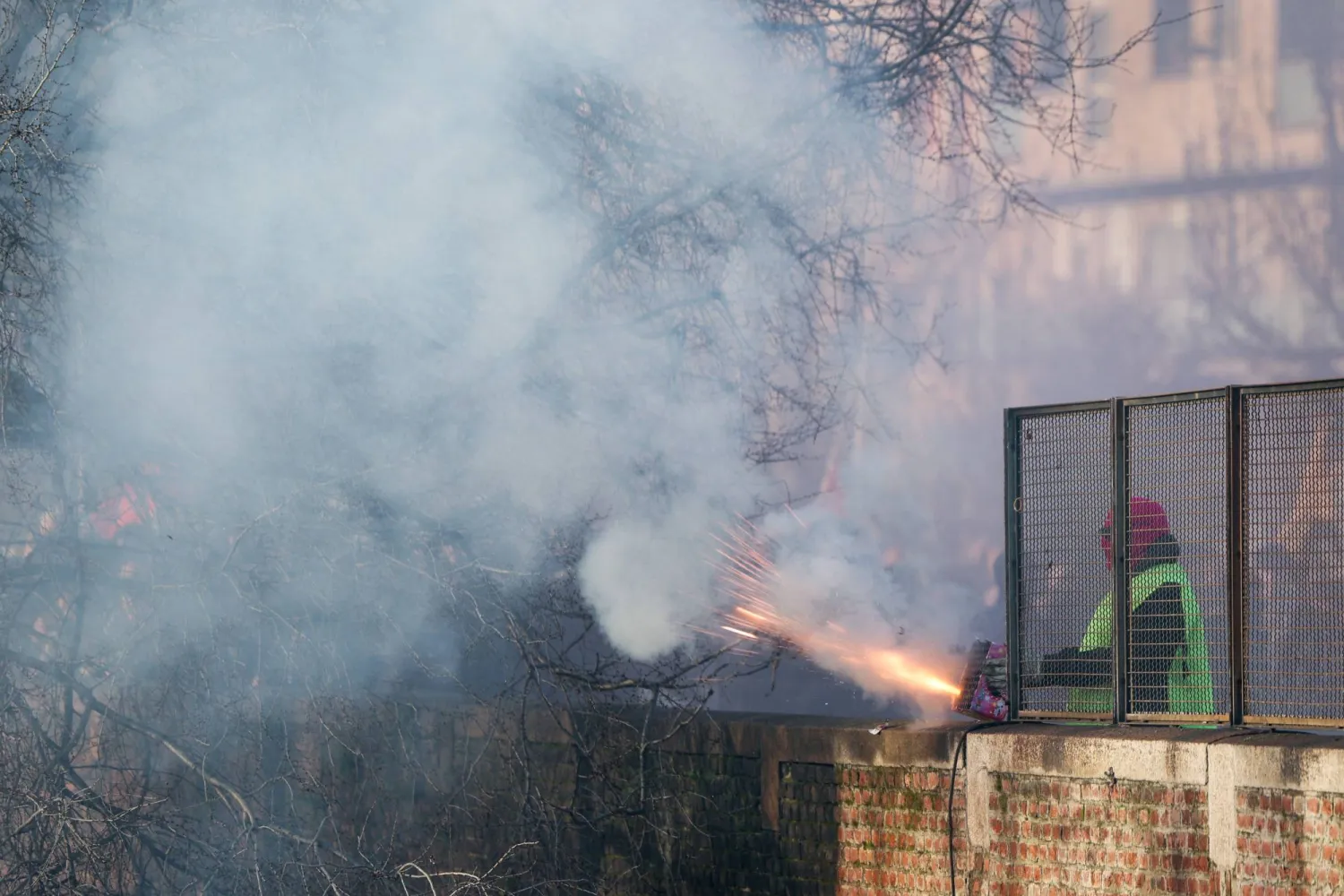

Thousands of people took to the streets of Milan on Saturday in a protest over housing costs and environmental concerns on the first full day of the Milano Cortina Winter Olympics.
The march, organized by grassroots unions, housing-rights groups and social center community activists, is seeking to highlight what activists call an increasingly unsustainable city model marked by soaring rents and deepening inequality.
The Olympics cap a decade in which Milan has seen a property boom following the 2015 World Expo, with locals squeezed by soaring living costs as an Italian tax scheme for wealthy new residents, alongside Brexit, draws professionals to the financial capital.
Some groups also argue that the Olympics are a waste of public money and resources pointing to infrastructure projects they say have damaged the environment in mountain communities.
A banner stretched across the street read: "Let's take back the cities, let's free the mountains."
CARDBOARD TREES SYMBOLIZE DESTRUCTION
"I’m here because these Olympics are unsustainable — economically, socially, and environmentally," said 71-year-old Stefano Nutini, standing beneath a Communist Refoundation Party flag.
He argued that Olympic infrastructure had placed a heavy burden on mountain towns hosting events in the first widely dispersed edition of the Winter Games.
The International Olympic Committee (IOC) points out that the Games are largely using existing facilities, making them more sustainable.
At the head of the procession, about 50 people carried stylized cardboard trees to represent the larches they said were felled to build a new bobsleigh track in Cortina d'Ampezzo.
"Century-old trees, survivors of two wars...sacrificed for 90 seconds of competition on a bobsleigh track costing 124 million (euros)," read another banner.
MARCH TAKES PLACE UNDER TIGHT SECURITY
According to police estimates, more than 5,000 people were taking part in the march.
Protesters set off from the Medaglie d'Oro central square to cover nearly four kilometers (2.5 miles) to end in Milan's south-eastern quadrant of Corvetto, a historically working-class district.
A rally last weekend by the hard-left in the city of Turin turned violent, with more than 100 police officers injured and nearly 30 protesters arrested, according to an interior ministry tally.
Saturday's protest follows a series of actions in the run-up to the Games, including rallies on the eve of the opening ceremony that denounced the presence in Italy of US ICE agents and what activists describe as the social and economic burdens of the Olympic project.
The march is taking place under tight security as Milan hosts world leaders, athletes and thousands of visitors for the global sport event, including US Vice President JD Vance.


