
The Biggest Takeaways from the 2026 World Cup

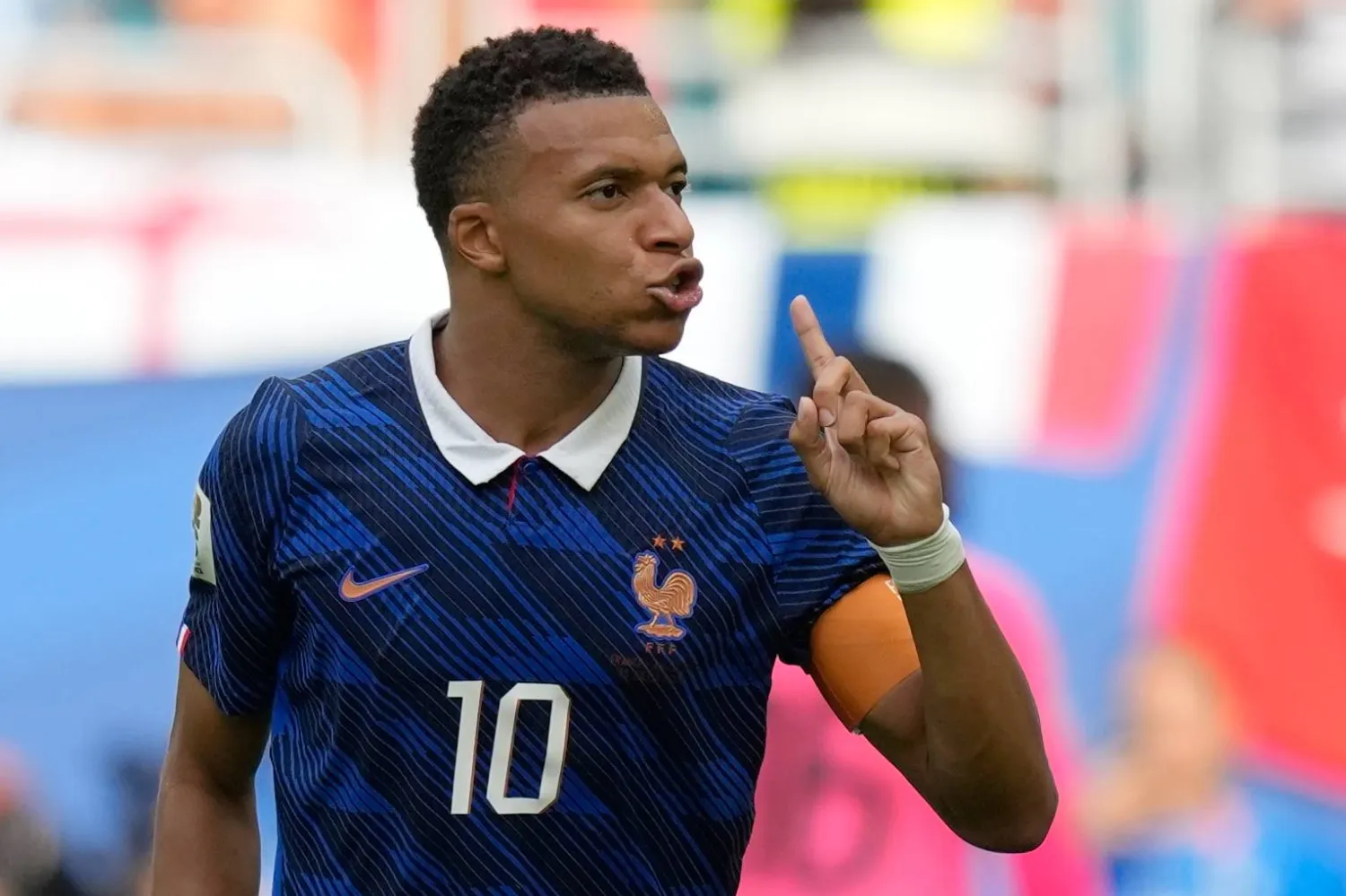
France's Kylian Mbappé (10) reacts after scoring his side's third goal during the World Cup third-place playoff match between France and England in Miami Gardens, Fla., Saturday, July 18, 2026. (AP)
TT

The Biggest Takeaways from the 2026 World Cup

France's Kylian Mbappé (10) reacts after scoring his side's third goal during the World Cup third-place playoff match between France and England in Miami Gardens, Fla., Saturday, July 18, 2026. (AP)

The World Cup final between Spain and defending champion Argentina marks the end of the biggest tournament in the competition’s history. At the final whistle in New Jersey on Sunday, a record 104 games will have been played across almost six weeks and three countries.

The supersized tournament delivered thrilling action on the field, with upsets, dramatic comebacks, spectacular goals and standout performances by the biggest stars of the game.

It also generated controversy, from political tensions surrounding Iran’s participation to criticism against innovations such as hydration breaks, which were unpopular among many fans.

Here are some key takeaways from the 2026 World Cup in the United States, Mexico and Canada.

More teams, more drama

A newly expanded 48-team format raised concerns about lopsided matches and a lack of jeopardy in the group stage.

Tell that to Cape Verde, Congo and even Curaçao, which all made history and won new fans.

Cape Verde held Spain to a draw in its opening game, advanced to the round of 32 and gave Argentina a scare before eventually losing 3-2 in extra time in a World Cup classic. Cape Verde's goalkeeper Vozinha became a breakout star at the age of 40, gaining millions of followers on social media.

Congo also advanced beyond the group stage and pushed England before eventually losing, while Curaçao was still in with a chance of making the knockouts going into its final group match.

FIFA opened its door to more teams and they proved they could compete on football's biggest stage. Nonetheless, it was top-ranked nations Argentina, Spain, France and England — all former champions — that made it to the final four.
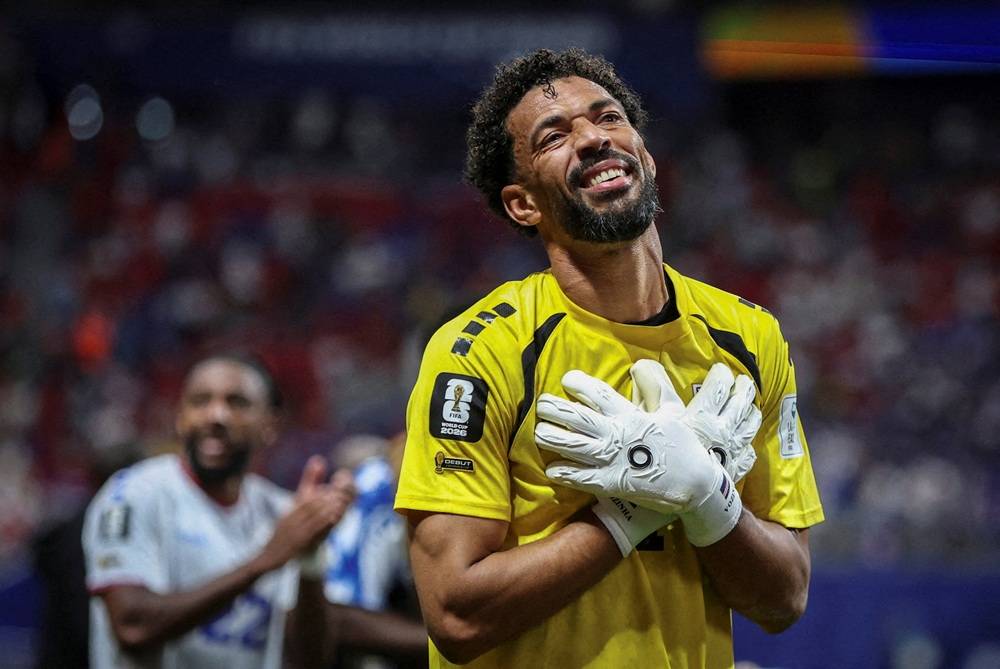
Cape Verde's Vozinha celebrates after the match in Atlanta Stadium, Atlanta, Georgia, US, June 15, 2026. (Reuters)

The big stars delivered

The race for the golden boot became a who's who of the world's top players with Lionel Messi, Kylian Mbappé, Erling Haaland, Harry Kane and Jude Bellingham firing on all cylinders.

Mbappé led the way ahead of Sunday's final with 10 goals in the tournament and a record 22 career World Cup goals. Messi had eight at this World Cup and 21 in total with one game to go.

Cristiano Ronaldo couldn't lead Portugal to success in what he said was his last World Cup, while Spain's teenage sensation Lamine Yamal — the star of the Euros two years ago — had to work his way into the tournament after overcoming injury.

Big tech, big complaints

Video reviews known as VAR were at the center of a number of contentious decisions, ruling out huge goals for Germany, Croatia and Egypt.

Egypt coach Hossam Hassan launched a furious tirade after Argentina staged a spectacular comeback from 2-0 down to win 3-2 in the round of 16.

“We have suffered injustice,” he said after Egypt had a goal overturned when the score was still 1-0.

Fitted with sensors, the high-tech ball in use at the tournament cost Croatia a dramatic late equalizer against Portugal in the round of 32 when it detected the slightest of touches from Igor Mantanovic and ruled Josko Gvardiol's goal offside.

“All these decisions take the joy out of football,” said Croatia coach Zlatko Dalić, who has since stepped down.
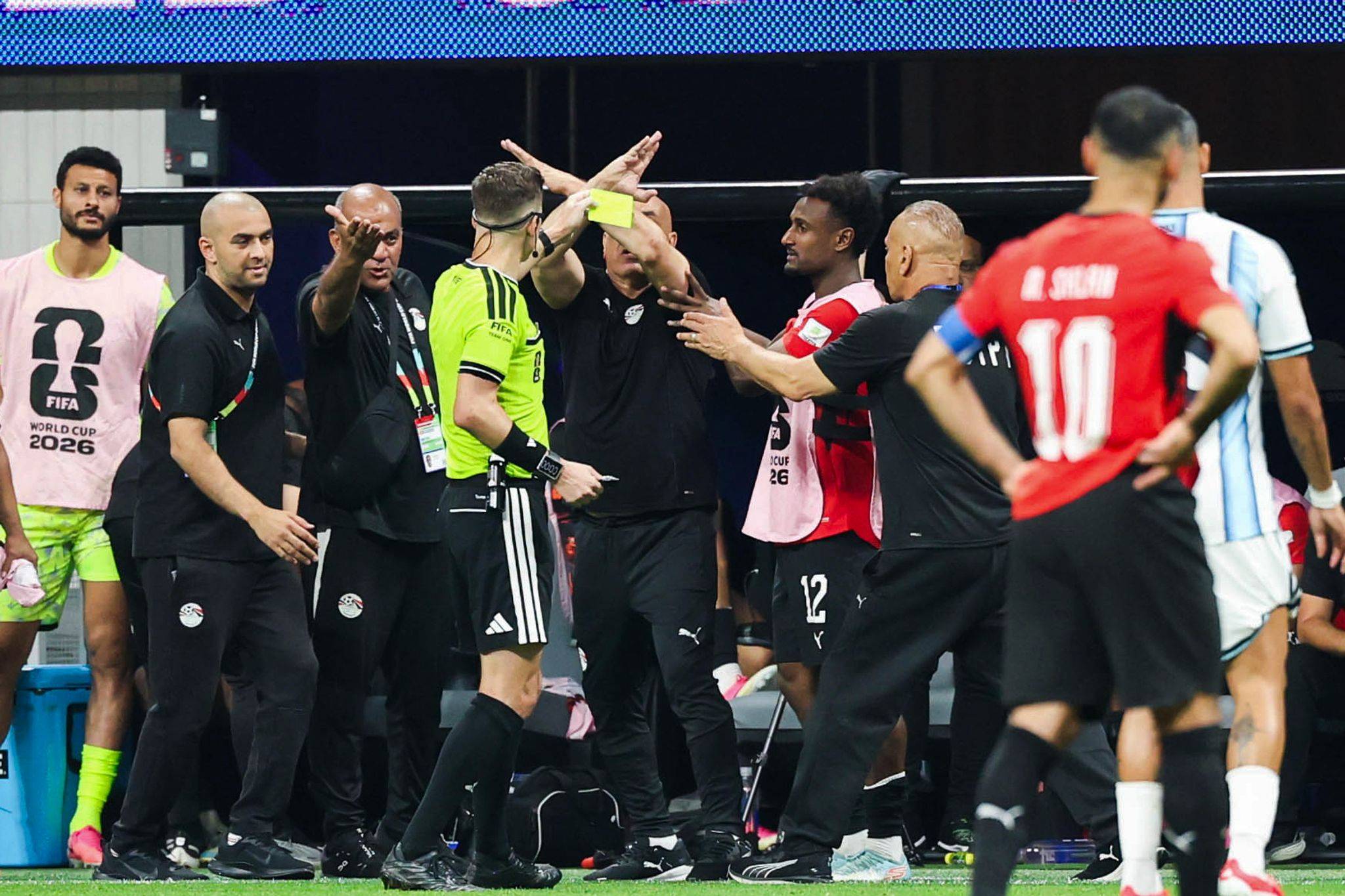
07 July 2026, US, Atlanta: Egypt coach Hossam Hassan gestures as he receives a yellow card during the 2026 FIFA World Cup Round of 16 match between Argentina and Egypt at Atlanta Stadium. (dpa)

Exorbitant ticket prices, but fans still turned up

There were concerns going into the tournament that FIFA's introduction of dynamic pricing would make game tickets unaffordable for average fans. Some critics accused FIFA of a “monumental betrayal."

Official ticket prices on general sale ranged from $140 to $2,735 for group stage matches and up to $8,680 for the final, far beyond the prices at the previous World Cup in Qatar in 2022.

After criticism FIFA said it would offer a selection of $60 tickets for every game to the 48 national federations participating.

FIFA's resale market place allowed sellers to list tickets for massively more than face value, including ones for the final for just under $2.3 million. FIFA didn't control resale pricing, but took a cut from sales.

For all the criticism, fans still turned up in big numbers, even for games that didn’t feature marquee teams or players.

After a shaky start when there were empty seats for the game between South Korea and the Czech Republic in Guadalajara, stadium after stadium reported full houses.

Many foreign visitors were impressed by the hospitality they experienced in the US.

Hydration breaks a turnoff

FIFA’s new hydration breaks midway through each half — a novelty for this World Cup — prompted loud jeers from fans inside the stadium, while former players were also critical.

"We’re in America, right? So, it’s like it is a timeout,” former Ireland international Roy Keane said on The Overlap podcast.

The breaks were introduced to help players deal with the summer heat, but FIFA stipulated they would occur regardless of the weather, venue or location.

Coaches used them like timeouts to pass on in-game tactical instructions. Broadcasters, meanwhile, used them as an opportunity to take commercial breaks.

It is unclear whether FIFA will implement hydration breaks at future World Cups, but the English Football Association said they were unlikely to be in place for the 2028 European Championship, co-hosted by England, Scotland, Wales and Ireland.
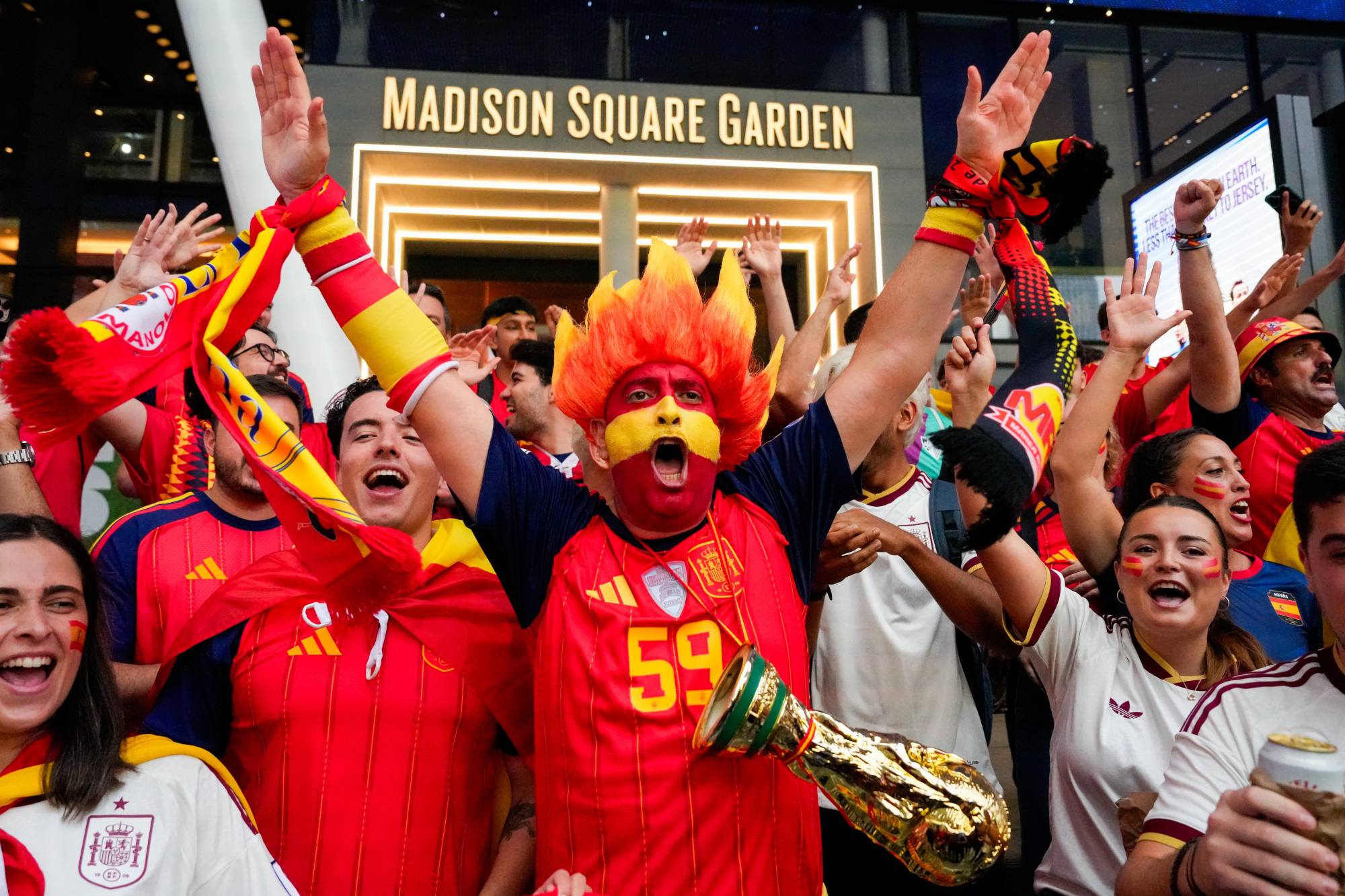
Spain fans gather for a rally on the eve of the World Cup final match in New York's Times Square, Saturday, July 18, 2026 (AP)

Iran participated despite the war

It’s not unusual for politics and sport to intertwine at the World Cup. This time the biggest political tensions surrounded the national team of Iran.

The war in the Middle East raised doubts about whether the Iranian team would show up at all. It did, but only after moving its base camp from Arizona to Mexico.

Its participation was overshadowed by visa issues, with the US refusing visas to several members of Iran's delegation. The Iranians also complained about travel restrictions, including having to leave the US immediately after each match.

When Iran was eliminated at the group stage, Homeland Security Secretary Markwayne Mullin made his feelings clear. “I’m just glad they’re done and they’re not coming back,” he said.

Trump's role in focus

While the Trump administration’s travel restrictions on a series of countries prevented some fans from traveling to the US, there were no reports of the aggressive immigration enforcement that some human rights groups had feared could take place around World Cup stadiums.

Besides the final, Trump didn't attend any World Cup games. However, his relationship with FIFA president Gianni Infantino came into sharp focus when US striker Folarin Balogun's one game ban for a red card was suspended ahead of the team's round of 16 game against Belgium.

Trump said he had called Infantino to ask for the decision to be reviewed before FIFA made Balogun eligible to play. FIFA insisted its disciplinary bodies acted independently, but the incident raised question about political interference.

Ultimately, the decision didn't help the US as it lost 4-1 to Belgium.


Real Madrid Officially Presents José Mourinho in a Closed-door Ceremony

File: Soccer Football - Pre Season Friendly - Schalke 04 v Real Madrid - Veltins-Arena, Gelsenkirchen, Germany - August 16, 2026 Real Madrid coach Jose Mourinho REUTERS/Kai Pfaffenbach
TT

Real Madrid Officially Presents José Mourinho in a Closed-door Ceremony

File: Soccer Football - Pre Season Friendly - Schalke 04 v Real Madrid - Veltins-Arena, Gelsenkirchen, Germany - August 16, 2026 Real Madrid coach Jose Mourinho REUTERS/Kai Pfaffenbach

In an unusual ceremony closed to the media and fans, Real Madrid officially presented coach José Mourinho on Tuesday.

The event took place at the club's headquarters in Madrid, with president Florentino Pérez welcoming the coach. The only images of the presentation were provided by Real Madrid TV and the club's website and social media accounts.

“I'm one of you,” Mourinho said in a message to fans in a video released by the club. “And not just today, but since I arrived in 2010 and after I left in 2013, always with you. ... To return to Real Madrid is to return home.”

Madrid said the coach was signed for three seasons until June 30, 2029.

After the signing, Madrid said Mourinho received a replica of the stadium, a watch and a jersey with his name.

Madrid has been revamped after a second consecutive season without a major title. In addition to Mourinho, who replaced Álvaro Arbeloa, the club also brought in players such as Marc Cucurella, Ibrahima Konaté, Denzel Dumfries, Bernardo Silva and Yan Diomande.

Kylian Mbappé, Vinícius Júnior and Jude Bellingham will lead the squad again as it tries to keep Barcelona from winning a third straight La Liga title. Mourinho was hired in June and officially took over in July at the start of the preseason.

He is back for a second stint with Madrid some 13 years after he left the club. He was in charge from 2010-13, winning a Spanish league and a Copa del Rey. He was more remembered for his confrontational personality that ended up splitting his own squad and alienating all but the most hardcore fans, as well as a large part of the local media.


Esports Foundation Postpones Inaugural Esports Nations Cup to November 2027

Esports Foundation Postpones Inaugural Esports Nations Cup to November 2027
TT

Esports Foundation Postpones Inaugural Esports Nations Cup to November 2027

Esports Foundation Postpones Inaugural Esports Nations Cup to November 2027

The Esports Foundation has postponed the inaugural Esports Nations Cup (ENC) in Riyadh from November 2026 to November 2027, following an ongoing regional assessment, consultations with key partners, and a commitment to match the high expectations of players, national teams, publishers, partners, and fans across more than 100 participating countries and territories.

The foundation affirmed that Saudi Arabia remains a safe, stable, and welcoming host for international sports and entertainment. It stressed that its commitment to staging the tournament and supporting the national esports ecosystem is unchanged, SPA reported.

All commitments under the ENC Development Fund and its programs remain fully active, with ongoing stakeholder coordination to manage the revised timeline.

Esports Foundation CEO Ralf Reichert noted that while the decision was not taken lightly, the positive global response underscores the event's immense potential. He emphasized the foundation's responsibility to deliver the inaugural edition under optimal conditions, confirming that investments in national partners, publisher collaborations, and national team ecosystems will continue unabated.

The global tournament aims to elevate the esports sector, create player pathways, advance national teams, and foster national identity.

In the coming weeks, the foundation will coordinate with stakeholders to clarify the revised schedule, qualifying rounds, and related operational details.


Holders Al-Ahli to Face Former Winners Al-Ain in Asian Champions League

The finals phase, featuring the quarter-finals, semi-finals and final, will kick off on April 23 and run until May 1. (AFC)
TT

Holders Al-Ahli to Face Former Winners Al-Ain in Asian Champions League

The finals phase, featuring the quarter-finals, semi-finals and final, will kick off on April 23 and run until May 1. (AFC)

Back-to-back champions ‌Al-Ahli from Saudi Arabia will take on 2024 winners Al-Ain of the United Arab Emirates in the league phase of the Asian Champions League Elite after the draw for the expanded competition was conducted in Kuala Lumpur on Tuesday.

Al-Ahli, now coached by Marino Pusic after Matthias Jaissle left to join Newcastle United, will also play Qatari trio Al-Sadd, Al-Shamal and Al-Gharafa as well ‌as Emirati ‌sides Shabab Al-Ahli and Al-Wasl plus ‌Uzbekistan's ⁠Neftchi and Pakhtakor.

The ⁠league phase has been increased from 24 to 32 teams with the opening round to commence on September 14 and finish on February 17.

Japan's Kashima Antlers, the last team from east Asia playing in the current edition to have ⁠won the title, will face twice winners ‌Jeonbuk Motors from ‌South Korea, as well as Thai sides Buriram United, Port ‌FC and Ratchaburi FC.

The J-League side will ‌also take on tournament debutants Cong An Ha Noi from Vietnam, Daejeon Citizen and Pohang Steelers from South Korea, and Australian champions Newcastle Jets.

Clubs in the west ‌and east of the continent are divided into separate groups of 16 ⁠teams for ⁠the league phase, with the top eight finishers on each side advancing to the knockout rounds.

Those last 16 matches will also be held on a regional basis with the four victorious teams from the two sides of the confederation advancing to the centralized finals, which will be played for the third year in a row in Saudi Arabia.

The finals phase, featuring the quarter-finals, semi-finals and final, will kick off on April 23 and run until May 1.