The logo of OpenAI is displayed near a response by its AI chatbot ChatGPT on its website, in this illustration picture taken February 9, 2023. (Reuters)
TT
TT
US-Based Generative AI Job Postings up 20% in May
The logo of OpenAI is displayed near a response by its AI chatbot ChatGPT on its website, in this illustration picture taken February 9, 2023. (Reuters)
Generative AI-related job postings in the United States jumped about 20% last month as companies look to harness a technology that has been widely touted as the next big growth driver, according to data from job portal Indeed.
The May figure, at 204 per million job postings, was also more than double the 2021 level and underscored the buzz around AI, sparked by the runaway success of OpenAI's ChatGPT.
Data scientist roles made up 5% of the AI job postings on Indeed's US platform, while roles such as software engineer, machine learning engineer and data engineer were also in demand.
"There has been a notable increase in job seeker interest in AI-related jobs, especially since the introduction of ChatGPT," said Nick Bunker, director of economic research at Indeed.
The jump comes at a time when the broader tech job market is under pressure from mass layoffs at companies such as Meta Platforms and Amazon.com Inc, which are tightening their belts to cope with an uncertain economy.
Overall, tech jobs are down 43.6% in the United States from June last year, Indeed said, adding the number of available AI jobs was not keeping up with the interest from job seekers.
Indeed's data showed that searches for generative AI jobs jumped to 147 per million total jobs searched in May from virtually zero a year earlier.
Its US website showed generative AI job listings from companies such as Meta Platforms, Apple, Tiktok, Pinterest and Amazon.com.
Argentina’s Milei Pitches a Regulation-Free AI Haven at the End of the Worldhttps://english.aawsat.com/technology/5336550-argentina%E2%80%99s-milei-pitches-regulation-free-ai-haven-end-world
Argentina's President Javier Milei delivers a statement at the Organization for Economic Co-operation and Development headquarters, ahead of the ''Argentina Week'', an event aimed at promoting investment and business opportunities, in Paris, Oct. 1, 2026. (AP)
TT
TT
Argentina’s Milei Pitches a Regulation-Free AI Haven at the End of the World
Argentina's President Javier Milei delivers a statement at the Organization for Economic Co-operation and Development headquarters, ahead of the ''Argentina Week'', an event aimed at promoting investment and business opportunities, in Paris, Oct. 1, 2026. (AP)
Data centers have become one of the most polarizing issues in the world. Argentina’s president wants to lure as many of them as he can get.
As residents and policymakers in the United States and Europe fight the facilities that power artificial intelligence, President Javier Milei is pitching Argentina as a haven, promising a hands-off approach to draw foreign investment his crisis-prone country needs.
Like his ally, US President Donald Trump, Milei frequently posts AI-generated images on social media. He has proposed creating “nonhuman corporations” run entirely by AI agents.
“We are not going to regulate artificial intelligence,” Milei told the US Chamber of Commerce in Washington last month. “We are going to leave it free.”
Visitor logs obtained by The Associated Press show a steady stream of tech figures meeting with Milei and his aides in recent months, from venture capitalist Peter Thiel to representatives of OpenAI, Amazon, Google, Oracle and data center companies. Foreign Ministry records show that data center developer Crusoe, which helped build OpenAI’s flagship campus in Texas, sought talks this year with Argentine energy officials about US government-backed investments.
Milei’s hopes rest as much on geography as on ideology. Patagonia offers vast, open plains where noisy server farms can be built far from population centers, a chilly climate to cool the machines, powerful winds to generate electricity and one of the world’s largest shale deposits in Vaca Muerta to fuel power plants.
“In densely populated parts of the US and Europe, there’s a lot of fighting over access to the grid and who should get the electricity,” said Marta Zlotkowska, head of international development at Green Capital, a Polish renewable energy company that plans to build a $3 billion data center in Patagonia to lease to big tech firms for AI computing, though it has yet to secure a customer.
“We compared potential locations for the project around the world and Argentina — well, Patagonia — came out on top in every category," she said.
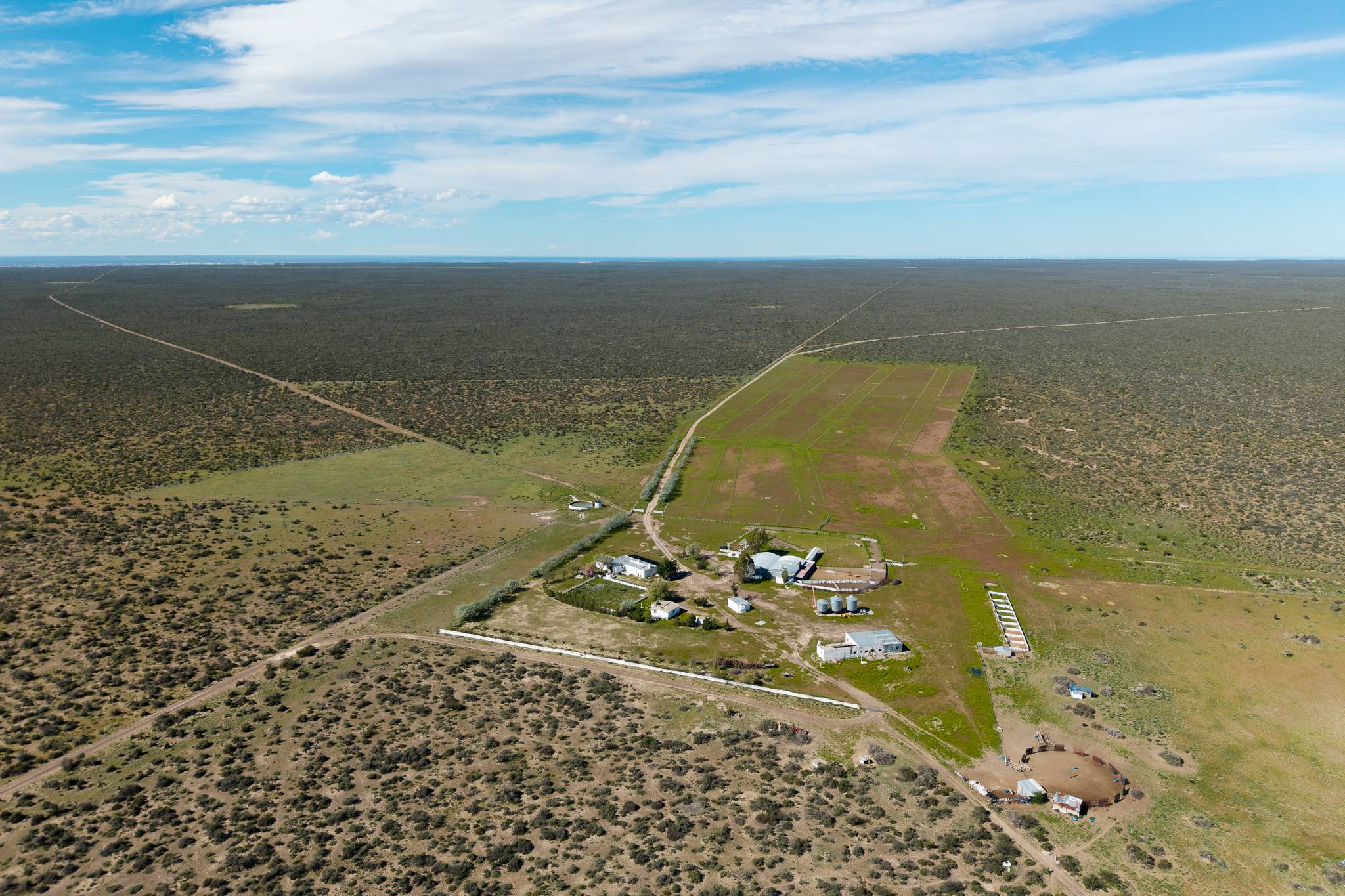
A view of Tatay ranch, one of the properties, picked to host a proposed data center complex near Trelew, Tuesday, Oct. 27, 2026. (AP)
Patagonia’s AI promise
For Argentina’s energy industry, already booming as the Iran war hikes oil prices, data centers represent a tantalizing new market. Pampa Energía, one of the country’s biggest power companies, has announced plans to supply immense amounts of gas-fired power to a data center near Vaca Muerta and is seeking developers.
“Being at the end of the world used to be a disadvantage,” said Rubén Etcheverry, a top official in Neuquén, the Patagonian province home to Vaca Muerta. “But today, faced with energy shortages and rising costs, investors are looking at us.”
To win over companies wary of Argentina’s chronic economic instability, Milei is pushing an incentive scheme that would slash the corporate income tax rate to 15% from 25% for projects of at least $1 billion in AI and other emerging industries. The measure is awaiting Senate approval.
The payoff for Argentines remains unclear. Data centers employ relatively few people. Milei’s proposed incentives don’t require companies to reserve computing capacity for local consumption or to disclose their energy and water use.
“We’re not talking about data centers designed to strengthen Argentine technological sovereignty,” said Alan Rocha Varsanyi, a researcher at Observatorio Petrolero Sur, an Argentine environmental group. “The computing capacity will be exported wherever OpenAI or the other companies need it.”
Blueprints, not yet bulldozers
For all Milei’s hype, Argentina lags behind in the race to become a regional data center hub, as its neighbors tout cheap land, renewable power and expanding fiber-optic connections to US tech giants.
Milei insists his calls for unfettered AI give Argentina an edge at a time when the European Union and a growing number of US states have adopted new regulations. Critics warn he is pushing to deploy AI in Argentina without safeguards against risks ranging from mass surveillance to cyberattacks.
“Without rules, Argentina will become a laboratory — like when companies go to developing countries to test strange drugs they can’t test in major developed countries,” said Nicolás Wolovick, a computer science professor at the National University of Córdoba.
Milei may hear similar concerns next week when Pope Leo XIV, who has warned of AI’s threats to humanity, visits Argentina on his Latin American tour.
Even some in Milei’s own government acknowledge that his anti-regulation stance complicates efforts to build a clear legal framework, with one senior official not authorized to brief media saying companies are waiting for Argentina to settle rules on training AI with copyrighted works and sending personal data abroad.
Some investors are holding back until next year’s potentially tight presidential election, worried that if Milei loses, the next government could unravel his free-market reforms.
“One of our major challenges is getting foreign investors to understand that Argentina remains a friendly place for investment under different political parties,” said Andrés Arbeletche, cabinet coordination secretary for Chubut, a Patagonian province courting several AI mega-projects.
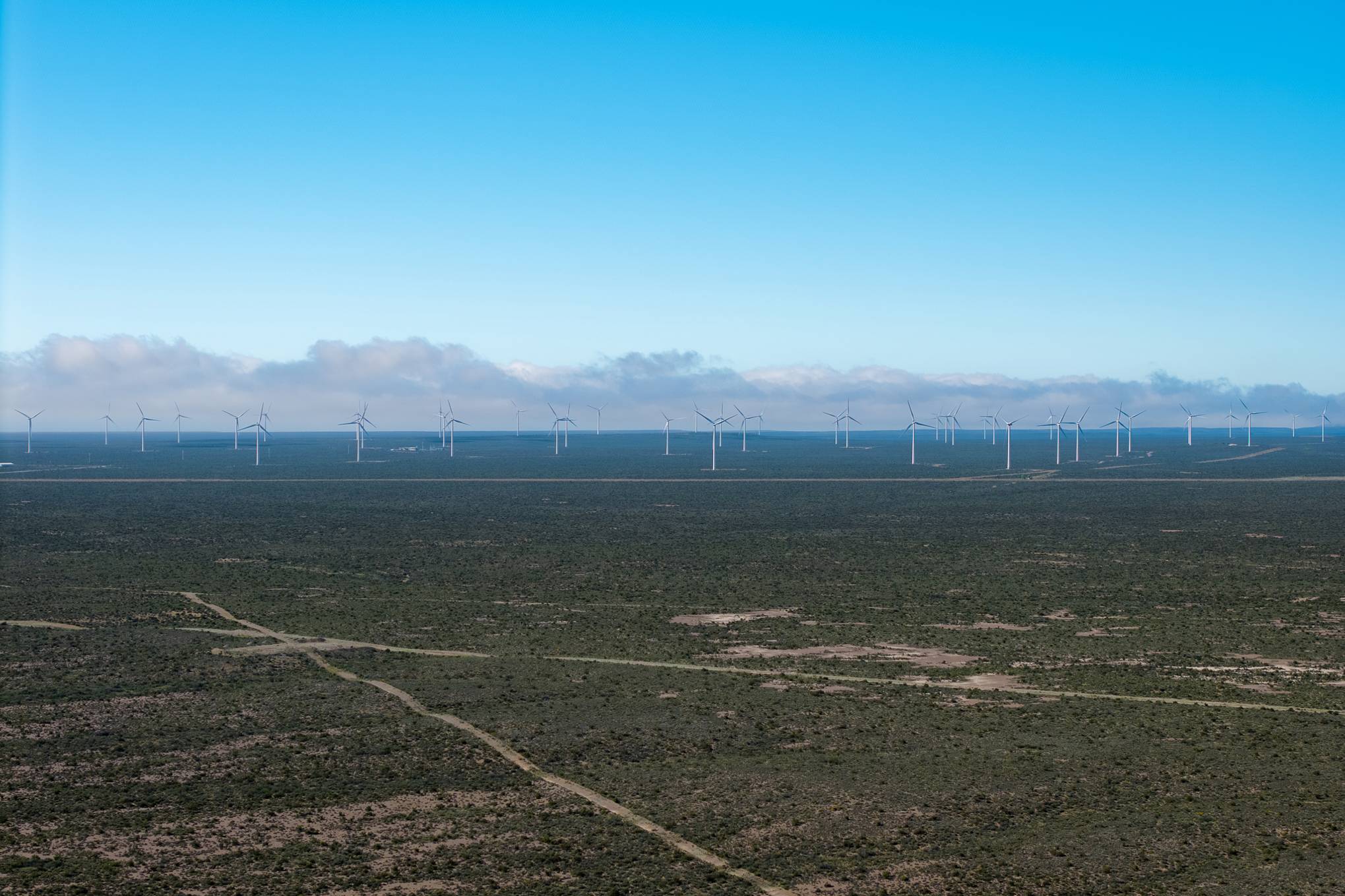
Wind turbines stand on the field near Trelew, Argentina, Wednesday, Oct. 28, 2026. (AP)
Farms of servers and sheep
In remote ranching outposts across the treeless plateau of Chubut province, life revolves around tending flocks on steppes and shearing sheep in sheds. With the wool industry in decline after decades of drought, overgrazing and soaring production costs, some ranchers are betting on a different kind of shed — filled not with fleece but with blinking racks of servers.
“Sheep farmers are looking very hard at what alternatives can be found to bring in more income,” said Francisco Sáenz, an agricultural engineer and fourth-generation sheep farmer whose family is among 14 landowners who have leased a combined 130,000 hectares (about 321,000 acres) to Green Capital for its planned data center. The ranchers expect to keep grazing sheep alongside their colossal future neighbor.
Construction isn’t expected to begin until around 2028. If operated continuously at its projected peak demand, the finished campus would use about 2.7 times as much electricity in a year as the entire city of Buenos Aires consumed in 2025, according to an AP calculation.
Green Capital promises to generate all its own electricity from wind turbines, solar farms and gas-fired generators rather than strain Argentina’s congested grid. Provincial officials are counting on the project to deliver billions of dollars in investment, highly skilled jobs and a market for surplus wind power.
“For us, it is all a benefit, and we give nothing up,” Arbeletche said.
But some residents of Trelew, a dust-blown city near the proposed site, say they have no way to judge those assurances. Environmental studies are still underway, permits are pending and the company hasn’t specified how much water the project would need or how much of its power would come from gas.
“There’s just so little information,” said Cristina Gibón, 46, who fears the environmental toll of data centers. “Maybe we’ll have water until we’re old. But afterward, our children will still be here, and they won’t have those resources.”
Worries like hers are feeding a wider backlash against Milei's courtship of Big Tech. In Trelew, a small group of residents has rallied online and in the main square under the banner “Trelew Free of Data Centers.” In Congress, where lawmakers recently accused Milei of selling off the country at a hearing on billionaire Peter Thiel’s interests in Argentina, the opposition has forced the president to gut a bill easing restrictions on foreign land ownership and has stalled his plan to let AI agents control companies.
Back on his family’s farm, Sáenz sees a familiar Argentine reflex.
“Whenever a foreign company wants to make a major investment in Argentina, there’s a lot of criticism. Many people’s first reaction is to say, ‘No, they’re terrible people coming from the outside to take our resources,’” he said. “I’m not saying big companies are the best thing ever. I’m just saying that when I look at other countries, I see stable economies."
South Korea to Double Spending on AI and Chips in 2027https://english.aawsat.com/technology/5336525-south-korea-double-spending-ai-and-chips-2027
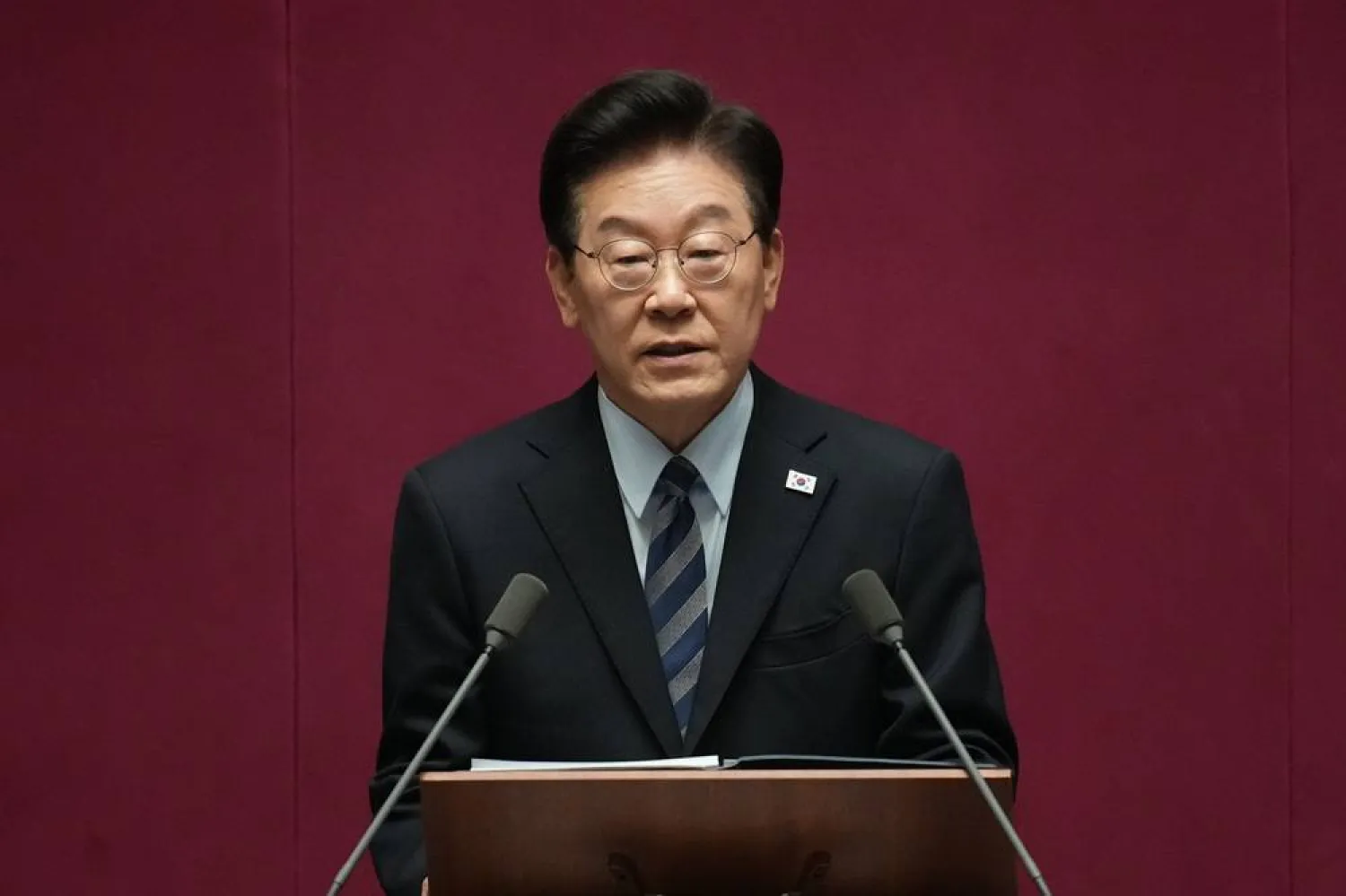
South Korean President Lee Jae Myung delivers a budget speech for 2027 at the National Assembly in Seoul, South Korea, 02 November 2026. (EPA)
TT
TT
South Korea to Double Spending on AI and Chips in 2027
South Korean President Lee Jae Myung delivers a budget speech for 2027 at the National Assembly in Seoul, South Korea, 02 November 2026. (EPA)
South Korea will double spending on AI and semiconductors in 2027 to a record high, the president said Monday, pledging to use the technology to turn the military into a "smart, elite force".
President Lee Jae Myung in his annual budget speech to parliament said 21.3 trillion won ($16 billion) would be allocated to chipmaking and artificial intelligence, spanning data centers to robotics.
"We will make bold investments in AI and future growth engines to boost our economy's growth potential," he said, adding that the figure was "nearly double this year's amount".
On the defense budget, the government wants to see an increase of around eight percent from this year to 73.3 trillion won, aiming to secure nuclear-powered submarines and KF-21 fighter jets.
Lee said Seoul aims to "rapidly transform our military into a smart, elite force by establishing integrated manned and unmanned systems based on AI, robots and drones".
North Korea has recently tested a slew of weapons, including a new precision-guided torpedo system and an intermediate-range hypersonic missile, both of which it said used AI technology.
And last year, Seoul announced an agreement with Washington to build nuclear-powered submarines, with Pyongyang slamming the submarine program as a "dangerous attempt at confrontation".
Overall, the 2027 budget plan totals 821 trillion won, a 12.8 percent increase on-year, making it the largest budget proposal on record.
Lee now needs parliament to pass the budget proposal, which is likely given his party's majority.
-'Mega projects'-
The country is a tech powerhouse, home to Samsung Electronics and SK hynix, two of the world's three biggest makers of memory chips -- components in huge demand thanks to the AI boom.
Lee said the government will invest 4.7 trillion won to support "frontier AI development projects, with the aim of achieving world-leading performance for our own AI model, a national strategic asset".
In June, Lee announced a public-private partnership centered on "three mega-projects" -- aiming to expand chip production hubs nationwide, establish robotics research and development centers, and build gigawatt-scale AI data centers.
The government at the time unveiled plans for nearly $1.2 trillion in investment, equivalent to more than two-thirds of South Korea's GDP.
Samsung and SK hynix also in June announced plans to invest more than 4,755 trillion won ($3.5 trillion) in South Korea, marking a record level of corporate investment in the country.
South Korean chipmakers have seen profits and share prices skyrocket as frenzied demand for AI infrastructure squeezes the global supply of memory chips.
The boom has also spurred chip engineers and other workers to seek higher payouts in tense negotiations at companies including Samsung and SK hynix.
In September, Seoul announced plans for a 162.3 trillion won "Future Fund" next year, aimed at channeling record tax revenues from the country's chip boom into long-term growth.
Lee said Monday the government would also invest 2.1 trillion won in electricity, water supply and industrial complex infrastructure, as semiconductor plants require a stable power supply around the clock, 365 days a year.
AI Giants Promise Publishers New Way to Block Some Scrapinghttps://english.aawsat.com/technology/5335881-ai-giants-promise-publishers-new-way-block-some-scraping
An OpenAI logo is displayed at Moscone Center during the Dreamforce 2026 technology summit in San Francisco, California, US, September 17, 2026. (Reuters)
TT
TT
AI Giants Promise Publishers New Way to Block Some Scraping
An OpenAI logo is displayed at Moscone Center during the Dreamforce 2026 technology summit in San Francisco, California, US, September 17, 2026. (Reuters)
OpenAI, Google, Microsoft and Anthropic pledged on Friday to give media outlets and other websites a single way to prevent their content from being scraped to train artificial intelligence (AI) models, amid growing criticisms and legal battles from news publishers.
Publishers currently have to implement multiple blocking commands for every bot that crawls the web to collect data, but the new proposed solution will allow them to enter a single, standardized instruction that's recognized and honored by any AI company that adopts the protocol.
The solution will not fully take effect for months, though.
Microsoft will implement it beginning February 1, 2027, and Google sometime in 2027. ChatGPT-maker OpenAI said it will roll it out "in the coming months," while Claude-maker Anthropic said it has "already started" rolling it out.
The announcement comes as publishers are facing a surge in bots that scrape their articles to feed AI models. Some, like the New York Times, have taken the matter to court.
In December 2023, the Times sued OpenAI and Microsoft for allegedly using millions of its articles without authorization or payment to train ChatGPT. The two tech companies are invoking an exception to copyright law known as fair use.
Meanwhile, internet infrastructure provider Cloudflare has blocked AI bots by default on new customer sites since July 2025, and a standard called Really Simple Licensing already allows publishers to charge bots that visit their pages.
The new setting will apply only to future training of models but does not prevent bots from crawling otherwise, and content scraping will be allowed by default until the setting is changed by a publisher, Microsoft said in a blog post.
Opting out of AI training could reduce the chances that a publisher's content will surface in AI apps and experiences, Microsoft and Google said in separate blog posts.
"We believe creating a common signal that conveys such preferences to multiple providers at once is an important step. And we look forward to working with other AI companies on the standards and their implementation across the industry," Meta spokesperson Andy Stone wrote on X, conveying his support for the effort.
لم تشترك بعد
انشئ حساباً خاصاً بك لتحصل على أخبار مخصصة لك ولتتمتع بخاصية حفظ المقالات وتتلقى نشراتنا البريدية المتنوعة