Japan Chip Giant Rohm to Invest $722 Mln in Toshiba Buyout Group 

A man arrives to attend Toshiba Corporation's 184th annual general meeting of shareholders in Tokyo on June 29, 2023. (AFP)
TT

Japan Chip Giant Rohm to Invest $722 Mln in Toshiba Buyout Group 

A man arrives to attend Toshiba Corporation's 184th annual general meeting of shareholders in Tokyo on June 29, 2023. (AFP)

Rohm co said on Tuesday it will invest 100 billion yen ($722.33 million) in the group led by Japan Industrial Partners that is launching a tender offer for Toshiba Corp.

Rohm also plans to underwrite 200 billion yen of non-voting preferred stock issued by TBJ Holdings which will be set up by the Japan Industrial Partners for the tender offer of Toshiba.

"Toshiba's semiconductor business is highly compatible with the company," Rohm said of its investment, in a statement.


Xbox Boss Phil Spencer Retires as Microsoft Shakes Up Gaming Unit

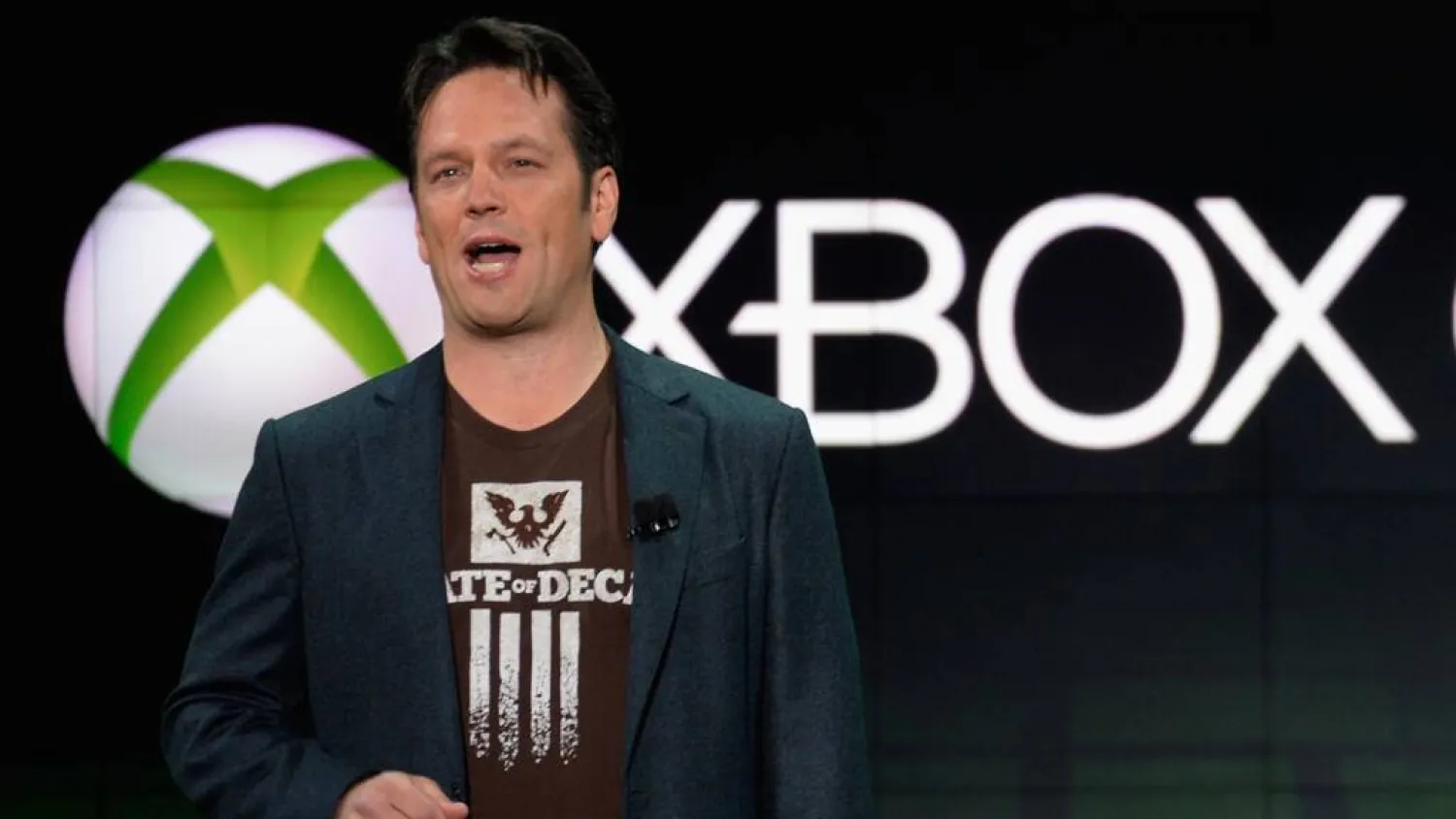
During 12 years leading Xbox, Phil Spencer oversaw blockbuster studio buys and an evolution to video games being played just about anywhere players can get online. KEVORK DJANSEZIAN / GETTY IMAGES NORTH AMERICA/AFP
TT

Xbox Boss Phil Spencer Retires as Microsoft Shakes Up Gaming Unit

During 12 years leading Xbox, Phil Spencer oversaw blockbuster studio buys and an evolution to video games being played just about anywhere players can get online. KEVORK DJANSEZIAN / GETTY IMAGES NORTH AMERICA/AFP

Microsoft on Friday put out word that Xbox stalwart Phil Spencer is retiring, in a shakeup of leadership at the tech titan's video game unit.

Former Instacart chief operating officer Asha Sharma will take over as head of Microsoft Gaming, with Matt Booty becoming executive vice president and chief content officer, said AFP.

"As we celebrate Xbox's 25th year, the opportunity and innovation agenda in front of us is expansive," Microsoft chief executive Satya Nadella said in a message to employees.

"I am long on gaming and its role at the center of our consumer ambition."

Changes to the gaming team include Sarah Bond leaving her job as Xbox president "to begin a new chapter" away from Microsoft, according to the company.

The shakeup comes as cloud computing and artificial intelligence have become priorities at Microsoft, driving revenue growth but also massive spending on infrastructure to power the technology.

"When I walked through Microsoft's doors as an intern in June of 1988, I could never have imagined the products I'd help build, the players and customers we'd serve or the extraordinary teams I'd be lucky enough to join," Spencer said in a message to colleagues.

"It's been an epic ride and truly the privilege of a lifetime."

Spencer headed the Xbox unit for 12 of his 38 years at Microsoft, nearly tripling the size of the business as video games evolved from packaged software for consoles to subscription services and digital downloads on an array of devices.

Spencer also guided the Xbox team through acquisitions of Activision Blizzard, ZeniMax, and Minecraft.

Xbox boasts more than 500 million monthly users and a vast stable of game studios, along with a subscription gaming service.

"We are witnessing the reinvention of play," Sharma said in a blog post announcing the leadership changes.

"To meet the moment, we will invent new business models and new ways to play by leaning into what we already have: iconic teams, characters and worlds that people love."


Indian PM, President of Saudi Arabia’s SDAIA Discuss AI Cooperation 

Indian Prime Minister Narendra Modi and President of the Saudi Data and Artificial Intelligence Authority (SDAIA) President Dr. Abdullah Al-Ghamdi meet on the sidelines of the India AI Impact Summit 2026. (SPA)
TT

Indian PM, President of Saudi Arabia’s SDAIA Discuss AI Cooperation 

Indian Prime Minister Narendra Modi and President of the Saudi Data and Artificial Intelligence Authority (SDAIA) President Dr. Abdullah Al-Ghamdi meet on the sidelines of the India AI Impact Summit 2026. (SPA)

Indian Prime Minister Narendra Modi held talks with President of the Saudi Data and Artificial Intelligence Authority (SDAIA) President Dr. Abdullah Al-Ghamdi on the sidelines of the India AI Impact Summit 2026, reported the Saudi Press Agency on Friday.

Discussions focused on knowledge transfer and the exchange of expertise to accelerate digital development in both nations. They also tackled expanding bilateral cooperation in data and AI.

Al-Ghamdi commended India’s leadership in hosting the summit, noting that such international partnerships are essential for harnessing advanced technology to benefit humanity and achieve shared strategic goals.


India Chases 'DeepSeek Moment' with Homegrown AI

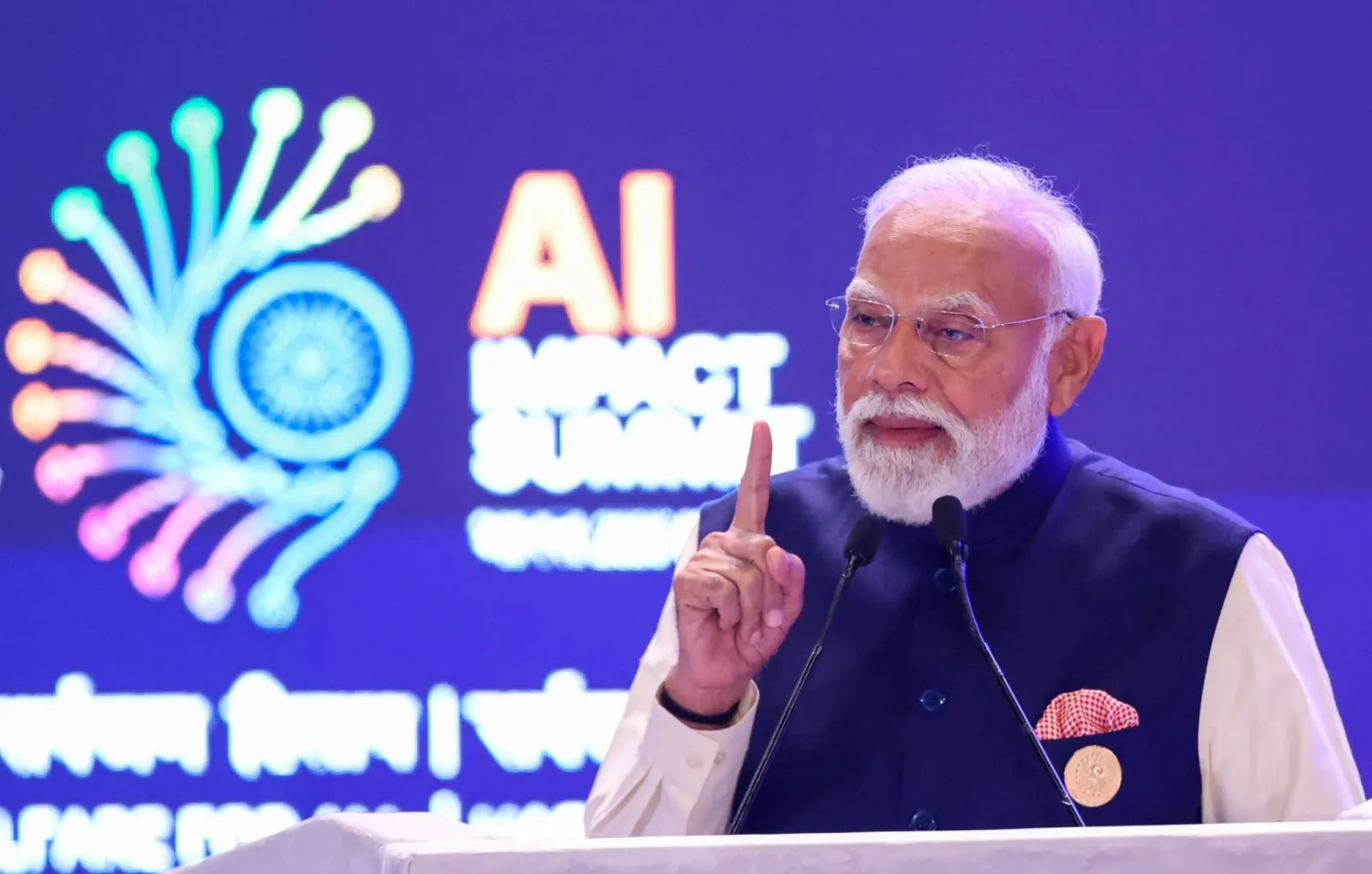
A handout photo made available by the Press Information Bureau (PIB) of Indian Prime Minister Narendra Modi speaking with global leaders at the AI Impact Summit 2026 at Bharat Mandapam in New Delhi, India, 19 February 2026.EPA/PRESS INFORMATION BUREAU HANDOUT HANDOUT
TT

India Chases 'DeepSeek Moment' with Homegrown AI

A handout photo made available by the Press Information Bureau (PIB) of Indian Prime Minister Narendra Modi speaking with global leaders at the AI Impact Summit 2026 at Bharat Mandapam in New Delhi, India, 19 February 2026.EPA/PRESS INFORMATION BUREAU HANDOUT HANDOUT

Fledgling Indian artificial intelligence companies showcased homegrown technologies this week at a major summit in New Delhi, underpinning big dreams of becoming a global AI power.

But analysts said the country was unlikely to have a "DeepSeek moment" -- the sort of boom China had last year with a high-performance, low-cost chatbot -- any time soon, AFP reported.

Still, building custom AI tools could bring benefits to the world's most populous nation.
At the AI Impact Summit, Prime Minister Narendra Modi lauded new Indian AI models, along with other examples of the country's rising profile in the field.

"All the solutions that have been presented here demonstrate the power of 'Made in India' and India's innovative qualities," Modi said Thursday.

One of the startups making a buzz at the five-day summit was Sarvam AI, which this week released two large language models it says were trained from scratch in India.

Its models are optimized to work across 22 Indian languages, says the company, which received government-subsidized access to advanced computer processors.

The five-day summit, which wraps up Friday, is the fourth annual international meeting to discuss the risks and rewards of the fast-growing AI sector.

It is the largest yet and the first in a developing country, with Indian businesses striking deals with US tech giants to build large-scale data center infrastructure to help train and run AI systems.

On Friday, Abu Dhabi-based tech group G42 said the United Arab Emirates would deploy an AI supercomputer system in India, in a project "designed to lower barriers to AI innovation".

So-called sovereign AI has become a priority for many countries hoping to reduce dependence on US and Chinese platforms while ensuring that systems respect local regulations, including on data privacy.

AI models that succeed in India "can be deployed all over the world", Modi said on Thursday.

But experts said the sheer computational might of the United States would be hard to match.

"Despite the headline pledges, we don't expect India to emerge as a frontier AI innovation hub in the near term," said Reema Bhattacharya, head of Asia research at risk intelligence company Verisk Maplecroft.

"Its more realistic trajectory is to become the world's largest AI adoption market, embedding AI at scale through digital public infrastructure and cost-efficient applications," she said.

Another Indian company that drew attention with product debuts this week was the Bengaluru-based Gnani.ai, which introduced its Vachana speech models at the summit.

Trained on more than a million hours of audio, Vachana models generate natural-sounding voices in Indian languages that can process customer interactions and allow people to interact with digital services out loud.

Job disruption and redundancies, including in India's huge call center industry, have been one key focus of discussions at the Delhi summit.

Prihesh Ratnayake, head of AI initiatives at think-tank Factum, told AFP that the new Indian AI models were "not really meant to be global".

"They're India-specific models, and hopefully we'll see their impact over the coming year," he said.

"Why does India need to build for the global scale? India itself is the biggest market."
And Nanubala Gnana Sai at the Cambridge AI Safety Hub said that homegrown models could bring other benefits.

Existing models, even those developed in China, "have intrinsic bias towards Western values, culture and ethos -- as a product of being trained heavily on that consensus", Sai told AFP.

India already has some major strengths, including "technology diffusion, eager talent pool and cheap labor", and dedicated efforts can help startups pivot to artificial intelligence, he said.

"The end-product may not 'rival' ChatGPT or DeepSeek on benchmarks, but will provide leverage for the Global South to have its own stand in an increasingly polarized world."