


It’s Google Versus the US in the Biggest Antitrust Trial in Decades 

A logo is pictured at Google's European Engineering Center in Zurich, Switzerland July 19, 2018. (Reuters)
TT

It’s Google Versus the US in the Biggest Antitrust Trial in Decades 

A logo is pictured at Google's European Engineering Center in Zurich, Switzerland July 19, 2018. (Reuters)

Google will confront a threat to its dominant search engine beginning Tuesday when federal regulators launch an attempt to dismantle its internet empire in the biggest US antitrust trial in a quarter century.

Over the next 10 weeks, federal lawyers and state attorneys general will try to prove Google rigged the market in its favor by locking its search engine in as the default choice in a plethora of places and devices.

US District Judge Amit Mehta likely won't issue a ruling until early next year. If he decides Google broke the law, another trial will decide what steps should be taken to rein in the Mountain View, California-based company.

Top executives at Google and its corporate parent Alphabet Inc., as well as those from other powerful technology companies are expected to testify. Among them is likely to be Alphabet CEO Sundar Pichai, who succeeded Google co-founder Larry Page four years ago. Court documents also suggest that Eddy Cue, a high ranking Apple executive, might be called to the stand.

The Justice Department filed its antitrust lawsuit against Google nearly three years ago during the Trump administration, charging that the company has used its internet search dominance to gain an unfair advantage against competitors.

Government lawyers allege that Google protects its franchise through a form of payola, shelling out billions of dollars annually to be the default search engine on the iPhone and on web browsers, such as Apple’s Safari and Mozilla’s Firefox.

Regulators also charge that Google has illegally rigged the market in its favor by requiring its search engine to be bundled with its Android software for smartphones if the device manufacturers want full access to the Android app store.

Google counters that it faces a wide range of competition despite commanding about 90% of the internet search market. Its rivals, Google argues, range from search engines such as Microsoft's Bing to websites like Amazon and Yelp, where consumers can post questions about what to buy or where to go.

From Google’s perspective, perpetual improvements to its search engine explain why people almost reflexively keep coming back to it, a habit that long ago made “Googling” synonymous with looking things up on the internet.

The trial begins just a couple weeks after the 25th anniversary of the first investment in the company — a $100,000 check written by Sun Microsystems co-founder Andy Bechtolsheim that enabled Page and Sergey Brin to set up shop in a Silicon Valley garage.

Today, Google’s corporate parent, Alphabet, is worth $1.7 trillion and employs 182,000 people, with most of the money coming from $224 billion in annual ad sales flowing through a network of digital services anchored by a search engine that fields billions of queries a day.

The Justice Department's antitrust case echoes the one it filed against Microsoft in 1998. Regulators then accused Microsoft of forcing computer makers that relied on its dominant Windows operating system to also feature Microsoft’s Internet Explorer — just as the internet was starting to go mainstream. That bundling practice crushed competition from the once-popular browser Netscape.

Several members of the Justice Department's team in the Google case — including lead Justice Department litigator Kenneth Dintzer — also worked on the Microsoft investigation.

Google could be hobbled if the trial ends in concessions that undercut its power. One possibility is that the company could be forced to stop paying Apple and other companies to make Google the default search engine on smartphones and computers.

Or the legal battle could cause Google to lose focus. That’s what happened to Microsoft after its antitrust showdown with the Justice Department. Distracted, the software giant struggled to adapt to the impact of internet search and smartphones. Google capitalized on that distraction to leap from its startup roots into an imposing powerhouse.

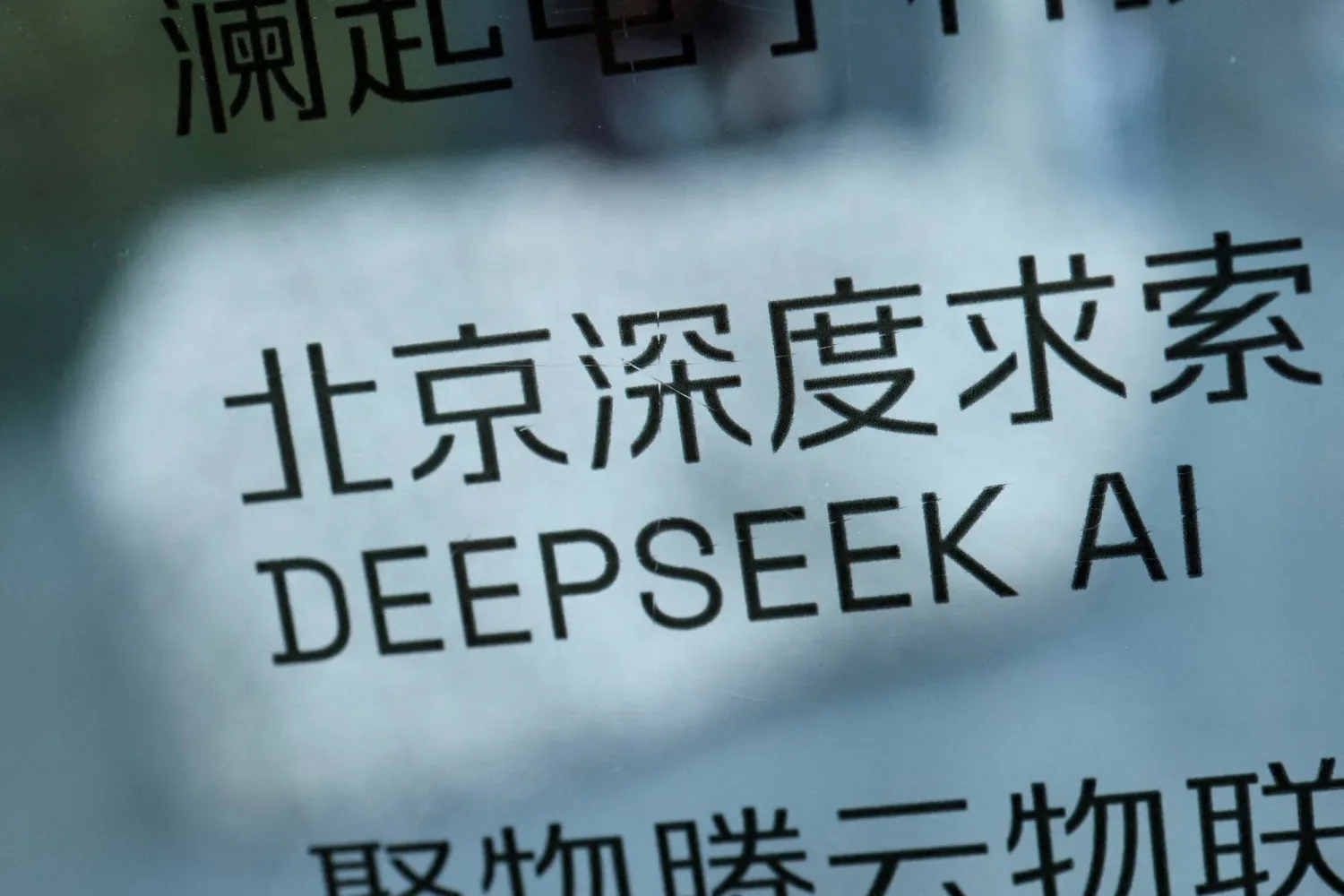


China's DeepSeek launches V4.1-Flash model

A DeepSeek AI sign is seen at a building where the Chinese start-up's office is located in Beijing, China, February 19, 2025. REUTERS/Florence Lo
TT

China's DeepSeek launches V4.1-Flash model

A DeepSeek AI sign is seen at a building where the Chinese start-up's office is located in Beijing, China, February 19, 2025. REUTERS/Florence Lo

Chinese artificial intelligence startup DeepSeek on Thursday launched DeepSeek-V4.1-Flash, which the company said is the smallest model in its new architecture ⁠family, according to ⁠a statement.

The release came as the company ⁠is starting to prepare for an initial public offering on Shanghai's tech-focused STAR Market, Reuters has reported.

DeepSeek said the new model ⁠is designed ⁠for greater capability, faster inference, higher throughput and scaling to larger models.


China Says US Accusations of AI Theft Are ‘Groundless’

A DeepSeek AI sign is seen at a building where the Chinese start-up's office is located in Beijing, China, February 19, 2025. (Reuters)
TT

China Says US Accusations of AI Theft Are ‘Groundless’

A DeepSeek AI sign is seen at a building where the Chinese start-up's office is located in Beijing, China, February 19, 2025. (Reuters)

China said on Wednesday that US accusations of Chinese labs stealing the capabilities of American models were "groundless", as the two countries race for tech supremacy. 

The US cyber defense agency released an advisory on Tuesday accusing top Chinese AI labs including DeepSeek and Moonshot AI of systematically stealing the capabilities "through industrial-scale knowledge distillation campaigns". 

It came ahead of an expected meeting this month between President Donald Trump and his Chinese counterpart Xi Jinping at the White House, where AI could be an important discussion topic. 

China hit back on Wednesday, calling the accusations "groundless". 

"The US approach is a typical case of using the crackdown on distillation as a pretext to achieve industrial monopoly," the Ministry of Commerce said in a statement. 

The US accusations are a "case of double standards", it added. 

Distillation is where an AI model is trained to mimic the output of a larger, more capable one. 

The method is widely used across the industry, but Washington says Chinese firms have deployed it at scale to illicitly copy American systems. 

The US advisory also detailed how DeepSeek, Moonshot AI, Alibaba, MiniMax, StepFun and Z.AI allegedly used millions of exchanges and requests to steal the capabilities of US models from the likes of OpenAI, Anthropic, Google and xAI. 

Chinese companies that adopt this strategy "see significantly shorter AI development timelines and reduced financial expenditures in training a frontier model", the advisory said. 

These actions, taken "likely with Chinese government awareness", have occurred since at least late 2024, it said. 

AFP contacted the Chinese companies apart from StepFun, which was not immediately reachable. Moonshot AI declined to comment. 

Trump is under pressure to respond to the increasing success of Chinese AI models that many companies prefer to the more powerful, but pricier, US versions from Anthropic or OpenAI. 

In July, dozens of startups wrote a letter to the Trump administration urging it to think twice against any outright ban or strict curbs on foreign-made AI models, saying this should only be considered for government use of the technology. 

That month, Beijing also turned the tables by accusing US AI of using Chinese examples to train their models. 

Asked about the accusations at a regular briefing on Wednesday, Chinese foreign ministry spokeswoman Mao Ning said the United States should "refrain from making unfounded accusations against and smearing China". 

"The development of artificial intelligence in China is the result of achieving high-level self-reliance and strength in science and technology," she said. 

"Both China and the United States are major countries in the field of AI. We should strengthen cooperation." 


OpenAI Says Working with Samsung on Next-Generation Chips, Deepening Cooperation

The logo of Samsung is seen on a building during the Mobile World Congress in Barcelona, Spain February 25, 2018. (Reuters)
TT

OpenAI Says Working with Samsung on Next-Generation Chips, Deepening Cooperation

The logo of Samsung is seen on a building during the Mobile World Congress in Barcelona, Spain February 25, 2018. (Reuters)

OpenAI is deepening cooperation with Samsung Electronics as the ChatGPT maker develops its own chips, expanding ties with the South Korean technology giant across semiconductors and enterprise AI services.

"One of the areas where we have made the most progress and gained the most recognition with Samsung Electronics is our joint production and research on the next-generation chips we are developing," Harrison Kim, General Manager of OpenAI Korea, said at a press ‌conference in Seoul ‌on Wednesday, without elaborating.

Kim also said Samsung Electronics was "one ‌of ⁠the largest-scale deployments of ⁠ChatGPT globally," saying the company's employees in Korea and overseas use ChatGPT for work across research and development, marketing and sales.

Samsung Electronics said in a statement that it could not confirm information related to customers.

In June, OpenAI unveiled its first custom artificial intelligence chip designed with Broadcom. OpenAI's engineers designed the chip, called Jalapeno, together with Broadcom for a task known as AI inference, the ⁠process of crunching data to answer queries in applications ‌such as ChatGPT.

OpenAI at that time said that ‌Taiwan's TSMC would manufacture the chips.

Last year, Samsung Electronics and SK Hynix signed letters ‌of intent to supply memory chips for OpenAI's Stargate data center project.

Kim ‌said demand for memory chips would continue to grow as more advanced chips were needed to enable faster and more complex computing, making cooperation with South Korean semiconductor suppliers a priority for OpenAI's local office.

The cooperation comes as Samsung broadens its ‌use of generative AI. The company said in June that workers in its Device eXperience division, which oversees mobile ⁠phones, televisions and home ⁠appliances, would be allowed to use ChatGPT, Google's Gemini and Anthropic's Claude internally.

OpenAI said the number of ChatGPT Enterprise users at South Korean companies and institutions had surged about 28-fold as of the end of August from a year earlier, as businesses broadened their use of artificial intelligence from individual tasks to company-wide operations.

Companies were increasingly using AI across functions including legal, sales, finance, marketing and operations, OpenAI said. The company declined to provide absolute user numbers.

South Korea had the largest number of paying ChatGPT subscribers outside the United States as of late last year, according to OpenAI.

OpenAI expects adoption to accelerate following the September 4 launch of GPT-6 Astra, its latest model, which it said offered improved performance in computer use, professional work, science, coding and cybersecurity.