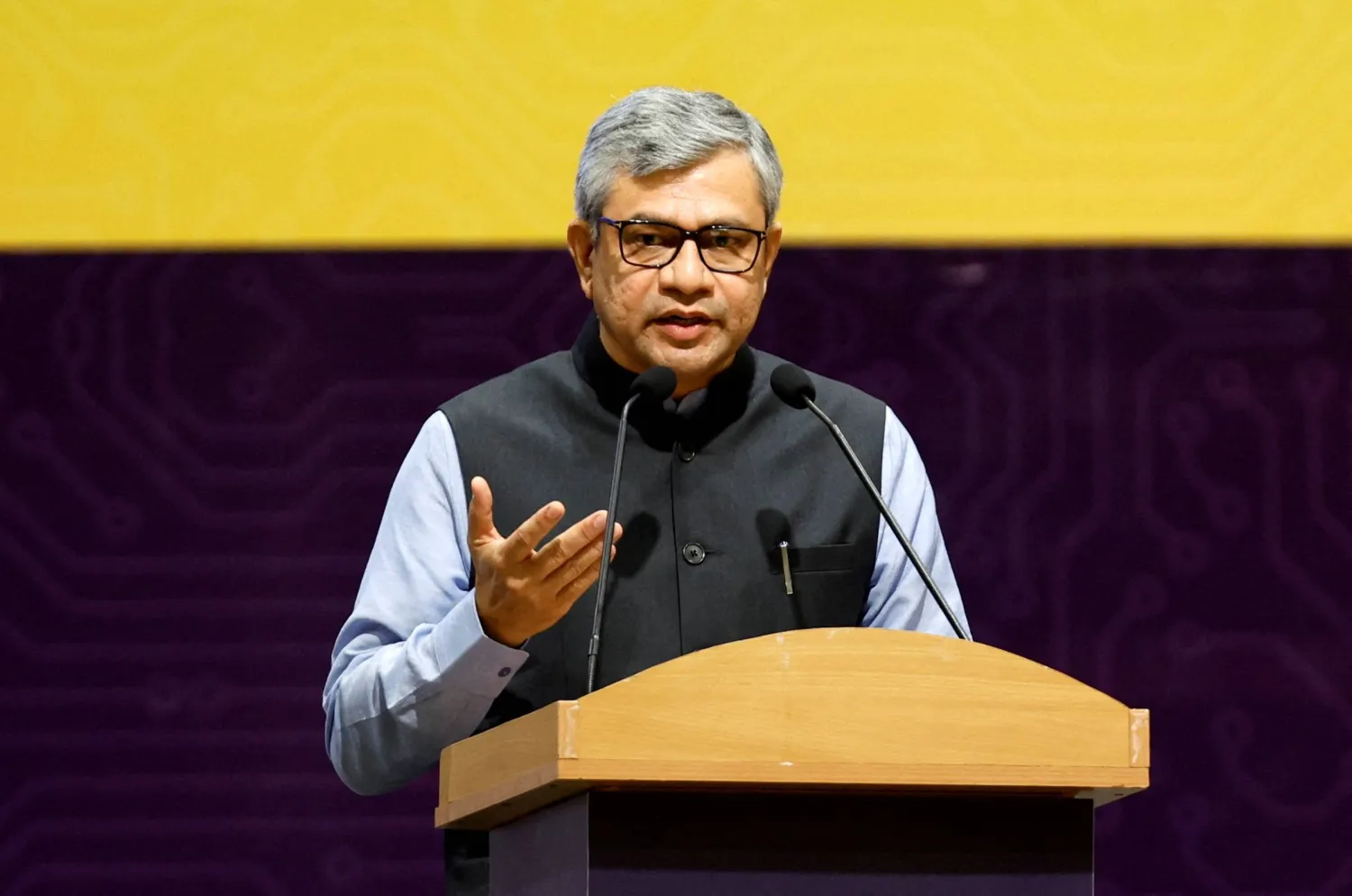
After years of building infrastructure and regulatory frameworks, Saudi Arabia's challenge is shifting toward how to effectively integrate artificial intelligence into the core operations of institutions. This is the gap Ayman Al-Ghamdi, the new president of Microsoft Arabia, has placed at the top of his priorities as he takes over the company's business in the Kingdom.
In his first media interview since taking office last July, Al-Ghamdi identified three priorities for the next phase: building a trusted cloud foundation, moving AI from experimentation to practical deployment, and expanding local capabilities.
This comes alongside the launch of the Azure region in Saudi Arabia's Eastern Province, the expansion of skills programs, and the development of scalable local solutions that can grow regionally and globally.
The implementation gap within institutions
Al-Ghamdi says Saudi Arabia has completed much of the foundational work required to move toward an economy that relies more heavily on data and AI, pointing to progress in infrastructure, data governance, responsible AI, and capacity building.
In this context, he cites what he described as the progress made by the Saudi Data and Artificial Intelligence Authority, noting that the regulatory ecosystem includes 32 regulatory instruments related to data and 13 related to AI. However, he believes the next phase will depend more heavily on what happens within institutions themselves.
He tells Asharq Al-Awsat: "Many institutions are still treating AI as something to experiment with, rather than integrating it into core operations."
In his view, closing this gap requires linking AI directly to business and service performance and customer experience, while providing the appropriate data, governance, talent, and operating models capable of turning adoption into measurable impact.
This approach forms the central focus of Al-Ghamdi's priorities for his first year. He believes the goal is to make the impact of AI "real, not just a headline," so that it is reflected in how institutions operate, the services they provide, and the results they achieve.
Three priorities for the first year
Al-Ghamdi's first priority is what he calls a "trusted cloud foundation," particularly as the Azure region in the Kingdom's Eastern Province prepares to become available for customer workloads. He links this step to institutions' ability to modernize critical systems securely and responsibly, rather than simply adding more computing capacity inside the Kingdom.
The second priority is moving AI projects from experimentation to practical value. He says the measure of success will not be the number of use cases companies announce, but the extent of improvement achieved in productivity, services, operations, and customer experience.
He points to the O3ai platform, an intelligent system for smart factories developed by Obeikan Group, as an example of what this transition from experimentation to practical use could look like, according to his response.
The third priority is building Saudi capabilities, based on Microsoft's commitment to help 3 million people in Saudi Arabia acquire AI skills by 2030. He says the objective is for the transformation to be built and sustained locally, because "technology alone does not create transformation, people do."
The cloud region... more than local hosting
Al-Ghamdi does not present the launch of the Saudi cloud region simply as a matter of capacity or data residency. Instead, he links it to the ability of companies and government entities to modernize critical workloads and prepare to expand their use of AI.
He notes that expansion at the national level requires an integrated set of elements, including cloud readiness, data infrastructure, security, governance, skills, and a strong partner network. From this perspective, he believes the broader impact of the new region could emerge through a greater share of digital value creation shifting into the Kingdom.
He says this could mean more local solutions, deeper technical capabilities, greater innovation among partners, and, over the longer term, the production of intellectual property capable of serving the Saudi market and other markets in the region.
A more competitive market
Al-Ghamdi views the growing range of choices available to Saudi customers among local and global cloud service providers as a positive development, considering it a reflection of a "strong and rapidly maturing" market. As cloud capacity expands and access to advanced AI models becomes easier, he does not believe competition will remain focused solely on who owns the infrastructure or the model.
He notes that "differentiation will shift from access to impact," explaining that the question will not simply be who has the model, but who can help institutions use it safely and responsibly in ways that genuinely change how they work.
He links this to an effort to bring cloud, data, cybersecurity, productivity tools, business applications, developer tools, and model options together on a single platform, making AI part of daily workflows, decisions, operations, and customer experiences.
He also emphasizes control over the data, context, and institutional knowledge that distinguish each organization. Al-Ghamdi sums up the elements of competition on which Microsoft is betting in three concepts: "trust, choice, and control," alongside the ability to turn AI into measurable impact at scale.
Uneven returns from AI
Despite the acceleration of investment in generative AI, Al-Ghamdi acknowledges the risk that institutions may move toward these technologies faster than they can address problems with data, processes, and governance.
He says generative AI can accelerate what an organization is already doing, but it "cannot compensate for weak data foundations, fragmented processes, or the absence of clear governance." He believes institutions achieving stronger results are those that treat AI as part of business transformation rather than as a standalone technology project.
He cites the experience of Ma'aden, saying its teams save more than 2,200 hours per month using Microsoft 365 Copilot, Copilot Studio, and Azure OpenAI Service. In his view, the speed of adoption should not be considered separately from the quality of the foundations supporting it. He says security and governance must advance at the same pace, so the question is not whether an institution is moving too quickly, but whether its organizational, data, and security infrastructure is moving with it.
From consuming technology to producing it
Al-Ghamdi believes the next phase in Saudi Arabia is not only about using global platforms, but also about increasing the country's ability to build technologies from within the Kingdom that can expand beyond it.
He says Microsoft's role in this area is to provide cloud infrastructure, AI and cybersecurity tools, data platforms, and support from its partner ecosystem to Saudi companies, startups, and developers. He also stresses that the local cloud region can help build and host solutions inside the Kingdom while meeting data residency and regulatory requirements.
He adds that the long-term opportunity is for more Saudi institutions to move "from consuming technology to producing it," including by developing intellectual property, platforms, and AI solutions capable of competing regionally and globally.
Digital sovereignty... and local capability
Asked about digital sovereignty and the distinction between data residency, operational control, and technological independence, Al-Ghamdi focused in his response on increasing local capacity to build and host solutions inside the Kingdom.
He noted that the presence of local cloud infrastructure enables innovators to develop and host solutions within Saudi Arabia while taking data residency and regulatory requirements into account, linking this to the shift from using technology to producing it.
Al-Ghamdi did not directly distinguish between data residency, operational control, and technological independence. Instead, he linked the issue to the ability of Saudi companies, startups, and developers to retain a greater share of technological value, knowledge, and intellectual property within the Kingdom.
A role beyond infrastructure
Al-Ghamdi traces Microsoft's role in Saudi Arabia to more than 25 years of work with the government, institutions, companies, developers, partners, and educational organizations, including cooperation with the Ministry of Communications and Information Technology in cloud, skills, and responsible AI.
He says the current phase raises the level of responsibility from simply providing technology to turning it into national outcomes, such as improving services and productivity, strengthening secure digital environments, and creating broader opportunities for Saudi talent.
Al-Ghamdi takes up his position after more than 15 years of experience at Microsoft. Before that, he led the company's public sector business in Saudi Arabia, covering government entities, national institutions, education, and healthcare, in addition to participating in initiatives related to government cloud regulation and the National Analytics Platform. His career has also included roles at Oracle and Google.
The three-year test
In response to a question about the criteria by which his tenure could be assessed after three years, Al-Ghamdi did not tie success to business volume or the number of products sold. Instead, he framed it more broadly around turning AI ambitions into tangible results.
"After three years, I will measure success through one question: Did we help Saudi Arabia turn its AI ambition into progress that people can see?" he says.
He defines this in terms of the expansion of trusted cloud infrastructure across institutions and critical sectors, the transition of AI from experimentation to measurable improvements in productivity, services, and customer experience, as well as an increase in the number of Saudi talents, partners, and developers capable of creating digital value from within the Kingdom.
Within this framework, the phase described by Al-Ghamdi centers on testing whether technology investments can move from adoption to execution, and from the use of models and platforms to measurable outcomes in productivity, services, skills, and intellectual property within the Saudi economy.