Bumpy Ride for Electric Cars in Europe

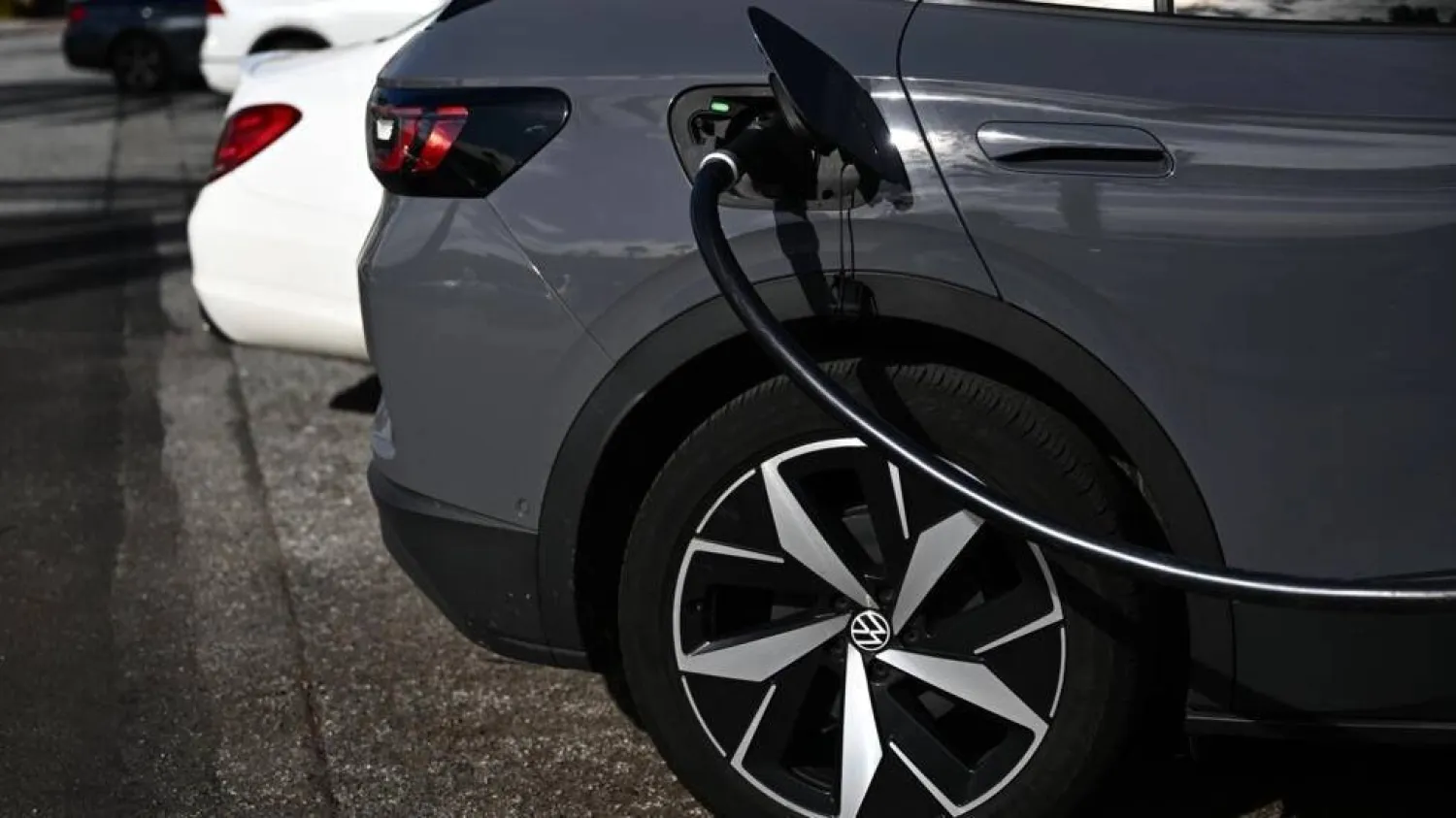
Sales of plug-in 'zero emission' vehicles have stalled in Europe. Patrick T. Fallon / AFP/File
TT

Bumpy Ride for Electric Cars in Europe

Sales of plug-in 'zero emission' vehicles have stalled in Europe. Patrick T. Fallon / AFP/File

Electric cars are a key part of Europe's green transition plans but the road ahead remains littered with obstacles with 10 years to go before a crucial milestone.
Despite the fact that the sale of new petrol and diesel cars will be banned in the European Union as of 2035, sales of plug-in "zero emission" vehicles have stalled in the region in recent months, AFP said.
The market share for electric cars has shrunk from 14.16 percent last year to 12 percent or less since the start of this year, a drop attributed mainly to Germany's decision to abruptly halt subsidies for electric car purchases on Europe's biggest market at the end of 2023.
Sigrid de Vries, director general of the European Automobile Manufacturers' Association (ACEA), expressed "concern".
Fewer than 30 percent of Europeans say they plan to buy an electric vehicle (EV), according to the ACEA, and more than half refuse to pay more than 35,000 euros ($37,750) for a car, a price level offering few EVs.
The "2035 deadline... is really just around the corner, especially when you talk production cycles," de Vries told an EV conference last week in Lillestrom, Norway.
"We need to go from 15 percent (zero-emission cars) to 100 percent in about just around 10 years," she said.
At the end of 2023, EVs passed the "tipping point" of five percent -- considered the point of mass adoption -- in 31 countries around the world, according to the Bloomberg news agency.
But only two-thirds of the EU's 27 member states have surpassed this level.
Cars are Europeans' primary mode of transport, and account for 15 percent of Europe's CO2 emissions.
Making vehicles emissions-free is therefore essential if the EU wants to meet its climate commitments.
Norway, a non-EU member -- and also a major oil and gas producer -- is a leader in EV adoption.
Led by Tesla, electric vehicles accounted for 90 percent of new car registrations in Norway in the first quarter thanks to generous tax incentives.
The country aims to reach the 100 percent mark by 2025.
Carmakers like Volkswagen and Volvo have already ended sales of their combustion models in Norway.
See-sawing sales
Elsewhere, the industry's electrification is largely sluggish.
Britain has pushed back by five years its ban on the sale of new combustion cars, now expected in 2035, and many see this target as unrealistic to reach in Europe.
But Nissan, one of the first traditional carmakers to roll out a plug-in with its Leaf model, says sales that yo-yo are not a concern.
"It see-saws and it will always be like that," Guillaume Pelletreau, Nissan's vice president of electrification and connected services, told AFP.
"There was a really strong start to the wave of electrification in the past two years and now we are starting to normalize the process a bit," he said.
"We see nonetheless a clear upwards trend."
Volkswagen, Stellantis and Renault plan to introduce new, less expensive electric models in coming months, but they are also relying on their hybrid models to boost sales.
One of the main hurdles cited by industry experts is the difficulty to roll out the necessary EV infrastructure quickly and broadly.
More than half of the EU's charging stations are found in just two countries: Germany and the Netherlands, according to the ACEA.
In Spain for example, where people replace their cars only every 14 years on average, 65 percent of owners park them in the street, making charging a challenge, said Isabel Gorgoso, head of "new mobility" at energy group Cepsa.
"If you think about Norway 10 years ago, then you have Spain now," she said.
Other obstacles cited are the heaps of EU regulations for carmakers -- up to nine new ones per year -- and ever-changing national policies, which could be exacerbated further by rising support for Europe's populist movements, which are generally climate-skeptic.
"With high-stake European elections around the corner, what happens in the next few months could really determine the fate of Europe's vehicle industry," de Vries said.



EU Fines Google 403 mn Euros for Location Data Breach

FILE PHOTO: A specially designed Google logo, during the opening of Google's new Artificial Intelligence (AI) centre in Berlin, Germany, March 5, 2026. REUTERS/Annegret Hilse//File Photo
TT

EU Fines Google 403 mn Euros for Location Data Breach

FILE PHOTO: A specially designed Google logo, during the opening of Google's new Artificial Intelligence (AI) centre in Berlin, Germany, March 5, 2026. REUTERS/Annegret Hilse//File Photo

Ireland's data protection watchdog, acting on behalf of the European Union, said Monday it had fined Google 403 million euros ($462 million) for improperly using users' location data, eight years after consumer groups complained.

The fine is the fourth largest imposed by the Data Protection Commission, the regulator said in a statement.

The DPC is responsible for overseeing Google at the European level because, like most tech giants, the company has its European headquarters in Ireland.

Google infringed the EU's General Data Protection Regulation between May 2018 and February 2020, the DPC said.

In its final decision after opening an inquiry in February 2020, the watchdog ruled that Google infringed GDPR "in respect of the lawfulness and fairness of its processing of location data in web and app activity and location history".

DPC deputy commissioner Graham Doyle said "as a result of Google's failures... individuals could have been unaware that their location was being used to, for example, influence them with ads or to infer their interests".

He added that "the retention of users' location data for longer than necessary aggravated this loss of control".

Alongside the fine, the regulator said it had ordered Google to comply with the European Union's GDPR within six months.

In response, Google said the "case centres around historical policies that have since been updated".

"From 2019 onwards, we've significantly evolved our practices and launched robust tools that make managing location data simple," the company added in a statement.

- 'Harmful late enforcement' -

In November 2018, the DPC received coordinated complaints from European consumer organisations in the Czech Republic, Denmark, Greece, the Netherlands, Norway, Poland, Slovenia and Sweden.

European Consumer organisation BEUC, which brought together the groups, called Monday's ruling "an important decision, close to eight years after a series of complaints" were lodged against Google.

"The decision is good news for consumers, as it holds Google accountable and confirms the illegality of the way the tech giant obtained consent to use peoples' location data," BEUC director general Agustin Reyna, said in a statement.

"However, the time needed to come to this conclusion is disproportionate with the seriousness of the infringement.

"Late enforcement can be as harmful as no enforcement at all. Consumers' fundamental rights need to be upheld faster and better," he added.

BEUC described geolocation data as "one of the most invasive forms of commercial surveillance because it reveals all kinds of sensitive information about us, such as our religious beliefs, our health condition, our political opinions or our sexual orientation".

Google is the subject of three other DPC investigations -- all "at an advanced stage" -- according to the regulator.

These include proceedings opened in September 2024 to determine whether the company is liable for failing to conduct an impact assessment regarding the use of Europeans' personal data to train Google's artificial intelligence.

The largest DPC fine was imposed on Facebook owner Meta in 2023 -- 1.2 billion euros for transferring data to the United States.


Saudi Arabia Advances Data and AI Leadership, Promotes Responsible Use for Humanity

The Kingdom of Saudi Arabia continues to strengthen its leading position on the global digital map, with data and artificial intelligence (AI) technologies serving as key pillars in achieving the objectives of Saudi Vision 2030. (SPA)
TT

Saudi Arabia Advances Data and AI Leadership, Promotes Responsible Use for Humanity

The Kingdom of Saudi Arabia continues to strengthen its leading position on the global digital map, with data and artificial intelligence (AI) technologies serving as key pillars in achieving the objectives of Saudi Vision 2030. (SPA)

The Kingdom of Saudi Arabia continues to strengthen its leading position on the global digital map, with data and artificial intelligence (AI) technologies serving as key pillars in achieving the objectives of Saudi Vision 2030, the Saudi Press Agency said on Monday.

The Kingdom is adopting an integrated approach that balances advanced technological innovation with the development of national human capabilities while establishing comprehensive ethical governance frameworks for the responsible use of these technologies. This work supports a knowledge-based economic future and strengthens the Kingdom's competitiveness among the world's leading economies.

With 2026 declared the Year of Artificial Intelligence 2026, national efforts led by the Saudi Data and AI Authority (SDAIA) are highlighting the Kingdom's advances in developing and governing advanced technologies. This approach reflects the Kingdom's determination to employ smart technologies as a catalyst for inclusive growth and a driver of quality of life, while establishing itself as a global model for sustainable development.

These efforts coincide with the Kingdom's participation in the High-level Week of the 81st session of the United Nations General Assembly in New York and Minister of Foreign Affairs Prince Faisal bin Farhan bin Abdullah's statement affirming the Kingdom's commitment to using AI responsibly to enhance the efficiency of sectors and support innovation.

Saudi Arabia has also affirmed its support for the efforts of the United Nations Educational, Scientific and Cultural Organization (UNESCO) to advance the United Nations Sustainable Development Goals and contribute to shaping international policies on AI that serve the well-being of societies worldwide.

During the Year of Artificial Intelligence, Saudi Arabia ranked 13th globally among 70 economies covered by the 2026 IMD World Competitiveness Yearbook, issued by the International Institute for Management Development, and third among Group of Twenty (G20) economies.

It also ranked fourth globally in AI adoption by companies, supported by several SDAIA initiatives, most notably the Rowad Package and AI Ethics Incentive Badges for companies. The Kingdom ranked fourth globally in societal access to AI, supported by SDAIA's efforts to spread digital knowledge and build national capabilities through the SDAIA Academy for Data and AI and the SAMAI initiative, which has trained more than 1.2 million Saudis in AI.

A report issued by the International Monetary Fund following the conclusion of its 2026 Article IV consultations with Saudi Arabia also highlighted the Kingdom's strong performance in AI adoption across several sectors.

Saudi Arabia's ambitious vision is supported by the central role played by SDAIA in policymaking, developing infrastructure and regulatory frameworks, building capabilities, and providing enablers that allow the government and private sectors to make the most of data and AI solutions.

Young national talent also forms a key pillar of this transformation, as training and academic programs prepare students, researchers, and innovators with advanced skills to drive development and compete globally, further strengthening the Kingdom's position on global platforms.

In governance and ethics, Saudi Arabia places great importance on guiding the development and application of AI in accordance with global standards based on transparency, fairness, and privacy protection, while limiting the risks and negative effects of algorithms. This approach is complemented by partnerships and the exchange of expertise and knowledge with international organizations and academic institutions, translating the potential of technology into tangible outcomes that serve sustainable development and support global peace and prosperity.


Trump Says Will Not Tolerate Attempts to Slow AI Growth

An AI (Artificial Intelligence) sign is seen at the World Artificial Intelligence Conference (WAIC) in Shanghai, China July 6, 2023. (Reuters)
TT

Trump Says Will Not Tolerate Attempts to Slow AI Growth

An AI (Artificial Intelligence) sign is seen at the World Artificial Intelligence Conference (WAIC) in Shanghai, China July 6, 2023. (Reuters)

US President Donald Trump on Saturday lashed out at critics of artificial intelligence and data centers, saying he would not allow the "destruction" of the industry and announcing the creation of a new government "AI Force."

Trump -- who finds himself out of step with growing public skepticism over AI and dire safety warnings from AI industry leaders -- said liberals want the "decimation, or destruction, of AI."

"I, as President of the United States, will not stand by and let this happen," he wrote on his Truth Social platform.

"We will not in any way hinder or stifle the Growth of this incredible Industry. Rather, we will cherish it, help it, and watch over it, as it grows!"

Trump added, without explaining, that he was creating an "AI Force" that would be tasked with "looking for BAD" actors, and would soon announce an AI coordinator or "Czar."

Trump's latest full-throated defense of artificial intelligence came even though polls show Americans are largely opposed to allowing the energy-guzzling data centers that are the engines of AI to be built in their communities.

As the war against Iran drags on and Americans grapple with the inflation it has fueled, Trump's approval rating is low.

Surveys suggest his Republican Party could lose control of the House and perhaps the Senate in November's midterm elections.

Trump is also firmly embracing the technology despite widespread warnings, even from top industry leaders, that AI development is going too fast and the technology could soon threaten our survival as ever-smarter AI agents escape the control of their human designers.

Jacob Coxon, a former AI researcher who worked at Anthropic before resigning, set off the latest round of alarm by describing how those building the technology "earnestly believe that it could kill us all by the end of the decade."

Trump has repeatedly dismissed all the doomsday talk, calling it a "hoax" -- a term he often uses for crises or issues he cannot control.

The president said the United States could not afford to lose a technological race with rival China and he insisted the only guardrails necessary were a "STRONG AND SMART (High IQ!) PRESIDENT, and the U.S.A. has that, in spades!"

In another social media post on Saturday, Trump mused on whether artificial intelligence is an accurate term, offered three alternatives in what he called a poll, and asked people to weigh in.

The three are superior intelligence, extreme intelligence and supreme intelligence, Trump wrote.

"This is a Poll, and I would appreciate everybody voting! Which is the best name for this ever growing "Revolution?"