

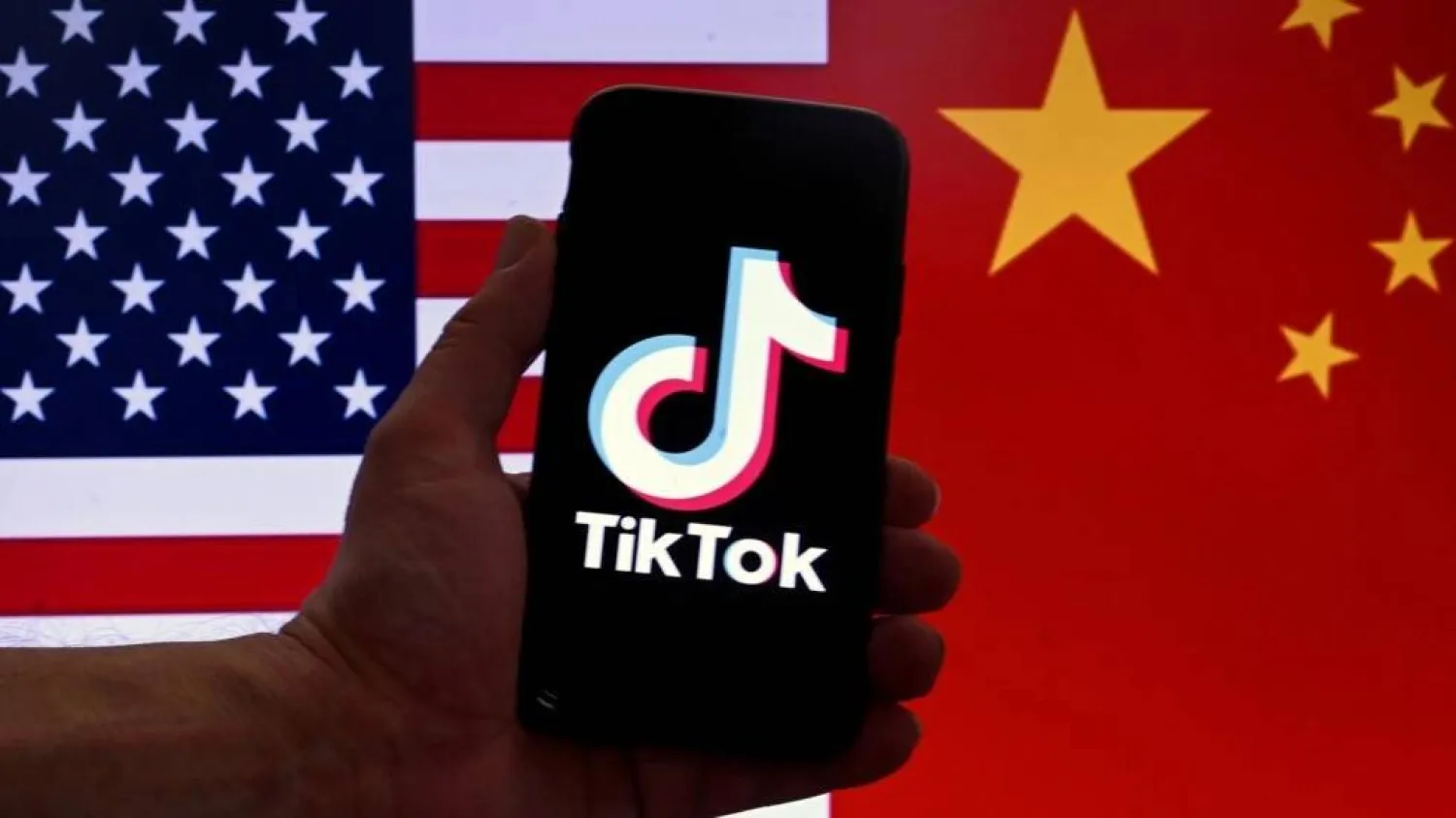

TikTok Creators Fear Economic Blow of US Ban

A new US law requires TikTok to sever all ties with its Chinese parent ByteDance or face a ban in the United States. OLIVIER DOULIERY / AFP/File
TT

TikTok Creators Fear Economic Blow of US Ban

A new US law requires TikTok to sever all ties with its Chinese parent ByteDance or face a ban in the United States. OLIVIER DOULIERY / AFP/File

Ayman Chaudhary turned her love for reading into a living on TikTok, posting video snippets about books like those banned in schools in ultra-conservative parts of the United States.
Now the online platform she relies on to support her family is poised to be banned in what entrepreneurs using TikTok condemn as an attack on their livelihoods, said AFP.
"It's so essential to small businesses and creators; it's my full-time job," the 23-year-old Chicago resident told AFP.
"It makes me really worried that I live in a country that would pass bans like these instead of focusing on what's actually important, like gun control and healthcare and education."
A new US law put TikTok's parent, Chinese tech giant ByteDance, on a nine-month deadline to divest the hugely popular video platform or have it banned in the United States.
US lawmakers argued that TikTok can be used by the Chinese government for espionage and propaganda as long as it is owned by ByteDance.
"Everybody who's involved in deciding whether or not this platform is going to get banned is turning a blind eye to how it's going to affect all of the small businesses," said Bilal Rehman of Texas.
His @bilalrehmanstudio TikTok account, which playfully promotes his company's interior design projects, has some 500,000 followers.
"They don't really understand social media and how it works," the 24-year-old added.
TikTok has gone from a novelty to a necessity for many US small businesses, according to an Oxford Economics study backed by the platform.
TikTok fuels growth for more than seven million businesses in the United States, helping generate billions of dollars and supporting more than 224,000 jobs, the study determined.
"It's become such a huge part of our economy that taking that away is going to be devastating to millions of people," Rehman said of TikTok.
Chaudhary took to TikTok to share her passion for reading in early 2020 while enduring Covid-19 lockdowns.
"I made a handful of videos and, long story short, one went viral," Chaudhary said.
Opportunities to make money from sponsors or advertising came as her audience grew, and posting on her @aymansbooks TikTok account became a job.
She saw books she extolled snapped up by readers, as she shined attention on titles banned from schools or libraries in parts of the country.
Unique vibe
A TikTok ban would be a particularly hard blow to businesses just starting out, according to eMarketer analyst Jasmine Enberg.
"Social media has democratized the commerce landscape, and TikTok really supercharged that," Enberg told AFP.
"It's become a crucial platform for many small businesses, especially those that are in niche industries or sell quirky products."
One factor setting TikTok apart from rival platforms is the potential for videos to be spread quickly by a highly engaged audience, according to Enberg.
"The potential to be discovered on TikTok is really unparalleled, and that's largely thanks to its algorithm as well as the entertaining kind of content that it hosts," she said.
A young generation is using TikTok as a search engine of sorts, making queries as they might on Google and seeing what the algorithm serves up, said SOCi director of market insights Damian Rollison.
"It feels like it has been created by your peers, so they're telling you the real deal about whatever the topic might be," Rollison said of the trend.
TikTok lovers say it has a unique style that will be missed in the case of a ban.
"There is definitely a different vibe on TikTok versus YouTube or Instagram," said Chaudhary.
"TikTok has a lot more humor in it and a lot more creativity than I see happening on Instagram."
"My favorite part about TikTok is, it feels almost like you're on a FaceTime call with your friend," Rehman said.
"It feels really raw and authentic."
Rollison advised businesses relying on TikTok to make contingency plans in event of a ban, sticking with short-form video, given the appetite for such content.
"The demand signals are so powerful amongst younger users that I believe the usage patterns are going to survive any of the outcomes," Rollison said.
"Learning that ecosystem is not only a useful but even critical strategy."



Mark Zuckerberg Set to Testify in Watershed Social Media Trial 

Meta's CEO Mark Zuckerberg testifies during the Senate Judiciary Committee hearing on online child sexual exploitation at the US Capitol in Washington, US, January 31, 2024. (Reuters)
TT

Mark Zuckerberg Set to Testify in Watershed Social Media Trial 

Meta's CEO Mark Zuckerberg testifies during the Senate Judiciary Committee hearing on online child sexual exploitation at the US Capitol in Washington, US, January 31, 2024. (Reuters)

Mark Zuckerberg will testify in an unprecedented social media trial that questions whether Meta's platforms deliberately addict and harm children.

Meta's CEO is expected to answer tough questions on Wednesday from attorneys representing a now 20-year-old woman identified by the initials KGM, who claims her early use of social media addicted her to the technology and exacerbated depression and suicidal thoughts. Meta Platforms and Google’s YouTube are the two remaining defendants in the case, which TikTok and Snap have settled.

Zuckerberg has testified in other trials and answered questions from Congress about youth safety on Meta's platforms, and he apologized to families at that hearing whose lives had been upended by tragedies they believed were because of social media.

This trial, though, marks the first time Zuckerberg will answer similar questions in front of a jury. and, again, bereaved parents are expected to be in the limited courtroom seats available to the public.

The case, along with two others, has been selected as a bellwether trial, meaning its outcome could impact how thousands of similar lawsuits against social media companies would play out.

A Meta spokesperson said the company strongly disagrees with the allegations in the lawsuit and said they are “confident the evidence will show our longstanding commitment to supporting young people.”

One of Meta's attorneys, Paul Schmidt, said in his opening statement that the company is not disputing that KGM experienced mental health struggles, but rather that Instagram played a substantial factor in those struggles.

He pointed to medical records that showed a turbulent home life, and both he and an attorney representing YouTube argue she turned to their platforms as a coping mechanism or a means of escaping her mental health struggles.

Zuckerberg's testimony comes a week after that of Adam Mosseri, the head of Meta's Instagram, who said in the courtroom that he disagrees with the idea that people can be clinically addicted to social media platforms.

Mosseri maintained that Instagram works hard to protect young people using the service, and said it's “not good for the company, over the long run, to make decisions that profit for us but are poor for people’s well-being."

Much of Mosseri's questioning from the plaintiff's lawyer, Mark Lanier, centered on cosmetic filters on Instagram that changed people’s appearance — a topic that Lanier is sure to revisit with Zuckerberg.

He is also expected to face questions about Instagram’s algorithm, the infinite nature of Meta’ feeds and other features the plaintiffs argue are designed to get users hooked.


US Tech Giant Nvidia Announces India Deals at AI Summit

FILED - 04 February 2026, Bavaria, Munich: The NVIDIA logo is seen during a press conference at the opening of Telekom and NVIDIA's AI factory "Industrial AI Cloud". Photo: Sven Hoppe/dpa
TT

US Tech Giant Nvidia Announces India Deals at AI Summit

FILED - 04 February 2026, Bavaria, Munich: The NVIDIA logo is seen during a press conference at the opening of Telekom and NVIDIA's AI factory "Industrial AI Cloud". Photo: Sven Hoppe/dpa

US artificial intelligence chip titan Nvidia unveiled tie-ups with Indian computing firms on Wednesday as tech companies rushed to announce deals and investments at a global AI conference in New Delhi.

This week's AI Impact Summit is the fourth annual gathering to discuss how to govern the fast-evolving technology -- and also an opportunity to "define India's leadership in the AI decade ahead", organizers say.

Mumbai cloud and data center provider L&T said it was teaming up with Nvidia, the world's most valuable company, to build what it touted as "India's largest gigawatt-scale AI factory".

"We are laying the foundation for world-class AI infrastructure that will power India's growth," said Nvidia boss Jensen Huang in a statement that did not put a figure on the investment.

L&T said it would use Nvidia's powerful processors, which can train and run generative AI tech, to provide data center capacity of up to 30 megawatts in Chennai and 40 megawatts in Mumbai.

Nvidia said it was also working with other Indian AI infrastructure players such as Yotta, which will deploy more than 20,000 top-end Nvidia Blackwell processors as part of a $2 billion investment.

Dozens of world leaders and ministerial delegations have come to India for the summit to discuss the opportunities and threats, from job losses to misinformation, that AI poses.

Last year India leapt to third place -- overtaking South Korea and Japan -- in an annual global ranking of AI competitiveness calculated by Stanford University researchers.

But despite plans for large-scale infrastructure and grand ambitions for innovation, experts say the country has a long way to go before it can rival the United States and China.

The conference has also brought a flurry of deals, with IT minister Ashwini Vaishnaw saying Tuesday that India expects more than $200 billion in investments over the next two years, including roughly $90 billion already committed.

Separately, India's Adani Group said Tuesday it plans to invest $100 billion by 2035 to develop "hyperscale AI-ready data centers", a boost to New Delhi's push to become a global AI hub.

Microsoft said it was investing $50 billion this decade to boost AI adoption in developing countries, while US artificial intelligence startup Anthropic and Indian IT giant Infosys said they would work together to build AI agents for the telecoms industry.

Nvidia's Huang is not attending the AI summit but other top US tech figures joining include OpenAI's Sam Altman, Google DeepMind's Demis Hassabis and Microsoft founder Bill Gates.

Indian Prime Minister Narendra Modi and other world leaders including French President Emmanuel Macron and Brazil's Luiz Inacio Lula da Silva are expected to deliver a statement at the end of the week about how they plan to address concerns raised by AI technology.

But experts say that the broad focus of the event and vague promises made at previous global AI summits in France, South Korea and Britain mean that concrete commitments are unlikely.

Nick Patience, practice lead for AI at tech research group Futurum, told AFP that nonbinding declarations could still "set the tone for what acceptable AI governance looks like".

But "the largest AI companies deploy capabilities at a pace that makes 18-month legislative cycles look glacial," Patience said.

"So it's a case of whether governments can converge fast enough to create meaningful guardrails before de facto standards are set by the companies themselves."


India Eyes $200B in Data Center Investments as It Ramps Up Its AI Hub Ambitions

FILE -Google CEO Sundar Pichai, right, interacts with India's Minister for Information and Technology Ashwini Vaishnaw during Google for India 2022 event in New Delhi, Dec. 19, 2022. (AP Photo/Manish Swarup), File)
TT

India Eyes $200B in Data Center Investments as It Ramps Up Its AI Hub Ambitions

FILE -Google CEO Sundar Pichai, right, interacts with India's Minister for Information and Technology Ashwini Vaishnaw during Google for India 2022 event in New Delhi, Dec. 19, 2022. (AP Photo/Manish Swarup), File)

India is hoping to garner as much as $200 billion in investments for data centers over the next few years as it scales up its ambitions to become a hub for artificial intelligence, the country’s minister for electronics and information technology said Tuesday.

The investments underscore the reliance of tech titans on India as a key technology and talent base in the global race for AI dominance. For New Delhi, they bring in high-value infrastructure and foreign capital at a scale that can accelerate its digital transformation ambitions.

The push comes as governments worldwide race to harness AI's economic potential while grappling with job disruption, regulation and the growing concentration of computing power in a few rich countries and companies.

“Today, India is being seen as a trusted AI partner to the Global South nations seeking open, affordable and development-focused solutions,” Ashwini Vaishnaw told The Associated Press in an email interview, as New Delhi hosts a major AI Impact Summit this week drawing participation from at least 20 global leaders and a who’s who of the tech industry.

In October, Google announced a $15 billion investment plan in India over the next five years to establish its first artificial intelligence hub in the South Asian country. Microsoft followed two months later with its biggest-ever Asia investment announcement of $17.5 billion to advance India’s cloud and artificial intelligence infrastructure over the next four years.

Amazon too has committed $35 billion investment in India by 2030 to expand its business, specifically targeting AI-driven digitization. The cumulative investments are part of $200 billion in investments that are in the pipeline and New Delhi hopes would flow in.

Vaishnaw said India’s pitch is that artificial intelligence must deliver measurable impacts at scale rather than remain an elite technology.

“A trusted AI ecosystem will attract investment and accelerate adoption,” he said, adding that a central pillar of India’s strategy to capitalize on the use of AI is building infrastructure.

The government recently announced a long-term tax holiday for data centers as it hopes to provide policy certainty and attract global capital.

Vaishnaw said the government has already operationalized a shared computing facility with more than 38,000 graphics processing units, or GPUs, allowing startups, researchers and public institutions to access high-end computing without heavy upfront costs.

“AI must not become exclusive. It must remain widely accessible,” he said.

Alongside the infrastructure drive, India is backing the development of sovereign foundational AI models trained on Indian languages and local contexts. Some of these models meet global benchmarks and in certain tasks rival widely used large language models, Vaishnaw said.

India is also seeking a larger role in shaping how AI is built and deployed globally as the country doesn’t see itself strictly as a “rule maker or rule taker,” according to Vaishnaw, but an active participant in setting practical, workable norms while expanding its AI services footprint worldwide.

“India will become a major provider of AI services in the near future,” he said, describing a strategy that is “self-reliant yet globally integrated” across applications, models, chips, infrastructure and energy.

Investor confidence is another focus area for New Delhi as global tech funding becomes more cautious.

Vaishnaw said the technology’s push is backed by execution, pointing to the Indian government's AI Mission program which emphasizes sector specific solutions through public-private partnerships.

The government is also betting on reskilling its workforce as global concerns grow that AI could disrupt white collar and technology jobs. New Delhi is scaling AI education across universities, skilling programs and online platforms to build a large AI-ready talent pool, the minister said.

Widespread 5G connectivity across the country and a young, tech-savvy population are expected to help with the adoption of AI at a faster pace, he added.

Balancing innovation with safeguards remains a challenge though, as AI expands into sensitive sectors such as governance, health care and finance.

Vaishnaw outlined a fourfold strategy that includes implementable global frameworks, trusted AI infrastructure, regulation of harmful misinformation and stronger human and technical capacity to hedge the impact.

“The future of AI should be inclusive, distributed and development-focused,” he said.