


Blistering Barnacles! AI Takes on Europe's Cartoon Heroes 

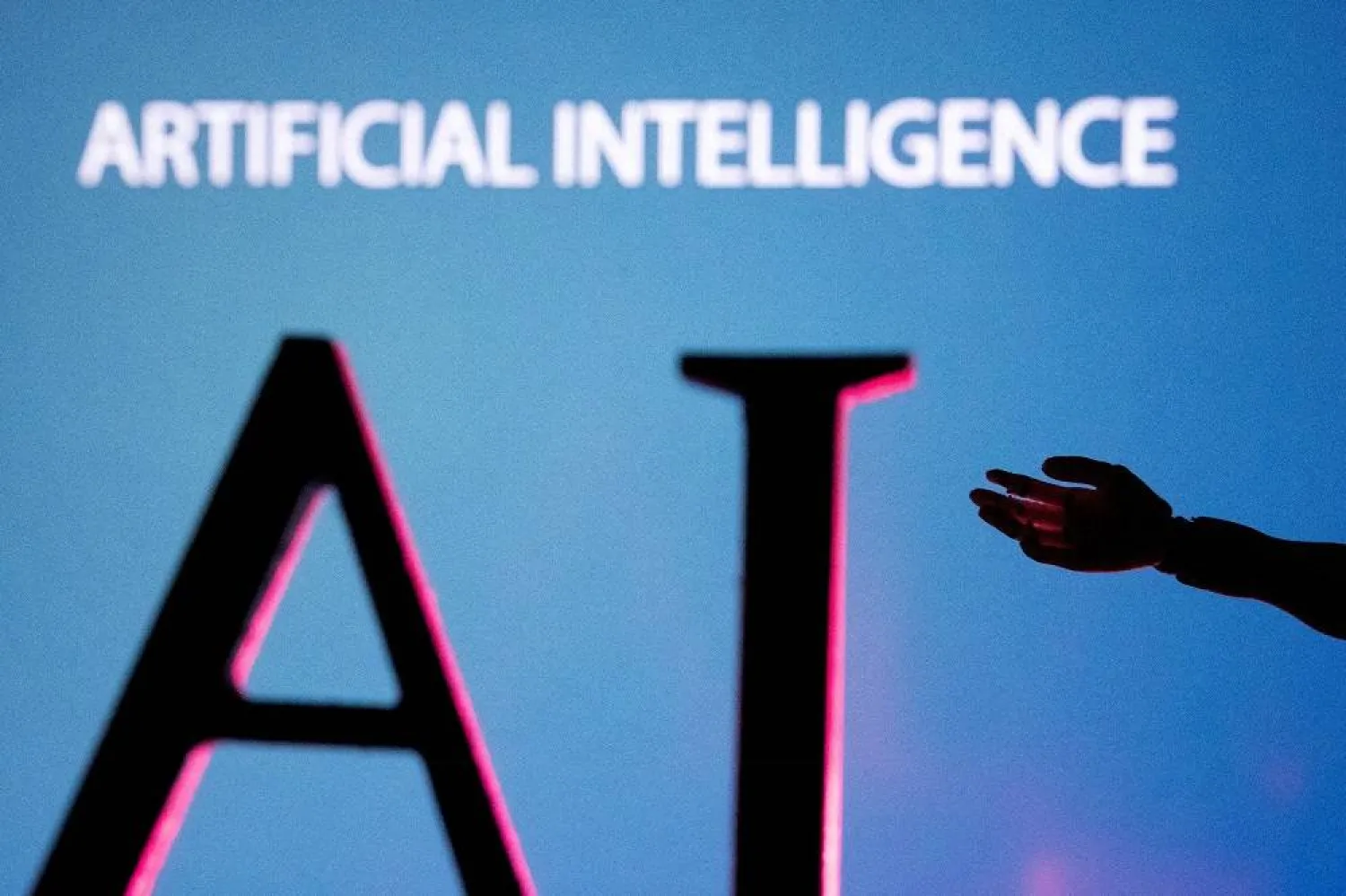
AI (Artificial Intelligence) letters and robot hand miniature in this illustration taken, June 23, 2023. (Reuters)
TT

Blistering Barnacles! AI Takes on Europe's Cartoon Heroes 

AI (Artificial Intelligence) letters and robot hand miniature in this illustration taken, June 23, 2023. (Reuters)

Home to animated heroes from Tintin to the Smurfs, Brussels is proud to display its cartoon heritage in mammoth murals that tower over the city's stately streets. But all is not well in the self-declared capital of comics.

In an industry where animators routinely depict epic battles between super-heroes and arch-villains, European cartoon artists are now in a real-life fight of their own, fending off a new, faceless adversary: artificial intelligence (AI).

AI-generated art currently operates in a legal grey area, ensuring novel intellectual property disputes in what is a fast-growing and ever-changing field.

Copyright laws in the European Union do not explicitly cover AI-generated art, leaving some artists wondering if AI will help or hinder creativity and throwing up the thorny question of whether low-cost AI tools will eventually replace human artists.

LITIGATE OR LICENCE

While artists spend years honing their skills, generative AI tools, such as MidJourney, use a machine-learning algorithm - trained on artists' images - to generate pictures in minutes.

This has triggered a "complete rejection" of AI in the European comic-book industry, according to Gauthier van Meerbeeck, editorial director at Le Lombard.

His firm is publisher of the legendary adventures of Tintin, an intrepid boy-reporter who is now almost a century old.

Created by Herge, Tintin became known for his blond quiff, baggy plus fours and trusty sidekick, Snowy the dog, and is considered an icon in what is now a global industry.

"This art is generated by stealing from artists. So morally I could never get involved in that," said van Meerbeeck.

AI IN THE DOCK

Across the Atlantic, Disney sparked controversy in June 2023 by using AI-generated images in Marvel's "Secret Invasion", and the boom in generative AI has spawned a flurry of US lawsuits.

Prominent tech companies from Microsoft-backed OpenAI to Meta Platforms, have been hit with copyright cases by artists who say AI profited from their work without permission or compensation.

European comic book publishing houses are gearing up for litigation when new EU rules under the AI act kick in mid-2025, forcing tech firms to be transparent about training inputs and opening them up to potential copyright lawsuits.

"It's huge for publishers," Quentin Deschandelliers, legal advisor at the Federation of European Publishers, told the Thomson Reuters Foundation, explaining that if you want to litigate you need to "know what is under the hood".

He said the incoming law may push tech firms towards licensing agreements to compensate artists if their work is used to train a generative AI model.

Amid growing scrutiny over copyright, several big tech companies that trained their AI using others' output have already signed content-licensing deals with media outlets, such as OpenAI with the Financial Times and Google with NewsCorp.

However, some publishers and authors are afraid of "giving away the keys to the kingdom", explained Deschandelliers, over fears of AI-generated works flooding the markets.

ART, SOUL AND BOTS

Courtroom battles aside, artists are also wondering whether to harness or reject the new tools.

Belgian comic book artist's Marnix Verduyn, who goes by the pseudonym NIX, describes himself as a computer engineer who "accidentally became a comic book artist". He chose to train a generative algorithm on his own comics, joking that he had a fantasy of replacing himself to spend more time at the beach.

But his fellow comic artists didn't find it so funny, especially when the generative AI model Dall-E came out in 2021; it was a watershed moment.

"It was a shock how powerful it was," he told the Thomson Reuters Foundation. "That's when I thought there's a lot of people who are not going to have jobs in the future."

In Europe, the cultural sector employed 7.7 million people in 2022, while its net turnover was about 448 billion euros ($481.51 billion)in 2021, according to European Commission business statistics.

NIX believes his use of AI - taking on low-skilled, repetitive tasks - is "gently disruptive" and necessary to keep up with competition from Japanese and US comic-book giants.

But recent art graduates are worked up over entry-level jobs they might once have filled now being filled by machines.

"It's cheap, fast, no humans needed, and it kills any kind of artistic endeavor in the industry," Sarah Vanderhaegen told the Thomson Reuters Foundation.

The 24-year-old Belgian described how a brush with AI during an internship had left her crushed, forcing her to reconsider options - and pivoting her to an archeology degree.

Now working on a comic book in her spare time, she sees AI as a bogus short-cut powered by an algorithm that can never hope to match an artist's ability to translate emotions onto a page.

A point where artists and publishers agree.

"AI-generated images, I can spot them straight away," noted van Meerbeeck, who thinks comics are safe for now, as storyline, text and images remain too complex for the current crop of generative AI to create.

For NIX the human remains the boss, AI - a mere tool.

"It's just a cocktail of ideas stolen from somebody. I see the mathematics (of AI), so there's no soul in the mathematics."



OpenAI's Altman Says World 'Urgently' Needs AI Regulation

OpenAI’s CEO Sam Altman speaks at the AI Summit in New Delhi, India, Thursday, Feb. 19, 2026. (AP Photo)
TT

OpenAI's Altman Says World 'Urgently' Needs AI Regulation

OpenAI’s CEO Sam Altman speaks at the AI Summit in New Delhi, India, Thursday, Feb. 19, 2026. (AP Photo)

Sam Altman, head of ChatGPT maker OpenAI, told a global artificial intelligence conference on Thursday that the world "urgently" needs to regulate the fast-evolving technology.

An organization could be set up to coordinate these efforts, similar to the International Atomic Energy Agency (IAEA), AFP quoted him as saying.

Altman is one of the hosts of top tech CEOs in New Delhi for the AI Impact Summit, the fourth annual global meeting on how to handle advanced computing power.

Frenzied demand for generative AI has turbocharged profits for many companies while fueling anxiety about the risks to individuals and the planet.

"Democratization of AI is the best way to ensure humanity flourishes," Altman said, adding that "centralization of this technology in one company or country could lead to ruin".

"This is not to suggest that we won't need any regulation or safeguards," he said. "We obviously do, urgently, like we have for other powerful technologies."

Many researchers and campaigners say stronger action is needed to combat emerging issues, ranging from job disruption to sexualized deepfakes and AI-enabled online scams.

"We expect the world may need something like the IAEA for international coordination of AI," with the ability to "rapidly respond to changing circumstances", Altman said.

"The next few years will test global society as this technology continues to improve at a rapid pace. We can choose to either empower people or concentrate power," he added.

"Technology always disrupts jobs; we always find new and better things to do."

Generative AI chatbot ChatGPT has 100 million weekly users in India, more than a third of whom are students, he said.

Earlier on Thursday, OpenAI announced with Indian IT giant Tata Consultancy Services (TCS) a plan to build data center infrastructure in the South Asian country.


Saudi Arabia Showcases Responsible Use of AI at AI Impact Summit in India

Saudi Arabia took part in a high-level session on harnessing artificial intelligence on the sidelines of the AI Impact Summit 2026 hosted by India.
TT

Saudi Arabia Showcases Responsible Use of AI at AI Impact Summit in India

Saudi Arabia took part in a high-level session on harnessing artificial intelligence on the sidelines of the AI Impact Summit 2026 hosted by India.

Saudi Arabia, represented by the Saudi Data and Artificial Intelligence Authority (SDAIA), took part in a high-level session on harnessing artificial intelligence for people, planet, and progress on the sidelines of the AI Impact Summit 2026 hosted by India, the Saudi Press agency reported on Wednesday.

The event drew participation from more than 70 countries and 25 international organizations, as well as senior decision-makers and technology experts.

The Saudi delegation, led by SDAIA President Dr. Abdullah Alghamdi, included Saudi Ambassador to India Haitham Al-Maliki and officials from relevant government entities.

The session aimed to launch a global network of specialized AI scientific institutions, accelerate discovery through advanced technologies, strengthen international cooperation among states and research bodies, and support the deployment of artificial intelligence to address global challenges and advance the United Nations Sustainable Development Goals (SDGs) 2030.

Deputy Chief Strategy Officer at SDAIA Dr. Abdulrahman Habib emphasized the need to unify international efforts to promote the responsible and ethical use of artificial intelligence, ensuring a sustainable, positive impact on societies and economies worldwide and supporting the 2030 SDGs.

He also reviewed Saudi Arabia’s data and AI initiatives, highlighting efforts to develop regulatory frameworks and national policies that balance innovation with the governance of emerging technologies, as well as applied models that have enhanced quality of life, improved government service efficiency, and advanced environmental sustainability.

SDAIA's participation in the summit underscores Saudi Arabia’s role in shaping the global future of AI and in strengthening its presence in international forums focused on advanced technologies, in line with the objectives of Saudi Vision 2030, which prioritizes digital transformation and innovation.


Google Says to Build New Subsea Cables from India in AI Push

A logo of Google is on display at Bharat Mandapam, one of the venues for AI Impact Summit, in New Delhi, India, February 17, 2026. REUTERS/Bhawika Chhabra
TT

Google Says to Build New Subsea Cables from India in AI Push

A logo of Google is on display at Bharat Mandapam, one of the venues for AI Impact Summit, in New Delhi, India, February 17, 2026. REUTERS/Bhawika Chhabra

Google announced Wednesday it would build new subsea cables from India and other locations as part of its existing $15 billion investment in the South Asian nation, which is hosting a major artificial intelligence summit this week.

The US tech giant said it would build "three subsea paths connecting India to Singapore, South Africa, and Australia; and four strategic fiber-optic routes that bolster network resilience and capacity between the United States, India, and multiple locations across the Southern Hemisphere".