China’s DeepSeek Frenzy Enters the Home as TV, Vacuum Cleaner Makers Adopt Its AI Models 

The DeepSeek logo is seen in this illustration taken Jan. 27, 2025. (Reuters)
TT

China’s DeepSeek Frenzy Enters the Home as TV, Vacuum Cleaner Makers Adopt Its AI Models 

The DeepSeek logo is seen in this illustration taken Jan. 27, 2025. (Reuters)

China's joyful embrace of DeepSeek has gone one step deeper - extending to TVs, fridges and robot vacuum cleaners with a slew of home appliance brands announcing that their products will feature the startup's artificial intelligence models.

Hangzhou-based DeepSeek's large language models upended the AI sector this year, rivalling Western systems in performance but at a much lower cost. That's resulted in much pride and glee in China, with DeepSeek held up as proof that US efforts to contain tech advances in China will ultimately fail.

DeepSeek's founder Liang Wenfeng has been feted by Chinese authorities, and the company plans to release R2, the successor to its R1 reasoning model, soon, sources have said.

Over the past two weeks, home appliance manufacturers such as Haier, Hisense and TCL Electronics have joined automakers and tech heavyweights like Huawei and Tencent in saying they will be using DeepSeek's models.

Many of these home goods are already smart devices that respond to voice-activated commands. But DeepSeek's models will allow for far greater precision.

Liu Xingliang, a Beijing-based independent industry analyst, said that a robotic vacuum cleaner, could, for example, leverage the semantic parsing capabilities of DeepSeek-R1 to position itself and avoid obstacles with more speed and sophistication.

"The device will be able to comprehend complex instructions such as 'Gently wax the wooden floor in the master bedroom but avoid the Legos'," said Liu.


OpenAI's Altman Says World 'Urgently' Needs AI Regulation

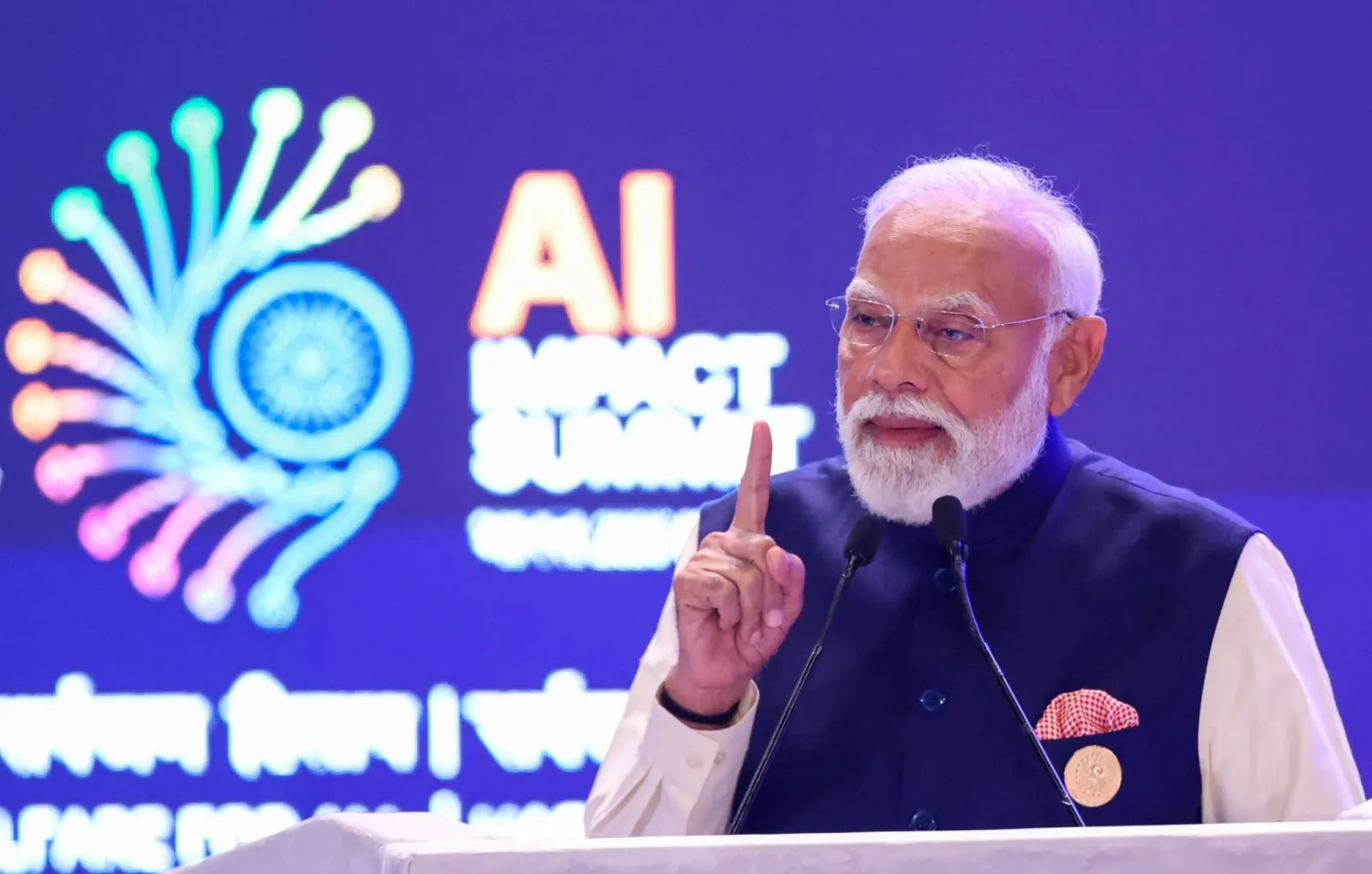
OpenAI’s CEO Sam Altman speaks at the AI Summit in New Delhi, India, Thursday, Feb. 19, 2026. (AP Photo)
TT

OpenAI's Altman Says World 'Urgently' Needs AI Regulation

OpenAI’s CEO Sam Altman speaks at the AI Summit in New Delhi, India, Thursday, Feb. 19, 2026. (AP Photo)

Sam Altman, head of ChatGPT maker OpenAI, told a global artificial intelligence conference on Thursday that the world "urgently" needs to regulate the fast-evolving technology.

An organization could be set up to coordinate these efforts, similar to the International Atomic Energy Agency (IAEA), AFP quoted him as saying.

Altman is one of the hosts of top tech CEOs in New Delhi for the AI Impact Summit, the fourth annual global meeting on how to handle advanced computing power.

Frenzied demand for generative AI has turbocharged profits for many companies while fueling anxiety about the risks to individuals and the planet.

"Democratization of AI is the best way to ensure humanity flourishes," Altman said, adding that "centralization of this technology in one company or country could lead to ruin".

"This is not to suggest that we won't need any regulation or safeguards," he said. "We obviously do, urgently, like we have for other powerful technologies."

Many researchers and campaigners say stronger action is needed to combat emerging issues, ranging from job disruption to sexualized deepfakes and AI-enabled online scams.

"We expect the world may need something like the IAEA for international coordination of AI," with the ability to "rapidly respond to changing circumstances", Altman said.

"The next few years will test global society as this technology continues to improve at a rapid pace. We can choose to either empower people or concentrate power," he added.

"Technology always disrupts jobs; we always find new and better things to do."

Generative AI chatbot ChatGPT has 100 million weekly users in India, more than a third of whom are students, he said.

Earlier on Thursday, OpenAI announced with Indian IT giant Tata Consultancy Services (TCS) a plan to build data center infrastructure in the South Asian country.


Saudi Arabia Showcases Responsible Use of AI at AI Impact Summit in India

Saudi Arabia took part in a high-level session on harnessing artificial intelligence on the sidelines of the AI Impact Summit 2026 hosted by India.
TT

Saudi Arabia Showcases Responsible Use of AI at AI Impact Summit in India

Saudi Arabia took part in a high-level session on harnessing artificial intelligence on the sidelines of the AI Impact Summit 2026 hosted by India.

Saudi Arabia, represented by the Saudi Data and Artificial Intelligence Authority (SDAIA), took part in a high-level session on harnessing artificial intelligence for people, planet, and progress on the sidelines of the AI Impact Summit 2026 hosted by India, the Saudi Press agency reported on Wednesday.

The event drew participation from more than 70 countries and 25 international organizations, as well as senior decision-makers and technology experts.

The Saudi delegation, led by SDAIA President Dr. Abdullah Alghamdi, included Saudi Ambassador to India Haitham Al-Maliki and officials from relevant government entities.

The session aimed to launch a global network of specialized AI scientific institutions, accelerate discovery through advanced technologies, strengthen international cooperation among states and research bodies, and support the deployment of artificial intelligence to address global challenges and advance the United Nations Sustainable Development Goals (SDGs) 2030.

Deputy Chief Strategy Officer at SDAIA Dr. Abdulrahman Habib emphasized the need to unify international efforts to promote the responsible and ethical use of artificial intelligence, ensuring a sustainable, positive impact on societies and economies worldwide and supporting the 2030 SDGs.

He also reviewed Saudi Arabia’s data and AI initiatives, highlighting efforts to develop regulatory frameworks and national policies that balance innovation with the governance of emerging technologies, as well as applied models that have enhanced quality of life, improved government service efficiency, and advanced environmental sustainability.

SDAIA's participation in the summit underscores Saudi Arabia’s role in shaping the global future of AI and in strengthening its presence in international forums focused on advanced technologies, in line with the objectives of Saudi Vision 2030, which prioritizes digital transformation and innovation.


Google Says to Build New Subsea Cables from India in AI Push

A logo of Google is on display at Bharat Mandapam, one of the venues for AI Impact Summit, in New Delhi, India, February 17, 2026. REUTERS/Bhawika Chhabra
TT

Google Says to Build New Subsea Cables from India in AI Push

A logo of Google is on display at Bharat Mandapam, one of the venues for AI Impact Summit, in New Delhi, India, February 17, 2026. REUTERS/Bhawika Chhabra

Google announced Wednesday it would build new subsea cables from India and other locations as part of its existing $15 billion investment in the South Asian nation, which is hosting a major artificial intelligence summit this week.

The US tech giant said it would build "three subsea paths connecting India to Singapore, South Africa, and Australia; and four strategic fiber-optic routes that bolster network resilience and capacity between the United States, India, and multiple locations across the Southern Hemisphere".