


Arab Media Summit Opens in Dubai to Tackle Industry Challenges

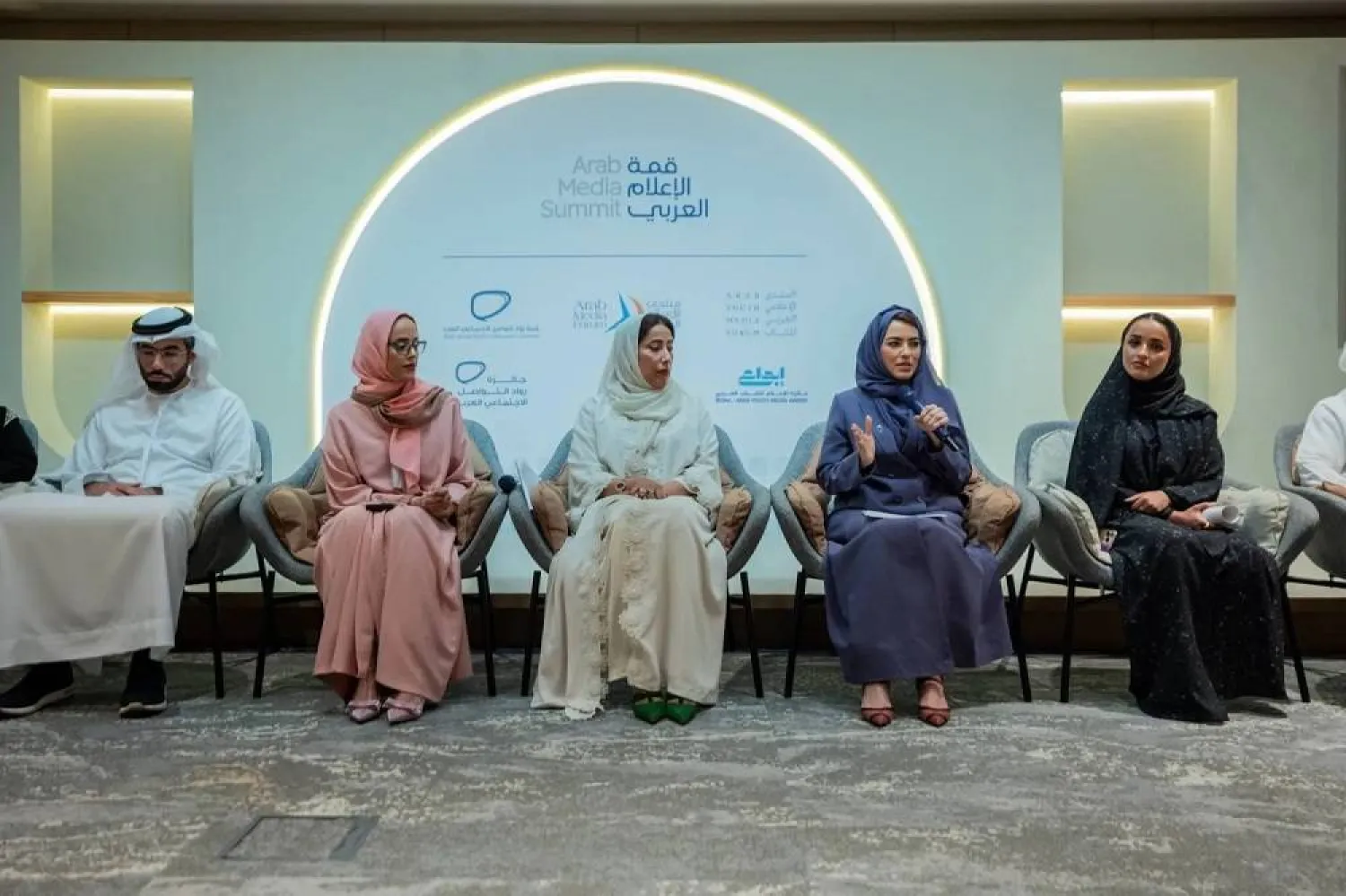
 Maryam Al Mulla, Acting Director of the Dubai Press Club, speaks about the Arab Media Summit 2025 agenda. (X)
Maryam Al Mulla, Acting Director of the Dubai Press Club, speaks about the Arab Media Summit 2025 agenda. (X)
TT

Arab Media Summit Opens in Dubai to Tackle Industry Challenges

 Maryam Al Mulla, Acting Director of the Dubai Press Club, speaks about the Arab Media Summit 2025 agenda. (X)
Maryam Al Mulla, Acting Director of the Dubai Press Club, speaks about the Arab Media Summit 2025 agenda. (X)

The Arab Media Summit 2025 opened in Dubai on Monday as the region’s media industry grapples with unprecedented challenges stemming from rapid digital transformation and the challenges of artificial intelligence.

The three-day summit runs from May 26 to 28 and brings together some 8,000 participants, including media leaders, policymakers and thought leaders from across the Arab world and beyond.

It aims to address the sweeping shifts reshaping the media landscape, including digital disruption, changing audience behavior, and funding pressures. It also explores how media institutions can adapt to the demands of the digital age by adopting sustainable business models capable of competing on a global scale.

Organizers said the event will offer practical strategies to navigate these changes, while promoting a vision for a strong, innovative Arab media ecosystem built on knowledge and creativity.

This year’s program features more than 175 keynote sessions and over 35 workshops led by top global media organizations and digital platforms. Participants from 26 countries are expected to take part.

Sheikh Ahmed bin Mohammed bin Rashid Al Maktoum, Second Deputy Ruler of Dubai and Chairman of the Dubai Media Council, said the Arab Media Summit 2025 represents a strategic milestone in the city’s broader vision to build a responsive, future-ready Arab media capable of shaping impactful content that reflects the region’s realities and aspirations.

In remarks carried by state media, Sheikh Ahmed said this year’s summit agenda reflects a forward-looking approach, with a strong focus on artificial intelligence, transformative technologies, gaming and filmmaking, all of which are becoming critical pillars of today’s media narrative.

Mona Ghanem Al Marri, Vice Chairperson and Managing Director of the Dubai Media Council, President of the Dubai Press Club, and Chairperson of the Organizing Committee of the Arab Media Summit, highlighted the event’s growing influence as a platform for shaping the future of Arab media, emphasizing that the 2025 edition marks “a new phase in Dubai’s strategic vision for media development and innovation.”

“This year’s edition comes at a pivotal time for the industry, as artificial intelligence and digital innovation continue to redefine how content is created, distributed, and consumed,” she added.

“The agenda reflects these shifts, offering a future-oriented perspective on the profound transformations reshaping the regional and global media landscape,” affirmed Al Marri.

“We have designed the summit as a dynamic space for dialogue and discovery, bringing together media professionals, policymakers, innovators, and creatives from across the Arab world to collaboratively shape a more agile, inclusive, and future-ready media ecosystem,” she said.




Meta Unveils Plans for Batch of In-house AI Chips

Mark Zuckerberg outside the court where he testified in a landmark trial (Reuters)
TT

Meta Unveils Plans for Batch of In-house AI Chips

Mark Zuckerberg outside the court where he testified in a landmark trial (Reuters)

Meta Platforms on Wednesday unveiled a roadmap of four new chips that the company is making in-house, as it rapidly expands its data centers.

Like many big tech companies such as Alphabet and Microsoft, Meta has invested heavily in building a team that can design chips in-house in addition to purchasing off-the-shelf products made by Nvidia and Advanced Micro Devices.

Making chips designed to tackle the specific types of data crunching Meta requires can lead to designs that use less energy and at a better cost.

The new chips are part of the company's Meta Training and Inference Accelerator (MTIA) program and the first of the new chips called the MTIA 300 is in use powering the company's ranking and recommendation systems. The other three will be rolled out this year and in 2027, with the final two chips, the MTIA 450 and 500 being designed to perform inference, the process when an AI model such as the one that powers the ChatGPT app responds to customer queries and requests.

"We see inference demand exploding at the moment and that's what we're currently focused on," Yee Jiun Song, Meta's vice president of engineering, said in an interview.

Meta has had some success with inference chips but has struggled with its long-time ambitions to make a generative AI training chip, capable of building the large models that power AI apps.

Beginning with the MTIA 400, which the company says is on the path to being used in its data centers, Meta has designed an entire system around the chips, which is roughly the size of several server racks and includes a version of liquid cooling.

The company plans to release the new chips at six-month intervals because it is rapidly expanding the number of data centers it uses to run apps like Instagram and Facebook, Song said.

"That is the reality of how quickly our infrastructure is being built out," Song said.

The company said in January it expects capital spending of between $115 billion and $135 billion this year.

Meta contracts Broadcom to help with some elements of the designs, though Song did not specify which chips. The company uses Taiwan Semiconductor Manufacturing Co to fabricate the processors.

In February, Meta signed big deals with Nvidia and AMD to buy tens of billions of dollars worth of chips.


SDAIA Unveils Logo for Saudi Arabia's Year of Artificial Intelligence 2026

The logo integrates symbolism in its elements
TT

SDAIA Unveils Logo for Saudi Arabia's Year of Artificial Intelligence 2026

The logo integrates symbolism in its elements

The Saudi Data and AI Authority (SDAIA) has launched the official logo for the Year of Artificial Intelligence 2026, after it was approved by the Cabinet.

This move underscores the Kingdom’s commitment to advancing artificial intelligence, reinforcing its role as a global hub in data and AI, and highlighting key achievements in this cutting-edge sector.

The logo integrates symbolism in its elements: the palm tree signifies the national emblem and the Kingdom’s cultural heritage, while the letters ‘AI’ highlight the technological and innovative aspects central to promoting digital inclusion as part of Vision 2030.

The palm tree’s green color symbolizes the Saudi flag and the Kingdom’s national identity, while the accompanying blue color represents digital technology and the Kingdom’s progression toward advanced technological development.

The logo is accompanied by the official hashtag for the Year of Artificial Intelligence: #SaudiAIYear.


‘Stealth Hit’ Pokemon Game Sends Nintendo Shares Soaring

Japan's Nintendo has enjoyed bumper sales for its latest Switch 2 console. (AFP)
TT

‘Stealth Hit’ Pokemon Game Sends Nintendo Shares Soaring

Japan's Nintendo has enjoyed bumper sales for its latest Switch 2 console. (AFP)

Fan buzz around life-simulation game "Pokemon Pokopia" sent Nintendo shares soaring on Wednesday, with some hailing the new title as a welcome antidote to global conflicts.

Japan's Nintendo has enjoyed bumper sales for its latest Switch 2 console, but some have called the line-up of new games for the device lackluster.

So early success for "Pokemon Pokopia", released on March 5 to rave reviews and reports of store sell-outs around the world, has relieved investors.

"Pokemon Pokopia" launched as a Switch 2 exclusive, "immediately becoming a viral stealth hit", analyst Atul Goyal from investment bank Jefferies said.

"The title successfully bridges the gap between core gamers and casual audiences," Goyal said.

The new Pokemon game has an aggregated review score of 89 on Metacritic, which Goyal described as a high for the three-decade-old video game franchise.

Nintendo shares were up nine percent in mid-morning trade on Wednesday, also likely boosted by the release of the final trailer for the star-studded upcoming "Super Mario" movie sequel.

Players have compared the game, in which they control a human-like character to rejuvenate a village, to "Animal Crossing" -- another Nintendo life-sim that became a hit during the pandemic.

"If you're looking for a mental break from the world def get Pokopia, it's like therapy," US-based influencer Ashley Duncan wrote on X.

"For Covid we had Animal Crossing. For WW3 we have Pokopia. Thank you for the distractions, Nintendo," said another X post from fan account Pokemon Daily Post, which has nearly 90 million followers.

The basic premise of Pokemon, inspired by the Japanese summer childhood tradition of bug-collecting, is to catch and train in battle hundreds of round-eyed "pocket monsters".

The phenomenon has evolved since the first 1996 game release with anime series, movies, a trading card game and the augmented reality smartphone app "Pokemon Go".

Nintendo's Switch 2, the world's fastest-selling games console, launched in June 2025 as the successor to the first Switch.

The original is now the second top-selling console of all time after Sony's PlayStation 2, boosted by the popularity of games including "Animal Crossing".