


AI-cloning of Lara Croft’s Voice Has ‘Tomb Raider’ Fans and Actors up in Arms 

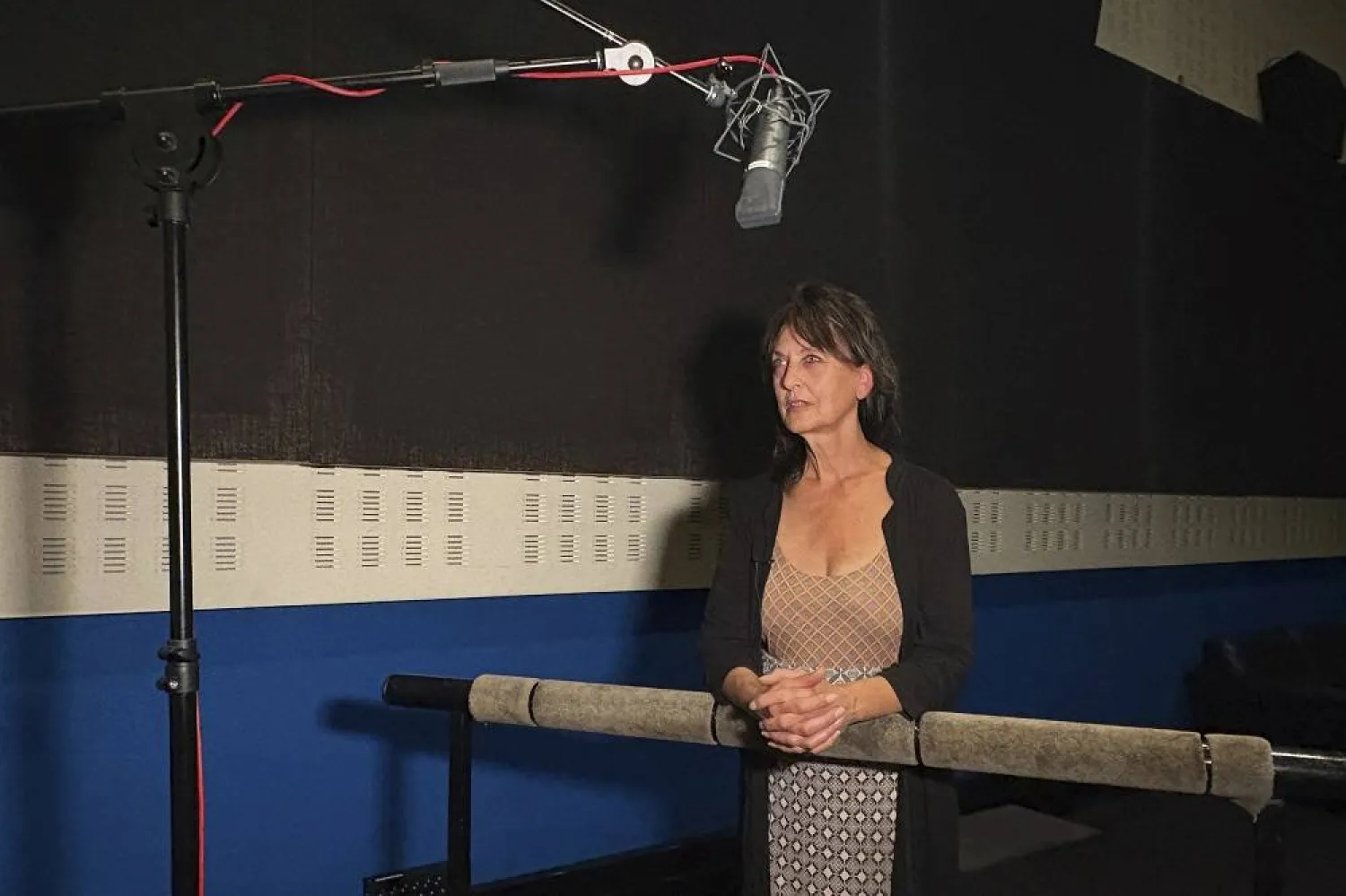
Françoise Cadol poses in a dubbing studio, in Saint Denis, outside Paris, France, Monday, Sept. 15, 2025. (AP)
TT

AI-cloning of Lara Croft’s Voice Has ‘Tomb Raider’ Fans and Actors up in Arms 

Françoise Cadol poses in a dubbing studio, in Saint Denis, outside Paris, France, Monday, Sept. 15, 2025. (AP)

A lifelong fan of "Tomb Raider," French gamer Romain Bos was on tenterhooks when an update of the popular video game went online in August.

But his excitement quickly turned to anger.

The gamer's ears — and those of other "Tomb Raider" fans — picked up something amiss with the French-language voice of Lara Croft, the game’s protagonist.

It sounded robotic, lifeless even — shorn of the warmth, grace and believability that French voice actor Françoise Cadol has given to Croft since she started playing the character in 1996.

Gamers and Cadol herself came to the same conclusion: A machine had cloned her voice and replaced her.

"It's pathetic," says Cadol, who straight away called her lawyer. "My voice belongs to me. You have no right to do that."

"It was absolutely scandalous," says Bos. "It was artificial intelligence."

AI encroaching ‘everywhere’

Aspyr, the game developer based in Austin, Texas, didn’t respond to e-mailed questions from The Associated Press. But it acknowledged in a post last week on its website that what it described as "unauthorized AI generated content" had been incorporated into its Aug. 14 update of "Tomb Raider IV–VI Remastered" that angered fans.

"We’ve addressed this issue by removing all AI voiceover content," Aspyr's post said. "We apologize for any inconvenience this may have caused."

Still, the affair has triggered alarms in the voiceover community, with campaigners saying it's a sobering example of dangers that AI poses to human workers and their jobs.

"If we can replace actors, we’ll be able to replace accountants, and a whole range of other professions that could also be automated," says Patrick Kuban, a French-language voice actor who is also a co-president of United Voice Artists, an international federation of voiceover artists.

"So we need to ask ourselves the right questions: How far should we go, and how do we regulate these machines?"

Hollywood has seen similar concerns, with video game performers striking for 11 months for a new contract this year that included AI guardrails.

"This is happening pretty much everywhere. We’re getting alerts from all over the world — from Brazil to Taiwan," Kuban said in an Associated Press interview.

"Actors’ voices are being captured, either to create voice clones — not perfect ones — but for illicit use on social media by individuals, since there are now many apps for making audio deepfakes," Kuban said.

"These voices are also being used by content producers who aren’t necessarily in the same country," he said. "So it’s very difficult for actors to reclaim control over their voices, to block these uses."

Cadol's ‘Voice Guardians’

Cadol says that within minutes of the release of the "Tomb Raider" update, her phone began erupting with messages, emails and social media notifications from upset fans.

"I took a look and I saw all this emotion — anger, sadness, confusion. And that's how I found out that my voice had been cloned," she said in an AP interview.

Cadol says 12 years of recording French-language voiceovers for Lara Croft — from 1996 to 2008 — built an intimate bond with her fans. She calls them the "guardians" of her work.

Once the initial shock subsided, she resolved to fight back. Her Paris lawyer, Jonathan Elkaim, is seeking an apology from Aspyr and financial redress.

Grammar error

In the update, new chunks of voiceover appear to have been added to genuine recordings that Cadol says she made years ago.

Most notably, fans picked up on one particularly awkward segment. In it, a voice instructs players how to use their game controllers to make Lara Croft climb onto an obstacle, intoning in French: "Place toi devant et appuyez sur avancer" — Stand in front and press "advance’."

Not only does it sound clunky, but it also rings as grammatically incorrect to French speakers, mixing up the polite and less polite forms of language that they use, depending on who they're addressing.

Gamers were up in arms. Bos posted a video on his YouTube channel that same evening, lamenting: "It’s half Françoise Cadol, half AI. It’s horrible! Why have they done that?"

"I was really disgusted," the 34-year-old said in an AP interview. "I grew up with Françoise Cadol's voice. I've been a ‘Tomb Raider’ fan since I was young kid."

"Lara Croft is a bit — how should I say — a bit sarcastic at times in some of her lines. And I think Françoise played that very, very well," he said.

"That’s exactly why now is the time to set boundaries," he added. "It’s so that future generations also have the chance to experience talented actors."

Indian PM, President of Saudi Arabia’s SDAIA Discuss AI Cooperation 

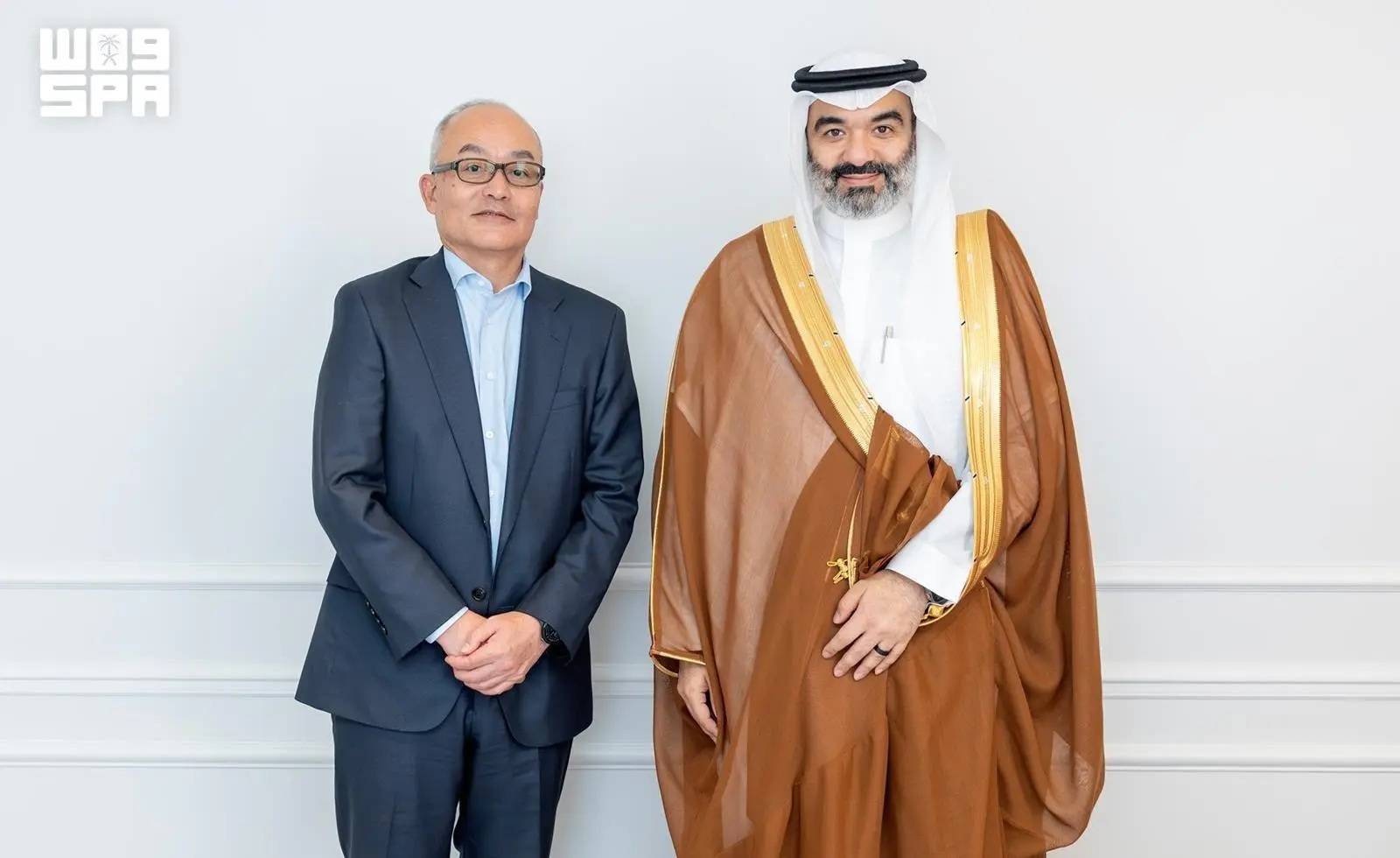
Indian Prime Minister Narendra Modi and President of the Saudi Data and Artificial Intelligence Authority (SDAIA) President Dr. Abdullah Al-Ghamdi meet on the sidelines of the India AI Impact Summit 2026. (SPA)
TT

Indian PM, President of Saudi Arabia’s SDAIA Discuss AI Cooperation 

Indian Prime Minister Narendra Modi and President of the Saudi Data and Artificial Intelligence Authority (SDAIA) President Dr. Abdullah Al-Ghamdi meet on the sidelines of the India AI Impact Summit 2026. (SPA)

Indian Prime Minister Narendra Modi held talks with President of the Saudi Data and Artificial Intelligence Authority (SDAIA) President Dr. Abdullah Al-Ghamdi on the sidelines of the India AI Impact Summit 2026, reported the Saudi Press Agency on Friday.

Discussions focused on knowledge transfer and the exchange of expertise to accelerate digital development in both nations. They also tackled expanding bilateral cooperation in data and AI.

Al-Ghamdi commended India’s leadership in hosting the summit, noting that such international partnerships are essential for harnessing advanced technology to benefit humanity and achieve shared strategic goals.


India Chases 'DeepSeek Moment' with Homegrown AI

A handout photo made available by the Press Information Bureau (PIB) of Indian Prime Minister Narendra Modi speaking with global leaders at the AI Impact Summit 2026 at Bharat Mandapam in New Delhi, India, 19 February 2026.EPA/PRESS INFORMATION BUREAU HANDOUT HANDOUT
TT

India Chases 'DeepSeek Moment' with Homegrown AI

A handout photo made available by the Press Information Bureau (PIB) of Indian Prime Minister Narendra Modi speaking with global leaders at the AI Impact Summit 2026 at Bharat Mandapam in New Delhi, India, 19 February 2026.EPA/PRESS INFORMATION BUREAU HANDOUT HANDOUT

Fledgling Indian artificial intelligence companies showcased homegrown technologies this week at a major summit in New Delhi, underpinning big dreams of becoming a global AI power.

But analysts said the country was unlikely to have a "DeepSeek moment" -- the sort of boom China had last year with a high-performance, low-cost chatbot -- any time soon, AFP reported.

Still, building custom AI tools could bring benefits to the world's most populous nation.
At the AI Impact Summit, Prime Minister Narendra Modi lauded new Indian AI models, along with other examples of the country's rising profile in the field.

"All the solutions that have been presented here demonstrate the power of 'Made in India' and India's innovative qualities," Modi said Thursday.

One of the startups making a buzz at the five-day summit was Sarvam AI, which this week released two large language models it says were trained from scratch in India.

Its models are optimized to work across 22 Indian languages, says the company, which received government-subsidized access to advanced computer processors.

The five-day summit, which wraps up Friday, is the fourth annual international meeting to discuss the risks and rewards of the fast-growing AI sector.

It is the largest yet and the first in a developing country, with Indian businesses striking deals with US tech giants to build large-scale data center infrastructure to help train and run AI systems.

On Friday, Abu Dhabi-based tech group G42 said the United Arab Emirates would deploy an AI supercomputer system in India, in a project "designed to lower barriers to AI innovation".

So-called sovereign AI has become a priority for many countries hoping to reduce dependence on US and Chinese platforms while ensuring that systems respect local regulations, including on data privacy.

AI models that succeed in India "can be deployed all over the world", Modi said on Thursday.

But experts said the sheer computational might of the United States would be hard to match.

"Despite the headline pledges, we don't expect India to emerge as a frontier AI innovation hub in the near term," said Reema Bhattacharya, head of Asia research at risk intelligence company Verisk Maplecroft.

"Its more realistic trajectory is to become the world's largest AI adoption market, embedding AI at scale through digital public infrastructure and cost-efficient applications," she said.

Another Indian company that drew attention with product debuts this week was the Bengaluru-based Gnani.ai, which introduced its Vachana speech models at the summit.

Trained on more than a million hours of audio, Vachana models generate natural-sounding voices in Indian languages that can process customer interactions and allow people to interact with digital services out loud.

Job disruption and redundancies, including in India's huge call center industry, have been one key focus of discussions at the Delhi summit.

Prihesh Ratnayake, head of AI initiatives at think-tank Factum, told AFP that the new Indian AI models were "not really meant to be global".

"They're India-specific models, and hopefully we'll see their impact over the coming year," he said.

"Why does India need to build for the global scale? India itself is the biggest market."
And Nanubala Gnana Sai at the Cambridge AI Safety Hub said that homegrown models could bring other benefits.

Existing models, even those developed in China, "have intrinsic bias towards Western values, culture and ethos -- as a product of being trained heavily on that consensus", Sai told AFP.

India already has some major strengths, including "technology diffusion, eager talent pool and cheap labor", and dedicated efforts can help startups pivot to artificial intelligence, he said.

"The end-product may not 'rival' ChatGPT or DeepSeek on benchmarks, but will provide leverage for the Global South to have its own stand in an increasingly polarized world."


Report: Nvidia Nears Deal for Scaled-down Investment in OpenAI

Nvidia chief executive Jensen Huang has insisted that the AI chip powerhouse is committed to a big investment in ChatGPT-maker OpenAI. Lionel BONAVENTURE / AFP
TT

Report: Nvidia Nears Deal for Scaled-down Investment in OpenAI

Nvidia chief executive Jensen Huang has insisted that the AI chip powerhouse is committed to a big investment in ChatGPT-maker OpenAI. Lionel BONAVENTURE / AFP

Nvidia is on the cusp of investing $30 billion in OpenAI, scaling back a plan to pump $100 billion into the ChatGPT maker, the Financial Times reported Thursday.

The AI-chip powerhouse will be part of OpenAI's new funding round with an agreement that could be concluded as early as this weekend, according to the Times, which cited unnamed sources close to the matter.

Nvidia declined to comment on the report.

Nvidia chief executive Jensen Huang has insisted that the US tech giant will make a "huge" investment in OpenAI and dismissed as "nonsense" reports that he is unhappy with the generative AI star.

Huang made the remarks late in January after the Wall Street Journal reported that Nvidia's plan to invest up to $100 billion in OpenAI had been put on ice.

Nvidia announced the plan in September, with the investment helping OpenAI build more infrastructure for next-generation artificial intelligence.

The funding round is reported to value OpenAI at some $850 billion.

Huang told journalists that the notion of Nvidia having doubts about a huge investment in OpenAI was "complete nonsense."

Huang insisted that Nvidia was going ahead with its investment in OpenAI, describing it as "one of the most consequential companies of our time".

"Sam is closing the round, and we will absolutely be involved in the round," Huang said, referring to OpenAI chief executive Sam Altman.

"We will invest a great deal of money."

Nvidia has become the coveted supplier of processors needed for training and operating the large language models (LLM) behind chatbots like OpenAI's ChatGPT or Google Gemini.

LLM developers like OpenAI are directing much of the mammoth investment they have received into Nvidia's products, rushing to build GPU-stuffed data centers to serve an anticipated flood of demand for AI services.

The AI rush, and its frenzy of investment in giant data centers and the massive purchase of energy-intensive chips, continues despite signs of concern in the markets.
