


The AI Revolution Has a Power Problem

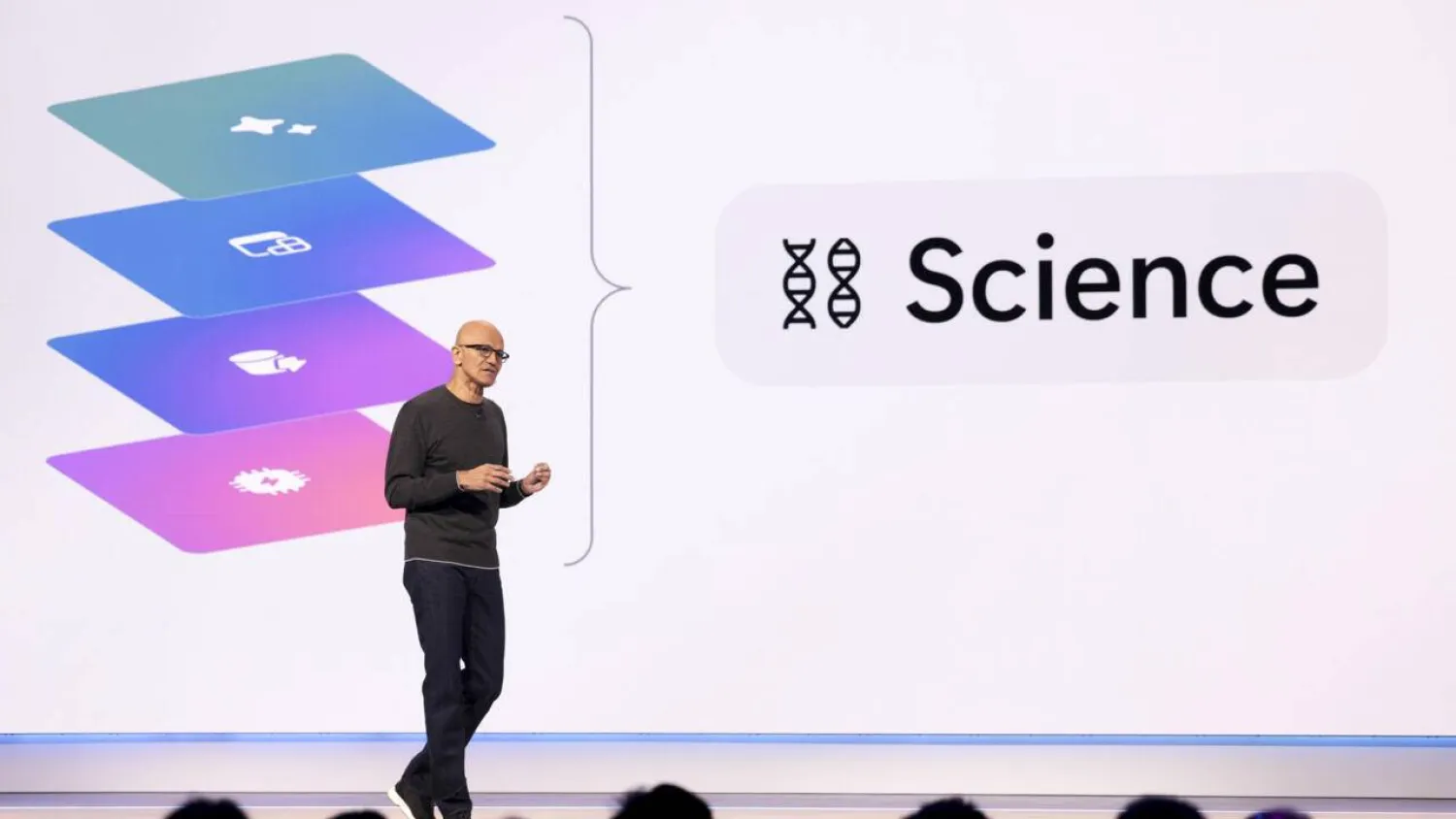
Easy access to electricity is posing a big challenge to the race for AI dominance, says Microsoft Chairman and CEO Satya Nadella. Jason Redmond / AFP/File
TT

The AI Revolution Has a Power Problem

Easy access to electricity is posing a big challenge to the race for AI dominance, says Microsoft Chairman and CEO Satya Nadella. Jason Redmond / AFP/File

In the race for AI dominance, American tech giants have the money and the chips, but their ambitions have hit a new obstacle: electric power.

"The biggest issue we are now having is not a compute glut, but it's the power and...the ability to get the builds done fast enough close to power," Microsoft CEO Satya Nadella acknowledged on a recent podcast with OpenAI chief Sam Altman.

"So if you can't do that, you may actually have a bunch of chips sitting in inventory that I can't plug in," Nadella added.

Echoing the 1990s dotcom frenzy to build internet infrastructure, today's tech giants are spending unprecedented sums to construct the silicon backbone of the revolution in artificial intelligence.

Google, Microsoft, AWS (Amazon), and Meta (Facebook) are drawing on their massive cash reserves to spend roughly $400 billion in 2025 and even more in 2026 -- backed for now by enthusiastic investors.

All this cash has helped alleviate one initial bottleneck: acquiring the millions of chips needed for the computing power race, and the tech giants are accelerating their in-house processor production as they seek to chase global leader Nvidia.

These will go into the racks that fill the massive data centers -- which also consume enormous amounts of water for cooling.

Building the massive information warehouses takes an average of two years in the United States; bringing new high-voltage power lines into service takes five to 10 years.

Energy wall

The "hyperscalers," as major tech companies are called in Silicon Valley, saw the energy wall coming.

A year ago, Virginia's main utility provider, Dominion Energy, already had a data-center order book of 40 gigawatts -- equivalent to the output of 40 nuclear reactors.

The capacity it must deploy in Virginia, the world's largest cloud computing hub, has since risen to 47 gigawatts, the company announced recently.

But some experts say the projections could be overblown.

"Both the utilities and the tech companies have an incentive to embrace the rapid growth forecast for electricity use," Jonathan Koomey, a renowned expert from UC Berkeley, warned in September.

As with the late 1990s internet bubble, "many data centers that are talked about and proposed and in some cases even announced will never get built.

Emergency coal

If the projected growth does materialize, it could create a 45-gigawatt shortage by 2028 -- equivalent to the consumption of 33 million American households, according to Morgan Stanley.

Several US utilities have already delayed the closure of coal plants, despite coal being the most climate-polluting energy source.

And natural gas, which powers 40 percent of data centers worldwide, according to the International Energy Agency, is experiencing renewed favor because it can be deployed quickly.

In the US state of Georgia, where data centers are multiplying, one utility has requested authorization to install 10 gigawatts of gas-powered generators.

Some providers, as well as Elon Musk's startup xAI, have rushed to purchase used turbines from abroad to build capability quickly. Even recycling aircraft turbines, an old niche solution, is gaining traction.

"The real existential threat right now is not a degree of climate change. It's the fact that we could lose the AI arms race if we don't have enough power," Interior Secretary Doug Burgum argued in October.

Nuclear, solar, and space?

Tech giants are quietly downplaying their climate commitments. Google, for example, promised net-zero carbon emissions by 2030 but removed that pledge from its website in June.

Instead, companies are promoting long-term projects.

Amazon is championing a nuclear revival through Small Modular Reactors (SMRs), an as-yet experimental technology that would be easier to build than conventional reactors.

Kara Hurst, chief sustainability officer at Amazon, introduces TRISO-X Pebbles, next-generation nuclear fuel developed for small modular reactors, during Amazon's 'Delivering the Future' presentation in California

Google plans to restart a reactor in Iowa in 2029. And the Trump administration announced in late October an $80 billion investment to begin construction on ten conventional reactors by 2030.

Hyperscalers are also investing heavily in solar power and battery storage, particularly in California and Texas.

The Texas grid operator plans to add approximately 100 gigawatts of capacity by 2030 from these technologies alone.

Finally, both Elon Musk, through his Starlink program, and Google have proposed putting chips in orbit in space, powered by solar energy. Google plans to conduct tests in 2027.



EU Launches Antitrust Probe into Meta over Use of AI in WhatsApp

FILE - Attendees visit the Meta booth at the Game Developers Conference 2023 in San Francisco on March 22, 2023. (AP Photo/Jeff Chiu, File)
TT

EU Launches Antitrust Probe into Meta over Use of AI in WhatsApp

FILE - Attendees visit the Meta booth at the Game Developers Conference 2023 in San Francisco on March 22, 2023. (AP Photo/Jeff Chiu, File)

Brussels has opened a new antitrust investigation into Meta Platforms over its rollout of artificial intelligence features in WhatsApp, the European Commission said on Thursday, reflecting rising scrutiny of Big Tech's use of generative AI.

The move, reported earlier by Reuters and the Financial Times, marks the latest action by European regulators against large technology firms as the bloc seeks to balance support for the sector with efforts to curb its expanding influence.

The European Commission opened the investigation into "Meta's new policy regarding AI providers' access to WhatsApp" after the California-based company integrated its Meta AI system into the messaging service earlier this year.

A WhatsApp spokesperson said that "the claims are baseless", adding that the emergence of chatbots on its platforms "puts a strain on our systems that they were not designed to support".

"Even still, the AI space is highly competitive and people have access to the services of their choice in any number of ways, including app stores, search engines, email services, partnership integrations, and operating systems."

Meta AI, a chatbot and virtual assistant, has been built into WhatsApp's interface since March 2025 across European markets.

Italy's antitrust watchdog opened a parallel investigation in July into allegations that Meta leveraged its market power by integrating an AI tool into WhatsApp. The probe was expanded in November to examine whether Meta further abused its dominance by blocking rival AI chatbots from the messaging platform.

The FT, citing officials, said that the EU probe will be conducted under traditional antitrust rules rather than the EU's Digital Markets Act, the bloc's landmark legislation currently used to scrutinize Amazon and Microsoft's cloud services for potential curbs.


Nintendo Launches Long-awaited 'Metroid Prime 4' Sci-fi Blaster

The 'Metroid' series's unique look has garnered many fans since it began in 1986. Ina FASSBENDER / AFP/File
TT

Nintendo Launches Long-awaited 'Metroid Prime 4' Sci-fi Blaster

The 'Metroid' series's unique look has garnered many fans since it began in 1986. Ina FASSBENDER / AFP/File

Fans of Nintendo's "Metroid" science-fiction saga have reason to celebrate Thursday as the latest instalment in the series is released after an eight-year wait and a bumpy road through development.

Drawing loose inspiration from the "Alien" movies since its first title in 1986, the game series has followed the adventures of space bounty hunter Samus Aran in her battle with the extraterrestrial Metroid, said AFP.

Over 15 instalments, the saga evolved from 2D platforming and exploration into a first-person action-adventure format from 2002, when the first "Metroid Prime" appeared on the Gamecube console.

Now "Metroid Prime 4: Beyond" will take players on Switch 1 or 2 to a distant planet they can explore on foot or by motorbike in Samus's distinctive armored suit.

Equipped with an arm-mounted cannon and a suite of psychic powers to overcome different challenges, players must blaze a trail through jungles or deserts as they battle enemies.

In a novelty for this instalment, players can use the Switch 2's detachable controller handset like a computer mouse to look around the environment -- making the game more comfortable for people used to gaming on a PC setup.

Critics have largely welcomed the new game, with a score of 81 out of 100 based on 71 reviews aggregated by the Metacritic website.

That's a relief for Nintendo after its painful and rare decision to restart development from scratch in 2019 -- 18 months after the title's initial unveiling.

The Japanese giant's first take had "not reached the standards we seek", Nintendo development lead Shinya Takahashi said at the time in a YouTube video.

Nintendo instead handed the job to its US-based development house Retro Studios, which created the first three "Metroid Prime" titles.

The years flying under the radar for "Prime 4" meant it joined longed-for future titles like "Half-Life 3" from Valve or "Beyond Good and Evil 2" from Ubisoft among game fans' white whales.


Saudi Investment Ministry Unveils High-quality Cybersecurity Investments at Black Hat MEA 2025 

The ministry revealed a series of new investments by leading international and local companies in the field of cybersecurity. (SPA)
TT

Saudi Investment Ministry Unveils High-quality Cybersecurity Investments at Black Hat MEA 2025 

The ministry revealed a series of new investments by leading international and local companies in the field of cybersecurity. (SPA)

The Saudi Ministry of Investment, the strategic sponsor and investment partner of the fourth edition of Black Hat Middle East and Africa 2025, announced a package of high-quality investments in the cybersecurity sector, reported the Saudi Press Agency on Wednesday.

The announcement came during the event, organized by the Saudi Federation for Cybersecurity, Programming, and Drones at the Riyadh Exhibition and Convention Center in Malham from December 2 to 4, with the participation of leading global companies and cybersecurity innovators, as well as senior officials and experts from the public and private sectors.

During its participation, the ministry revealed a series of new investments by leading international and local companies in the field of cybersecurity, including the opening of regional headquarters, the establishment of operational branches, the signing of exclusive partnerships, and expansion into external markets.

The total value of these investments exceeded SAR500 million, underscoring the attractiveness of the Kingdom’s investment environment and the strength of its technological and cybersecurity ecosystem.

The ministry’s participation in this international event comes as an extension of its efforts to attract high-quality investments, launch enabling initiatives, and support the expansion of Saudi investments abroad, in addition to boosting the growth of the cybersecurity sector as one of the promising technology sectors, which aligns with the objectives of the Saudi Vision 2030 to advance the digital economy and enhance the Kingdom’s competitiveness and technological readiness.