

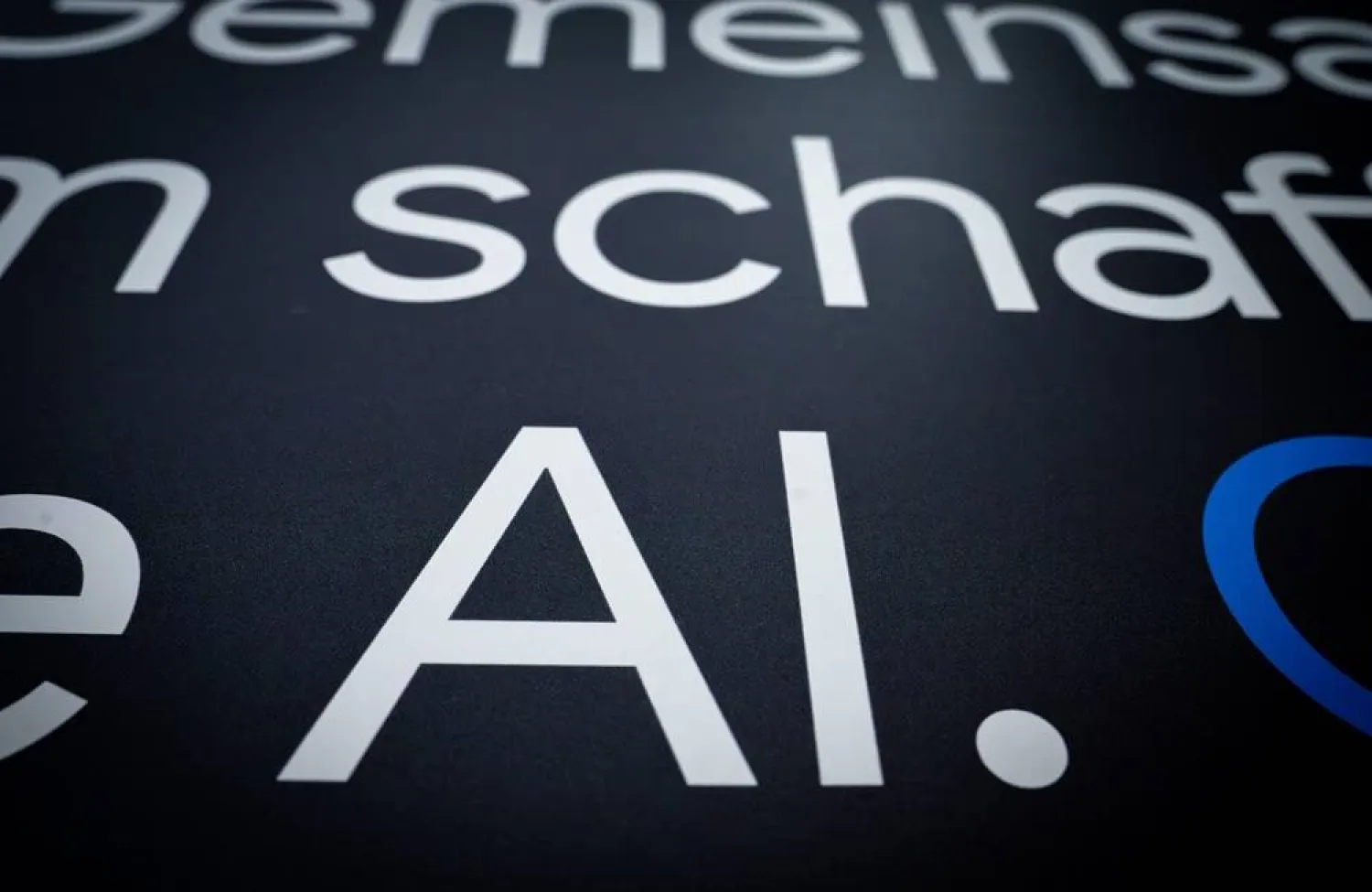

AI ‘Agent’ Fever Comes with Lurking Security Threats

05 March 2026, Berlin: The letters "AI" for Artificial Intelligence are displayed on a wall during the opening of the Google AI Center Berlin. (dpa)
TT

AI ‘Agent’ Fever Comes with Lurking Security Threats

05 March 2026, Berlin: The letters "AI" for Artificial Intelligence are displayed on a wall during the opening of the Google AI Center Berlin. (dpa)

Artificial intelligence "agents" promise to save users time and energy by automating tasks, but the growing power of systems like OpenClaw is setting cybersecurity experts on edge.

Powered by a wave of hype, OpenClaw today claims more than three million users worldwide.

The system allows users to create so-called agents, tools based on a large language model (LLM) like OpenAI's ChatGPT or Anthropic's Claude that can carry out online tasks.

"We've moved from an AI you could talk with via a chatbot to an agentic AI, which can take action... the threat and the risks are definitely much greater," said Yazid Akadiri, principal solutions architect at Elastic France, an IT security company.

In an article titled "Agents of Chaos" that has yet to be peer-reviewed, a 20-strong team of researchers studied the behavior of six AI agents created with OpenClaw.

They spotted a dozen potentially dangerous actions executed by the systems, from deleting an email inbox to sharing personal information.

Many users have posted similar stories of OpenClaw mishaps online.

"When you deploy agents, you have no control over what they'll do, and when you try to look at what they're doing, you'll find them going far beyond the limits you set," said Adrien Merveille, an expert at the Check Point cybersecurity agency.

And the security gaps are not limited to the agents' own mistaken actions.

To carry out useful work, the tools need access to personal accounts for email, calendars or search engines -- drawing the attention of cyberattackers.

- 'Delete your database' -

AI agents are likely to become top targets for hackers as their use spreads, said Wendi Whitmore, chief security intelligence officer at cybersecurity firm Palo Alto Networks.

"As soon as (attackers) are inside an environment, (they're) immediately going to the internal LLM (agent) that's being used and using that then to interrogate the systems for more information."

Palo Alto's Unit 42 research division said in early March that it had found traces of attempted attacks in the form of hidden instructions for agents added to websites.

One such command ordered any agent who might read it to "delete your database".

Other cybersecurity firms and researchers have warned that attackers could gain access to agents via so-called skills -- downloadable files that users can add to their systems to give them new abilities.

Among such files freely available for download, some include hidden instructions for malicious actions like exfiltrating data.

OpenClaw creator Peter Steinberger says he is well aware of the risks.

"I purposefully didn't make it simpler so people would stop and read and understand: what is AI, that AI can make mistakes, what is prompt injection -- some basics that you really should understand when you use that technology," he told AFP in March.

Whitmore argued that expecting users to create their own guardrails for agents is "pretty unrealistic".

"People are going to adopt innovation and really see what it's capable of before they ask the questions about, 'how do I secure my own data?'," she predicted.

"That's going to cause some significant challenges in terms of data breaches in 2026."


YouTube, Snap and TikTok Settle School District’s Social Media Addiction Claims

The TikTok logo is displayed on signage outside TikTok social media app company offices in Culver City, California on September 30, 2025. (AFP)
TT

YouTube, Snap and TikTok Settle School District’s Social Media Addiction Claims

The TikTok logo is displayed on signage outside TikTok social media app company offices in Culver City, California on September 30, 2025. (AFP)

Alphabet's YouTube, Snap and TikTok have reached settlements in the first case set for trial in litigation seeking to force social media platforms to cover the costs school districts incur to combat a youth mental health crisis they say the companies fueled.

The settlements were detailed in court filings on Friday in federal court in Oakland, California, and resolve claims by a Kentucky school district that is still due to take Facebook and Instagram parent Meta Platforms to trial on June 15.

Terms of the settlements with ‌Breathitt County School District ‌in rural Eastern Kentucky were not disclosed.

"This ‌matter ⁠has been amicably resolved ⁠and our focus remains on building age-appropriate products and parental controls that deliver on that promise," a YouTube spokesperson said in a statement.

Snap, the parent company of Snapchat, said it resolved the case amicably. TikTok did not immediately respond to a request for comment.

More than 3,300 lawsuits involving addiction claims are pending in California state court against the social media companies. ⁠Another 2,400 cases brought by individuals, municipalities, states and ‌school districts have been centralized in California ‌federal court.

In a landmark trial, a Los Angeles jury on March ‌25 found Meta and Alphabet's Google negligent for designing social media platforms that ‌are harmful to young people. It awarded a combined $6 million to a 20-year-old woman who said she became addicted to social media as a child.

The companies have denied the allegations and say they take extensive steps to keep ‌teens and young users safe on their platforms.

Breathitt is one of about 1,200 school districts suing the social ⁠media companies ⁠over claims they caused a mental health crisis among students and then saddled schools with the fallout.

The school district has been seeking over $60 million to cover the costs of counteracting social media's impact on students’ mental health and to fund a 15-year mental health program to abate the problem.

It also seeks a court order requiring the companies to modify their platforms to reduce addictive features.

Its case is a bellwether, or test case, for over a thousand similar school districts' lawsuits.

Judges and attorneys often use bellwether verdicts to assess the potential value of remaining claims and guide settlement talks. Typically, several bellwether cases are tried before reaching a broader resolution.


Foxconn Logs Quarterly Net Profit Jump on AI Demand

FILE PHOTO: A signage at Foxconn booth at the International Automobile & Motorcycle Parts & Accessories Show (AMPA) trade show in Taipei, Taiwan, April 14, 2026. REUTERS/Edgar Su/File Photo
TT

Foxconn Logs Quarterly Net Profit Jump on AI Demand

FILE PHOTO: A signage at Foxconn booth at the International Automobile & Motorcycle Parts & Accessories Show (AMPA) trade show in Taipei, Taiwan, April 14, 2026. REUTERS/Edgar Su/File Photo

Taiwanese tech hardware giant Foxconn on Thursday announced a 19-percent jump in quarterly net profit as the booming market for artificial intelligence servers drives growth, despite geopolitical uncertainty.

Foxconn, whose official name is Hon Hai Precision Industry, has gone beyond assembling low-margin iPhones to making AI servers for Nvidia, along with electric vehicles and robots.

Soaring global demand for generative AI tools is boosting business for Foxconn, even as the war in the Middle East has threatened supply chain volatility.

On Thursday the company said net profit for January-March came to NT$49.9 billion (US$1.6 billion), up from NT$42.1 billion in the same period the previous year.

The figure beat estimates of $48.4 billion in a Bloomberg survey of analysts, AFP reported.

Foxconn said it expects "strong demand for AI servers" to continue this year, forecasting "high double-digit quarter-on-quarter growth" for AI rack shipments in the second quarter.

When the company reported its annual results in March, chairman Young Liu had shrugged off concerns that market volatility caused by global conflict would dent profits.

Taiwanese contract chipmaker TSMC has also said it does not expect geopolitics to impact its supply of key materials such as helium and hydrogen in the near term.

On Wednesday, some of Foxconn's factories in North America suffered a cyberattack, according to a company statement.

"The affected factories are currently resuming normal production," after a response from the cybersecurity team, said the statement dated Wednesday afternoon in Taiwan.

TechCrunch and other media outlets reported that ransomware gang Nitrogen had claimed responsibility for the hack on the dark web.


Meta Launches WhatsApp ‘Incognito’ Mode to Address Privacy Concerns for AI Chats

A WhatsApp icon is displayed on an iPhone, Nov. 15, 2018, in Gelsenkirchen, Germany. (AP)
TT

Meta Launches WhatsApp ‘Incognito’ Mode to Address Privacy Concerns for AI Chats

A WhatsApp icon is displayed on an iPhone, Nov. 15, 2018, in Gelsenkirchen, Germany. (AP)

Meta Platforms said Wednesday it is rolling out an “incognito” mode for WhatsApp users to have private conversations with its AI chatbot, a move intended to ease privacy concerns about sensitive information that users share in chats.

The social media company said in a blog post that incognito chat mode provides a way to have private, temporary conversations with Meta AI, its artificial intelligence assistant that's been available on WhatsApp for a few years.

Messages will be processed in a “secure environment" that even Meta can't access, won't be saved by default and will disappear when exiting a session, Meta said.

Generative AI systems have been dogged by privacy concerns because the large language models that underpin these systems are trained on vast troves of data, sometimes including personal information provided by users themselves in their conversations with AI chatbots.

Rival chatbot makers already have some privacy features. Google's Gemini chatbot has the option to disable chat history and opt out of allowing one's data to be used in training its AI models. ChatGPT has similar controls.

Meta says it's rolling out incognito chats because users often ask chatbots sensitive questions or include private financial, personal, health or work data in their questions.

“We’re starting ask a lot of meaningful questions about our lives with AI systems, and it doesn’t always feel like you should have to share the information behind those questions with the companies that run those AI systems,” Will Cathcart, Meta’s head of WhatsApp, told reporters.

Incognito chat mode has safety features to prevent the chatbot from answering questions about harmful topics, Cathcart said.

It will “steer the user towards helpful information if it can and then refuse (to answer) and eventually even just stop interacting with the user completely,” Cathcart said.

Users will only be able to type in questions and get text responses; they won't be able to upload or generate images. They'll also have to confirm their age because Meta doesn't allow users under 13 on its platforms.
