Japan's Tech Business SoftBank Rolls Out OpenAI 'Patches' Against Cyberattacks

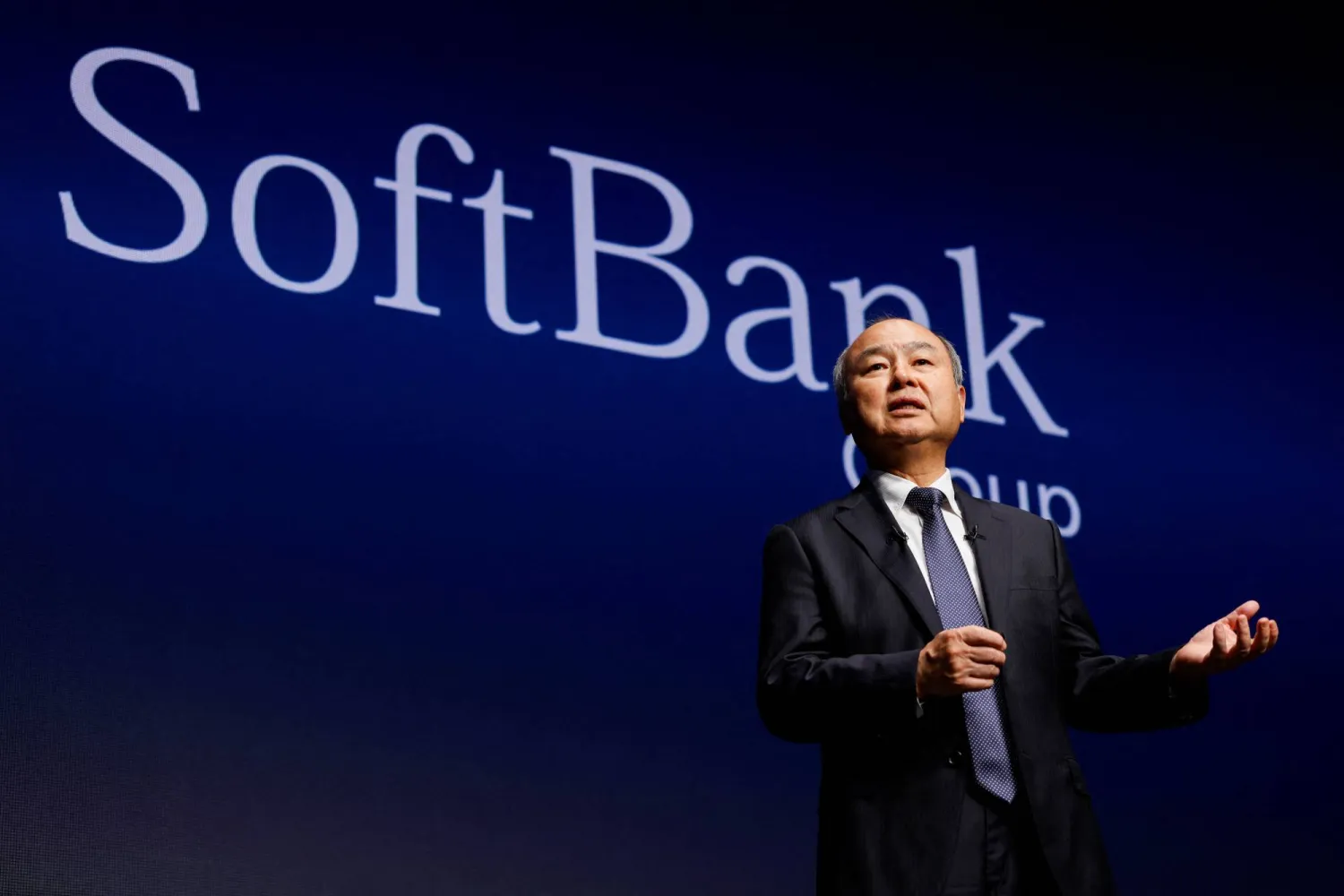
SoftBank Chairman and CEO Masayoshi Son speaks during an event to pitch AI for businesses, in Tokyo, Japan June 16, 2026. REUTERS/Manami Yamada
TT

Japan's Tech Business SoftBank Rolls Out OpenAI 'Patches' Against Cyberattacks

SoftBank Chairman and CEO Masayoshi Son speaks during an event to pitch AI for businesses, in Tokyo, Japan June 16, 2026. REUTERS/Manami Yamada

Japanese technology giant SoftBank Group Corp. is launching a service using OpenAI technology to protect against the looming threat of cyberattacks, both companies said Tuesday.

Chief Executive Masayoshi Son called Japan’ s vulnerability to cyberattacks “a crisis,” comparing it to a potential assault by machine guns instead of the rifle shots of the past.

SoftBank will offer “a patching service,” targeting the nation’s top 3,000 companies behind crucial infrastructure like airports, power systems and transportation, The Associated Press quoted Son as saying.

“I feel it is our duty,” Son said, repeatedly referring to the criminal attackers as “the bad guys.”

The service involves first diagnosing any weaknesses to attacks, and then analyzing what needs to be done to patch up such “holes," Son said.

Sam Altman, chief of OpenAI, was scheduled to attend the launch, but instead appeared only in a short video. He said he couldn’t make it because his baby daughter was born earlier than expected. Mark Chen, OpenAI’s chief researcher, was present in his place.

SoftBank and OpenAI, behind the popular chatbot ChatGPT, set up a 50:50 joint venture named SB OAI Japan last year to develop and exclusively market an AI service for the Japanese market.

Tuesday’s announcement was a key update, highlighting the rollout. No monetary value was announced. But SoftBank said everyone who came to the presentation in Tokyo Tuesday can apply for a free diagnosis.

The use of AI has caused the number of attacks to balloon exponentially and grow more complex, meaning defenses have had to become more AI-savvy and versatile.


EU Tells Instagram, Facebook to Change Addictive Features or Risk Fines

FILE PHOTO: A blue verification badge and the logos of Facebook and Instagram are seen in this picture illustration taken January 19, 2023. REUTERS/Dado Ruvic/Illustration/File Photo
TT

EU Tells Instagram, Facebook to Change Addictive Features or Risk Fines

FILE PHOTO: A blue verification badge and the logos of Facebook and Instagram are seen in this picture illustration taken January 19, 2023. REUTERS/Dado Ruvic/Illustration/File Photo

The EU charged Meta Platforms' Instagram and Facebook on Friday with breaching its tech rules, with regulators targeting features they say are designed to keep users hooked and demanding changes to autoplay and infinite scroll or risk fines.

The European Commission's preliminary findings follow a two-year investigation under the European Union's landmark Digital Services Act, which requires large online platforms to do more to tackle illegal and harmful content.

Social media companies face growing scrutiny around the world over concerns that their platforms are contributing to a mental health crisis among children, prompting some governments to impose or consider bans for underage users.

The Commission, the EU's tech regulator, said Meta had failed to adequately assess the addictive risks posed by highly personalized recommendations, autoplay and infinite ⁠scroll, which continuously feed ⁠users new content and encourage prolonged engagement.

It said reels and stories on Facebook and Instagram could contribute to excessive or compulsive use.

The regulator criticized Meta's measures to mitigate these risks, saying time management tools can be easily dismissed, while parental controls require significant time, effort and technical knowledge to use effectively.

Meta should disable features such as autoplay and infinite scroll by default, introduce effective screen-time breaks and make its recommendation system less focused on driving engagement, Reuters quoted the Commission as saying.

"We disagree with these preliminary findings, which don't accurately take into account the significant steps we've taken to protect teens," Meta spokesperson Ben Walters said.

"Since this investigation began, we rolled out Teen Accounts that automatically protect teens and put parents in control - allowing them to block access to Instagram at night and cap daily screen time at just 15 minutes."

Meta added it would continue to engage constructively with EU regulators.

"Our starting point is that, based on our findings, this design is too addictive and changes need to be made," EU tech chief Henna Virkkunen told Reuters.

"The next step is either that Meta changes its design or a non-compliance decision will follow."

Meta, which risks a fine of up to 6% of its global annual turnover, can ⁠respond to the ⁠charges before the Commission issues a final decision in the coming months.

The company last month failed in its bid to dismiss claims by 29 US state attorneys general's that Facebook and Instagram are addictive to children.

The EU charges against Meta mirror those brought against TikTok in February, when regulators demanded similar changes to its app.

The Commission is separately investigating so-called rabbit hole effects caused by Facebook and Instagram recommendation systems, where users can be drawn into prolonged viewing by algorithmic recommendations that push them towards similar content. In another case announced in April, it told Meta to do more to prevent children under 13 from accessing its social networks or risk fines.

The Commission is due to receive findings from experts on Monday that could help pave the way for a Europe-wide social media ban for teenagers that Commission President Ursula von der Leyen is expected to announce in her September state of the union address.


Global AI Industry Falls Short on Safety, Think Tank Warns

Mistral ranked last in a survey on the management of risks associated with artificial intelligence. Lionel BONAVENTURE / AFP/File
TT

Global AI Industry Falls Short on Safety, Think Tank Warns

Mistral ranked last in a survey on the management of risks associated with artificial intelligence. Lionel BONAVENTURE / AFP/File

US artificial intelligence lab Anthropic scored the highest in a semiannual safety ranking, but globally the industry fails to combat "existential" threats, according to a report released on Tuesday.

Meta moved up two spots to fourth place, while xAI dropped three spots to seventh place, just ahead of China's DeepSeek and France's Mistral, which placed last, according to US-based AI safety think tank Future of Life Institute, which ranked nine of the world's leading AI companies.

Seven researchers and governance experts determined the rankings based on public data and information provided by the companies.

They evaluated efforts across six distinct categories: risk assessment, current harms, safety frameworks, existential safety, governance and accountability, and information sharing.

No company received an "A" in any single category, while Anthropic got the best overall score of "C+."

Mistral was included on the list for the first time, though when asked by AFP to comment on its last place, the company said the report's framework isn't suited for its approach to developing AI models.

The French company develops so-called open models, which allow users to download and modify them. Many of its competitors develop closed AI models -- including Anthropic, OpenAI and Google DeepMind, which are also included in the report.

"I was very disappointed to find that they came last, especially since Europe has really...been a leader in AI safety," Max Tegmark, an MIT professor and Future of Life president, told AFP.

"We reached out many, many times" but Mistral did not respond to the organization's survey, Tegmark continued.

Alibaba, xAI and DeepSeek did not respond to its survey either, the organization said.

Three Chinese developers included in the report also produce open models and landed in the bottom half of the ranking: DeepSeek (fifth), Alibaba Cloud (sixth) and Z.ai (eighth).

- 'Questionable' practices -

The report noted that several companies that previously banned their technology from military uses have "gradually reversed course," including Anthropic, which the report criticized for having "questionable military engagements."

The US government used Anthropic's technology in military operations in Venezuela and Iran over the past year, according to various media reports -- though the company was subject to a recent ban by the Pentagon over disagreements on AI safety.

All nine companies are failing when it comes to combating "existential" threats such as pursuing models that reach human-level intelligence, known as "artificial general intelligence" or AGI, the report said.

Although "constructive attempts exist," efforts across the board are "entirely inadequate."

Other risks include the possible misuse of a model to carry out a cyberattack or perform tasks potentially harmful to humans.

Anthropic was thrust into the spotlight recently after it released its most powerful model yet, called Mythos.

In early April, the San Francisco-based company released Mythos only to a handful of trusted organizations due to its abilities to expose cyber safety vulnerabilities to bad actors.

However, by June 12 the US government blocked Anthropic from releasing Mythos to foreigners on national security grounds.

The Trump administration eventually lifted the ban a couple of weeks later on June 30.


Humanitarians Look to Put the AI in Aid

The World Food Program is using autonomous trucks to deliver aid in South Sudan, Sudan and Uganda. Rian COPE / AFP
TT

Humanitarians Look to Put the AI in Aid

The World Food Program is using autonomous trucks to deliver aid in South Sudan, Sudan and Uganda. Rian COPE / AFP

From remote-controlled trucks delivering life-saving aid in dangerous settings to mobile phone data analysis flagging mass displacement, humanitarians are eyeing ways in which artificial intelligence can speed up and improve their operations.

There have been plenty of warnings about the dangers of AI for aid agencies, who face growing challenges of securing often extremely sensitive data and swelling misinformation about their operations and beneficiaries, said AFP.

But at the AI for Good summit in Geneva this week, a handful of humanitarian-focused displays emphasized the technology's positive potential.

Parked in one corner of a vast hall at the Palexpo conference center was a giant white SHERP vehicle, resembling a hulking Martian rover, decked out with cameras and sensors and a drone landing-pad on the roof.

Made in Ukraine, SHERPs are amphibious vehicles that can float on water, drive through swamps and flooded rivers with their giant wheels, and climb over obstacles up to one meter (3.3 feet) high.

The UN's World Food Program is preparing to begin field-testing a version of the AI-enabled truck that can be steered remotely through the most dangerous and difficult terrain to reach people in need.

"I think this could be a game-changer," Bernhard Kowatsch, head of WFP's global accelerator and ventures innovation division, told AFP.

The technology, he said, "should allow us essentially to reach people that otherwise never would have been reachable".

Not possible without AI

WFP already has drivers using SHERPs to deliver aid in Sudan, South Sudan and Uganda.

But after numerous heartbreaking losses of drivers, it tasked the German Aerospace Center (DLR) to help equip the vehicles with AI and other technologies, making it possible to control them remotely through particularly dangerous terrain.

The idea is to set up a shipping container control room in a safe area, where a human can remotely control the vehicle on the last, most treacherous leg of its journey.

Tests have been conducted in Germany, and will be tried out in the field in Uganda in 2028, said Armin Wedler, who is coordinating DLR's Autonomous Humanitarian Emergency Aid Devices (AHEAD) project.

Standing next to the 2.8-meter high vehicle, he told AFP that the team had used "remote-control technologies which are based on mathematics and old-school... research", but stressed: "We would not be able to process everything without using also AI".

It would be possible to make the vehicle fully autonomous, Wedler said, but stressed that in complex humanitarian settings "we have to have a human in the loop".

"We're not talking about driving on clear streets with clear lanes. There are no streets," he said, also describing scenes where aid trucks are suddenly swarmed by desperately hungry people.

"There's no AI autonomous algorithms ever capable to handle that safely."

'Life-saving'

Among more than 200 exhibitors at the summit -- showing off everything from humanoid robots to bionic prosthetics and emotional companions -- the other humanitarian displays were more discreet, with pamphlets detailing how AI tools are boosting and streamlining operations.

Among them, the UN refugee agency detailed a new Legal Virtual AI Assistant for lawyers and legal officers representing refugees, enabling them to swiftly determine the rights available within country-specific legal frameworks.

Rebeca Moreno Jimenez, the lead data scientist at UNHCR's Innovation Service, told AFP that building cases faster and more efficiently can be "life-saving for many refugees".

Another UN initiative called Data Insights for Social and Humanitarian Action, or DISHA, relies on partnerships with private actors such as Google and McKinsey to provide humanitarian organizations with data and AI models to speed up and improve disaster responses.

One project uses AI analysis of anonymized mobile phone data to spot mass-population movements during disasters, determining where people are fleeing, to help humanitarians better tailor their response.

Another uses AI for rapid analysis of satellite images taken before and after disasters like last month's earthquakes in Venezuela to determine building damage.

The aim is to give humanitarians "accurate information early enough to make better decisions (and) avoid going to the wrong place when there are people who need you somewhere else", DISHA product lead Andreas Kortis told AFP.