BT, Verizon Join Forces to Create $4 Billion Int’l Joint Venture

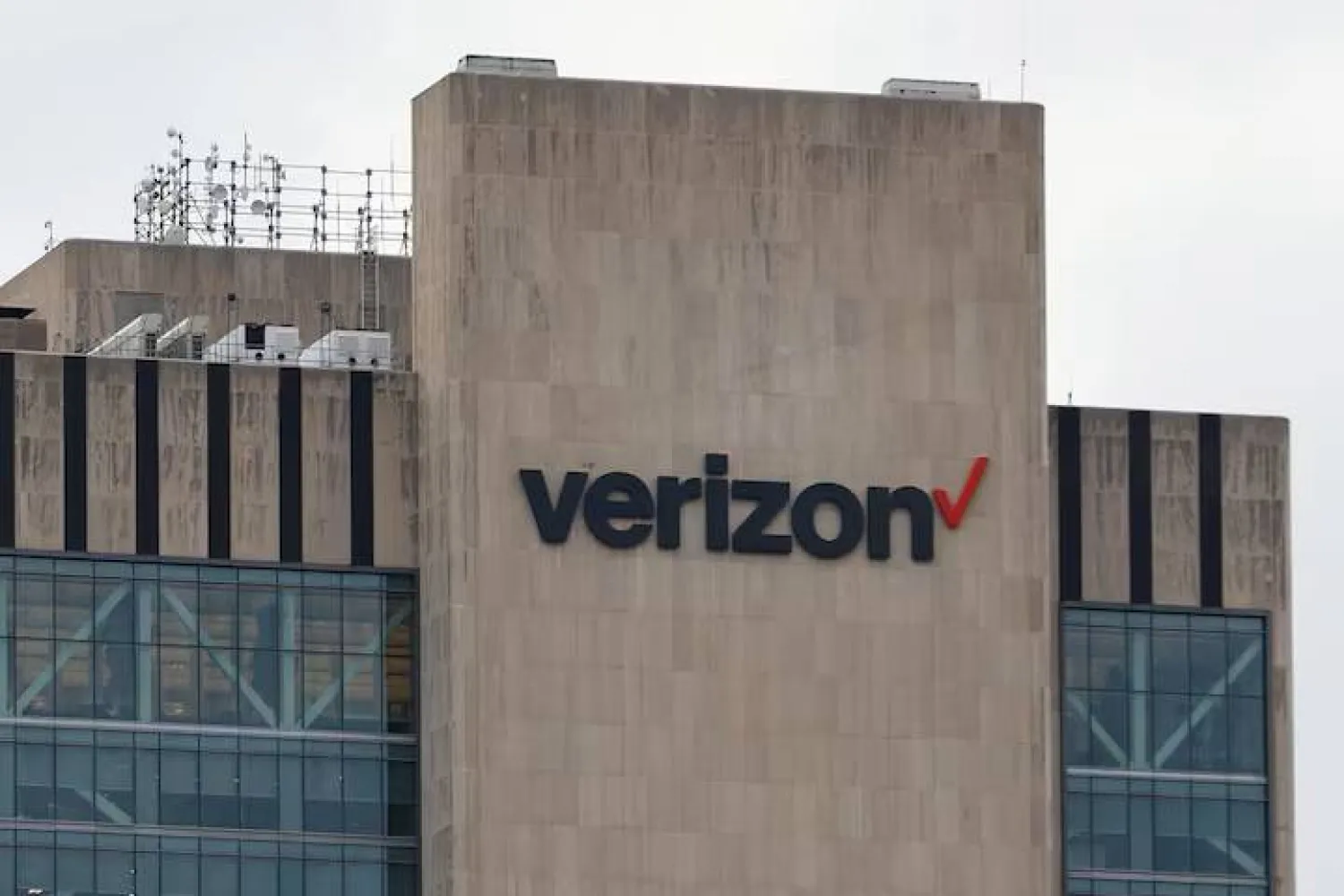
The Verizon logo is seen on the 375 Pearl Street building in Manhattan, New York City, US, November 22, 2021. REUTERS/Andrew Kelly
TT

BT, Verizon Join Forces to Create $4 Billion Int’l Joint Venture

The Verizon logo is seen on the 375 Pearl Street building in Manhattan, New York City, US, November 22, 2021. REUTERS/Andrew Kelly

BT and Verizon on Monday announced a deal to combine their international enterprise operations into a 50:50 joint venture, focusing on serving multinational clients and bringing together $4 billion in combined annual revenue.

Verizon has agreed to pay BT an equalization payment of $625 million, and both companies ⁠will hold equal ⁠voting rights in the new venture, which will serve more than 3,000 customers in over 180 countries, Reuters reported.

The deal marks a milestone for BT chief executive ⁠Allison Kirkby, who has been steadily refocusing the 180-year-old British telecoms group on its home UK market while shedding international assets.

Verizon CEO Dan Schulman, who has been pushing his own turnaround at the US wireless carrier, said the venture was "the clear answer" for international customers ⁠who ⁠need secure, flexible connectivity that works across borders and cloud environments.

BT and Verizon named Martijn Blanken as chief executive officer-designate of the new company. Blanken will join BT Group from September 1, 2026, and work with both parent companies as they prepare to launch the joint venture.


South Korea Unveils Massive AI and Chip Investment Drive

South Korean President Lee Jae Myung (C), alongside Samsung Electronics Co. Chairman Lee Jae-yong (L) and SK Group Chairman Chey Tae-won, attends a meeting at the presidential office Cheong Wa Dae in Seoul, South Korea, 29 June 2026.  EPA/YONHAP
South Korean President Lee Jae Myung (C), alongside Samsung Electronics Co. Chairman Lee Jae-yong (L) and SK Group Chairman Chey Tae-won, attends a meeting at the presidential office Cheong Wa Dae in Seoul, South Korea, 29 June 2026. EPA/YONHAP
TT

South Korea Unveils Massive AI and Chip Investment Drive

South Korean President Lee Jae Myung (C), alongside Samsung Electronics Co. Chairman Lee Jae-yong (L) and SK Group Chairman Chey Tae-won, attends a meeting at the presidential office Cheong Wa Dae in Seoul, South Korea, 29 June 2026.  EPA/YONHAP
South Korean President Lee Jae Myung (C), alongside Samsung Electronics Co. Chairman Lee Jae-yong (L) and SK Group Chairman Chey Tae-won, attends a meeting at the presidential office Cheong Wa Dae in Seoul, South Korea, 29 June 2026. EPA/YONHAP

South Korea rolled out sweeping chip and AI mega-projects on Monday, as President Lee Jae Myung pledged to cement overwhelming industry ⁠leadership with investments spanning ⁠hundreds of billions of dollars over several years.

The announcement marks Lee's boldest push yet to align South Korea's AI and chip ambitions with his pledge to narrow regional disparities and revive economies beyond the Seoul metropolitan area.

Lee was joined by ⁠the leaders of Samsung Electronics and SK Hynix, the world's two largest memory chipmakers, for the televised announcement.

"We must secure the core elements of AI faster than any other country," Reuters quoted the president as saying. "Semiconductors, physical AI, and AI data centers are the triple axis for our great leap forward."

The projects are expected to attract investments including by Samsung and SK over the next several years. Lee said the country's ⁠southwestern ⁠city of Gwangju and South Jeolla province will also invest 520 trillion won ($336.70 billion) in the projects.

As part of the overall initiative, the southwest would be the home to new massive chip production clusters, Lee said, in part to utilize the rich power resources yet untapped there.

Local media have reported the planned investments could exceed 1,000 trillion won ($651.41 billion) over coming years.


Google Limits Meta’s Use of its Gemini AI Models, FT Reports

(FILES) A photo taken on May 19, 2026 shows the US multinational technology and Internet-related services company Google displayed on a smartphone (bottom) in front of the Google's logo on a laptop screen in Frankfurt am Main, western Germany. (Photo by Kirill KUDRYAVTSEV / AFP)
TT

Google Limits Meta’s Use of its Gemini AI Models, FT Reports

(FILES) A photo taken on May 19, 2026 shows the US multinational technology and Internet-related services company Google displayed on a smartphone (bottom) in front of the Google's logo on a laptop screen in Frankfurt am Main, western Germany. (Photo by Kirill KUDRYAVTSEV / AFP)

Google has put limits on Meta’s use of its Gemini AI models after the social media company sought more computing capacity than the rival tech group could provide, the Financial Times reported on Sunday.

Google, owned by Alphabet, told Meta around March it could not meet the full Gemini capacity the company had sought to purchase, the newspaper said, adding ⁠that the shortfall disrupted ⁠and delayed some of Meta’s internal AI projects.

Several other Google clients have also been affected, though to a lesser extent, according to the report. Meta has been particularly impacted due to its exceptionally high ⁠demand for Google’s models, the FT said.

Reuters could not immediately verify the report, which cited people familiar with the matter. Google and Meta did not immediately respond to requests for comment outside business hours.

Due to the restrictions, Meta has encouraged staff to be more efficient with AI tokens, the units that measure AI usage, the FT report said.

Even as companies ⁠continue ⁠to spend billions on chips and data centers, they are still struggling to secure enough computing power to support the growing demand for AI services.

Revenue at Google Cloud grew to $20 billion in the first quarter ended March, but CEO Sundar Pichai said computing power constraints prevented even higher growth and contributed to the cloud unit's backlog nearly doubling quarter on quarter.


How Some Venezuelans’ Smartphones Warned of Quake

A man searches for survivors in the rubble of a collapsed building following twin earthquakes in Caraballeda, La Guaira State, some 40 km northeast of Caracas, on June 25, 2026. (AFP)
TT

How Some Venezuelans’ Smartphones Warned of Quake

A man searches for survivors in the rubble of a collapsed building following twin earthquakes in Caraballeda, La Guaira State, some 40 km northeast of Caracas, on June 25, 2026. (AFP)

Many social media users in Venezuela have reported receiving alerts on Android smartphones moments before Wednesday's quake with almost 600 confirmed dead.

Google's Android and Apple's iOS, both include the option to display government alerts for emergencies like earthquakes.

But the search giant last year also detailed its system that uses the billions of Android smartphones worldwide to detect earthquakes in the first place.

- How it works -

Almost all smartphones contain an accelerometer, a movement sensor used for tasks like flipping the screen when users turn it sideways.

That same sensor "can also detect the ground shaking from an earthquake," Google wrote in a July 2025 blog post.

Accelerometers can spot potential earthquakes' fast-moving initial "P" wave, sending information about the tremor to a Google server.

By rapidly cross-referencing many such reports, the system can "confirm that an earthquake is happening and estimate its location and magnitude," Google said.

"The goal is to warn as many people as possible before the slower, more damaging S-wave of an earthquake reaches them".

Google offers two stages of alerts.

"BeAware" warns of weaker tremors, while for the heaviest quakes, "TakeAction" takes over the screen and plays a loud sound even when the phone is on silent mode.

- How effective is the system? -

Google said last year that its systems had already sent 790 million alerts to individual phones, warning of over 2,000 potentially dangerous earthquakes detected from April 2021.

While that gives many more people than before access to early warning information, there have been hiccups.

Android phones failed to sound warnings ahead of devastating February 2023 earthquakes that killed almost 60,000 people across Türkiye and Syria.

Google said last year that it has since updated its algorithms to avoid a repeat.

The company also apologized in February 2025 for a false alarm sent to some Android users in Brazil.

This week in Venezuela, hundreds of people have posted praise for Google on X, with some including unverified videos of alerts prompting people to leave buildings.

- What about Apple? -

Beyond government warnings, Apple says on its website that users in the US and Taiwan can also receive alerts from other "alert originators" about earthquakes.

The company did not respond to AFP's questions about how that system works by time of publication.

Neither has the iPhone giant enlisted its users' phones for a distributed detection system like Google's.

The hundreds of millions of iPhones around the globe are, however, able to forward alerts they receive to other nearby Apple devices that do not have mobile reception or a WiFi connection -- potentially helping life-saving warnings to get through.