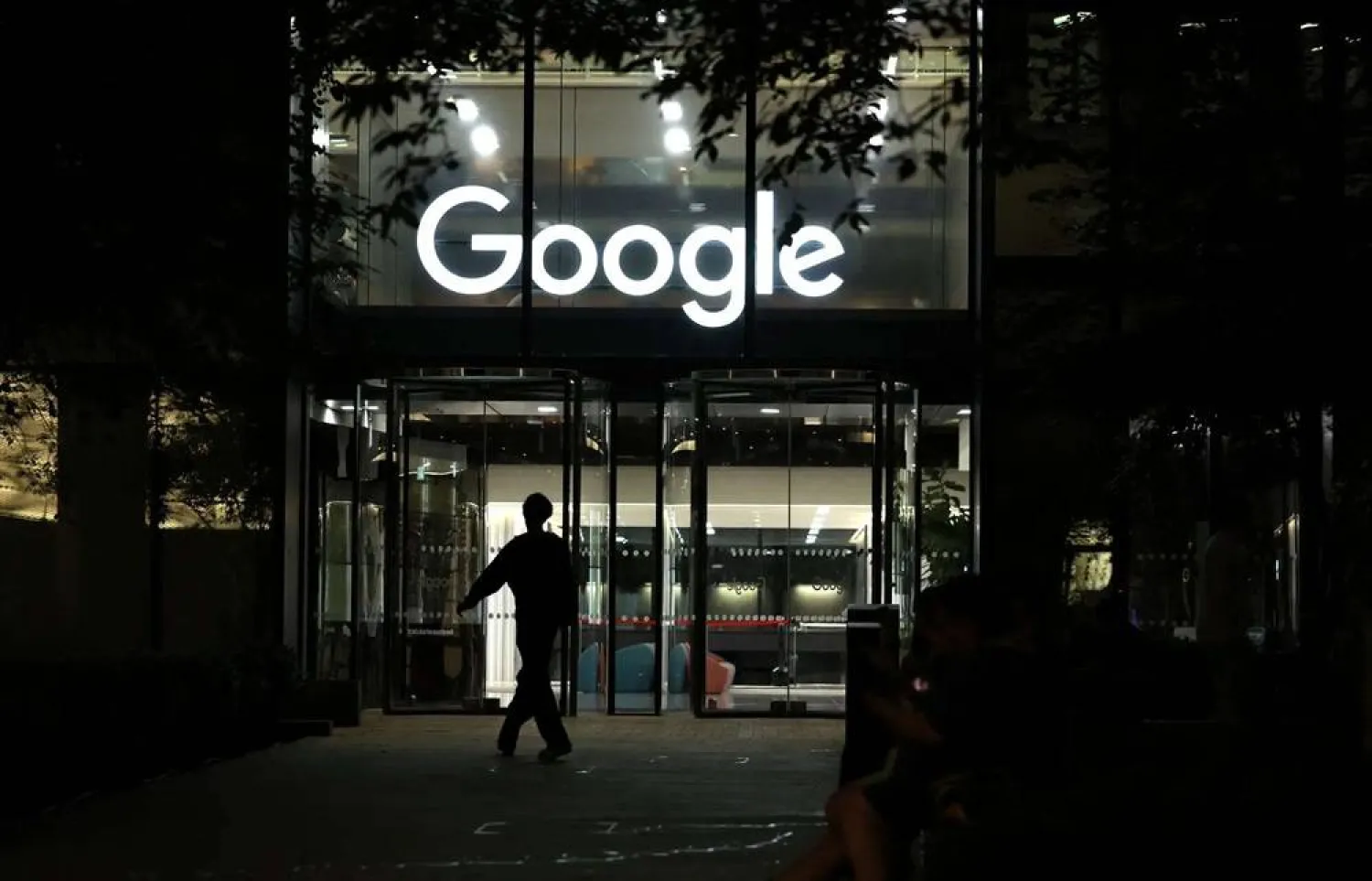
EU Top Court to Rule on Record 4.1 bn Euro Google Fine

A pedestrian walks past the Google offices in London, Britain, August 14, 2025. (Reuters)
TT

EU Top Court to Rule on Record 4.1 bn Euro Google Fine

A pedestrian walks past the Google offices in London, Britain, August 14, 2025. (Reuters)

The EU's top court will decide Thursday whether to uphold a record 4.1 billion euro ($4.7 billion) fine the bloc slapped on Google for anti-competitive practices related to its Android operating system.

It is the second attempt by the US tech giant to overturn the penalty imposed by the European Commission in 2018 -- which remains the bloc's highest ever antitrust fine, said AFP.

The commission, the EU's antitrust regulator, had accused Google of abusing the popularity of its Android operating system to restrict competition.

It alleged Google pressured phone makers using Android to pre-install its search engine and Google Chrome browser -- essentially shutting out rivals -- and ordered it to pay a 4.3-billion-euro fine.

The findings were upheld in 2022 by the General Court, the EU's second-highest. But the Luxembourg-based body slightly reduced the levy to 4.1 billion euros -- still the EU's biggest ever.

Google filed a new challenge arguing before the bloc's top court, the European Court of Justice, that the case was unfounded and that the sanction penalized innovation.

In first instance, the firm had pushed the case that the EU was unfairly blind to practices by Apple, which gives preference to its own services, such as Safari on iPhones.

It also argued that customers were in no way forced to use its products on Android and that downloading competing apps was just a tap away.

But it suffered a legal blow in June last year when the EU top court's adviser recommended upholding the fine in an opinion, describing Google's arguments as "ineffective".

- Legal battles -

Although not binding, such advice carries weight and is often followed by EU judges in their rulings.

The case is one in a series pitting Google against Brussels.

As part of a major push to target big tech abuses, the EU slapped the Mountain View company with fines worth a total of 8.2 billion euros between 2017 and 2019 over antitrust violations.

This set off a series of long-running legal battles.

Brussels has since armed itself with a more powerful legal weapon known as the Digital Markets Act (DMA), to rein in tech giants.

Rather than regulators discovering antitrust violations after probes lasting many years, the DMA gives businesses a list of what they can and cannot do online.

Google is already the subject of several formal DMA probes, and was hit with a massive 2.95 billion euro fine in September in another competition case predating the digital law for favoring its own advertising services.

That drew an angry rebuke from US President Donald Trump who has accused Brussels of unfairly targeting American firms, and repeatedly threatened to impose retaliatory tariffs on EU exports.


Microsoft Offers Voluntary Exit Packages to 60,000 Staff

The Microsoft logo and a keyboard in this illustration taken October 19, 2026. (Reuters)
TT

Microsoft Offers Voluntary Exit Packages to 60,000 Staff

The Microsoft logo and a keyboard in this illustration taken October 19, 2026. (Reuters)

Microsoft is offering voluntary buyouts to about 60,000 employees, the company said on Monday, roughly a quarter of its workforce, as the tech giant seeks to cut costs while pouring money into artificial intelligence.

Staff on select teams in the United States, Canada, India and Britain at vice president level and below will be eligible, a Microsoft spokesperson said, while some groups of employees, including some working on data centers, sales and marketing, are excluded.

"The Voluntary Exit Offer reflects an important part of how we're evolving our approach to change: creating greater flexibility and, where possible, more ways for employees to shape their next chapter," Amy Coleman, an executive vice president and chief people officer, told employees in a memo.

It's the second voluntary buyout offer that Microsoft has offered employees this year.

In April, the company reportedly offered around seven percent of its US workforce the option to retire early.

Around 30 percent of those eligible took the voluntary retirement plan, according to CNBC.

Microsoft had 223,000 employees globally at the end of June, down from 228,000 at the end of 2025, according to regulatory filings.

Around 27 percent of Microsoft's workforce is eligible for the new buyout offer.

The company is expected to report quarterly earnings later this week.


From Carnegie to Claude: AI Wealth Could Reshape Philanthropy

Anthropic, the maker of the Claude chatbot, will commit 5 percent of its shares to a new public benefit fund. ANDREJ IVANOV / AFP
TT

From Carnegie to Claude: AI Wealth Could Reshape Philanthropy

Anthropic, the maker of the Claude chatbot, will commit 5 percent of its shares to a new public benefit fund. ANDREJ IVANOV / AFP

A wave of American wealth created by artificial intelligence companies could produce some of the largest charitable sums since the era of Andrew Carnegie and John D. Rockefeller, raising questions about where the money goes.

Anthropic, the maker of the Claude chatbot, has said it would commit 5 percent of its shares to a new Anthropic Public Benefit Fund, a stake that could be worth around $100 billion if the company reaches the $2 trillion valuation investors are eyeing for a stock market debut expected as early as November, reported AFP.

Combined with pledges by its seven co-founders to give away 80 percent of their equity and a program matching employees' donations, Anthropic says roughly a fifth of its shares will be dedicated to public-benefit purposes.

"This might be one of the biggest stories in corporate philanthropy ever," said Michael Moody, a professor of philanthropic studies at Indiana University's Lilly Family School of Philanthropy.

The OpenAI Foundation, the nonprofit that controls ChatGPT maker OpenAI, holds a 26 percent stake in the company that was valued at about $130 billion when it was restructured a year ago, more than the endowment of the Gates Foundation.

Nan Ransohoff of payments firm Stripe has described the moment as a "third wave" of American philanthropy, after the industrial fortunes of the late 19th century and the internet billionaires of recent decades.

- 'Dies disgraced' -

Carnegie argued in his 1889 essay "The Gospel of Wealth" that "the man who dies thus rich dies disgraced," and by his death had given away the bulk of his fortune, about $350 million.

Carnegie transferred what remained into a trust, which has continued to make grants for more than a century.

Rockefeller's money built universities and funded medical research and public health campaigns around the world.

Railroad magnate Cornelius Vanderbilt gave comparatively little, apart from the $1 million that founded the university bearing his name.

Anthropic is setting up its fund as a limited liability company that it wholly owns, rather than as a nonprofit foundation, which must pay out a minimum share of its assets each year and file public tax returns.

"The trade-off is that decision-making stays with the company and transparency is voluntary," said Sarah Wolfolds, who studies nonprofit organizations at Cornell University's SC Johnson College of Business.

Anthropic has said the fund's equity will not be used for lobbying or political giving and that it will report on its activities.

- 'Where the money is' -

Many Anthropic founders and staff have close ties to effective altruism, a movement that favors causes such as AI safety and global health because of their measurable impact.

"Nonprofits tend to reorient their programs toward where the money is," Wolfolds said, warning that other causes can become neglected.

Moody said the philanthropic world would be "looking closely at which causes they support," including whether research funding is limited to AI.

Laura McGarry, of fundraising consultancy Graham-Pelton, said the charities best placed to benefit are those that already have relationships with the newly wealthy.

"It's really about values alignment," she said, adding that charities that court the newly rich only after their big payday risk looking transactional.

Effective altruism has shaped some donors' giving but has not "dramatically upset the apple cart," she said.

Anthropic has said the fund could make payments directly to groups affected by AI's impact on jobs, without giving details.

Research on cash transfers is encouraging, Wolfolds said, but "the harder challenge may be identifying who has been affected by AI."

Such payments should complement, not replace, unemployment insurance and retraining programs, she said.

- One child, one share -

Elon Musk, the world's richest person, whose SpaceX owns rival AI developer xAI, criticized Anthropic's approach.

"I recommend giving the shares directly to the public," he wrote on X.

As an alternative, Musk pledged one of his SpaceX shares to every American child next year, a gift worth about $10.5 billion.

US President Donald Trump praised the move as fitting the philosophy behind his "Trump Accounts," government-backed investment accounts for children born between 2025 and 2028. Billionaires Michael and Susan Dell have pledged billions to the program.


'Tech Debt Coming Due': AI-found Flaw Signals Chaos Ahead

Michael Daniel is president of the Cyber Threat Alliance and was a White House cybersecurity coordinator under former US president Barack Obama. BRENDAN SMIALOWSKI / AFP
TT

'Tech Debt Coming Due': AI-found Flaw Signals Chaos Ahead

Michael Daniel is president of the Cyber Threat Alliance and was a White House cybersecurity coordinator under former US president Barack Obama. BRENDAN SMIALOWSKI / AFP

Companies and government agencies rushed this week to patch two critical flaws in PHP, the programming language that runs a large share of the world's websites.

The vulnerability to potential hackers was found by using a powerful model from OpenAI in one of the most high-profile demonstration of AI's cyber capabilities.

AFP spoke with Michael Daniel, president of the Cyber Threat Alliance and a former White House cybersecurity coordinator under former US president Barack Obama, about what the episode means as AI tools find software flaws faster than ever.

The interview has been edited for length and clarity.

Q: What does the PHP episode tell us?

A: This is the beginning of a pretty chaotic period, given the abilities of the advanced models. I've been saying for years that the logical conclusion of these AI models being able to find vulnerabilities at speed and at scale is that there's going to be a flood of these vulnerabilities.

Rob Joyce [former cybersecurity director at the US National Security Agency] has referred to it as the great cleansing forest fire of old software. I've talked about our tech debt coming due.

The incentives have been for people to keep software as long as possible, and we don't really factor these risks into the cost of having the software. You're not incurring a direct cost on your books for this old software, but in reality you are, only it's an implicit cost until something like this happens.

Q: What should organizations be doing?

A: Preparing to get your software updated, be prepared to keep it updated, and be prepared to implement patches when they come out.

There's going to be a flood of vulnerabilities, a flood of patches and a flood of mitigations, and not all of them will be created equal.

For a lot of smaller organizations that don't have a lot of internal capacity, what you've got to do is shift your organization to be able to accept the vendor updates as fast as you can.

Q: Is every flaw dangerous?

A: Historically, the exploitation rate for vulnerabilities has been five or six percent, and there's no indication that number is going up. But now when bad guys exploit a vulnerability, they're able to do so much more quickly.

It used to take a month or two for a proof of concept to come out, and then another month or two for it to show up in exploit kits (used by bad actors). That's now measured in hours or days.

Q: What does that mean for large companies?

A: Most businesses essentially ran a zero-risk tolerance for breaking things, so they would test the hell out of a patch before they put it into production. Now they don't have that time.

If the risk of breaking something by putting this patch into place is one percent, but the risk of being attacked could cost me 50 million dollars...now I've got an interesting trade-off.

Q: Are advanced AI tools reliable at finding real flaws?

A: There's a lot of noise. The PHP one is a prime example of a real one, but there's an awful lot out there that are either not real or are on software that's never exposed to the internet. We've got to improve our triage system.

Q: Where does this lead us in two or three years?

A: We're going to turn these AI tools on software that hasn't been deployed yet, so one would hope we start to deploy software that has fewer vulnerabilities to begin with. You burn out all the old stuff, and it makes way for new growth that's more secure from the beginning.

It's not like this solves our cybersecurity problem, but it does change the nature of it going forward.