


Mulling AI Investment, Anthropic Lobbied Australia on Copyright Law

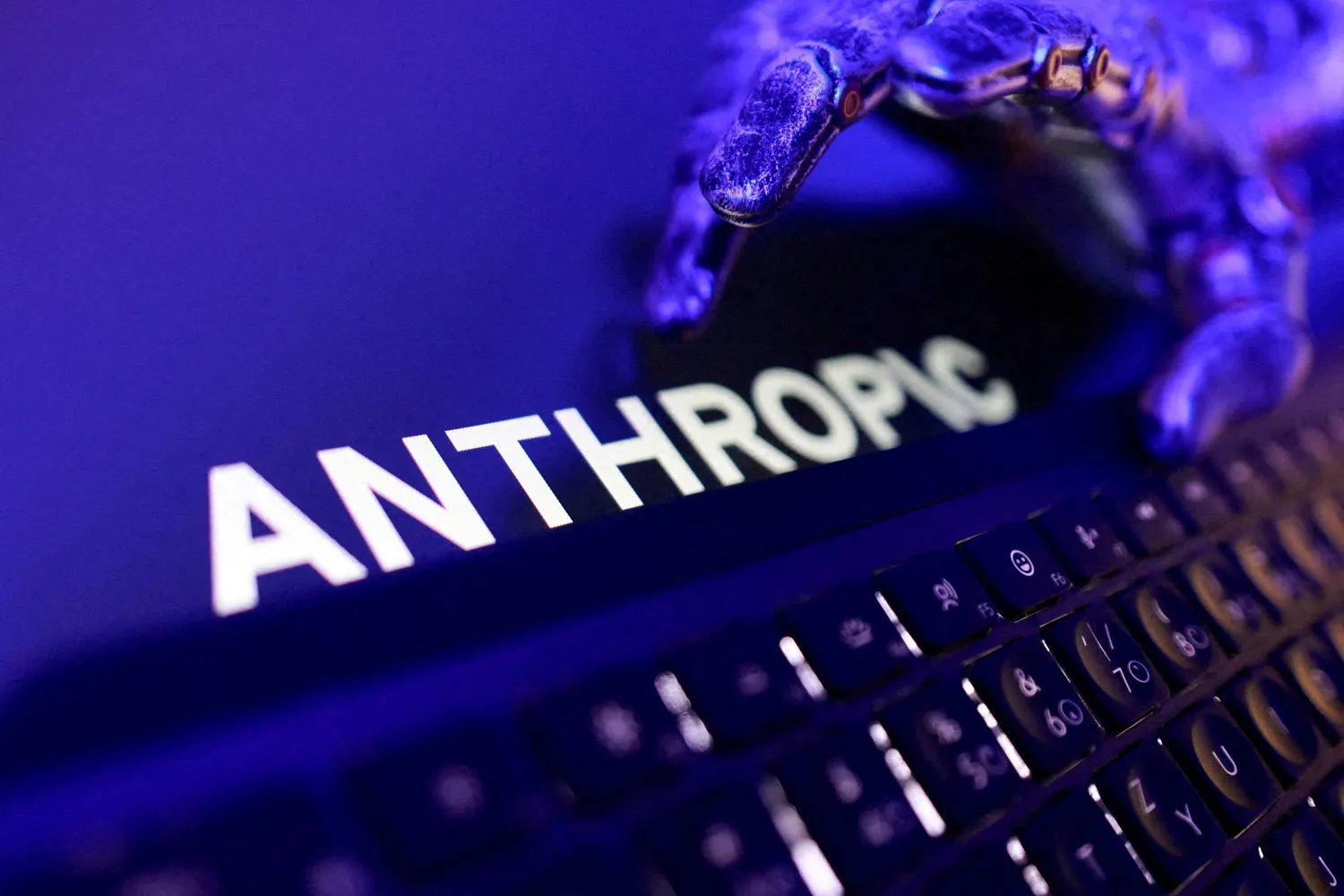
FILE PHOTO: Anthropic logo, a keyboard, and a robotic hand in this illustration taken June 5, 2026. REUTERS/Dado Ruvic/Illustration//File Photo
TT

Mulling AI Investment, Anthropic Lobbied Australia on Copyright Law

FILE PHOTO: Anthropic logo, a keyboard, and a robotic hand in this illustration taken June 5, 2026. REUTERS/Dado Ruvic/Illustration//File Photo

Anthropic's chief executive Dario Amodei has lobbied Australian officials for "copyright reform" as the artificial intelligence giant seeks to make a major investment in the country, official briefing notes released Monday show.

Amodei met Australia's Treasurer Jim Chalmers in April to discuss plans to enter the Australian market, including building data centers, AFP reported.

According to briefing notes released under freedom of information law, Amodei had requested the meeting to discuss barriers to AI training in Australia, "particularly copyright reform".

Australia's center-left Labor government is under pressure from musicians, screenwriters and artists to reject proposals they say seek to let AI models use copyrighted works for free.

Prime Minister Anthony Albanese is set to deliver a speech on AI and "social license" on Wednesday.

A briefing note government officials had sent to Chalmers ahead of his meeting with Amodei said: "Anthropic will raise that investment in AI model development capability and associated infrastructure, like data centers, is contingent on clarity of copyright settings."

In the United States, Anthropic has argued AI training is covered as "fair use" of material, which does not require rightsholders' consent.

The Australian officials disputed this in the briefing note, saying the matter was "not settled".

In Australia, AI companies require permission from copyright holders through a voluntary license.

Anthropic was told Australia would not introduce a text and data mining exception in its copyright law, and was in talks with a range of stakeholders over the issue.

Anthropic "purport there is a 'long tail' of smaller rights holders which impedes efforts to identify and purchase licensing rights", the officials wrote.

Anthropic did not immediately respond to a request for comment on the Australian meeting.


Lee: South Korea's AI Tax Windfall a 'Golden Window' for Investment

South Korean President Lee Jae Myung (C) speaks during the National Fiscal Strategy Meeting at the presidential office Cheong Wa Dae in Seoul, South Korea, 13 July 2026.  EPA/YONHAP SOUTH KOREA OUT
South Korean President Lee Jae Myung (C) speaks during the National Fiscal Strategy Meeting at the presidential office Cheong Wa Dae in Seoul, South Korea, 13 July 2026. EPA/YONHAP SOUTH KOREA OUT
TT

Lee: South Korea's AI Tax Windfall a 'Golden Window' for Investment

South Korean President Lee Jae Myung (C) speaks during the National Fiscal Strategy Meeting at the presidential office Cheong Wa Dae in Seoul, South Korea, 13 July 2026.  EPA/YONHAP SOUTH KOREA OUT
South Korean President Lee Jae Myung (C) speaks during the National Fiscal Strategy Meeting at the presidential office Cheong Wa Dae in Seoul, South Korea, 13 July 2026. EPA/YONHAP SOUTH KOREA OUT

South Korea will use a tax revenue windfall from artificial intelligence chipmakers as a strategic source of investment, President Lee Jae Myung said Monday, describing a "golden window" of opportunity.

Global demand for advanced memory chips used in AI data centers has helped South Korea's semiconductor giants post record profits this year, boosting economic growth.

The boom has also strengthened workers' demands for higher pay, with Samsung Electronics avoiding a major strike in May after reaching an agreement on bonuses.

"Driven by an unprecedented semiconductor boom fueled by the AI revolution, we expect to see additional tax revenues on a scale never experienced before," Lee said at a policy meeting with cabinet members.

According to AFP, his comments reflect plans previously outlined by his office to use the excess tax revenues, from chipmakers Samsung Electronics and SK hynix in particular, to fund public infrastructure projects.

"These revenues are a valuable national resource that should be invested during the golden window when the global race for AI leadership is being decided," Lee said.

The tax windfall will be used to establish a "future response fund" to concentrate investment in "future industries, youth, regional development, and education", he added, without giving further details.

Through such mechanisms, the government wants to ensure the benefits of the fast-evolving AI industry are shared by all, he said.

Budget Minister Park Hong-keun told the meeting that South Korea was expected to reap tax revenue of at least 500 trillion won (US$330 billion) next year, above an earlier estimate of 412 trillion won.

Against that backdrop, his ministry "will draw up next year's budget at a record-high scale of 800 trillion won", he said, an increase of more than 10 percent from this year's budget.


Amid Criticism, Meta Reins in New AI Tool That Automatically Accessed Public Instagram Images

A teenager holds her smartphone displaying the logo of US social network Instagram in Brussels on July 7, 2026. (AFP)
TT

Amid Criticism, Meta Reins in New AI Tool That Automatically Accessed Public Instagram Images

A teenager holds her smartphone displaying the logo of US social network Instagram in Brussels on July 7, 2026. (AFP)

Meta has pulled the plug on a feature of a recently launched AI tool following criticism that it made Instagram accounts fodder for use in creating AI-generated images.

The move on Friday came less than a week after the parent of Instagram and Facebook rolled out Muse Image, its first image-generation model available through the company’s artificial intelligence assistant, Meta AI.

“Our intent was to provide a useful creative tool and to give people control over whether their public content could be referenced in this way,” Meta said in a statement. “We’ve heard the feedback that this feature missed the mark, so it’s no longer available.”

Like other AI apps with image-generating capabilities, Muse Image creates images based on users’ suggestions. But it also automatically made photos posted on all public Instagram accounts usable by the AI tool as a reference when creating new images.

That led to a flurry of social media posts flagging privacy concerns and instructing Instagram users how to opt out of having their accounts accessed by Muse Image.

Hollywood also was quick to raise concerns about the image-generation feature.

The Screen Actors Guild-American Federation of Television and Radio Artists urged its members to change the settings on their Instagram account to protect their likeness.

In a statement on X, SAG-AFTRA applauded Meta’s decision to shut off the feature.

“With the dangers of nonconsensual digital replicas well known to all, a feature that encouraged that behavior is unwise,” the union said. “We appreciate its discontinuance. It is the right thing to do.”


Apple Sues OpenAI for Stealing Trade Secrets

 11 July 2026, Taiwan, Taichung: Apple and OpenAI logos displayed on smartphone. (dpa)
11 July 2026, Taiwan, Taichung: Apple and OpenAI logos displayed on smartphone. (dpa)
TT

Apple Sues OpenAI for Stealing Trade Secrets

 11 July 2026, Taiwan, Taichung: Apple and OpenAI logos displayed on smartphone. (dpa)
11 July 2026, Taiwan, Taichung: Apple and OpenAI logos displayed on smartphone. (dpa)

Apple on Friday sued OpenAI, accusing the artificial intelligence company of orchestrating a campaign to steal the iPhone maker's trade secrets as it tries to develop its own consumer hardware device.

The lawsuit -- filed in a federal court in San Jose, California -- paints a picture of an aggressive effort by OpenAI to poach Apple employees and extract confidential information to build its own device.

The lawsuit marks a dramatic escalation in tensions between two companies that partnered in 2024 to integrate ChatGPT into Apple's products.

That relationship has since deteriorated. Bloomberg reported in May that OpenAI was itself considering legal action against Apple, alleging the tech giant had failed to adequately promote the ChatGPT integration.

"At every level, from members of its Technical Staff to its Chief Hardware Officer, and in coordination with business partners, OpenAI has been stealing Apple's trade secrets and confidential information," Apple said in the 41-page complaint.

The suit will significantly complicate OpenAI's plans for a hotly anticipated initial public offering.

The company, valued at roughly $852 billion, has raised more than $180 billion from investors, and expanding into consumer hardware was seen as a major opportunity for growth.

"Significant evidence has emerged suggesting individuals employed by OpenAI wrongfully took Apple's secret and confidential information regarding our unreleased technologies, processes and products," the company said in a statement to AFP.

"We will always defend our teams' hard work and innovations, and we are taking all appropriate steps to do so."

OpenAI responded to AFP's request for comment with an emailed statement Friday.

"We have no interest in other companies' trade secrets. We remain focused on building innovative technology that empowers people everywhere," an OpenAI spokesperson said.

The suit names OpenAI, its hardware subsidiary io Products -- the company co-founded by former Apple design chief Jony Ive -- and two former Apple employees: Tang Yew Tan, now OpenAI's chief hardware officer, and engineer Chang Liu.

Apple said it was seeking damages and an injunction barring OpenAI from using its confidential information, calling the lawsuit necessary after OpenAI failed to respond to concerns the company raised in February.

- 'Show and tell' -

Tan spent 24 years at Apple, most recently as vice president of product design for the iPhone and Apple Watch, before co-founding io Products, which OpenAI acquired for roughly $6.5 billion in 2025.

Apple alleged that Tan used confidential project code names during OpenAI job interviews to probe candidates about unreleased Apple products. According to the complaint, about 400 employees at OpenAI are former Apple staffers.

Tan also allegedly told Apple employees to bring physical components, such as batteries, circuit boards, and other parts, to interviews for "show and tell" sessions.

Apple described its findings as "the tip of the iceberg," saying it had limited visibility into what was happening behind OpenAI's closed doors.

"OpenAI's nascent hardware business now rests on the shakiest of foundations, rotten to its core by its illegal reliance on misappropriated trade secrets," the complaint said.
