


Made by AI? EU Tells Firms to Stick a Label on It from Sunday

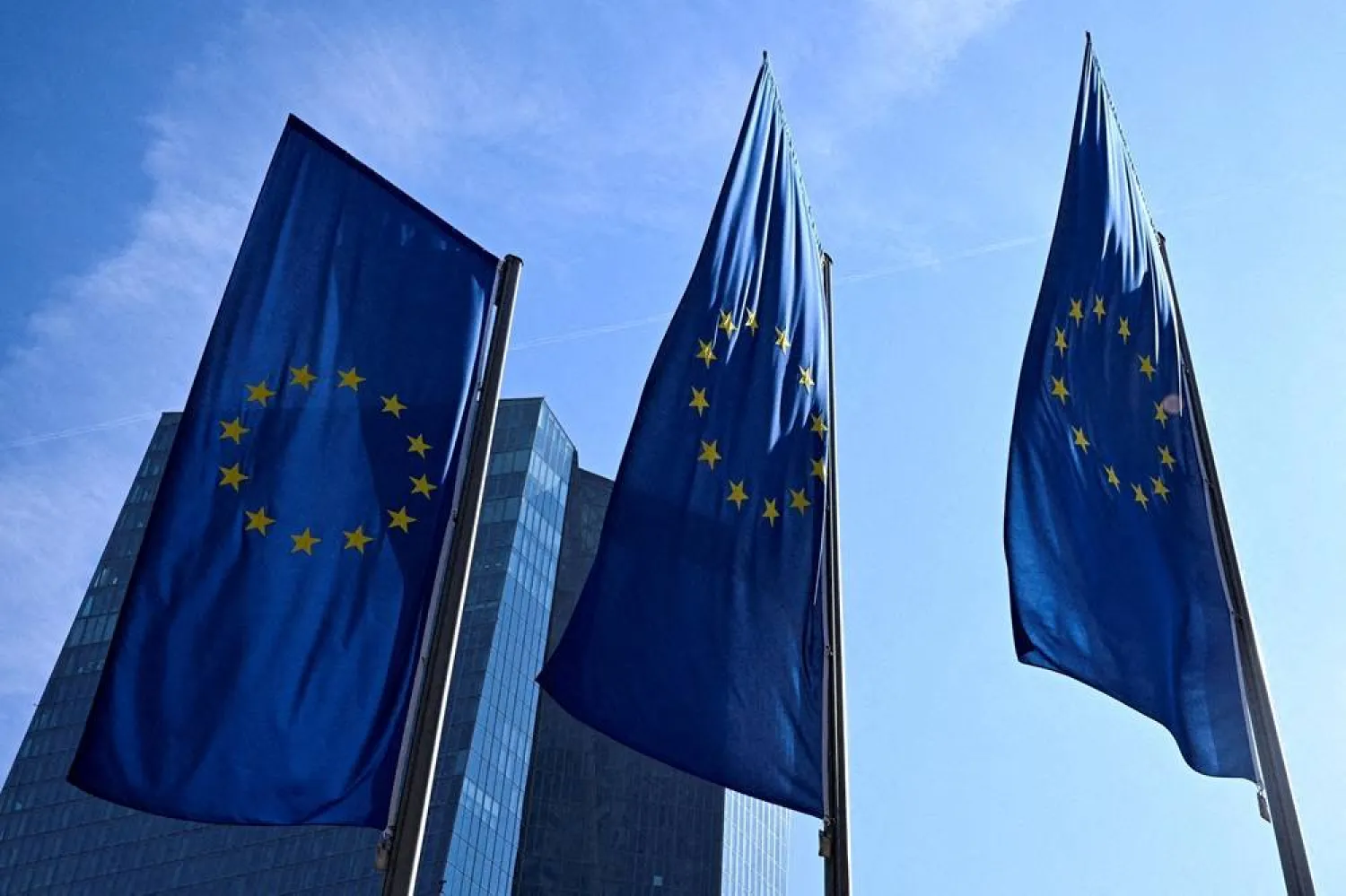
European Union flags flutter outside the European Central Bank (ECB) headquarters in Frankfurt, Germany, March 19, 2026. (Reuters)
TT

Made by AI? EU Tells Firms to Stick a Label on It from Sunday

European Union flags flutter outside the European Central Bank (ECB) headquarters in Frankfurt, Germany, March 19, 2026. (Reuters)

Deepfakes and other AI-generated content must be labelled from Sunday, as the European Union's sweeping artificial intelligence transparency rules kick in.

The goal? To make sure Europeans immediately know whether the online content they see is real or fake.

The EU's comprehensive AI law enters into force in stages. From Sunday, companies must ensure their AI systems like chatbots make it clear to users they are AI, or when an image or text has been created using AI, there must be a label saying so.

This can be done by integrating watermarks and other markers to allow the easy detection of AI-generated content. Firms face large fines if they don't comply.

"Generative AI enables disinformation to be created at unprecedented scale, tailored to specific audiences, and disseminated with remarkable speed," an EU official said.

Since AI is "making it increasingly difficult for all of us to distinguish what is real from what is synthetic", the official said, the EU's rules seek to "preserve citizens' ability to trust what they see, hear, and read".

Of particular concern for the EU are deepfakes -- text, images, videos and sounds that appear to be real but are generated or manipulated by AI.

The rules affect content made for professional reasons, and the EU insists individuals using AI in a purely personal capacity will not be affected.

Text that aims to inform the public on general interest issues will also have to be labelled if they are created using AI without human editorial oversight.

Existing AI systems have until December 2 to adapt to the new rules, and there are exemptions for "artistic, creative, satirical, fictional" work.

- Big Tech moves -

The EU has come under fire for placing more demands on businesses, and rules that will ultimately force all content to be labelled given the rapidly growing widespread use of AI across Europe.

"We have heard that it is going to be very, very difficult to implement. But I think we often hear this with compliance requirements. And yet, the world turns and we figure these things out," Ashley Casovan of International Association of Privacy Professionals told AFP.

The world's tech giants have already begun slapping their own labels in anticipation of the rules.

For example, TikTok has required content creators to label AI-generated images, audio and video for several years, and says over three billion content items already have labels thanks to tools and detection technology.

Likewise, Meta has deployed an "AI Info" label on Instagram and Facebook for posts using the technology.

Google has signed the EU code of conduct on AI transparency, and says it is working with others like Nvidia, OpenAI and Apple on digital tagging tools.

But Google's Karen Massin warns of "regulatory complexity" that could prove counterproductive, and "risks confusing the people these rules are meant to help".

"If online content is flooded with overlapping AI labels and legal disclosures, it becomes harder for people to get the clear context they need," Massin added.



China’s Lenovo Posts 43% Jump in Q1 Revenue, Highest in Five Years

The Lenovo logo is seen in this illustration photo January 22, 2018. (Reuters)
TT

China’s Lenovo Posts 43% Jump in Q1 Revenue, Highest in Five Years

The Lenovo logo is seen in this illustration photo January 22, 2018. (Reuters)

China's Lenovo Group reported a 43% jump in quarterly revenue on Thursday, beating forecasts and sending shares of the world's largest computer maker surging, as it rides an AI hardware boom and reaps the benefits of a global memory chip shortage.

Lenovo's revenue rose to $26.94 billion in the three months ended June 30, beating analyst expectations of $22.3 billion, as the consumer electronics hardware giant benefited from artificial intelligence-driven demand and solid PC sales.

It was ‌the group's highest ‌quarterly revenue growth in the last five years, as ‌AI-related ⁠revenue grew 60% ⁠year-on-year to $9.3 billion, accounting for 35% of total revenue in its fiscal first quarter.

The company swung to a net loss attributable to shareholders of $609 million from a profit of $505 million last year, compared to the average analyst estimate of $589 million profit, according to data compiled by LSEG.

The company said the loss was primarily due to a non-cash fair value loss of US$1.7 billion arising ⁠from the revaluation of warrants issued in 2025.

Lenovo's shares hit ‌an all-time high on Thursday before ‌the results announcement, bringing its year-to-date gains to 225%. The shares surged as much as ‌17% after the results announcement.

Its US competitors Dell, Hewlett Packard and Super ‌Micro have been some of Wall Street's best performers this year but have raised prices by 10% to 30% due to soaring NAND and DRAM memory chip costs.

Lenovo's PC, tablet and smartphone division, which accounted for about 64% of total revenue, ‌reported a 27% year-on-year increase in revenue during the period. Adjusted net income, which excludes one-off items and non-cash charges, ⁠more than doubled ⁠to $1.075 billion.

R&D expenses jumped 30% year-on-year, the company said.

Global PC shipments declined by 2% year-on-year in the second quarter of 2026 to 16.6 million units for the first time since Q1 2025 due to memory-driven cost pressures, according to Counterpoint Research.

Lenovo retained its market lead in the second quarter, giving it a market share of 25.6%. Its AI server pipeline reached $54.0 billion, up 157% quarter-over-quarter, reflecting demand from hyperscalers, AI cloud and enterprise AI clients, its earnings report said.

Lenovo's strong performance comes after the company warned earlier this year of pressure on PC shipments as the industry grapples with a memory chip shortage that is getting more severe.

It has also raised PC prices to mitigate the impact of soaring memory costs.


Brazil Demands Safety Controls on Discord After Livestreamed Suicide

The Discord logo is seen in this illustration taken November 7, 2022. (Reuters)
TT

Brazil Demands Safety Controls on Discord After Livestreamed Suicide

The Discord logo is seen in this illustration taken November 7, 2022. (Reuters)

Brazilian authorities are calling on US-based messaging platform Discord, popular among teens, to take action after a suicide case sparked outcry and the first lady called for its shutdown.

Investigators say a 13-year-old girl was encouraged to self-harm and take her own life during a Discord livestream, and five teenagers have been arrested in connection to the death.

The office of the Attorney General of the Union (AGU), a public body that defends the legal interests of the Brazilian state, told AFP on Tuesday it requested and has received a proposal from Discord to "adopt measures aimed at strengthening the safety of its users, particularly children and adolescents."

In a statement sent to AFP, Discord said it was "cooperating with authorities in the investigation into this serious case."

Discord said it had additionally "deactivated, before the teenager's death," a "private server" suspected of being used by "individuals involved in criminal activities encouraging self-harm."

The AGU has demanded concrete measures, like age verification of users.

In Brazil, a law that came into effect earlier this year obliges platforms to link the accounts of users under age 16 to their parents' accounts, and requires platforms to verify user age.

Following the recent death, Rosangela da Silva, wife of left-wing President Luiz Inacio Lula da Silva, called for Discord to be shut down and urged "the judiciary to remove this horrible network from the Internet."

Discord claims more than 90 million active daily users worldwide.

In 2024, the platform X was blocked for 40 days in Brazil, until the social media network owned by the world's richest man Elon Musk complied with the Supreme Court's orders to remove accounts spreading disinformation.


Google’s Gemini AI Assistant Reaches One Billion Users

The Gemini app icon in this illustration taken June 5, 2026. (Reuters)
TT

Google’s Gemini AI Assistant Reaches One Billion Users

The Gemini app icon in this illustration taken June 5, 2026. (Reuters)

Google's artificial intelligence assistant Gemini has surpassed one billion monthly users, CEO Sundar Pichai announced Tuesday, a week after a major reorganization of the tech giant's AI division.

"It's our fastest growing product ever," and the 14th product to reach a billion users, Pichai posted on social media.

The milestone, which Google calculated based on how many people use the Gemini app across its ecosystem, gives the search giant a victory amid a major overhaul of its AI division.

Demis Hassabis, who won a Nobel Prize in chemistry, recently stepped back from the day-to-day management of Google DeepMind, the lab that designs the Gemini models. And several leading researchers left as well, including Jeff Dean, a central figure in the group's engineering efforts for nearly three decades.

Its new flagship model, Gemini 3.5 Pro, initially promised for June, still has not been released, while its rivals have launched several models that are considered more powerful, particularly for generating computer code -- currently the most lucrative area in the sector.

In the face of this technological lag, Google's audience remains its main asset as it integrates AI into its ecosystem, from search and Gmail to Google Maps and YouTube.

OpenAI reached one billion users across all its interfaces, led by ChatGPT, the lab announced in July without specifying whether that figure was monthly or weekly users.

The San Francisco-based AI lab sparked the artificial intelligence boom when it launched its free ChatGPT app in November 2022, and thus built its user base from scratch in under four years.

Every audience metric feeds into the valuation that OpenAI hopes to achieve with an eventual IPO, for which it filed a confidential application in June.

In a sign of tightening competition against Gemini, China's DeepSeek, and its San Francisco rival Anthropic, which makes Claude, ChatGPT's market share for AI assistants fell below 50 percent in the first half of the year, according to research firm Sensor Tower, which uses company data to estimate usage.