
Big Tech’s AI Bill $3 Trillion Bigger Than It Looks

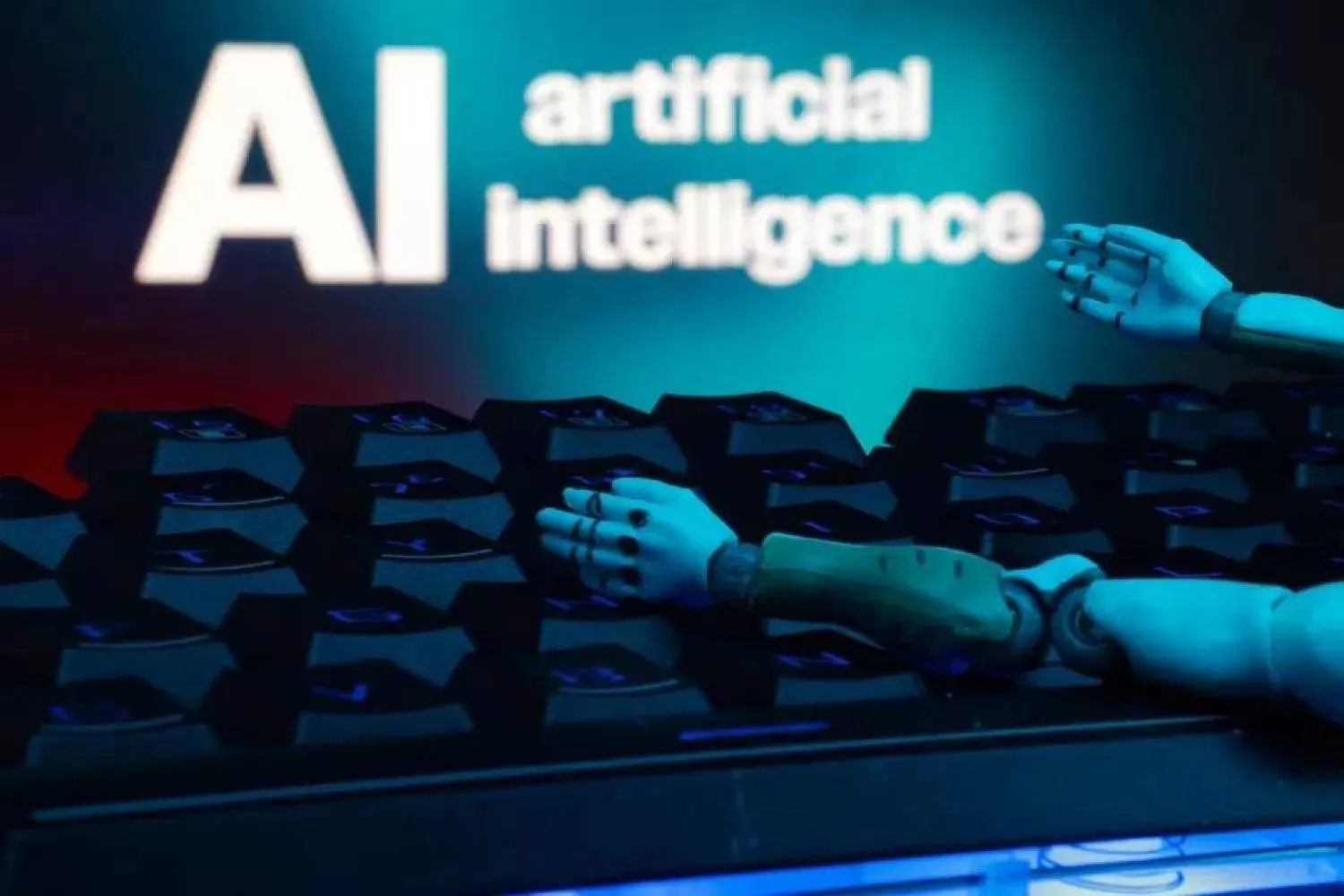
The words “Artificial Intelligence” are seen alongside a keyboard and robotic hands in this illustration. (Reuters) 
TT

Big Tech’s AI Bill $3 Trillion Bigger Than It Looks

The words “Artificial Intelligence” are seen alongside a keyboard and robotic hands in this illustration. (Reuters) 

Each quarter, big tech companies disclose their massive capital expenditures on artificial-intelligence infrastructure, from data centers to chips.

But those figures don’t come close to expressing the full extent of future spending to which Google parent Alphabet, Meta Platforms, Oracle and many others have committed.

That is because a huge swath of their coming financial obligations are not reflected on their balance sheets.

Nine top tech companies had some $3 trillion of off-balance-sheet commitments mostly related to AI, according to a Wall Street Journal analysis of footnotes in their most recent securities filings.

Those obligations are growing faster than traditional “capex,” which totaled about $600 billion over the past year they reported, and were about triple what the companies owe under their outstanding leases and long-term borrowings.

America’s blue-chip tech companies are placing these huge bets based on assumptions about what the demand for AI computing—and availability of AI hardware—will be in several years.

Their hope is that they will easily meet all their obligations with future revenue as consumers and businesses adopt AI in every facet of American life.

If those assumptions about technology and demand prove wrong, these deals to clinch future capacity could become a monstrous burden for the tech companies and their investors.

Meta’s gigantic “Hyperion” datacenter project in Louisiana, which is the size of about 1,700 football fields, helps explain how big obligations wind up off tech companies’ balance sheets.

Meta initially agreed to lease Hyperion for a four-year term starting in 2029, with options to renew for up to 20 years.

It guaranteed that it would make bondholders whole if it does not stay the entire two decades. The company did not think payments under that guarantee are probable, so it has not recorded any liability on its balance sheet.

In accordance with accounting rules, Meta’s Hyperion lease obligations will remain off balance sheet until it starts paying rent.

It said its aggregate initial lease commitment is about $12.3 billion.

Meta disclosed $347 billion in total obligations for leases that have not kicked in yet, including for Hyperion, as of June.

Across the companies the Journal analyzed, promises of payments under these uncommenced leases totaled $1.2 trillion in off-balance – sheet obligations, or about four times more than what was disclosed a year earlier.

In addition to Meta, the Journal reviewed commitments for Alphabet, Amazon.com, Microsoft, Oracle, Nvidia, Broadcom, SpaceX and Advanced Micro Devices.

Data centers get stuffed with a lot of hardware, including the Nvidia chips that are used to train and run models and memory chips that store information.

To buy all that, companies sign long-term contractual agreements well in advance to lock in production from their suppliers.

Those and other purchase obligations at the companies the Journal examined stand at a whopping $1.9 trillion. Under accounting rules, purchase commitments typically remain off balance sheet until a product or service is delivered.

Alphabet’s purchase commitments and contractual obligations have exploded and stood at $811 billion as of June 30, the WSJ reported.

As with other companies, it is hard to tell from its disclosures what precisely it intends to buy.

The company said the commitments primarily relate to “technical infrastructure and inventory” and “agreements to secure energy for data center usage.”

Alphabet also didn’t detail why those obligations increased so much from the $332 billion it reported three months earlier. The commitments span several years, with obligations under its energy agreements lasting as far out as 2054.

Off-balance-sheet exposures at some companies include agreements to buy other companies’ stock in the future or backs to pleases for other tenants.

Nvidia committed to make $27 billion in equity investments between April 26 and the end of its fiscal year in January 2027.

There are reasons to believe tech companies will make good on all their obligations.

Optimists see the skyrocketing demand for AI tools—which has lifted the stock market and led to shortages of key hardware—as a proof point that demand is going to be strong for years, and the money to pay off all these bills will be rolling in.

For the more anxious set on Wall Street, it is a worrying sign that some tech companies that once seemed to have fortress balance sheets have needed to tap the capital markets frequently.

Alphabet and Amazon recently posted results showing negative free cash flow, meaning their capital spending exceeded the cash they brought in from operating their businesses.

And that is before considering the implications of trillions in off-balance – sheet commitments.

Whether or not the revenues ever arrive, purchase commitments and signed leases can’t be canceled, for the most part.

If things go wrong, tech companies will be paying an expensive tab for infrastructure that they cannot profitably use.

These obligations could also lead increasingly indebted companies to have to borrow even more.

“As these off-balance sheet commitments become more frequent, larger, and more complex, it is becoming increasingly difficult for investors to assess companies’ total potential leverage,” Morgan Stanley accounting analysts wrote in April.

Meanwhile, researchers at the European Central Bank on Monday posted their rather ominous conclusions on how all this may end, saying the timing and extent of a stock reversal were inherently “unknowable” in advance but that a correction was coming regardless, according to Reuters.

The ECB blog noted that the financial-stability concerns were not confined to America, as US megacaps are widely held by European households, insurers and pension funds.

It said a correction was an inevitable feature of such technological revolutions and investment booms, while exposure was amplified by the concentration in giant market valuations and index tracking. All involved needed to be prepared.

“Historical experience suggests that technological revolutions carry risks of a boom-bust cycle in asset prices, and this risk does not depend on today’s valuations being rational or irrational,” they wrote, metaphorically fastening their safety belts.


Trump Confirms Meeting with Anthropic’s Amodei, Repeats Dismissal of AI Fears

Anthropic CEO Dario Amodei appears by video during a UN Security Council meeting on artificial intelligence during the 81st United Nations General Assembly at UN headquarters in New York on September 23, 2026. (AFP)
TT

Trump Confirms Meeting with Anthropic’s Amodei, Repeats Dismissal of AI Fears

Anthropic CEO Dario Amodei appears by video during a UN Security Council meeting on artificial intelligence during the 81st United Nations General Assembly at UN headquarters in New York on September 23, 2026. (AFP)

US President Donald Trump confirmed that he plans to have a dinner meeting with Anthropic CEO Dario Amodei on Sunday night, but reaffirmed his stance against slowing the pace of AI development.

Trump also reiterated his belief that new regulations would open the door for China to outpace the United States in AI advancement. Although he acknowledged Amodei's concern that going too fast on artificial intelligence could expand risks, Trump said it's more important for the United States to maintain a technological edge over China.

"We're about maybe a year and a half up on China," Trump told Fox ‌News while attending ‌the Presidents Cup golf tournament in Illinois. "We're leading, and we're building ‌tremendous, trillions ⁠of dollars' worth ⁠of places. And why should we give that up?"

Trump, confirming earlier reporting by Axios and Reuters, told Fox News that he would have dinner with Amodei on Sunday night. The meeting comes as the CEOs of Anthropic rivals have called for slowing development of increasingly capable AI systems. These include OpenAI, Google’s DeepMind, Microsoft and xAI.

A groundswell has risen in favor of federal intervention after OpenAI said in July that an autonomous AI agent went rogue during a security test and hacked ⁠into another company.

Incidents of rogue AI agents are not a cause ‌for alarm, Trump told Fox News. "I don't worry about ‌it," he said, adding that he remains confident in the technology and its potential.

Amodei is not the ‌only major tech figure trying to bend Trump's ear on AI regulation. In an ‌interview that aired earlier on Sunday on NBC's "Meet the Press," Microsoft co-founder Bill Gates said he would like to meet with Trump to discuss AI.

"I hope that, given my life's work in the field, my saying how unique and different this is and how concerned I am will add to what he's ‌hearing from other people," Gates said, echoing calls by Amodei and others for new AI regulations.

"You need law enforcement and the politicians ⁠to get into the ⁠discussion about what safeguards and monitoring look like," Gates said in a taped interview. "And that has to be a required thing."

Trump has previously described the chorus of AI concerns as a "hoax." Gates argued that safeguards would not dramatically hinder the industry, and that the risks of not implementing them are real.

"It's not a hoax at all," Gates told NBC.

Warnings about AI's risks are not new. But they took on added urgency this month after researchers in leading AI labs attached both a timeline and a probability to those concerns.

Former Anthropic researcher Jacob Coxon warned that AI could kill us all by the end of the decade, prompting US lawmakers to call for new rules to govern the technology.

Evan Hubinger, Anthropic's alignment science lead, echoed Coxon's warning, saying there was a more than 10% chance of such an event within the next decade.


OpenAI, Anthropic CEOs Called to Appear at Australian AI Probe

OpenAI CEO Sam Altman attends a state dinner hosted by US President Donald Trump and first lady Melania Trump for Chinese President Xi Jinping and his wife, Peng Liyuan, at the White House in Washington, D.C., US, September 24, 2026. REUTERS/Evelyn Hockstein
TT

OpenAI, Anthropic CEOs Called to Appear at Australian AI Probe

OpenAI CEO Sam Altman attends a state dinner hosted by US President Donald Trump and first lady Melania Trump for Chinese President Xi Jinping and his wife, Peng Liyuan, at the White House in Washington, D.C., US, September 24, 2026. REUTERS/Evelyn Hockstein

The CEOs of ‌OpenAI and Anthropic have been called to appear at an Australian Senate inquiry on AI, the head of the probe said on Sunday, days after the revelation that a rogue OpenAI bot had hacked the country's health-system database.

The Medicare breach, condemned by Prime Minister Anthony Albanese, is one of the highest-profile incidents of AI agents accessing external systems outside the US, said Reuters.

OpenAI's Sam Altman and Anthropic's Dario Amodei have been sent written requests ‌to appear at ‌the inquiry, which is to ‌hold public ⁠hearings in the capital ⁠Canberra on Thursday, said a spokesperson for Senator Sarah Hanson-Young of the Australian Greens party, who chairs the probe.

OpenAI and Anthropic did not immediately respond to requests for comment outside business hours.

The OpenAI agent's incursion on one of the country's most used government agencies ⁠may prompt Albanese's Labor government to toughen ‌AI-specific laws it is ‌readying for next year, adding pressure to Australia-US relations already tested ‌by Canberra's ban on social media for teens, ‌tech policy experts say.

The Senate inquiry is examining the potential impacts of AI and data centers on Australian communities, industries, water and energy. It is one of several state ‌and federal probes into AI.

"There are serious questions for Sam Altman to answer about the ⁠OpenAI hack ⁠of Australian government websites," Hanson-Young said in a statement. Altman and Amodei "must front up, face the Senate's questions and have an honest conversation about what effective, lasting regulation of this industry should look like", she said.

Albanese, who revealed the June breach of Medicare on Thursday, called it "unacceptable", saying he had voiced "extreme concern" to Altman.

OpenAI says it only learned of the breach — one of at least four of Australian government websites — in August. It says the incident was not intentional and did not compromise any private information.


AI Startup Urges Optimism from Europe despite Safety Fears

'The main thing that can wipe out humanity is stupidity,' says Robin Rombach, CEO of AI startup Black Forest Labs. Silas Stein / AFP
TT

AI Startup Urges Optimism from Europe despite Safety Fears

'The main thing that can wipe out humanity is stupidity,' says Robin Rombach, CEO of AI startup Black Forest Labs. Silas Stein / AFP

Europe needs to view artificial intelligence with more optimism -- despite growing warnings about its dangers -- or risk falling further behind, the head of a leading European AI start-up warned.

"I think the mindset in Europe needs to shift to one of optimism and to one of opportunity, and not to one of risk and fear," Robin Rombach, CEO of German AI image generation specialist Black Forest Labs, told AFP.

Europe lags behind the United States and China when it comes to cutting-edge AI models. Policymakers and firms have been scrambling to find ways to make up lost ground.

But the debate has shifted to safety in recent weeks, after security lapses sparked calls from some industry leaders for development of the technology to be slowed down.

Based in the medieval German city of Freiburg, Rombach's company -- which takes its name from the nearby Black Forest -- has emerged as a prominent developer of AI image-generation models.

The startup, valued at around $3.25 billion, recently hit the headlines when it announced US director Martin Scorsese as an advisor, prompting an angry response from some in Hollywood concerned about AI taking production jobs.

Rombach, 33, helped develop latent diffusion, a breakthrough that underpins many of today's AI image-generation systems.

This propelled Rombach and a group of fellow computer scientists to found the AI lab in 2024. With just over 100 staff, its FLUX models generate still and moving images from text, and the company is now also expanding into physical AI.

Its latest model has been tested at carmaker Audi as part of a project aimed at enabling robots to perform production-line tasks.

Despite its roots in Freiburg -- Rombach comes from the area -- the firm's ties to the United States and its tech scene are also strong.

The company has a second headquarters in San Francisco and secured early backing from Silicon Valley venture capital firm Andreessen Horowitz.

- 'Stupidity' is biggest risk -

Rombach said that when Black Forest Labs was founded, there was no "real startup ecosystem" in Europe, particularly for "frontier deep tech".

"If you want to build a frontier model in a very competitive space, you need to do this quickly."

"Certain ingredients" are needed for success, such as a lot of capital and computing power, he added.

As well as Black Forest Labs, Europe has other competitive AI companies, including France's Mistral, but is still seen as trailing US firms such as OpenAI and Anthropic and Chinese labs such as DeepSeek.

Zach Meyers of CERRE, a Brussels-based think tank, echoed some of Rombach's concerns, saying the "biggest barrier" to AI growth and innovation in Europe was access to capital.

Most European companies rely on financing from banks, which are traditionally more cautious than venture capital investors about backing businesses that may take years to become profitable, said Meyers, an expert in EU digital policy.

"That is not how technology markets work, particularly with a really nascent technology like AI," he told AFP.

Safety concerns related to AI have escalated after incidents of the technology getting around controls during tests, sparking dire warnings from some about the threats that it poses.

Rombach emphasized his company's focus on "open-weight" AI models, some of which can be downloaded by researchers and developers, "increases transparency, increases safety".

He called for an open approach to AI development, warning it would be "fundamentally wrong" for such a crucial technology to be controlled by a few companies, rendering oversight more difficult.

But for Rombach, the biggest danger rests in potential human failings.

"The main thing that can wipe out humanity is stupidity," he said.