
Sources: Samsung Hikes Chipmaking Prices by Up to 15% on Demand Spike

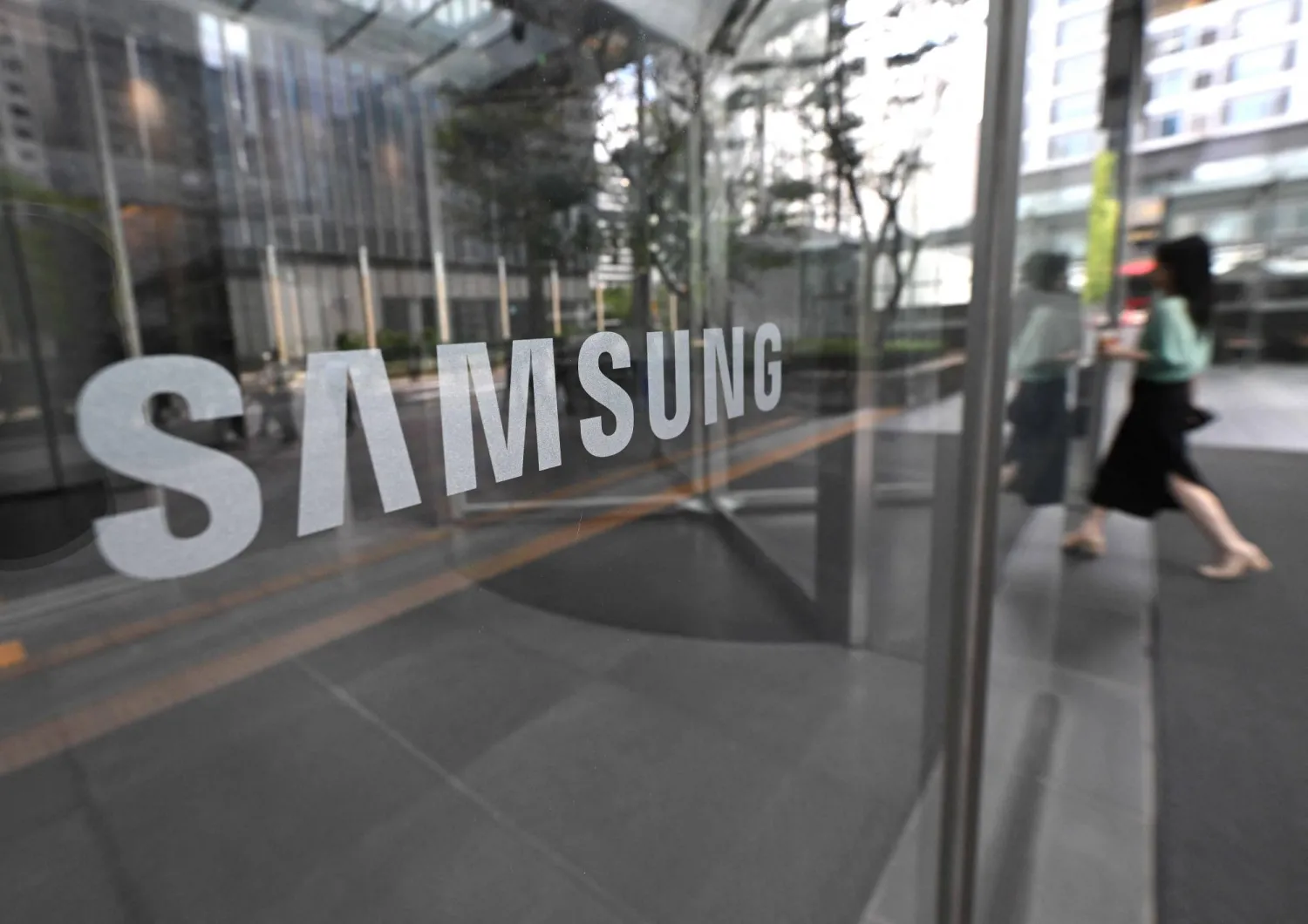
The logo of Samsung is seen at the Samsung Electronics Seocho building in Seoul on July 30, 2026. (Photo by Jung Yeon-je / AFP)
TT

Sources: Samsung Hikes Chipmaking Prices by Up to 15% on Demand Spike

The logo of Samsung is seen at the Samsung Electronics Seocho building in Seoul on July 30, 2026. (Photo by Jung Yeon-je / AFP)

Samsung Electronics has raised prices for some advanced contract chipmaking services by up to 15% for new orders, two people familiar with the matter said, as demand for AI chips tightens capacity in a business long dominated by TSMC.

Demand from Chinese customers has been particularly strong, but Samsung has been unable to meet all orders because it must serve US customers and reserve part of its capacity to support its own chip production, said the sources, who spoke on the condition of anonymity because they are discussing sensitive commercial matters.

Chinese customers are among those accepting the steepest price increase, one of the sources said, underscoring how US curbs on exports of advanced chipmaking equipment to China have increased local firms' reliance on overseas foundries.

The price hikes mark a turnaround for Samsung's foundry business, which has been a loss maker since 2022, according to industry ⁠estimates.

The division ⁠has struggled to narrow the gap with Taiwan Semiconductor Manufacturing Co, even as Samsung reported record profits, driven by soaring prices for memory chips used in AI systems.

Samsung raised prices in July for chips made using its 4-nanometre process, known as SF4, the sources said.

Prices for SF4 customers in China and the US were increased 10% to 15% from the previous month, while customers in Taiwan, home to TSMC, saw increases of 5% to 10%, according to one of the sources.

Prices for wafers produced by its 5-nanometre SF5 process rose by 10% to 15%, while those for its older 8-nanometre technology ⁠rose by nearly 10%, according to the source. Samsung declined to comment to Reuters as the company does not provide details on operational matters.

Samsung produced 7% of global foundry revenue in the first quarter of 2026, compared with more than 70% for TSMC, according to research firm Counterpoint.

However, demand for AI chips has booked up much of TSMC's leading-edge capacity.

Samsung expects advanced processes to account for more than half of foundry revenue this year, while AI and high-performance-computing applications would make up more than 30%, up from 15% to 20% in late 2025.

With TSMC's production taken up, Samsung has more leverage to raise prices.

"As TSMC faces tight capacity and raises prices, customers are shifting to rivals such as Samsung and Intel, prompting Samsung to raise its prices as well," said Lee Min-hee, a Seoul-based analyst at BNK Investment & Securities.

"If Samsung raises prices from here, its foundry business could potentially become profitable as early as next ⁠year, earlier than previously expected," ⁠Lee said.

Samsung's SF4 production line at its Pyeongtaek, South Korea, plant has been running at full capacity since late last year, said a person familiar with the company's operations.

The line produces logic chips for customers including Qualcomm as well as base dies used in Samsung's own multi-layer high-bandwidth memory (HBM) chips, the person said.

Samsung said in July it expects the foundry unit to return to profit in the near future, helped by higher factory utilization, better production yields and firmer pricing.

It also said then rising sales to major US and Chinese customers, along with demand for HBM base dies, should help lift foundry revenue by more than double-digit percentage points in the second half from a year earlier.

Improvements in production yields have also helped Samsung win customers. Tesla and Apple unveiled chip manufacturing deals with Samsung last year. Samsung also announced an AI chip production deal with Broadcom in July, while Nvidia CEO Jensen Huang said in March that Samsung would manufacture its new AI inference processor.

Google is also in talks with Samsung to manufacture chips using SF4, said one of the two sources familiar with the price increases.

Google did not respond to a request for comment.


OpenAI Begins Rollout of New Powerful AI Model GPT-6 Astra

The OpenAI logo in this illustration taken June 11, 2026. (Reuters)
TT

OpenAI Begins Rollout of New Powerful AI Model GPT-6 Astra

The OpenAI logo in this illustration taken June 11, 2026. (Reuters)

ChatGPT maker OpenAI said Thursday it would begin rolling out its newest and most powerful artificial intelligence (AI) model to select customers, saying it had built in safeguards to mitigate security risks.

"At this level of capability, safety has to become our top priority," OpenAI President Greg Brockman told reporters on a call about the release of GPT-6, also known as Astra.

Just over a year has passed since OpenAI launched the previous version of its flagship model, GPT-5, said AFP.

Concerns about the capabilities of advanced models have grown since then, following incidents involving systems built by OpenAI and rival developer Anthropic.

OpenAI paused some model development for two weeks this summer after two models it was testing were involved in a security breach at AI platform Hugging Face.

The San Francisco-based company said Astra was developed with stronger safeguards after that incident, though Astra itself was not involved in the hack.

Some cybersecurity customers will get access to the new model Thursday, the company said, with a wider rollout to other paying customers to follow. Users on the free tier or the cheapest paid plan will not get access.

"We are working towards getting Astra in everyone's hands as quickly as we can; I know it is frustrating and I appreciate the patience. It should be quick," OpenAI CEO Sam Altman posted on social media Thursday afternoon.

In a blog post, OpenAI said Astra can autonomously handle a wide range of "tedious" computer tasks, including website creation, scientific analysis, game development, cybersecurity and coding.

To illustrate the time savings of building autonomous AI agents with Astra, the company said the model could cut apartment hunting from six hours to under 10 minutes.

"It's not unreasonable to feel that we are now in the AGI era," Brockman said on the call, referring to artificial general intelligence, a hypothetical stage at which AI systems match human intelligence across most tasks.

OpenAI previously had an agreement with Microsoft, one of its earliest and largest investors, under which an exclusivity clause would end once OpenAI reached AGI. Those terms were scrapped in April.

- 'Limited window' -

OpenAI chief scientist Jakub Pachocki acknowledged there was still uncertainty about how a new model behaves once released.

"A model can become very good at achieving a goal, and it can still act in ways that go against what the person intended," Pachocki said on the same call.

"We also have to be willing to slow down or withhold further scaling when our confidence in safety is not sufficient," he added.

Altman explained in an interview with Bloomberg TV on Thursday afternoon why the company decided to release a new model with this level of uncertainty and risk.

"The world is very close to a complete change in the landscape of cyber attacks, and the only way that we see for society to collectively defend itself... is to use tools like Astra to rapidly defend against these new cyber threats," Altman said.

In July OpenAI confirmed that it had reached one billion active users across all of its products, including both free and paid users.

OpenAI, Anthropic and more than 100 other organizations signed an open letter last week calling for a coordinated global response to AI-related cybersecurity risks, warning that the window to strengthen cyber defenses was limited.

Anthropic went further on Monday, calling for industry-wide coordination on safety and on the pace of developing increasingly capable models.

"I believe that shared safety standards and international coordination on further AI development need to be prioritized now," OpenIA's Pachocki said on Thursday.

The US state of Alabama opened an investigation into OpenAI last week over the Hugging Face breach, his office citing what it called the company's complete lack of oversight and adequate safeguards.

It also comes as OpenAI and rival Anthropic are both racing towards becoming public companies over the next several months, though OpenAI might not hold its IPO till sometime in 2027, according to reports.


Deputy CEO of NCAI Highlights AI’s Future at DeepFest 2026

Deputy CEO of the National Center for Artificial Intelligence (NCAI) Dr. Hotham Altwaijry said the future of AI will be shaped by countries that can maximize the value of their technologies.(SPA)
TT

Deputy CEO of NCAI Highlights AI’s Future at DeepFest 2026

Deputy CEO of the National Center for Artificial Intelligence (NCAI) Dr. Hotham Altwaijry said the future of AI will be shaped by countries that can maximize the value of their technologies.(SPA)

Deputy CEO of the National Center for Artificial Intelligence (NCAI) Dr. Hotham Altwaijry said the future of AI will be shaped by countries that can maximize the value of their technologies. He explained that the current phase requires greater focus on using AI optimally and harnessing its potential to achieve tangible impact that benefits humanity and society, the Saudi Press Agency said on Friday.

His remarks came during the opening session of the fourth and final day of DeepFest 2026. He highlighted the evolving relationship between humans and AI, as well as technology's role in enhancing human capabilities and improving experiences.

Altwaijry explained that SDAIA recognized early on that a meaningful partnership between humans and AI cannot be achieved through algorithms, models, and technical concepts alone. Rather, it requires enabling individuals to experience AI’s potential firsthand.

He noted that AI has now become an integral part of today’s work environments, contributing to software development and testing, analyzing and preparing business requirements, and giving individuals greater space to focus on user experience, creativity, and exploring new ideas and solutions.


Abu Dhabi AI Institute Releases Fully Open-Source Models With Training Data, Code

A view of the UAE capital, Abu Dhabi (Asharq Al-Awsat)
TT

Abu Dhabi AI Institute Releases Fully Open-Source Models With Training Data, Code

A view of the UAE capital, Abu Dhabi (Asharq Al-Awsat)

Abu Dhabi-based research institute IFM on Thursday released six artificial intelligence models together with the data and methods used to build them, challenging an industry trend toward increasingly secretive AI development.

The K2 Horizon release includes model weights, training data, code, methodologies and intermediate checkpoints, allowing researchers to retrace the models' development process and reproduce results, IFM founder Eric Xing told Reuters.

The move goes beyond the "open-weight" approach used by some Chinese developers, which make models available for download but provide limited insight into how they were built, and contrasts with the more closed development practices of companies such as OpenAI and Anthropic, which neither release their models for download nor disclose the data and techniques behind them.

"Our goal with this release is to establish a reference point for what a truly open model release can look like," Xing said.

He said the release was also intended to show policymakers, regulators and public-interest advocates that "openness and competitive performance are not mutually exclusive."

The launch forms part of the UAE's push to establish itself as a global AI hub.

The model family ranges from one designed for smartwatches and other constrained devices to a 375-billion-parameter system for enterprise deployments.