



CD Projekt RED to Launch Remastered Version of ‘The Witcher 3’ Ahead of New Expansion

A bird flies in front of the CD Projekt logo at its headquarters in Warsaw, Poland January 21, 2020. Picture taken January 21, 2020. (Reuters)
TT

CD Projekt RED to Launch Remastered Version of ‘The Witcher 3’ Ahead of New Expansion

A bird flies in front of the CD Projekt logo at its headquarters in Warsaw, Poland January 21, 2020. Picture taken January 21, 2020. (Reuters)

CD ‌Projekt RED will publish a remastered version of its 2015 blockbuster "The Witcher 3" on September 29, ahead of a 2027 launch of a new expansion for the video game, it said late on Tuesday.

Poland's biggest video game developer showcased a trailer for "The Witcher 3: Wild Hunt - Remastered" and a teaser trailer for its upcoming third expansion, titled "Songs of the Past", ‌at the Opening ‌Night Live of the world's ‌biggest ⁠video game trade fair ⁠Gamescom.

It did not specify a release date for the expansion, but confirmed the 2027 launch.

"The Witcher 3", a winner of more than 250 Game of the Year awards, is among the world's all-time best-sellers, with ⁠more than 65 million copies sold since ‌its launch.

The remastered ‌version will be available as a free upgrade to ‌all owners of the original game on ‌GOG, Steam, Epic Games Store, PlayStation 5 and Xbox Series X/S. The game will also get a native version for Nintendo Switch 2.

All current ‌owners of the base game will also gain free access to the ⁠two existing ⁠expansions to "The Witcher 3", and both of them will be included in the remastered version.

"This maps a great opportunity for people, who have perhaps only played the base game, to jump in with the improvements on the remaster update and get a whole lot of stuff for free before we ship the Songs of the Past," CD Projekt RED level design lead Miles Toast said after the trailer showcase.


China's Huawei, US PC Maker HP Sign Multi-year Wi-Fi Patent Deal

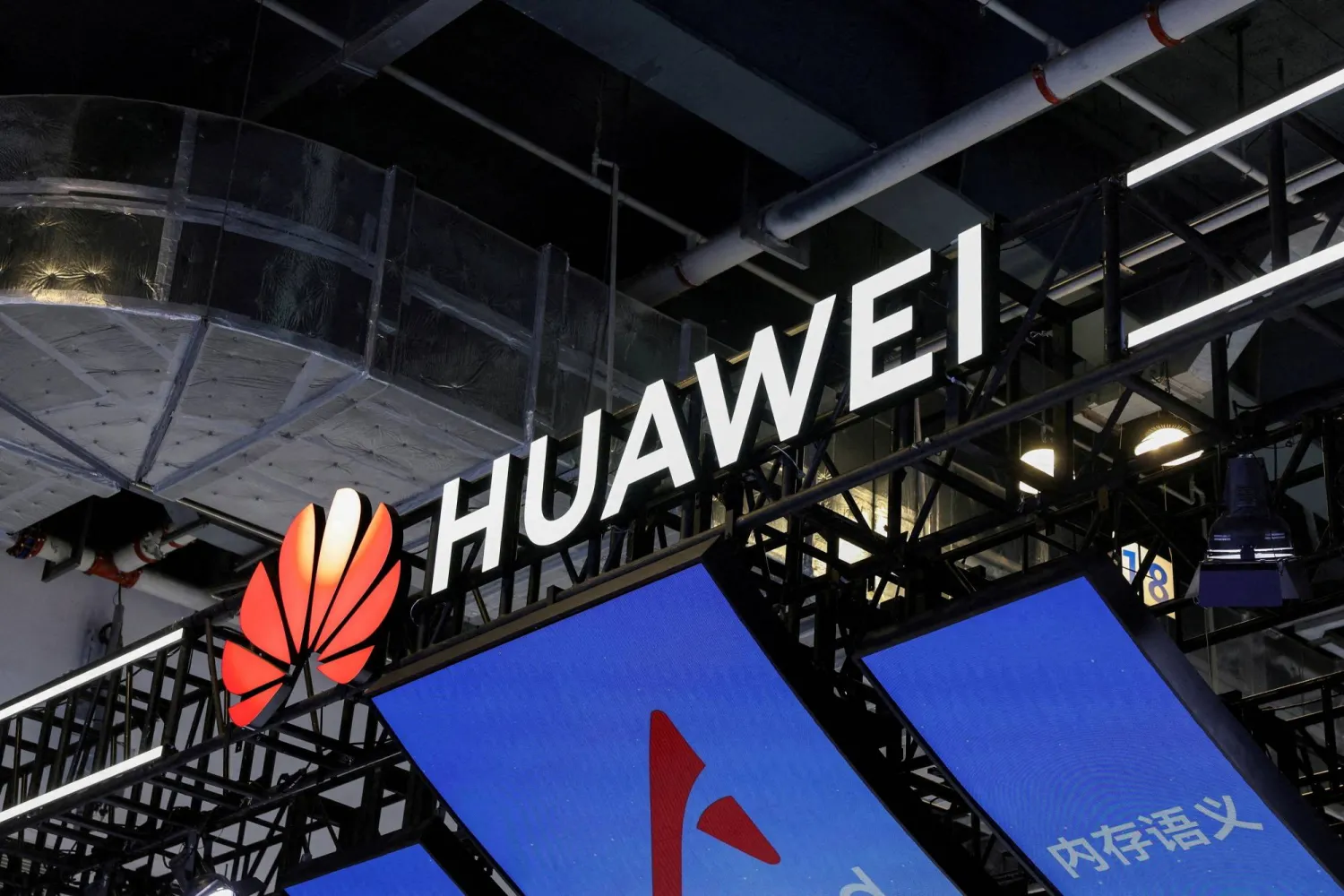
People walk past the Huawei booth, where the Atlas 950 SuperPoD system is displayed, during the World Artificial Intelligence Conference (WAIC) in Shanghai, China, July 17, 2026. (Reuters)
TT

China's Huawei, US PC Maker HP Sign Multi-year Wi-Fi Patent Deal

People walk past the Huawei booth, where the Atlas 950 SuperPoD system is displayed, during the World Artificial Intelligence Conference (WAIC) in Shanghai, China, July 17, 2026. (Reuters)

China's Huawei Technologies said on Wednesday it had reached a multi-year cross-license agreement with HP Inc, covering patents used in Wi-Fi technology, including the latest Wi-Fi 7 standard.

The deal gives HP access to Huawei patents and gives Huawei access to HP patents, though neither company disclosed financial terms. Huawei did not detail the scope of the patents it would receive from HP.

HP said the agreement was a routine license for technology used broadly across the industry, rather than the start of a wider ‌commercial relationship ‌with the Chinese technology company.

"This is a standard-essential patent license ‌covering ⁠Wi-Fi technology," an HP ⁠spokesperson said. "It is not new, and does not represent a broader strategic or commercial relationship, partnership, or collaboration with Huawei."

Standard-essential patents cover inventions that companies may need to use in order to make products compatible with an industry standard, such as Wi-Fi. Such licenses are common for makers of computers, printers, phones and other devices that connect to wireless networks.

The agreement shows Huawei remains an important holder of patents used in global ⁠wireless standards, despite US restrictions requiring US carriers to remove ‌their equipment from US networks.

HUAWEI-HP DEAL FOLLOWS LEGAL ‌DISPUTE

Huawei has expanded its patent portfolio and licensing business in recent years, reaching settlements with ‌companies including Amazon. It has said it is among the leading holders of patents ‌needed to implement Wi-Fi 6, the prior generation of the wireless standard.

Huawei has set a fee of 50 cents for each consumer device using its Wi-Fi 6 technology. More than 1.6 billion consumer electronic devices, excluding mobile phones, had used Huawei's Wi-Fi-related inventions by the end ‌of 2025, the company said.

Wednesday's agreement follows a lawsuit Huawei filed against HP at Europe's Unified Patent Court in August ⁠2025, accusing the US ⁠company of using a Wi-Fi 6 patent without permission, according to intellectual-property publication IAM.

HP joined the Sisvel Wi-Fi 6 patent pool in November 2025, ending legal actions against it by Huawei and Philips. The pool gives companies access through a single agreement to about 2,000 patents considered necessary for Wi-Fi 6 products.

Huawei said the new direct deal covers a broader set of its Wi-Fi patents, including Wi-Fi 7.

Huawei has faced US trade restrictions since 2019, when Washington added the company to a trade blacklist that generally requires suppliers to obtain government approval before providing certain US-origin technology.

The restrictions have limited Huawei's ability to buy advanced semiconductors and crucial software, but do not automatically bar patent-licensing agreements.

HP, based in Palo Alto, California, was the world's second-largest PC maker with a 21.3% market share, behind Lenovo, according to Gartner data.


How to Turn Your Phone Into a Personal Health Dashboard

From left, the Google Health, the Samsung Health and Apple’s Health apps offer plenty of tools and features to help you manage your diet, exercise and personal safety. (Google; Samsung; Apple)
TT

How to Turn Your Phone Into a Personal Health Dashboard

From left, the Google Health, the Samsung Health and Apple’s Health apps offer plenty of tools and features to help you manage your diet, exercise and personal safety. (Google; Samsung; Apple)

New York: JD Biersdorfer

The health app on your phone’s home screen has many uses, even if you don’t have a smartwatch or fitness tracker. With a little manual effort, you can use the app to get a better idea of your general wellness.

For example, you can keep a food-and-fitness diary there. Most phones provide a free basic step-counting function. And you can link other exercise and diet apps you use to streamline your data.

Many medical providers let you import records from your doctor, and you can create a “medical ID” for your phone’s lock screen in case of emergency.

Here’s how to get started.

Choose Your App

Although third-party options abound, the basic health apps from Google, Samsung and Apple have been available for years and have been steadily adding new features:

Google recently revamped its Google Health app (formerly its app for FitBit devices) and is phasing out the older Google Fit software. Google Health is free in the app stores for Android and iOS.

Samsung Health updated last month, comes with Galaxy phones. It is also available for other Android and iOS users, particularly those using Samsung’s fitness trackers and smartwatches.

Apple’s Health app comes preinstalled on iPhones and iPads (and collects data from paired Apple Watches). It does not have an Android version.

The menus in the health apps can be a little overwhelming, so take time to explore. Each app offers a place to manually log your daily workouts, food intake, emotional state and sleep time.

You can set up medication reminders. And if you use a compatible separate exercise or diet app, you can often link it to the health app so you don’t have to log updates twice.

Many phones have an automatic step-counting feature already enabled. While not as precise as some dedicated sensors, the step count shown on the main screens of Google Health, Samsung Health and Apple’s Health, can give you a general idea of your daily distance. (If your phone isn’t counting your steps, check your settings to make sure the fitness-tracking feature is turned on.)

Sync Health Records

Many health care providers use “patient portal” sites like MyChart that allow you to log in and see your test results and other electronic medical records. If the provider’s site is compatible with your health app, you can synchronize those records to have them all in one place. You’ll need the login credentials you use for the provider’s online patient portal.

If you have confidentiality concerns about pulling in digital records to a different app, check your health app’s privacy policy before you proceed. Google Health, Samsung Health and Apple’s Health all have explanations on their sites. Note that federal privacy laws generally don’t apply to mobile devices.

The Google Health support site has a page of detailed instructions. To sync your records directly from your health care provider, open the Google Health app, tap the Connections icon in the upper-left corner of the screen and tap Medical Records; iOS users must tap Apps and Services first to get to the Medical Records option. On the

Medical Records screen, select Manage Connections and then the Add More Providers button to search and sync your files.
In Samsung Health, open the app, tap the Home tab at the bottom of the screen, scroll down and tap to Health Records to get started.

In Apple’s Health app, from the Summary screen, tap your profile icon in the upper-right corner. On the next screen, tap Health Records and follow the onscreen prompts so you can view your files, test results and other data from your doctor, or share information.

Create a Medical ID

Even if you don’t plan to use it as a personal-health database, your phone can show important information to emergency medical workers on your phone’s lockscreen, should you be incapacitated. These details can include blood type, any current prescriptions or health conditions you have, and your organ-donor status.

On many Android models, open the Personal Safety app, and tap the Your Info tab at the bottom of the screen. There, you can add your medical information and an emergency contact person.

On a Samsung Galaxy phone, tap the Settings icon, select Safety and Emergency, and then tap the options for adding medical and emergency contact information.

On an iPhone, open the Health app. If you aren’t prompted to set up your Medical ID, tap your profile photo in the top-right corner and choose Medical ID. On the next screen, add or edit the details you wish to share, and give permission to have the information displayed when your phone is locked.

Setting up a smartphone medical ID is worth your time: A recent study led by the University of Rochester showed the information was useful for patient care in 75% of cases.

The New York Times


Saudi Communications Minister Discusses Expanding AI, Quantum Computing Partnerships in France

Saudi Minister of Communications and Information Technology Abdullah Alswaha meets with Electronic Arts Chairman and CEO Andrew Wilson in Paris. (SPA)
TT

Saudi Communications Minister Discusses Expanding AI, Quantum Computing Partnerships in France

Saudi Minister of Communications and Information Technology Abdullah Alswaha meets with Electronic Arts Chairman and CEO Andrew Wilson in Paris. (SPA)

Saudi Minister of Communications and Information Technology Abdullah Alswaha held a series of meetings during his visit to France with senior executives from leading global companies in artificial intelligence (AI), digital content and digital entertainment, gaming, and quantum computing.

The meetings aimed to expand high-impact partnerships, facilitate knowledge transfer, develop national capabilities, and strengthen the Kingdom of Saudi Arabia’s position as a global hub for artificial intelligence, electronic gaming, and emerging and advanced technologies, reported the Saudi Press Agency on Monday.

Alswaha discussed with Ubisoft CEO and Co-Founder Yves Guillemot, Sony Group CEO Hiroki Totoki, Riot Games CEO Dylan Jadeja, and Electronic Arts Chairman and CEO Andrew Wilson the use of AI in developing the gaming, entertainment, and content industries, as well as developing Saudi talent and empowering developers and content creators in the Kingdom to build globally competitive experiences and intellectual properties.

Saudi Minister of Communications and Information Technology Abdullah Alswaha meets with Sony Group CEO Hiroki Totoki in Paris. (SPA)

He discussed with Thales Group Chairman and CEO Patrice Caine the security of artificial intelligence applications, data protection, knowledge transfer, and the development of national capabilities in advanced technologies, building on the partnership between the group and the Kingdom spanning more than five decades.

Alswaha visited the headquarters of Pasqal in Paris, where he toured its laboratories and reviewed its advanced quantum computing technologies, in the presence of CEO Dr. Wasiq Bokhari and Chairman of the Board of Pasqal Arabia Prince Abdulaziz bin Turki bin Talal.

He discussed expanding the presence of quantum computing technologies in the Kingdom, integrating them with artificial intelligence, and developing national capabilities and talent.

In the field of advanced artificial intelligence, he discussed with Advanced Machine Intelligence Co-Founder Laurent Solly the future of the next generation of artificial intelligence models and their capabilities in understanding, prediction, and planning, as well as their applications in robotics, automation, and industry, in addition to enabling Saudi researchers and developers to build new applications and technologies.

The visit builds on the Kingdom's efforts to forge effective international partnerships, attract high-quality technologies and investments, and empower national talent to lead opportunities created by the intelligent era, supporting the objectives of Saudi Vision 2030.