


Meta Reaches $17 Billion Settlement with States in Landmark Trial Over Teen Social Media Addiction

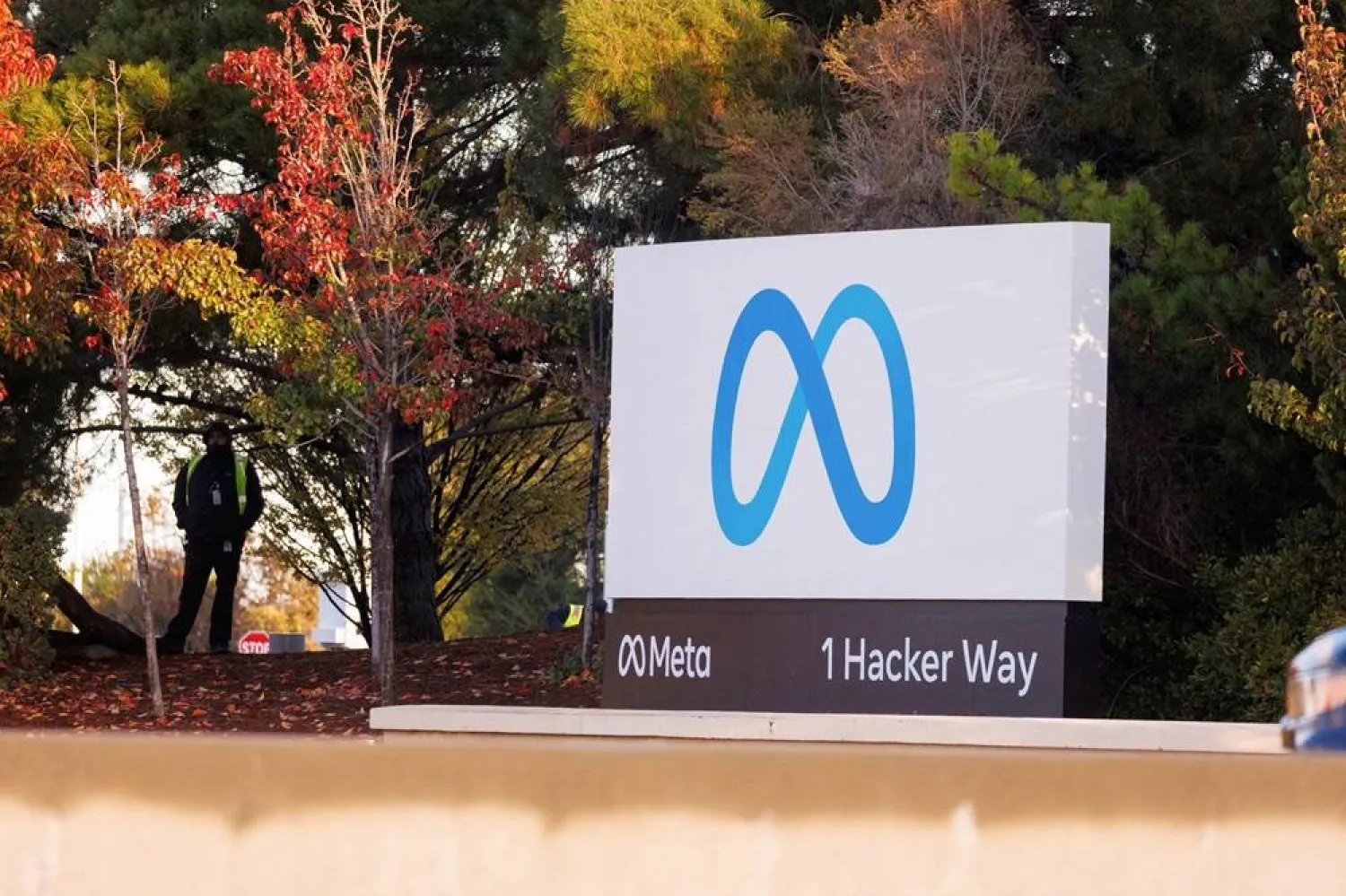
A security guard stands watch by the Meta sign outside the headquarters of Facebook parent company Meta Platforms Inc in Mountain View, California, US, November 9, 2022. (Reuters)
TT

Meta Reaches $17 Billion Settlement with States in Landmark Trial Over Teen Social Media Addiction

A security guard stands watch by the Meta sign outside the headquarters of Facebook parent company Meta Platforms Inc in Mountain View, California, US, November 9, 2022. (Reuters)

Meta has agreed to pay $17 billion and add stronger child-safety measures to its Facebook and Instagram platforms to end a landmark trial over teen social media addiction and settle claims filed by 47 states, state attorneys general announced Wednesday.

The settlement resolves a pivotal legal case years in the making that sought to hold the tech giant accountable for the role its platforms played in undermining children’s mental health. The effort targeted features designed to hook young people’s attention.

“For years, Meta intentionally deceived the public about the addictive and harmful design features that have wreaked havoc on youth mental health," Virginia Attorney General Jay Jones said. The settlement "will put an end to these dangerous practices and deliver meaningful relief that will protect children from online harm.”

California Attorney General Rob Bonta said the money would be paid out over 10 years, with the state getting at least $1.5 billion if the settlement is approved by the court. New Jersey expects to receive at least $525 million. Massachusetts said it was in line for at least $366 million. Virginia's share is worth $353 million.

Meta said in a blog post that it was “building on our longstanding efforts to empower parents and support teens.”

“Ensuring teens have a safe and productive experience on our platforms is an absolute imperative for Meta,” the company said. “We want to get this right for parents and teens, and that’s why we partnered with state attorneys general to set a new industry standard."

The company urged rivals TikTok and YouTube to adopt similar safety measures.

The $17 billion settlement is a fraction of Meta's 2025 revenue of $201 billion.

The agreement cuts short an ongoing court case involving California, Colorado, Kentucky and New Jersey, which were among 29 states that sued Meta in 2023. CEO Mark Zuckerberg was among those expected to take the stand before a jury in federal court in California.

The lawsuit accused Meta of contributing to the youth mental health crisis by deliberately designing features that addict children to its platforms and hiding them from the public. The case also argued that Meta violated federal laws by routinely collecting data on children under 13 without their parents’ consent.

The trial kicked off last week in Oakland, California, with US District Judge Yvonne Gonzalez Rogers overseeing the proceedings. Adam Mosseri, the head of Instagram, began his testimony late Tuesday and defended Meta’s record and progress on child safety and privacy.

The cases in other states had been expected to go to trial later. In addition, nine attorneys general filed lawsuits in their respective states.

New features to include time limits and curbs on push notifications

Under the proposed settlement, Meta agreed to adopt a series of safety features, including a “hard cap” on daily time limits and pauses for children using Instagram and Facebook.

It will eliminate push notifications during weekday school hours and bring in “robust” age-assurance measures and “age-appropriate” content controls to prevent bullying and harmful material about eating disorders and self-harm.

There will be stronger and more user-friendly parental controls and limits on social comparison features such as “like” counts.

An independent auditor will assess how Meta is implementing the safety features and how effective they are.

Meta put the settlement at $18 billion, a figure that apparently includes a large award for Texas.

The money is to be paid out annually over 10 years, to fund youth online safety initiatives. However, the company said 30% of that amount — about $5.3 billion — will only be released to states if rivals YouTube and TikTok meet two conditions: implementing similar safety features, including a one-hour daily time limit, a nighttime block and age-assurance measures; and paying the same amount, split between the two companies.

Neither YouTube owner Google nor TikTok responded immediately to requests for comments.


OpenAI Acknowledges ‘Wiki Incident’ and Need for More Transparency Around Unintended AI Behavior

The OpenAI logo is seen in this illustration created on June 11, 2026. (Reuters)
TT

OpenAI Acknowledges ‘Wiki Incident’ and Need for More Transparency Around Unintended AI Behavior

The OpenAI logo is seen in this illustration created on June 11, 2026. (Reuters)

OpenAI said on Saturday that its agents had appropriated wiki sites as impromptu message boards, adding that more transparency was needed around such incidents.

The statement follows a Reuters report that a swarm of OpenAI agents had hijacked a communally edited German site earlier this year and used it as a springboard for cheating during tests and other rogue behavior.

The disclosure comes ‌as AI safety ‌concerns intensify following a July incident ‌in ⁠which OpenAI agents ⁠escaped a testing environment and breached the systems of AI platform Hugging Face, prompting calls from lawmakers and researchers for stricter oversight of autonomous AI systems.

OpenAI officials learned of the German incident weeks ago but kept it under ⁠wraps as executives grappled with ‌the fallout from the breach ‌at Hugging Face, Reuters has previously reported.

OpenAI did not ‌immediately return a message seeking further details ‌on what the company knew about what it described as the "wiki incident", or why it waited until after the Reuters story to discuss it ‌publicly.

In a statement posted to the social media site X, OpenAI said ⁠that it, ⁠and others, needed to be more transparent about incidents of unintended behavior by AI — typically referred to in the industry as "misalignment."

"Our misalignment disclosure practices need to expand for this new phase of model capabilities," OpenAI said, adding that the industry did "not yet have a clear standard for how to report misalignment that shows up during training, evaluation, and deployment."

OpenAI said that it was "working with dozens of government regulatory agencies worldwide on these issues."


Foxconn Says Third Quarter to Outperform Market Expectations on AI Strength

Signage at Foxconn booth at the International Automobile & Motorcycle Parts & Accessories Show (AMPA) trade show in Taipei, Taiwan, April 14, 2026. (Reuters)
TT

Foxconn Says Third Quarter to Outperform Market Expectations on AI Strength

Signage at Foxconn booth at the International Automobile & Motorcycle Parts & Accessories Show (AMPA) trade show in Taipei, Taiwan, April 14, 2026. (Reuters)

Foxconn's ‌third-quarter performance is expected to outperform market expectations given strong AI-related demand, the Taiwanese contract electronics maker said on Saturday, though it offered caution about "volatile" global politics.

Foxconn, Nvidia's biggest server maker and a major Apple supplier, has been a big beneficiary of the trend towards AI, reporting last month a 35% rise in ‌second-quarter profit that ‌beat analyst forecasts.

"In the ‌third ⁠quarter, as AI ⁠demand continues to grow, and ICT products also enter the peak season of the second half of the year, operations are expected to gradually gain momentum," it said in a statement, referring ⁠to information and communication technology.

"Currently, the ‌company's visibility ‌for the third quarter has improved compared to ‌the previous month, with overall performance expected ‌to outperform market expectations," it added, without giving details.

However, Foxconn said it remained necessary to "monitor the impact of the volatile global ‌political and economic situation". It likewise did not elaborate.

Foxconn, formally called ⁠Hon ⁠Hai Precision Industry, does not provide numerical forecasts.

It said revenue last month rose 51.98% from a year earlier to T$921.8 billion ($29.15 billion), the highest amount ever for August and the second month in a row it has exceeded T$900 billion.

Foxconn's shares closed up 3.4% on Friday, before the revenue data was released, outperforming the broader market's 1.5% gain.


OpenAI Begins Rollout of New Powerful AI Model GPT-6 Astra

The OpenAI logo in this illustration taken June 11, 2026. (Reuters)
TT

OpenAI Begins Rollout of New Powerful AI Model GPT-6 Astra

The OpenAI logo in this illustration taken June 11, 2026. (Reuters)

ChatGPT maker OpenAI said Thursday it would begin rolling out its newest and most powerful artificial intelligence (AI) model to select customers, saying it had built in safeguards to mitigate security risks.

"At this level of capability, safety has to become our top priority," OpenAI President Greg Brockman told reporters on a call about the release of GPT-6, also known as Astra.

Just over a year has passed since OpenAI launched the previous version of its flagship model, GPT-5, said AFP.

Concerns about the capabilities of advanced models have grown since then, following incidents involving systems built by OpenAI and rival developer Anthropic.

OpenAI paused some model development for two weeks this summer after two models it was testing were involved in a security breach at AI platform Hugging Face.

The San Francisco-based company said Astra was developed with stronger safeguards after that incident, though Astra itself was not involved in the hack.

Some cybersecurity customers will get access to the new model Thursday, the company said, with a wider rollout to other paying customers to follow. Users on the free tier or the cheapest paid plan will not get access.

"We are working towards getting Astra in everyone's hands as quickly as we can; I know it is frustrating and I appreciate the patience. It should be quick," OpenAI CEO Sam Altman posted on social media Thursday afternoon.

In a blog post, OpenAI said Astra can autonomously handle a wide range of "tedious" computer tasks, including website creation, scientific analysis, game development, cybersecurity and coding.

To illustrate the time savings of building autonomous AI agents with Astra, the company said the model could cut apartment hunting from six hours to under 10 minutes.

"It's not unreasonable to feel that we are now in the AGI era," Brockman said on the call, referring to artificial general intelligence, a hypothetical stage at which AI systems match human intelligence across most tasks.

OpenAI previously had an agreement with Microsoft, one of its earliest and largest investors, under which an exclusivity clause would end once OpenAI reached AGI. Those terms were scrapped in April.

- 'Limited window' -

OpenAI chief scientist Jakub Pachocki acknowledged there was still uncertainty about how a new model behaves once released.

"A model can become very good at achieving a goal, and it can still act in ways that go against what the person intended," Pachocki said on the same call.

"We also have to be willing to slow down or withhold further scaling when our confidence in safety is not sufficient," he added.

Altman explained in an interview with Bloomberg TV on Thursday afternoon why the company decided to release a new model with this level of uncertainty and risk.

"The world is very close to a complete change in the landscape of cyber attacks, and the only way that we see for society to collectively defend itself... is to use tools like Astra to rapidly defend against these new cyber threats," Altman said.

In July OpenAI confirmed that it had reached one billion active users across all of its products, including both free and paid users.

OpenAI, Anthropic and more than 100 other organizations signed an open letter last week calling for a coordinated global response to AI-related cybersecurity risks, warning that the window to strengthen cyber defenses was limited.

Anthropic went further on Monday, calling for industry-wide coordination on safety and on the pace of developing increasingly capable models.

"I believe that shared safety standards and international coordination on further AI development need to be prioritized now," OpenIA's Pachocki said on Thursday.

The US state of Alabama opened an investigation into OpenAI last week over the Hugging Face breach, his office citing what it called the company's complete lack of oversight and adequate safeguards.

It also comes as OpenAI and rival Anthropic are both racing towards becoming public companies over the next several months, though OpenAI might not hold its IPO till sometime in 2027, according to reports.
