Smaller Phone and Laptop Makers Dig in for Years of Memory Scarcity

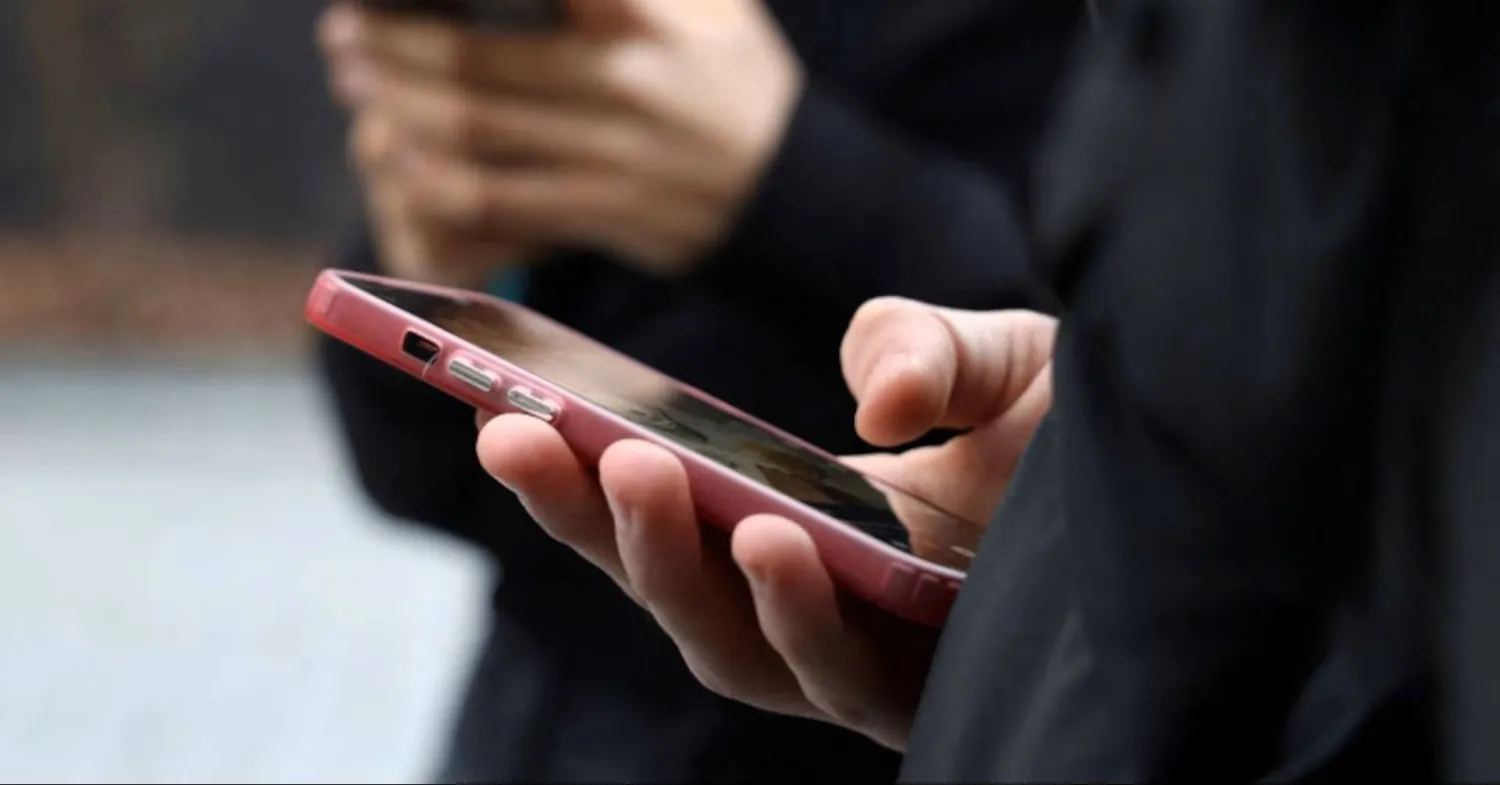
Teenagers look at their mobile phone screens during an interview with Reuters about the bill aimed at banning the use of social networks for those under 15 and mobile phones in high schools from the start of the 2026 school year, in Paris, France, February 20, 2026. (Reuters)
TT

Smaller Phone and Laptop Makers Dig in for Years of Memory Scarcity

Teenagers look at their mobile phone screens during an interview with Reuters about the bill aimed at banning the use of social networks for those under 15 and mobile phones in high schools from the start of the 2026 school year, in Paris, France, February 20, 2026. (Reuters)

Independent phone and laptop makers are redesigning products, testing incoming chips for fakes and passing on costs as a memory shortage they expect to last through 2027 squeezes the lower end of the device market.

Availability, not price, is the binding constraint, executives at three companies said.

"If you don't have allocation, you're out of the game anyhow," said Raymond van Eck, chief executive of Dutch repairable-phone maker Fairphone.

Memory maker ‌SK Hynix's CEO ‌in July said 2027 would be "the worst year ‌in ⁠the industry's history from ⁠the supply perspective," with demand outstripping capacity beyond 2030.

Counterpoint Research forecast in June that smartphone shipments would fall 13.9% this year to 1.08 billion units, the steepest annual decline on record, as memory costs make entry-level phones uneconomical to build.

THE RALLY SLOWS, THE SHORTAGE DOESN'T

TrendForce expects conventional volatile memory (DRAM) contract prices up 13-18% this quarter, against 93-98% in the first.

Jolla, a Finnish ⁠handset maker founded by former Nokia engineers, said its ‌combined storage and DRAM package rose ‌to a peak at the end of March and has held since, confounding ‌spring forecasts of a doubling by autumn.

"We are very happy for ‌that, of course, for the time being," said Chief Executive Sami Pienimäki, who expects supply to normalize only from 2028.

The scale of the mismatch became clear late last year, said Nirav Patel, chief executive of US repairable-laptop maker Framework, prompting "everyone ‌trying to grab as much supply, as much inventory as they could, as quickly as they could", which deepened ⁠the shortage.

Unable ⁠to afford a stockpile, Framework places non-cancellable orders well ahead without knowing final price, timing or volume.

DESIGNING FOR SCARCITY

Jolla designed two motherboard variants so it can swap the combined package for discrete chips. Framework made memory modular from the start; customers now fit memory salvaged from older machines.

Jolla stress-tests samples from every batch it receives, checking the chips are new rather than refurbished parts resold as first-hand. Where prices spike, Pienimäki said, sellers follow.

Memory can account for almost 60% of the bill of materials on handsets priced around $400, van Eck said. Each firm passes that on differently: Framework reprices quickly as costs land, Jolla added a paid memory upgrade, and Fairphone has not raised prices at all.


Meta, TikTok, X Lose Legal Challenge against UK Watchdog over Online Safety Data Demands

Meta logo (Reuters)
Meta logo (Reuters)
TT

Meta, TikTok, X Lose Legal Challenge against UK Watchdog over Online Safety Data Demands

Meta logo (Reuters)
Meta logo (Reuters)

Meta, TikTok and X on Friday lost a legal challenge against British regulator Ofcom over the amount of information it is demanding they provide under Britain's nascent online safety regime.

The challenge is one of the first in relation ‌to the ‌2023 Online Safety Act, ‌which ⁠sets tougher standards ⁠for platforms such as TikTok, X and Meta's Facebook and Instagram with the aim to protect children from harmful and illegal content, reported Reuters.

Ofcom has been gradually ⁠implementing the regime, with ‌its requirements backed ‌up by the threat of fines ‌of up to 10% of ‌a company's global turnover for the most serious breaches.

In February, it issued information notices requesting detailed content moderation ‌metrics from the tech companies, including data on how ⁠many ⁠posts were removed or had visibility restricted, and how many users were exposed to harmful content.

Meta, TikTok and X argued the notices create unprecedented regulatory burdens, but their case was rejected by London's High Court.

None of the companies, nor Ofcom, immediately responded to requests for comment.


US Regulator Bans Chinese Labs from Electronics Testing

A person uses his cellphone on a street in Beijing, China, 29 October 2026. (EPA)
TT

US Regulator Bans Chinese Labs from Electronics Testing

A person uses his cellphone on a street in Beijing, China, 29 October 2026. (EPA)

A US regulator voted Thursday to ban Chinese labs from testing electronic devices ranging from smartphones to cameras for use in the United States.

The move, which the Federal Communications Commission (FCC) says aims to boost security, comes a year after the agency adopted rules to ban test labs "owned or controlled by foreign adversaries."

Around 82 percent of certified devices in the United States are tested in recognized labs in China, the FCC estimates.

"These labs are a critical gateway into American communications infrastructure. And their privileged role gives them access to sensitive and confidential information about electronic products often months before the devices enter the market," the FCC said in a statement.

The ban, which will come into force in 2028, applies to test labs and certification bodies in countries that do not have a mutual recognition agreement with the United States, the agency said.

China does not have such a pact with the FCC, according to its website.

The agency said it began investigating "bad labs" after discovering in 2024 that Chinese tech giant Huawei was running an FCC-recognized Test Lab.

The FCC had previously blacklisted telecommunications equipment made by Huawei and several other Chinese firms over security concerns.

The latest ban would also protect the US technology industry by fighting against the "offshoring of electronics manufacturing, which is often collocated where devices are tested", it added.

Beijing criticized the policy which it said harmed trade between the world's top two economies.

"The US has overstretched the concept of national security, abused state power and unjustifiably cracked down on Chinese companies," Chinese foreign ministry spokesman Guo Jiakun said at a regular briefing on Friday.

"The US actions seriously hinder normal economic and trade exchanges between Chinese and US businesses and run counter to the interests of all parties, including US companies and consumers."

He said Beijing would "take necessary measures" to safeguard its interests.

The FCC has been taking steps to separate Chinese entities from US supply chains.

In March, the regulator barred authorizations of new consumer routers made in foreign countries, also on national security grounds.


Shock, Vindication, Regret: Scientists React to AI Roiling Life's Work

OpenAI and Anthropic each said one of their AI models had disproved the 'exponential time hypothesis'. Nicolas TUCAT / AFP
TT

Shock, Vindication, Regret: Scientists React to AI Roiling Life's Work

OpenAI and Anthropic each said one of their AI models had disproved the 'exponential time hypothesis'. Nicolas TUCAT / AFP

For decades, three computer scientists built their careers around an idea about the limits of what computers can do.

Artificial intelligence may now have shown it to be wrong: OpenAI and Anthropic each said on Monday one of their AI models had disproved the "exponential time hypothesis" (ETH).

The hypothesis holds that some problems are so hard that computers can solve them only by trying nearly every possible answer. Hundreds of studies in computer science and biology rely on it.

The claim is the latest in a string of AI results that have shaken academia, setting off soul-searching, most notably among mathematicians, over the value of human expertise and the future of their profession.

Russell Impagliazzo and Ramamohan Paturi of the University of California San Diego first proposed the hypothesis around 25 years ago.

Ryan Williams of MIT, a leading researcher in the field, had long publicly doubted it.

The three are now helping organize an independent review of the claims from the AI companies.

They shared their initial reactions with AFP. The interview has been edited for length and clarity.

- 'Surprise' -

Q: How did you feel when you learned that a machine may have overturned this hypothesis?

Ramamohan Paturi: My first reaction was surprise. ETH has shaped a great deal of research over the past three decades. But the research built around it would not simply disappear.

Ryan Williams: I did not fully believe the hypothesis, and I'm on the record as a prominent skeptic. So I felt vindicated.

Russell Impagliazzo: I'm afraid I am less cheerful about this than the others. I would have much preferred it to be discovered by a human who could explain their thought process. And I'd like to have shaken the (actual) hand of the person who disproved ETH.

- 'Major revolution' -

Q: What is left for human researchers facing the machine? What would you tell a student?

Paturi: These breakthroughs extend the frontier of research, but I believe shaping that frontier and moving it forward remain within human capacity and creativity. I would encourage young students to join. They should learn to use these tools while developing their own judgment.

Williams: I think we're starting to experience a major revolution in the field, and it is absolutely worth going into. Some people may not want to work in the field anymore; others may now feel motivated to.

Impagliazzo: I'm less confident. The rate of change is amazing. Until now, the same researchers mostly did both the glamorous part of research, solving, and the less glamorous part, verifying and explaining. Now it looks like much or most of the first will be done by AI, leaving humans the second -- until next year, when AI progresses further. I have no idea what research will be like next year.

- 'Worrisome' -

Q: These results come from models owned by companies, which decide what to publish and when. Does that worry you?

Paturi: Concentrated access to powerful research tools raises serious questions about who can participate, who gets early access and who shapes the research agenda. Publicly releasing a proof is important, but it does not provide equal access to the tools that produced it. A company's announcement cannot substitute for the community's assessment.

Williams: Yes, it is worrisome. It's on the AI companies to be responsible about their power, and I think they're aware of that.

Impagliazzo: When a human solves a problem, they share not just the solution but the thought process that led to it, which is often more valuable than the solution itself. Access to the AI model itself is the closest we can get to that.

- Possibilities -

Q: If confirmed, what would this result change for ordinary people?

Williams: It's still a theoretical result, but it opens up the possibility of much more efficient ways of computing in an enormous variety of scenarios.

Impagliazzo: There will be no immediate consequences for almost all people (as opposed to me and my friends!). But a first breakthrough is usually followed by improvements and generalizations, so this might eventually lead to better data analysis tools in many branches of science. The current result does not represent a security threat, but future extensions might require stronger encryption.