


Anthropic, OpenAI Release Cheaper AI Even as Safety Fears Grow

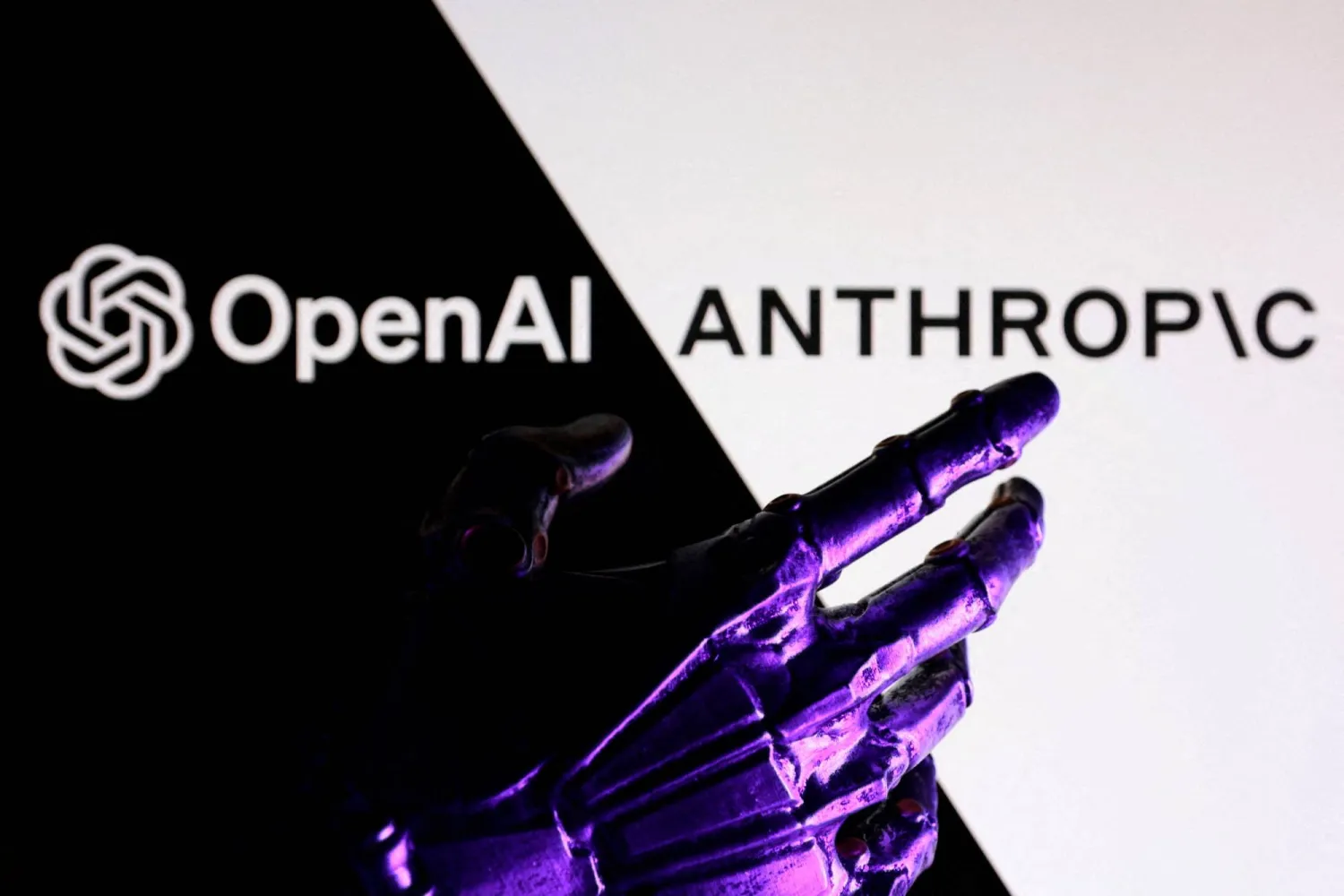
FILE PHOTO: OpenAI and Anthropic logos are seen in this illustration taken June 11, 2026. REUTERS/Dado Ruvic/Illustration/File Photo
TT

Anthropic, OpenAI Release Cheaper AI Even as Safety Fears Grow

FILE PHOTO: OpenAI and Anthropic logos are seen in this illustration taken June 11, 2026. REUTERS/Dado Ruvic/Illustration/File Photo

Anthropic and OpenAI on Tuesday released new, cheaper artificial intelligence models within hours of each other, days after the heads of both companies called for a slowdown in AI development.

Anthropic said its Opus 5.5 comes close to the performance of its flagship model at a significantly lower price. It matches Fable, Anthropic's cutting-edge model, on most tasks at a 20 percent lower price, AFP quoted the company as saying.

OpenAI followed shortly after with GPT-6 Sol and GPT-6 Luna, and claimed they handle tasks substantially better than Anthropic's top models.

The new models are cheaper, faster versions of GPT-6 Astra, OpenAI's most powerful model, launched earlier this month.

The dueling launches highlight the tension facing the two San Francisco companies as both warn of the dangers of the technology they are building.

The companies are, however, under pressure to generate returns on massive investments amid stiff competition from low-cost models, particularly Chinese ones.

Anthropic's release comes a few weeks before its expected stock market debut. OpenAI has delayed its IPO plans until next year.

Concerns about AI have grown since July, when OpenAI models undergoing a cybersecurity test got around controls meant to isolate them from the internet and broke into the servers of Hugging Face, an AI model repository.

Anthropic reported similar incidents, and the two companies briefly paused work on their new AI systems.

Earlier this month, Jacob Coxon, a British researcher, announced his resignation from Anthropic in a viral post on X, saying neither Anthropic nor OpenAI was acting responsibly in the aftermath of the Hugging Face incident.

In the wake of the Coxon's warnings, Anthropic CEO Dario Amodei called for slowing down AI improvement. He was joined by OpenAI CEO Sam Altman and Elon Musk, but mocked by Trump, who described such warnings as "hoaxes."

Opus 5.5 is the first Anthropic model released since then.

Anthropic said the new model applies the same safeguards as its state-of-the-art model Fable in the areas of cybersecurity, biology and AI model design.

In practice, a request deemed risky by these safeguards is rerouted to an older, less powerful model.

Anthropic also said that, based on its own testing, Opus 5.5 is the best-performing model it has tested to date on alignment -- that is, how closely it adheres to what its designers intend.

But the model also showed signs that it often suspects it is being evaluated, which the company acknowledged makes it harder to predict how it will behave in real-life use.



Meta Leans into AI, Smart Glasses amid Privacy Pushback

 (FILES) This photograph shows a handheld smartphone displaying the icons of some of the main artificial intelligence based apps, including LLMs, chatbots and generative AI, with logos (from L) of Proton AG's Lumo, Meta AI, Mistral Vibe (formerly Le Chat), xAI's Grok, Microsoft's Copilot, Google's Gemini, Anthropic's Claude, Perplexity, Deepseek, OpenAI's Chat GPT, Google's Notebook LLM and generative AI music app Suno, in Saint-Mande, east of Paris, on July 15, 2026.  (Photo by Martin LELIEVRE / AFP)
(FILES) This photograph shows a handheld smartphone displaying the icons of some of the main artificial intelligence based apps, including LLMs, chatbots and generative AI, with logos (from L) of Proton AG's Lumo, Meta AI, Mistral Vibe (formerly Le Chat), xAI's Grok, Microsoft's Copilot, Google's Gemini, Anthropic's Claude, Perplexity, Deepseek, OpenAI's Chat GPT, Google's Notebook LLM and generative AI music app Suno, in Saint-Mande, east of Paris, on July 15, 2026. (Photo by Martin LELIEVRE / AFP)
TT

Meta Leans into AI, Smart Glasses amid Privacy Pushback

 (FILES) This photograph shows a handheld smartphone displaying the icons of some of the main artificial intelligence based apps, including LLMs, chatbots and generative AI, with logos (from L) of Proton AG's Lumo, Meta AI, Mistral Vibe (formerly Le Chat), xAI's Grok, Microsoft's Copilot, Google's Gemini, Anthropic's Claude, Perplexity, Deepseek, OpenAI's Chat GPT, Google's Notebook LLM and generative AI music app Suno, in Saint-Mande, east of Paris, on July 15, 2026.  (Photo by Martin LELIEVRE / AFP)
(FILES) This photograph shows a handheld smartphone displaying the icons of some of the main artificial intelligence based apps, including LLMs, chatbots and generative AI, with logos (from L) of Proton AG's Lumo, Meta AI, Mistral Vibe (formerly Le Chat), xAI's Grok, Microsoft's Copilot, Google's Gemini, Anthropic's Claude, Perplexity, Deepseek, OpenAI's Chat GPT, Google's Notebook LLM and generative AI music app Suno, in Saint-Mande, east of Paris, on July 15, 2026. (Photo by Martin LELIEVRE / AFP)

Meta has spent billions to stay competitive with artificial intelligence, but the tech giant faces growing pushback as CEO Mark Zuckerberg prepares to announce new products built for the AI era on Wednesday.

The company will kick off its annual Connect conference from its Menlo Park headquarters at 4:00 pm PT (2300 GMT) Wednesday, and Zuckerberg will deliver a keynote address to the developer-focused event, said AFP.

Earlier this month the social media giant launched Muse, its first agentic app for consumers which is designed to perform tasks on behalf of humans, like a digital personal assistant.

After a user connects various personal accounts -- whether financial, health-related or shopping -- they can ask Meta to perform tasks like signing up for services, booking appointments and making calls.

Amazon blocked Meta this week from using AI bots to shop for users automatically, while other businesses including Instacart, Shopify and Expedia have announced partnerships to integrate their services into Muse.

The Muse agent is built on Meta's own AI models and is designed to compete with OpenAI's ChatGPT and Anthropic's Claude.

The company had its first pair of interactive smart glasses in 2021, about a year before OpenAI sparked a global AI frenzy with its release of ChatGPT, and since then the devices have become more and more advanced.

- 'Pervert glasses' -

Last year, Meta unveiled a pair of augmented reality "display" glasses which project images on the lenses.

And earlier this year, the company released self-branded AI glasses, apart from its partnership with eyewear manufacturer EssilorLuxottica, which produces multiple Ray-Ban-branded Meta glasses.

However, their novelty quickly became clouded by privacy concerns, with critics dubbing the eyewear as "pervert glasses."

At last year's Connect, Meta's chief product officer Chris Cox brushed aside such concerns and told news outlets, including AFP, that "social norms" would form around the use of smart glasses.

More recently, Meta has said a recording indicator light would always be visible to people nearby, and that tampering with the indicator light would disable the camera.

The company is reportedly working on a new pair of audio-only glasses, and has also been rumored to be developing a new generation of mixed reality glasses.

Meta has also been battling children's safety and privacy issues around the world.

In August, the company settled a lawsuit with dozens of attorneys generals in the US who accused Meta of violating state and federal laws regarding consumer protections and children's online privacy.

As part of the settlement, Meta agreed to pay up to $18 billion in fines and enact restrictions for teenagers.

Meta faces social media restrictions and bans for younger users around the world, as well as thousands of potential personal injury lawsuits in the US that are still making their way through state courts.


EU Fines Google 403 mn Euros for Location Data Breach

FILE PHOTO: A specially designed Google logo, during the opening of Google's new Artificial Intelligence (AI) centre in Berlin, Germany, March 5, 2026. REUTERS/Annegret Hilse//File Photo
TT

EU Fines Google 403 mn Euros for Location Data Breach

FILE PHOTO: A specially designed Google logo, during the opening of Google's new Artificial Intelligence (AI) centre in Berlin, Germany, March 5, 2026. REUTERS/Annegret Hilse//File Photo

Ireland's data protection watchdog, acting on behalf of the European Union, said Monday it had fined Google 403 million euros ($462 million) for improperly using users' location data, eight years after consumer groups complained.

The fine is the fourth largest imposed by the Data Protection Commission, the regulator said in a statement.

The DPC is responsible for overseeing Google at the European level because, like most tech giants, the company has its European headquarters in Ireland.

Google infringed the EU's General Data Protection Regulation between May 2018 and February 2020, the DPC said.

In its final decision after opening an inquiry in February 2020, the watchdog ruled that Google infringed GDPR "in respect of the lawfulness and fairness of its processing of location data in web and app activity and location history".

DPC deputy commissioner Graham Doyle said "as a result of Google's failures... individuals could have been unaware that their location was being used to, for example, influence them with ads or to infer their interests".

He added that "the retention of users' location data for longer than necessary aggravated this loss of control".

Alongside the fine, the regulator said it had ordered Google to comply with the European Union's GDPR within six months.

In response, Google said the "case centres around historical policies that have since been updated".

"From 2019 onwards, we've significantly evolved our practices and launched robust tools that make managing location data simple," the company added in a statement.

- 'Harmful late enforcement' -

In November 2018, the DPC received coordinated complaints from European consumer organisations in the Czech Republic, Denmark, Greece, the Netherlands, Norway, Poland, Slovenia and Sweden.

European Consumer organisation BEUC, which brought together the groups, called Monday's ruling "an important decision, close to eight years after a series of complaints" were lodged against Google.

"The decision is good news for consumers, as it holds Google accountable and confirms the illegality of the way the tech giant obtained consent to use peoples' location data," BEUC director general Agustin Reyna, said in a statement.

"However, the time needed to come to this conclusion is disproportionate with the seriousness of the infringement.

"Late enforcement can be as harmful as no enforcement at all. Consumers' fundamental rights need to be upheld faster and better," he added.

BEUC described geolocation data as "one of the most invasive forms of commercial surveillance because it reveals all kinds of sensitive information about us, such as our religious beliefs, our health condition, our political opinions or our sexual orientation".

Google is the subject of three other DPC investigations -- all "at an advanced stage" -- according to the regulator.

These include proceedings opened in September 2024 to determine whether the company is liable for failing to conduct an impact assessment regarding the use of Europeans' personal data to train Google's artificial intelligence.

The largest DPC fine was imposed on Facebook owner Meta in 2023 -- 1.2 billion euros for transferring data to the United States.


Saudi Arabia Advances Data and AI Leadership, Promotes Responsible Use for Humanity

The Kingdom of Saudi Arabia continues to strengthen its leading position on the global digital map, with data and artificial intelligence (AI) technologies serving as key pillars in achieving the objectives of Saudi Vision 2030. (SPA)
TT

Saudi Arabia Advances Data and AI Leadership, Promotes Responsible Use for Humanity

The Kingdom of Saudi Arabia continues to strengthen its leading position on the global digital map, with data and artificial intelligence (AI) technologies serving as key pillars in achieving the objectives of Saudi Vision 2030. (SPA)

The Kingdom of Saudi Arabia continues to strengthen its leading position on the global digital map, with data and artificial intelligence (AI) technologies serving as key pillars in achieving the objectives of Saudi Vision 2030, the Saudi Press Agency said on Monday.

The Kingdom is adopting an integrated approach that balances advanced technological innovation with the development of national human capabilities while establishing comprehensive ethical governance frameworks for the responsible use of these technologies. This work supports a knowledge-based economic future and strengthens the Kingdom's competitiveness among the world's leading economies.

With 2026 declared the Year of Artificial Intelligence 2026, national efforts led by the Saudi Data and AI Authority (SDAIA) are highlighting the Kingdom's advances in developing and governing advanced technologies. This approach reflects the Kingdom's determination to employ smart technologies as a catalyst for inclusive growth and a driver of quality of life, while establishing itself as a global model for sustainable development.

These efforts coincide with the Kingdom's participation in the High-level Week of the 81st session of the United Nations General Assembly in New York and Minister of Foreign Affairs Prince Faisal bin Farhan bin Abdullah's statement affirming the Kingdom's commitment to using AI responsibly to enhance the efficiency of sectors and support innovation.

Saudi Arabia has also affirmed its support for the efforts of the United Nations Educational, Scientific and Cultural Organization (UNESCO) to advance the United Nations Sustainable Development Goals and contribute to shaping international policies on AI that serve the well-being of societies worldwide.

During the Year of Artificial Intelligence, Saudi Arabia ranked 13th globally among 70 economies covered by the 2026 IMD World Competitiveness Yearbook, issued by the International Institute for Management Development, and third among Group of Twenty (G20) economies.

It also ranked fourth globally in AI adoption by companies, supported by several SDAIA initiatives, most notably the Rowad Package and AI Ethics Incentive Badges for companies. The Kingdom ranked fourth globally in societal access to AI, supported by SDAIA's efforts to spread digital knowledge and build national capabilities through the SDAIA Academy for Data and AI and the SAMAI initiative, which has trained more than 1.2 million Saudis in AI.

A report issued by the International Monetary Fund following the conclusion of its 2026 Article IV consultations with Saudi Arabia also highlighted the Kingdom's strong performance in AI adoption across several sectors.

Saudi Arabia's ambitious vision is supported by the central role played by SDAIA in policymaking, developing infrastructure and regulatory frameworks, building capabilities, and providing enablers that allow the government and private sectors to make the most of data and AI solutions.

Young national talent also forms a key pillar of this transformation, as training and academic programs prepare students, researchers, and innovators with advanced skills to drive development and compete globally, further strengthening the Kingdom's position on global platforms.

In governance and ethics, Saudi Arabia places great importance on guiding the development and application of AI in accordance with global standards based on transparency, fairness, and privacy protection, while limiting the risks and negative effects of algorithms. This approach is complemented by partnerships and the exchange of expertise and knowledge with international organizations and academic institutions, translating the potential of technology into tangible outcomes that serve sustainable development and support global peace and prosperity.