
Effective Altruism: The Philosophy Behind Silicon Valley's AI Fears

Effective Altruism conspicuously connects a number of leaders in American tech and finance. ANDREJ IVANOV / AFP
TT

Effective Altruism: The Philosophy Behind Silicon Valley's AI Fears

Effective Altruism conspicuously connects a number of leaders in American tech and finance. ANDREJ IVANOV / AFP

Dario Amodei says he is not part of it. But the Anthropic chief's personal and professional circle is entwined with Effective Altruism (EA), a philanthropic movement that has become one of the most contested ideas in Washington and Silicon Valley.

To its proponents, EA is a rational, evidence-based way to do good. To many in the Trump administration, it fuels unfounded and exaggerated fears about artificial intelligence -- the kind of warnings Amodei has become known for.

Here are some facts about EA:

- Philosophical roots -

EA is a loosely defined movement that uses evidence and reason to work out how to do the most good with a person's money and time.

Its intellectual roots can be traced to Australian philosopher Peter Singer.

If reasonable people would agree it is morally right to ruin one's clothes to save a drowning child, he argued in 1972, they should also sacrifice greater resources and comforts to save lives in foreign lands -- because the distance should not matter.

The idea took hold among wealthy donors who felt a moral obligation to give, but wanted their money to do as much good as possible.

- Giving what you can -

EA took shape as a decentralized movement during the heady, techno-optimistic days of the late 2000s and early 2010s -- when many believed social media and smartphones would promote empathy and democracy.

In 2007, financial professionals Holden Karnofsky and Elie Hassenfeld quit their jobs to launch GiveWell, which produced data-driven analyses of charities' effectiveness.

Karnofsky was once Amodei's roommate, and is now married to his sister Daniela, who co-founded Anthropic with him.

Two years later, Oxford University philosophers William MacAskill and Toby Ord launched "Giving What We Can," encouraging people to donate at least 10 percent of their income to tackling global poverty.

"The critique of the status quo was that existing attempts to evaluate the work of charities and nonprofits focused on things like overhead and executive pay," Theodore Lechterman, a philosophy professor at IE University in Madrid, told AFP.

GiveWell and others wanted to ask, "How much good is this organization actually doing in the world?" Lechterman said.

EA's three big causes today are global poverty, factory-farmed animals and "the most controversial one -- global catastrophic risk," said Richard Chappell, a professor at University of Miami and an EA proponent.

That worry about the future is where AI comes in.

- Data-driven -

Over the last 15 years, EA has found eager followers in American tech and some corners of Wall Street.

"Since the movement is data driven, it's a relatively easier sell to people who...make decisions on the basis of data," Lechterman said.

That numbers-backed thinking means engineers, software developers or entrepreneurs might all find it more appealing than humanities graduates, Lechterman said.

Among them was Sam Bankman-Fried, the crypto-finance wunderkind sentenced in 2024 to 25 years in prison for fraud.

A vocal champion of the movement, Bankman-Fried said he went into finance to make a fortune he could give away.

He also was an early investor in Anthropic.

- EA and AI -

As AI worries grew, EA philosophers such as MacAskill were "kind of thinking about the future of humanity," said Brian Berkey of the University of Pennsylvania.

The result was long-termism, a philosophy that "came to play a very central role" in the movement.

MacAskill reportedly brokered contacts between Bankman-Fried and Elon Musk.

Musk was for years outspoken about the threat he believed AI posed to humanity, and in 2015 helped create OpenAI to guard against it.

EA's focus on AI also owes much to a neighboring movement, rationalism -- an online community that grew up around writer Eliezer Yudkowsky, who has warned since the 2000s that superintelligent AI could wipe out humanity.

The two movements overlap heavily in membership and ideas, sharing an emphasis on reasoning through evidence and probabilities, and a conviction that preventing human extinction should be a top priority.

Both converged last month on Jacob Coxon, a 27-year-old researcher who quit Anthropic warning that AI companies were "gambling with our lives." His post was viewed more than 100 million times.

Days later, Amodei published a lengthy essay arguing that AI's mounting risks warranted a slowdown.


US Closes Loophole on China’s Access to AI Chips After Nvidia Scandal

Semiconductor chips are seen on a printed circuit board in this illustration picture taken February 17, 2023. (Reuters)
TT

US Closes Loophole on China’s Access to AI Chips After Nvidia Scandal

Semiconductor chips are seen on a printed circuit board in this illustration picture taken February 17, 2023. (Reuters)

The US Commerce Department on Monday issued a rule aimed at stopping Chinese companies from using advanced American AI chips housed in data centers in other countries.

The move comes days after a spy scandal forced Jensen Huang to step down as head of Nvidia, amid widening suspicions that he may have helped Chinese companies gain access to his company's most powerful AI chips in violation of US rules.

The Commerce Department, led by Howard Lutnick, has been accused by other voices inside the Trump White House of failing to properly enforce export controls that bar sales of Nvidia's most powerful AI chips to China.

One loophole allowed Chinese firms to rent AI computing power from data centers in Southeast Asia and elsewhere that run on US hardware not available for export to China.

Scrutiny of that loophole grew after Huang resigned last week over his relationship with Alice Huang, a former executive at Singapore-based Megaspeed.

US investigators suspect the Nvidia customer of illegally channeling the company's technology to China.

She is also suspected by some in US government to be an asset for Chinese secret services, according to The New York Times.

Megaspeed is under US investigation for possible export control violations and has denied wrongdoing. Alice Huang, who is not related to Jensen Huang, has not been charged, and Beijing has rejected the espionage allegations.

Treasury Secretary Scott Bessent on Friday blamed the Commerce Department for failing to blacklist Megaspeed over the alleged violations.

Under the new rule, data centers anywhere in the world will need a US license to provide large volumes of computing power from advanced chips to companies headquartered in China, Macau or other countries under US arms embargoes.

The rule also requires licenses to ship advanced chips to Singapore, Malaysia, Thailand, Indonesia and Brazil, which it says present a "higher-than-normal risk of diversion."

The rule "is designed to ensure that existing restrictions on access to sensitive American technology cannot be circumvented through remote computing arrangements involving data centers in third countries," the department's Bureau of Industry and Security (BIS) said in a statement.

BIS said the rule was "written by and at the direction of" the Treasury Department and the National Security Council.

The rule also formally rescinds the AI Diffusion Rule issued under former president Joe Biden. That rule set up a global licensing system for AI chips, and the Trump administration said in May 2025 that it would scrap it.


Tesla Invites Select Customers to Buy Cybercab for Personal Use

A passenger waves from a Tesla Cybercab driverless taxi as it travels through downtown Austin, Texas, US, October 27, 2026. (Reuters)
TT

Tesla Invites Select Customers to Buy Cybercab for Personal Use

A passenger waves from a Tesla Cybercab driverless taxi as it travels through downtown Austin, Texas, US, October 27, 2026. (Reuters)

Tesla said on Friday it was inviting select customers to buy the Cybercab for personal use, marking a push towards delivering fully designed autonomous vehicles to customers.

Tesla posted the announcement on X ‌with an ‌image of the golden butterfly door ‌two-seater, ⁠priced at $29,990 with ⁠an “Autonomy Subscription” of $299 a month.

Chief Executive Elon Musk said in a post on X that the offering would be available nationwide as Tesla receives regulatory approval.

"The monthly fee is too ⁠high," Musk said, adding that ‌it should match the ‌cost of Tesla Full Self Driving and connectivity ‌for other models, which is about $115 ‌per month.

The EV maker aims to start selling its Cybercab robotaxis to the public by the end of this year, ‌Lars Moravy, Tesla's vice president of vehicle engineering, said last month.

The ⁠Cybercab will work unsupervised in all the same geo locations as the robotaxi, Tesla’s head of artificial intelligence, Ashok Elluswamy, said in a separate X post.

Tesla launched its unsupervised robotaxi service in Austin, Texas, in June 2025, expanded the offering to Dallas and Houston in April 2026 and rolled it out in Miami in July 2026.


Microsoft Says All Services Restored After Global Outage

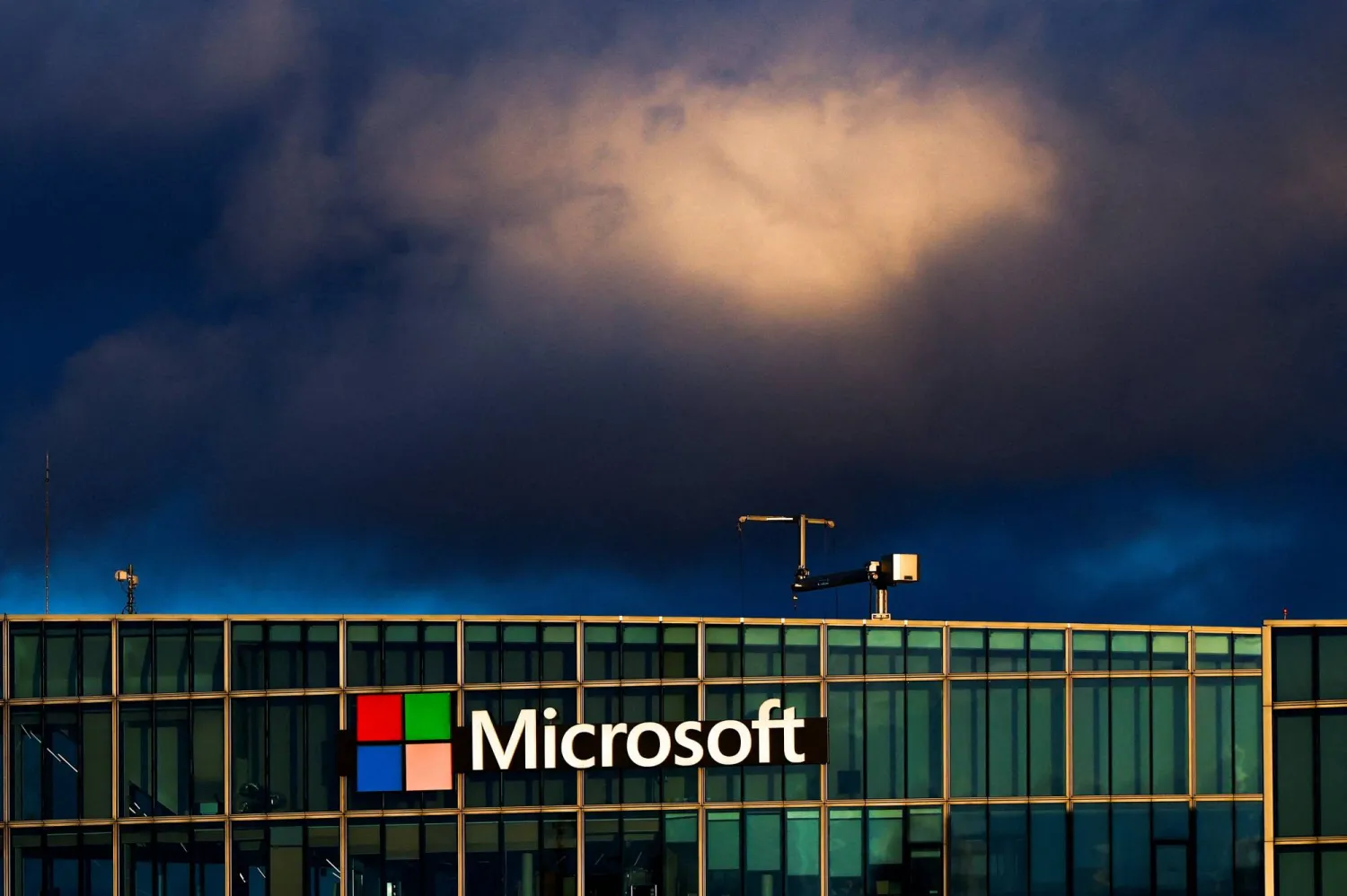
A view shows a Microsoft logo at Microsoft offices in Issy-les-Moulineaux near Paris, France, January 9, 2025. (Reuters)
TT

Microsoft Says All Services Restored After Global Outage

A view shows a Microsoft logo at Microsoft offices in Issy-les-Moulineaux near Paris, France, January 9, 2025. (Reuters)

Microsoft said on Saturday that services had fully recovered across Teams, Outlook and its other products, ending a global outage that crippled online communications for businesses and governments for over 24 hours. 

"We have completed our efforts to address the underlying issue of the incident and restored service to the remaining impacted customers and regions," the company posted on X. 

Microsoft had said server issues were behind the incident that also affected its Copilot AI assistant, and that it was not aware of any malicious activity, ruling out AI as the cause. 

Outlook and Teams are two of the most widely used workplace applications with hundreds of millions of users. The outage prevented people from performing essential functions such as sending emails, managing calendars and hosting virtual meetings. 

It affected government agencies from Australia and Japan to the United States, caused delays at trading firms, hindered some companies from publishing earnings and prompted airlines to warn customers of communication lags, according to public statements. 

Organizations that host Microsoft services on ‌their own servers, rather than ‌in the cloud, were somewhat spared. 

ANOTHER OUTAGE FOR MICROSOFT 

The outage, reports of which started climbing around ‌1725 GMT on ⁠Thursday according to ⁠Ookla, is one of the longest in Microsoft's history and the second disruption to its services this year. 

Microsoft said the outage specifically hit features tied to Exchange Online — its cloud-based email and scheduling hub — leaving unconnected applications operational. 

The incident deepens questions about the global reliance on a handful of Big Tech companies that supply both the essential software and the cloud infrastructure that underpins it. 

It also highlighted the dependence on Microsoft's workplace software, with outage reports spiking as employees began their workdays across Asia and Europe, according to Downdetector's parent company, Ookla. 

Downdetector logged more than 7.4 million reports worldwide, peaking at nearly 20,000 a minute, more than 1,500 times normal levels. 

"It shows how much of the working day now runs through one provider's email and collaboration tools," said Luke Kehoe, lead industry analyst at Ookla. 

Microsoft shares closed flat at $523.88 on Friday. The stock has ⁠gained roughly 8% so far this year. 

Disruptions and financial losses from the outage could result in numerous insurance claims, ‌but the overall hit to insurers is expected to be limited, said Mario De Cicco, vice president ‌of European financial institutions at Morningstar DBRS. 

De Cicco estimated global insured losses from the incident at between $300 million and $500 million, well below the $400 million to $1.5 billion financial toll from the ‌2024 CrowdStrike outage that crashed more than 8 million Windows-based computers and caused widespread disruptions. 

Microsoft also faced an outage with its 365 services in January this ‌year and in October last year. Last month, it reported an outage of its Azure cloud platform that impacted its suite of productivity software and a range of industries worldwide. 

"The bigger worry is that this is not the first Microsoft 365 outage this year," said Josh Gilbert, a market analyst at trading platform eToro. 

"If reliability starts to look like a recurring problem, it hands every IT department a reason to think twice before putting even more of their business in one provider's hands." 

Still, some analysts have questioned whether such ‌incidents can push customers on to rivals due to the steep switching costs of replacing tools embedded so deeply in daily operations. 

TRADES HAD TO BE CONFIRMED BY FAX 

A spokesperson for the UK government said it was ⁠working with Microsoft to find a solution ⁠for the outage that hit organizations such as the NHS and London's Metropolitan Police. 

Lack of access to emails and other services was impacting the Metropolitan Police's ability to report some crimes online, though its ability to respond to calls was not affected. 

The NHS said its local services were turning to alternate measures such as using IT systems or paper records. 

For businesses, the fallout was widespread. 

European exchange operator Euronext reported email disruptions, British insurer Aviva activated backups for its earnings calls and Danish shipping giant Maersk warned customers of delayed updates. 

American AI giants OpenAI and Anthropic also faced issues with Microsoft connectors that were later resolved, while Indian airlines IndiGo, Akasa Air and Air India said their email support services were impacted. 

The outage also disrupted fund management at Taiwanese securities firms, life insurers, and investment trust companies. One of the companies went as far as cancelling a bond repurchase transaction, a source familiar with the situation told Reuters. 

Another Taiwanese financial company resorted to using fax to confirm trades, a second source said. 

In the US, electric truck maker Workhorse Group rescheduled its results on Thursday to November 16, while Switzerland's Richemont briefly delayed its first-half results announcement on Friday. 

In Australia, where the spy agency and federal police were among organizations caught in the outage, Cyber Security Minister Tony Burke said Microsoft does not suspect a cyberattack.