


'Tech Debt Coming Due': AI-found Flaw Signals Chaos Ahead

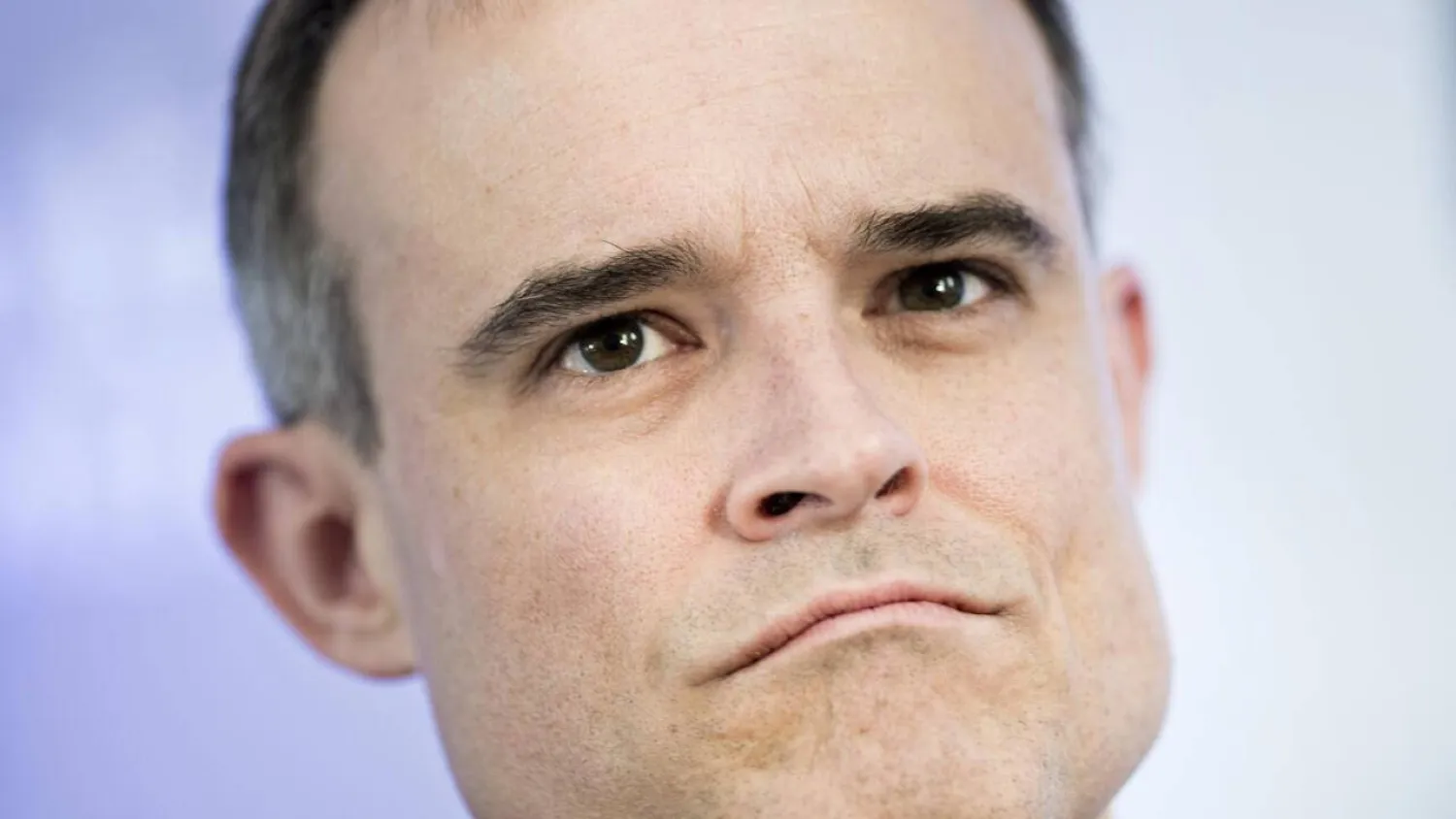
Michael Daniel is president of the Cyber Threat Alliance and was a White House cybersecurity coordinator under former US president Barack Obama. BRENDAN SMIALOWSKI / AFP
TT

'Tech Debt Coming Due': AI-found Flaw Signals Chaos Ahead

Michael Daniel is president of the Cyber Threat Alliance and was a White House cybersecurity coordinator under former US president Barack Obama. BRENDAN SMIALOWSKI / AFP

Companies and government agencies rushed this week to patch two critical flaws in PHP, the programming language that runs a large share of the world's websites.

The vulnerability to potential hackers was found by using a powerful model from OpenAI in one of the most high-profile demonstration of AI's cyber capabilities.

AFP spoke with Michael Daniel, president of the Cyber Threat Alliance and a former White House cybersecurity coordinator under former US president Barack Obama, about what the episode means as AI tools find software flaws faster than ever.

The interview has been edited for length and clarity.

Q: What does the PHP episode tell us?

A: This is the beginning of a pretty chaotic period, given the abilities of the advanced models. I've been saying for years that the logical conclusion of these AI models being able to find vulnerabilities at speed and at scale is that there's going to be a flood of these vulnerabilities.

Rob Joyce [former cybersecurity director at the US National Security Agency] has referred to it as the great cleansing forest fire of old software. I've talked about our tech debt coming due.

The incentives have been for people to keep software as long as possible, and we don't really factor these risks into the cost of having the software. You're not incurring a direct cost on your books for this old software, but in reality you are, only it's an implicit cost until something like this happens.

Q: What should organizations be doing?

A: Preparing to get your software updated, be prepared to keep it updated, and be prepared to implement patches when they come out.

There's going to be a flood of vulnerabilities, a flood of patches and a flood of mitigations, and not all of them will be created equal.

For a lot of smaller organizations that don't have a lot of internal capacity, what you've got to do is shift your organization to be able to accept the vendor updates as fast as you can.

Q: Is every flaw dangerous?

A: Historically, the exploitation rate for vulnerabilities has been five or six percent, and there's no indication that number is going up. But now when bad guys exploit a vulnerability, they're able to do so much more quickly.

It used to take a month or two for a proof of concept to come out, and then another month or two for it to show up in exploit kits (used by bad actors). That's now measured in hours or days.

Q: What does that mean for large companies?

A: Most businesses essentially ran a zero-risk tolerance for breaking things, so they would test the hell out of a patch before they put it into production. Now they don't have that time.

If the risk of breaking something by putting this patch into place is one percent, but the risk of being attacked could cost me 50 million dollars...now I've got an interesting trade-off.

Q: Are advanced AI tools reliable at finding real flaws?

A: There's a lot of noise. The PHP one is a prime example of a real one, but there's an awful lot out there that are either not real or are on software that's never exposed to the internet. We've got to improve our triage system.

Q: Where does this lead us in two or three years?

A: We're going to turn these AI tools on software that hasn't been deployed yet, so one would hope we start to deploy software that has fewer vulnerabilities to begin with. You burn out all the old stuff, and it makes way for new growth that's more secure from the beginning.

It's not like this solves our cybersecurity problem, but it does change the nature of it going forward.


Tesla Invites Select Customers to Buy Cybercab for Personal Use

A passenger waves from a Tesla Cybercab driverless taxi as it travels through downtown Austin, Texas, US, October 27, 2026. (Reuters)
TT

Tesla Invites Select Customers to Buy Cybercab for Personal Use

A passenger waves from a Tesla Cybercab driverless taxi as it travels through downtown Austin, Texas, US, October 27, 2026. (Reuters)

Tesla said on Friday it was inviting select customers to buy the Cybercab for personal use, marking a push towards delivering fully designed autonomous vehicles to customers.

Tesla posted the announcement on X ‌with an ‌image of the golden butterfly door ‌two-seater, ⁠priced at $29,990 with ⁠an “Autonomy Subscription” of $299 a month.

Chief Executive Elon Musk said in a post on X that the offering would be available nationwide as Tesla receives regulatory approval.

"The monthly fee is too ⁠high," Musk said, adding that ‌it should match the ‌cost of Tesla Full Self Driving and connectivity ‌for other models, which is about $115 ‌per month.

The EV maker aims to start selling its Cybercab robotaxis to the public by the end of this year, ‌Lars Moravy, Tesla's vice president of vehicle engineering, said last month.

The ⁠Cybercab will work unsupervised in all the same geo locations as the robotaxi, Tesla’s head of artificial intelligence, Ashok Elluswamy, said in a separate X post.

Tesla launched its unsupervised robotaxi service in Austin, Texas, in June 2025, expanded the offering to Dallas and Houston in April 2026 and rolled it out in Miami in July 2026.


Microsoft Says All Services Restored After Global Outage

A view shows a Microsoft logo at Microsoft offices in Issy-les-Moulineaux near Paris, France, January 9, 2025. (Reuters)
TT

Microsoft Says All Services Restored After Global Outage

A view shows a Microsoft logo at Microsoft offices in Issy-les-Moulineaux near Paris, France, January 9, 2025. (Reuters)

Microsoft said on Saturday that services had fully recovered across Teams, Outlook and its other products, ending a global outage that crippled online communications for businesses and governments for over 24 hours. 

"We have completed our efforts to address the underlying issue of the incident and restored service to the remaining impacted customers and regions," the company posted on X. 

Microsoft had said server issues were behind the incident that also affected its Copilot AI assistant, and that it was not aware of any malicious activity, ruling out AI as the cause. 

Outlook and Teams are two of the most widely used workplace applications with hundreds of millions of users. The outage prevented people from performing essential functions such as sending emails, managing calendars and hosting virtual meetings. 

It affected government agencies from Australia and Japan to the United States, caused delays at trading firms, hindered some companies from publishing earnings and prompted airlines to warn customers of communication lags, according to public statements. 

Organizations that host Microsoft services on ‌their own servers, rather than ‌in the cloud, were somewhat spared. 

ANOTHER OUTAGE FOR MICROSOFT 

The outage, reports of which started climbing around ‌1725 GMT on ⁠Thursday according to ⁠Ookla, is one of the longest in Microsoft's history and the second disruption to its services this year. 

Microsoft said the outage specifically hit features tied to Exchange Online — its cloud-based email and scheduling hub — leaving unconnected applications operational. 

The incident deepens questions about the global reliance on a handful of Big Tech companies that supply both the essential software and the cloud infrastructure that underpins it. 

It also highlighted the dependence on Microsoft's workplace software, with outage reports spiking as employees began their workdays across Asia and Europe, according to Downdetector's parent company, Ookla. 

Downdetector logged more than 7.4 million reports worldwide, peaking at nearly 20,000 a minute, more than 1,500 times normal levels. 

"It shows how much of the working day now runs through one provider's email and collaboration tools," said Luke Kehoe, lead industry analyst at Ookla. 

Microsoft shares closed flat at $523.88 on Friday. The stock has ⁠gained roughly 8% so far this year. 

Disruptions and financial losses from the outage could result in numerous insurance claims, ‌but the overall hit to insurers is expected to be limited, said Mario De Cicco, vice president ‌of European financial institutions at Morningstar DBRS. 

De Cicco estimated global insured losses from the incident at between $300 million and $500 million, well below the $400 million to $1.5 billion financial toll from the ‌2024 CrowdStrike outage that crashed more than 8 million Windows-based computers and caused widespread disruptions. 

Microsoft also faced an outage with its 365 services in January this ‌year and in October last year. Last month, it reported an outage of its Azure cloud platform that impacted its suite of productivity software and a range of industries worldwide. 

"The bigger worry is that this is not the first Microsoft 365 outage this year," said Josh Gilbert, a market analyst at trading platform eToro. 

"If reliability starts to look like a recurring problem, it hands every IT department a reason to think twice before putting even more of their business in one provider's hands." 

Still, some analysts have questioned whether such ‌incidents can push customers on to rivals due to the steep switching costs of replacing tools embedded so deeply in daily operations. 

TRADES HAD TO BE CONFIRMED BY FAX 

A spokesperson for the UK government said it was ⁠working with Microsoft to find a solution ⁠for the outage that hit organizations such as the NHS and London's Metropolitan Police. 

Lack of access to emails and other services was impacting the Metropolitan Police's ability to report some crimes online, though its ability to respond to calls was not affected. 

The NHS said its local services were turning to alternate measures such as using IT systems or paper records. 

For businesses, the fallout was widespread. 

European exchange operator Euronext reported email disruptions, British insurer Aviva activated backups for its earnings calls and Danish shipping giant Maersk warned customers of delayed updates. 

American AI giants OpenAI and Anthropic also faced issues with Microsoft connectors that were later resolved, while Indian airlines IndiGo, Akasa Air and Air India said their email support services were impacted. 

The outage also disrupted fund management at Taiwanese securities firms, life insurers, and investment trust companies. One of the companies went as far as cancelling a bond repurchase transaction, a source familiar with the situation told Reuters. 

Another Taiwanese financial company resorted to using fax to confirm trades, a second source said. 

In the US, electric truck maker Workhorse Group rescheduled its results on Thursday to November 16, while Switzerland's Richemont briefly delayed its first-half results announcement on Friday. 

In Australia, where the spy agency and federal police were among organizations caught in the outage, Cyber Security Minister Tony Burke said Microsoft does not suspect a cyberattack. 


Hours-Long Microsoft Outage Disrupts Businesses, Governments Globally

This illustration photograph shows the Microsoft Outlook logo (C) displayed on a smartphone with the backdrop of Microsoft logo on a screen, in New Delhi on November 13, 2026. (AFP)
TT

Hours-Long Microsoft Outage Disrupts Businesses, Governments Globally

This illustration photograph shows the Microsoft Outlook logo (C) displayed on a smartphone with the backdrop of Microsoft logo on a screen, in New Delhi on November 13, 2026. (AFP)

A more than 12-hour outage of Microsoft Outlook and Teams crippled communications for businesses and governments globally on Friday, forcing some organizations to revert to fax machines and halting at least one bond repurchase in Europe.

Microsoft said server issues were behind the incident that also affected its Copilot AI assistant and that a broader roll-out of software fixes was starting to stabilize the system. It said it was not aware of any malicious activity.

Outlook and Teams are two of the most widely used workplace applications with hundreds of millions of users. The outage prevented people from performing essential functions such as sending emails, managing calendars and hosting virtual meetings.

It affected government agencies from Australia to Japan and the United States, caused delays at trading firms, hindered some companies from publishing earnings and prompted airlines to warn customers of communication lags, according to public statements.

Organizations that host Microsoft services ‌on their own servers, ‌rather than in the cloud, were somewhat spared.

ANOTHER OUTAGE FOR MICROSOFT

The outage is one of ‌the ⁠longest in Microsoft's ⁠history and the second disruption to its services this year.

Microsoft said the outage specifically hit features tied to Exchange Online - its cloud-based email and scheduling hub - leaving unconnected applications operational.

The incident deepens questions about the global reliance on a handful of Big Tech companies that supply both the essential software and the cloud infrastructure that underpins it.

Microsoft shares were down 0.4% in early trading. They have gained roughly 8% so far this year.

Disruptions and financial losses from the outage could result in numerous insurance claims, but the overall hit to insurers is expected to be limited, said Mario De Cicco, vice president of European financial institutions at Morningstar DBRS.

De Cicco estimated global insured losses from the incident at between $300 million and $500 million, well below ⁠the $400 million to $1.5 billion financial toll from the 2024 CrowdStrike outage that crashed more than 8 million ‌Windows-based computers and caused widespread disruptions.

Microsoft also faced an outage with its 365 services in January ‌this year and in October last year. Last month, it reported an outage of its Azure cloud platform that impacted its suite of productivity software, ‌and a range of industries worldwide.

"The bigger worry is that this is not the first Microsoft 365 outage this year," said Josh ‌Gilbert, a market analyst at trading platform eToro.

"If reliability starts to look like a recurring problem, it hands every IT department a reason to think twice before putting even more of their business in one provider’s hands."

Still, some analysts have questioned whether such incidents can push customers on to rivals due to the steep switching costs of replacing tools embedded so deeply in daily operations.

TRADES HAD TO BE CONFIRMED BY FAX

A spokesperson for the UK government said ‌it was working with Microsoft to find a solution for the outage that hit organizations such as the NHS and London’s Metropolitan Police.

Lack of access emails and other services was impacting ⁠the Metropolitan Police's ability to report some ⁠crimes online, though its ability to respond to calls was not affected.

NHS said its local services were turning to alternate measures such as using IT systems or paper records.

For businesses, the fallout was widespread.

European exchange operator Euronext reported email disruptions, British insurer Aviva activated backups for its earnings calls and Danish shipping giant Maersk warned customers of delayed updates.

American AI giants OpenAI and Anthropic also faced issues with Microsoft connectors, while Indian airlines IndiGo, Akasa Air and Air India said their email support services were impacted.

The outage also disrupted fund management at Taiwanese securities firms, life insurers, and investment trust companies. One of the companies went as far as cancelling a bond repurchase transaction, a source familiar with the situation told Reuters.

Another Taiwanese financial company resorted to using fax to confirm trades, a second source said.

In the US, electric truck maker Workhorse Group rescheduled its results on Thursday to November 16, while Switzerland's Richemont briefly delayed its first-half results announcement on Friday.

In Australia, where the spy agency and federal police were among organizations caught in the outage, Cyber Security Minister Tony Burke said Microsoft does not suspect a cyber attack.

"The impact that they are dealing with ... is very much on email systems," the minister added.